The Rosette, or Order Made Visible
The oldest flower known to humanity never grew. It is traced with a compass, divided into equal petals, placed at the center of a circle, and for five thousand years it has been called a rosette. It adorns the jars of Mesopotamia and the thresholds of farmhouses, the facades of cathedrals and the heart of cement tiles, the engagement ring and, more recently, the handle of a drawer. No other decorative form has crossed so many civilizations without losing any of its legibility: a child recognizes it, a theologian reads in it the order of the world.
That is because it does not tell the story of a flower. It tells the story of an idea: that a circle can be shared, that chaos accepts a measure, that beauty is born of a geometric constraint before it is born of imitation. To follow the rosette through the centuries is to follow one of the longest conversations humanity has held with itself about the meaning of ornament. Let’s begin at the beginning, which is not meaning, but gesture.
Before meaning, the gesture
Before being a symbol, the rosette was a solution. Hand a compass to anyone, ask them to walk the point around a first circle without changing the span, and six arcs meet to form a flower with six perfectly regular petals. This hexafoil can be found carved in a single gesture on the wood of alpine barns, on the stone of Romanesque churches, on farmhouse lintels, wherever a hand has wanted to mark a threshold. Folklorists see in it a mark meant to ward off bad luck; geometers, the first proof that beauty can emerge whole from an instrument and a rule. Both are right: the rosette is born at the exact point where magic and measure become one.
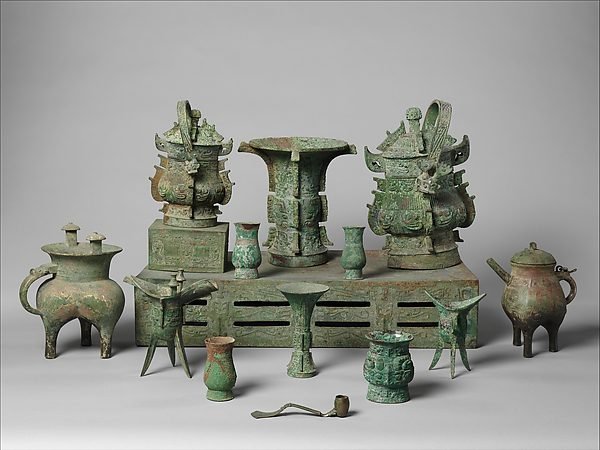
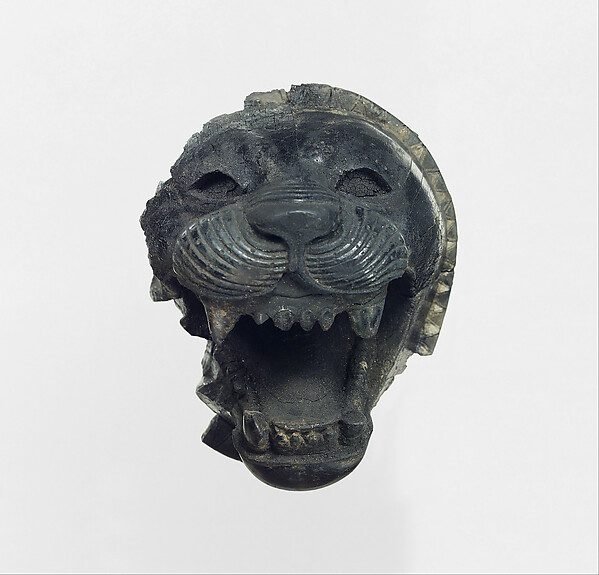
The oldest ornamental rosettes date back to the early fourth millennium BCE, in Mesopotamia, where they accompanied the goddess Inanna from very early on, the Akkadians’ Ishtar. By the Neo-Assyrian period, the rosette had even come to eclipse the eight-pointed star as the goddess’s emblem: the temples of Ishtar at Assur are covered in it, in the reliefs as much as in the architectural decoration. The geometric flower spoke of fertility, divine radiance, life renewing itself. It still did not imitate a plant: it abstracted blossoming into a sign that could be repeated endlessly along a frieze. This is its first strength, and the secret of its longevity: a pattern that can be copied without a model, passed down without being understood, and that survives every language because it fits within a single gesture.
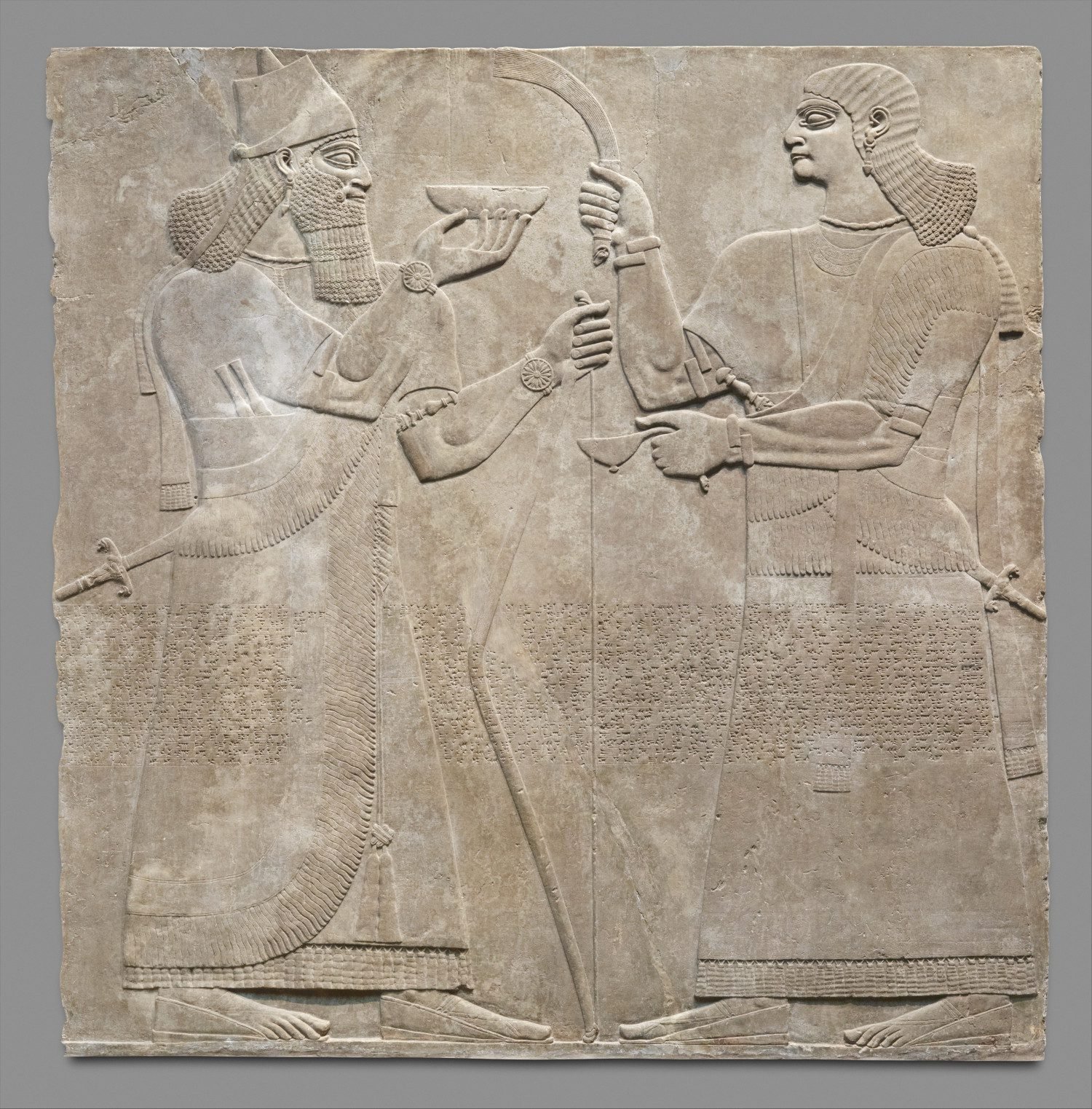
From Mesopotamia, the rosette spread across the entire Mediterranean basin and never left it. Egypt placed it on tomb ceilings and at the heart of necklaces; Greece alternated it with the palmette along the rim of its vases and the friezes of its temples; Rome carved it into the coffers of stone, those hollow compartments that lighten vaults, as can still be seen in the colossal ceilings of Baalbek. Islam, which rejects the figure but carries geometry to its summit, made it one of the knots of its interlacing patterns: at the center of the great stars of Moorish art, where the lines converge, it is almost always a rosette that closes the design. The same small compass drawn flower thus runs, unbroken, from the Sumerian temple to the stucco of the Alhambra.
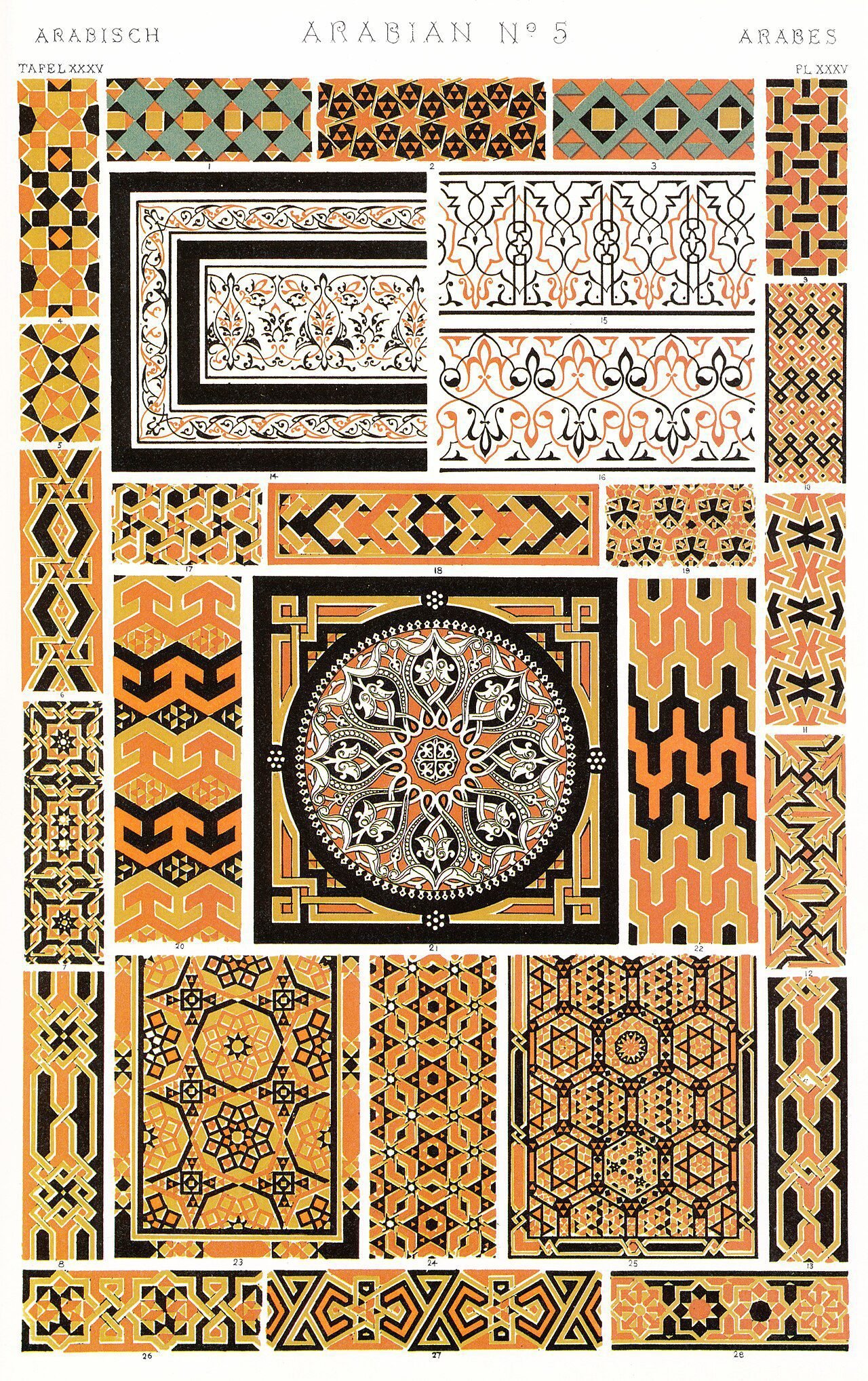
This permanence fascinated the earliest theorists of ornament. When the architect Owen Jones published his Grammar of Ornament in 1856, he found the same rosette, barely varied, from pharaonic Egypt to the ceilings of the Alhambra: proof, in his eyes, that a universal grammar of forms exists, an alphabet every culture had spelled out on its own. A generation later, the Viennese historian Alois Riegl made it one of the guiding threads of his Stilfragen (1893), known in English as Problems of Style. Against the then dominant idea that ornament was merely a byproduct of technique and material, Riegl demonstrated that the rosette, the palmette, and scrollwork are passed down and transformed through a logic that is properly artistic, a will to form he called Kunstwollen. For him, the rosette is not an accident of the weaver or the stonecutter: it is a thought that travels.
The century when the rose became theology
For three or four millennia, the rosette remained one ornament among many, sumptuous but silent. Then, within a single generation, at the heart of twelfth century France, it began to speak the most ambitious language there is: that of metaphysics.
The turning point has a place and a man. The place is the abbey church of Saint Denis, north of Paris; the man is its abbot, Suger, who rebuilt the choir around 1140 and pierced it with windows of unprecedented scale. Suger did not seek light in order to illuminate: he sought it because, to him, it was the shortest path to God. His thinking drew on a writer the Middle Ages believed to be Dionysius the Areopagite, the Athenian disciple of Saint Paul, whom scholars today call Pseudo Dionysius: a Neoplatonic mystic for whom all sensible clarity is the reflection of a higher clarity, and for whom the mind rises toward the divine degree by degree, through what he called anagogy. A window, in this system, is not a hole in a wall: it is a machine for carrying the soul from the visible to the invisible.
It is within this framework that the oculus, the simple bull’s eye window of Romanesque churches, swells, subdivides, and becomes the Gothic rose window. The circular form of the ancient rosette meets the theology of light, and the result is an argument made of stone and glass. God is lux, primal light; creation is diffraction, the colored dispersion of that single light; and the rose window of the facade, pierced by the sun, offers proof of it every morning to whoever cares to look up. The art historian Erwin Panofsky, in editing and translating Suger’s writings in the mid twentieth century, made this moment the starting point of every symbolic reading of Gothic architecture. The rose window stops being decoration and becomes a cosmology.
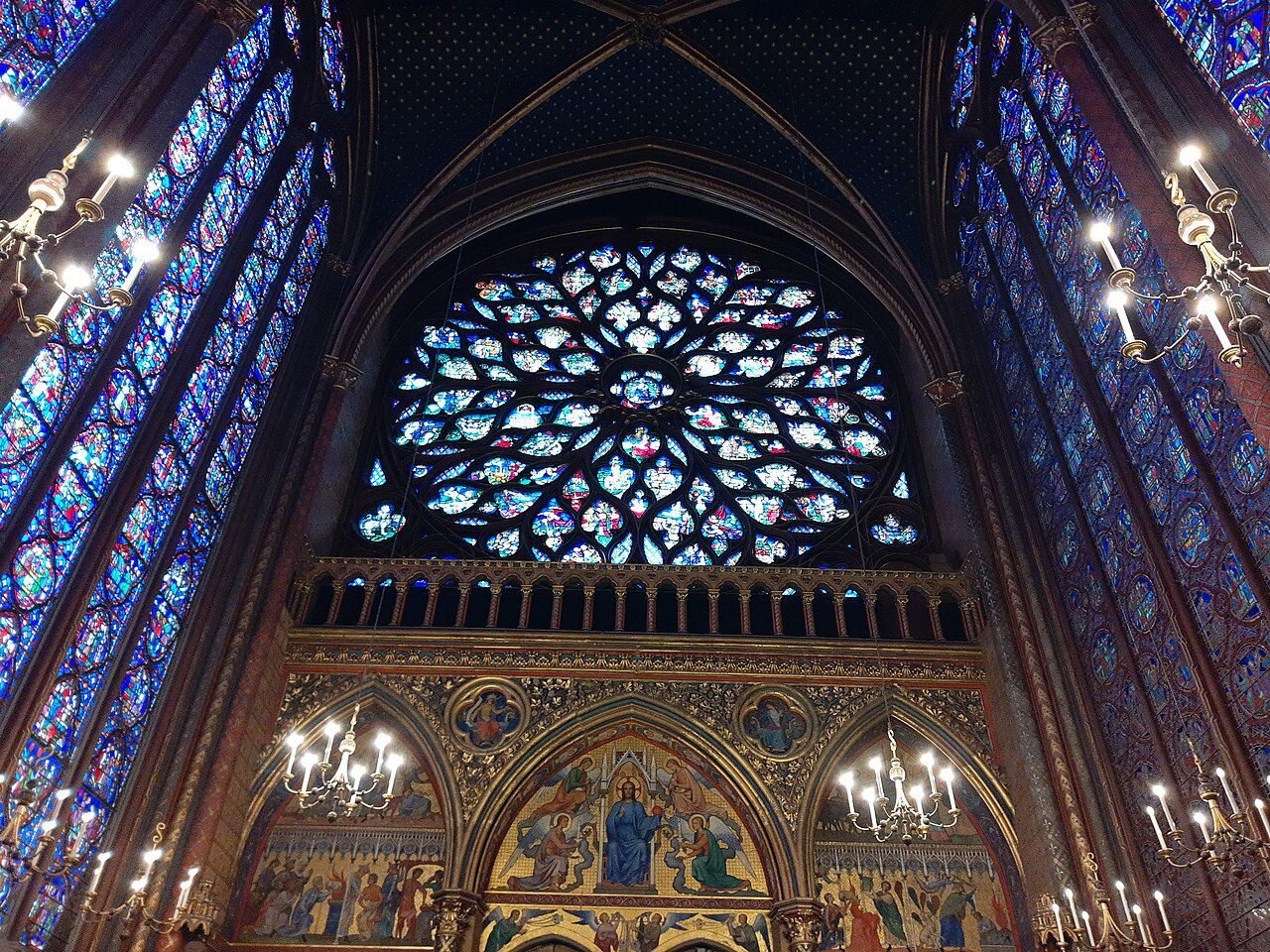
The Gothic rose window is also a feat of geometry. The first simply hollowed out oculi soon gave way to an increasingly fine stone lattice, what historians call the shift from plate tracery to bar tracery: the flower turned into lace, its petals became mullions, and light was cut into wedges within it. Medieval builders did not always call it a rose, in fact, but often a wheel, rota, and the kinship is not innocent: on certain facades, the rosette stands beside the Wheel of Fortune, the other great circle of the Middle Ages, the one that raises and topples the powerful in turn. A single figure to express both the immutable order of God and the churning of fate; the rosette holds, literally, both faces of the medieval world.
It is worth pausing on how extraordinary this shift is. The very same compass drawn figure that once protected a barn becomes, on a cathedral facade, the diagram of an ordered world: a single center, equal rays, a circumference that contains everything. The rosette did not change shape. It changed scale and standing. And in doing so, it found a calling it would never again set down: to express order, wherever people need to affirm one.
Migrations: the Virgin, the poet, the diamond
Once charged with meaning, the Gothic rose window began to spread, and it did so through symbolic contagion far more than through simple imitation of form.
Its first migration is Marian. Very quickly, the great rose window facing north, as at Chartres, is dedicated to the Virgin. Christian tradition calls it rosa mystica, the mystic rose, and describes it as a rose without thorns: Mary, conceived without sin, is the flower that never knew the wound. The vocabulary of prayer follows suit. The word rosary comes from the Latin rosarium, which first meant a rose garden before it came to name the strand of prayer beads: to recite one’s Hail Marys is to weave a crown of spiritual roses. The Assyrians’ geometric pattern had become, without renouncing any of its rigor, an instrument of tenderness.
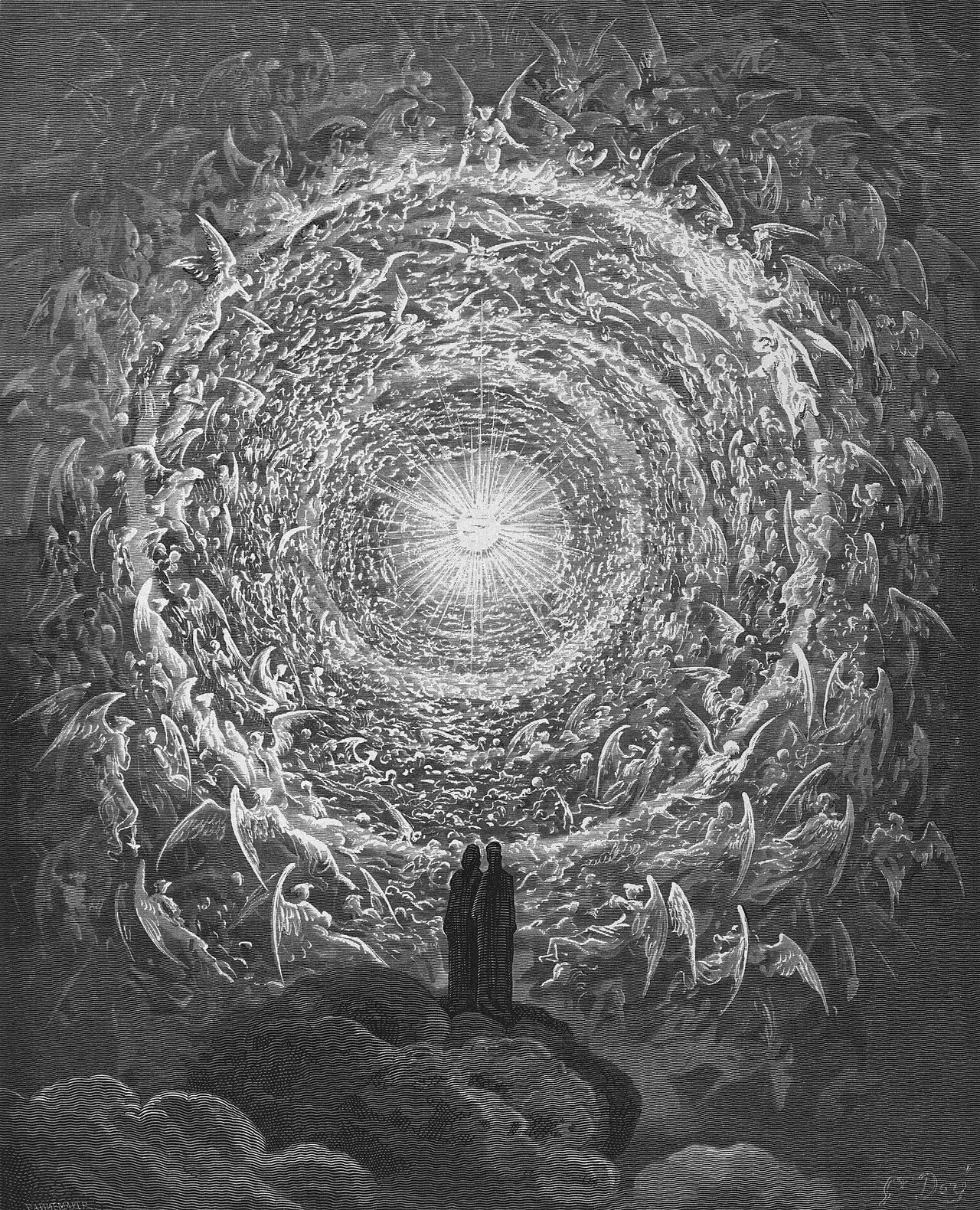
The highest of these migrations is literary. At the end of the Divine Comedy, arriving at the threshold of the vision of God, Dante arranges the entirety of the blessed into a candida rosa, an immense white rose whose petals are the tiers of Paradise and whose heart is the light of the Trinity. This celestial rose occupies cantos XXX and XXXI of the Paradiso. There, the entire heaven becomes flower: the almost dizzying culmination of a motif that began, four thousand years earlier, with a single stroke of a compass on a terracotta jar.
Because the medieval rose is not only sacred. At the very moment it blooms on the cathedrals, it also becomes, in courtly poetry, the secret name of the beloved. The Roman de la Rose, begun by Guillaume de Lorris around 1230 and continued some forty years later by Jean de Meun, is one of the greatest literary successes of the Middle Ages: an entire allegorical poem in which conquering the rose, enclosed deep within its garden, means conquering love itself. The same flower thus speaks, from one side to the other, of the spotless Virgin and of the most earthly desire. This ambivalence never left it: the rosette has remained that rare motif equally at home adorning an altar or an alcove, without ever betraying itself.
Honesty requires noting that not all the roses of sacred texts are, in fact, roses. The famous “rose of Sharon” from the Song of Songs (2:1) rests on a Hebrew word, habatselet, which specialists today translate rather as a meadow bulb, crocus or narcissus, than as a rose: a retrospective rose, planted there by translators. Likewise, the phrase sub rosa, which makes the rose hanging from the ceiling the seal of secrecy, belongs to a later tradition best cited for what it is, a fine symbolic usage, rather than as an archival certainty. Scholarship does not forbid wonder; it only asks that its quotation marks be restored.
There remains one migration no one expects in a history of devotion: that of jewelry. Around the middle of the 16th century, in Antwerp, then the world capital of diamonds, cutters developed a new cut, flat on the bottom and domed on top, bristling with triangular facets arranged in rays. It is called the rose cut, and the name is not mere ornament: the stone is meant to evoke a rosebud at the very moment it opens. The same mental gesture that turned the flower into geometry on an Assyrian frieze here turns light itself into geometry within the hollow of a setting. The rosette, it seems, likes nothing better than settling wherever matter meets order.
Two final migrations, secular this time, complete the measure of the motif’s reach. Heraldry turns it into an emblem of power: at the close of England’s dynastic wars, the Tudors fused the two rival roses, the white of York and the red of Lancaster, into a single double rose that would become the emblem of an entire dynasty. Navigation, for its part, turns it into an instrument: on portolan charts and inside compasses, the wind directions unfold into a many-branched star, the compass rose. From a sign of the sacred, the rosette thus becomes a figure of orientation, the very means by which we find our bearings in space. Ordering a surface or ordering the world: since the very first stroke of the compass, it has been the same operation of the mind.
The Rosette Is Alive
One might think this motif relegated to the past, imprisoned in cathedrals and museum cases. Nothing could be further from the truth: the rosette is one of the oldest ornaments that has most stubbornly stayed alive in high-end decoration.
Its most literal survival lives above our heads. In every Haussmannian apartment, the chandelier hangs from a ceiling rosette, and these plaster flowers continue to be molded, restored, and reinvented by master craftsmen, the staffeurs-ornemanistes, ornamental plasterers whose trade keeps intact the age-old gesture of dividing the circle. We find it, just as present, underfoot. The cement tile, that great popular art turned object of prestige, almost always places a rosette at the center of its compositions, and houses like Maison Bahya in Paris, or Popham Design, keep its handmade production alive, stencil after stencil. There, the rosette becomes again what it was at the start: a threshold flower, set right where the foot falls.
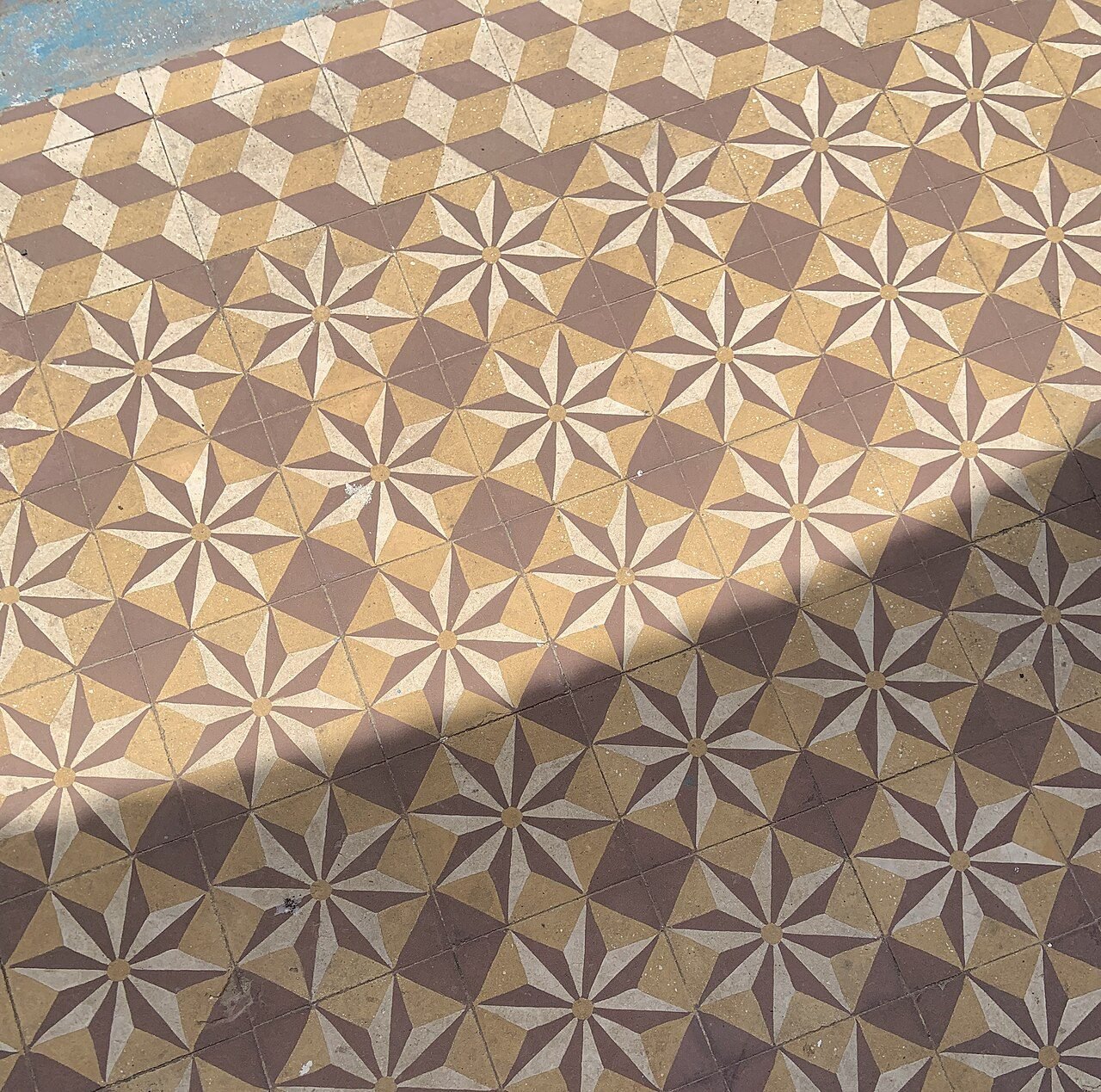
We even encounter it where we least expect it. The revival of patterned tile in kitchens and bathrooms, the fashion for zellige and workshop tonal palettes, have brought the rosette back to the forefront of a certain idea of quiet luxury, one that favors the hand over the machine and slow time over novelty. It is no accident that we find it today under the brush of the finest wallpaper makers as in the catalogs of art ceramicists: a form that has held for five thousand years offers, to anyone who knows how to use it, a guarantee that few ornaments can match.
High jewelry, finally, has never stopped returning to the rose. The La Rose Dior collection, which renders in gold and diamonds the flower so dear to Christian Dior, is the most visible example: proof that between the rose cut of Antwerp’s diamond cutters and today’s ring, the thread has never been broken. The motif is not a memory kept in storage; it is a vocabulary still spoken, by the finest workshops, in the noblest materials. So ancient a form that remains this desirable is nothing like a fossil: it has simply passed the test of time better than the trends that thought they had buried it.
And, to Close, a Hand on a Drawer
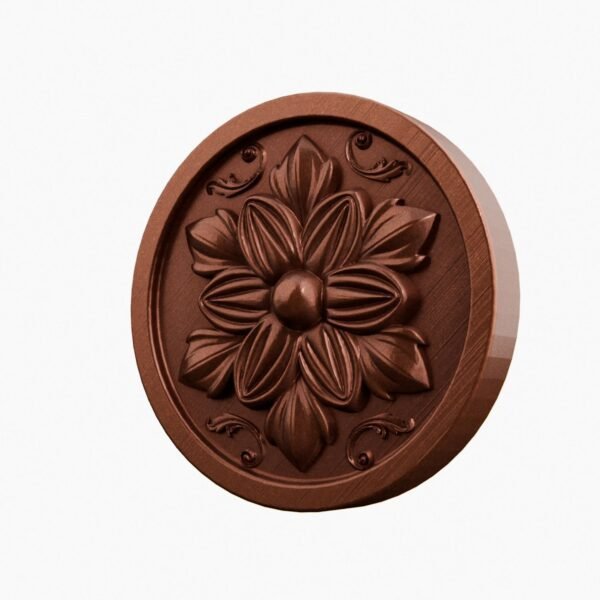
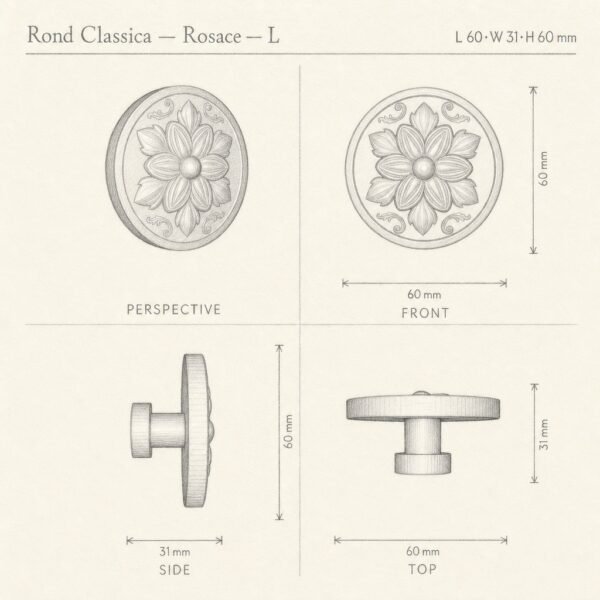
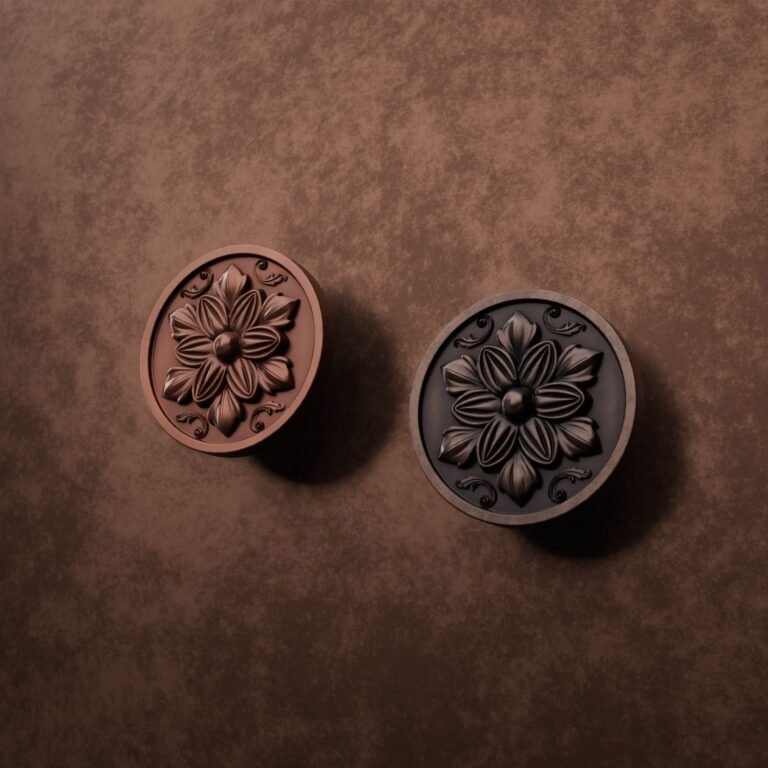
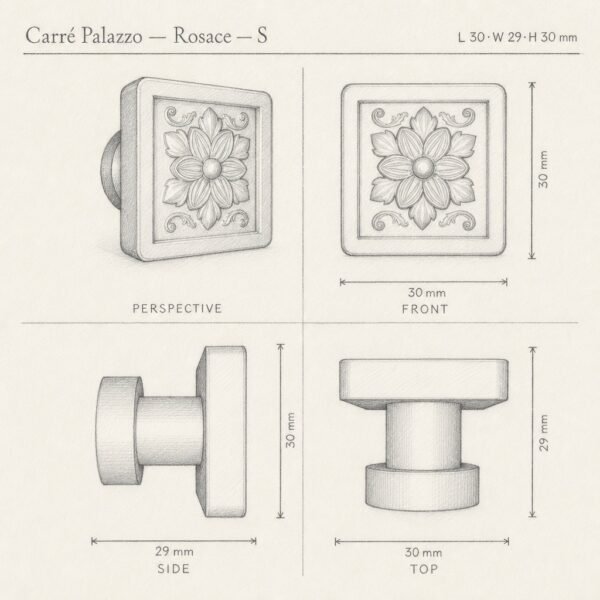
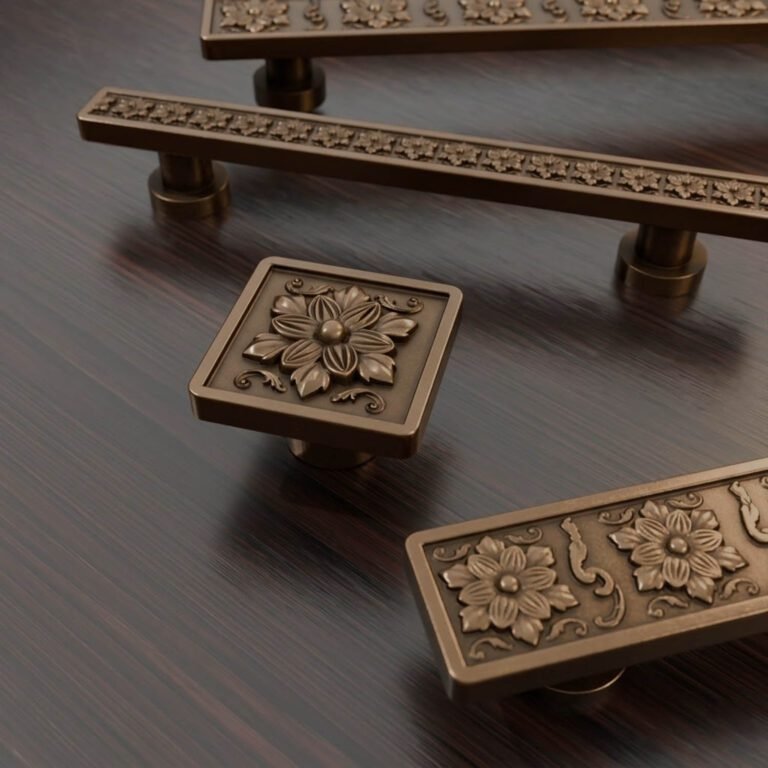
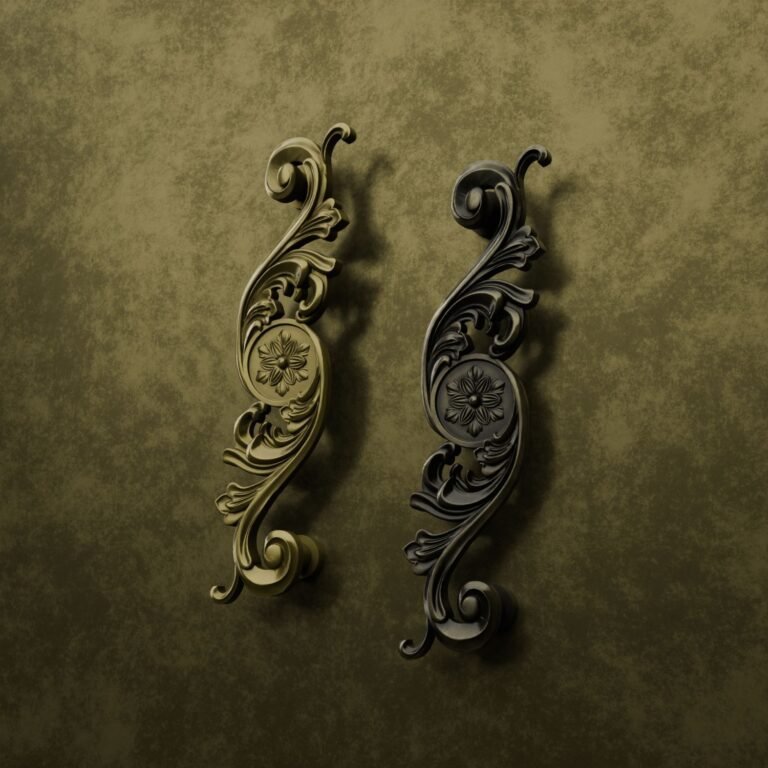
This long genealogy was missing one place: that of the hand. For five thousand years, the rosette lived up high or in majesty, on the ceiling, on the facade, on the finger, never quite within reach of an everyday gesture. It is this shift, modest in appearance, that a workshop like ours attempts by engraving a rosette at the center of a cabinet knob.
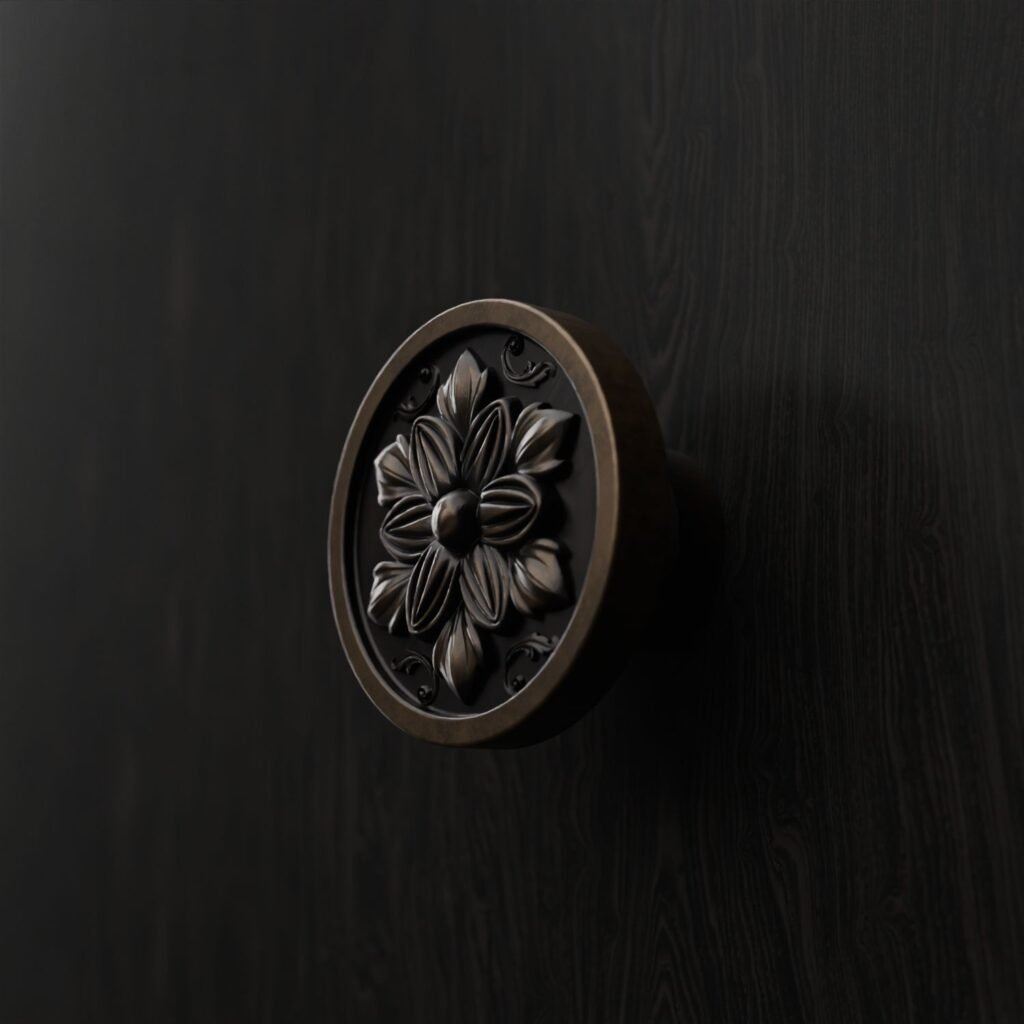
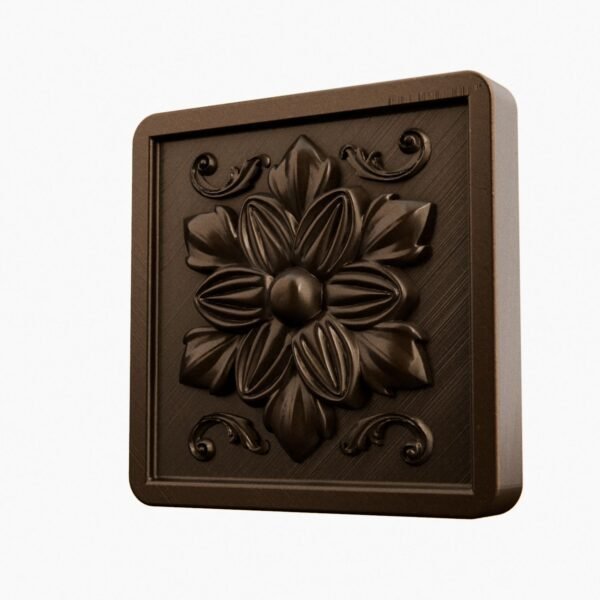
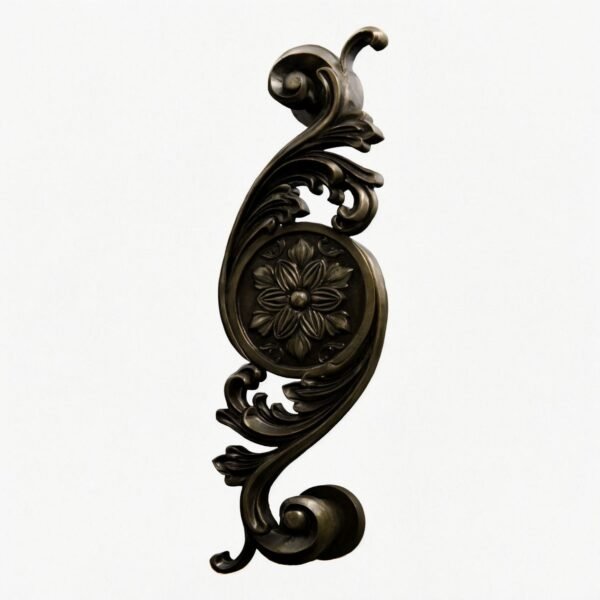
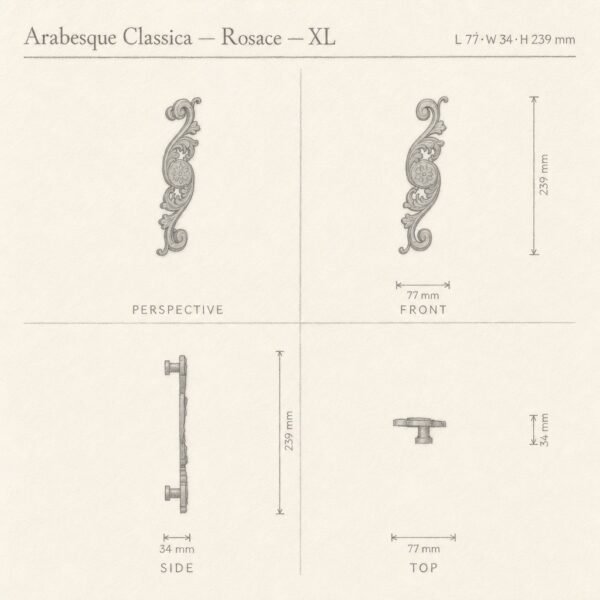
Reducing the cathedral rose to the diameter of a handle does not shrink it: it finally puts it to use. The hand that opens a drawer rediscovers, without knowing it, the compass-drawn lines of builders and stonecutters; the circle divided into equal petals moves from the scale of the sacred to the scale of the intimate. On a round silhouette as on a more intricate silhouette, the motif does what it has always done: it orders a surface, it catches the light, it affirms that a useful object can also be a considered one.
Perhaps that, in the end, is the story of the rosette: proving, from a Sumerian jar to a contemporary drawer, that dividing a circle is one of the oldest gestures of civilization. And that it isn’t done serving yet.
Sources and Further Reading
- Owen Jones, The Grammar of Ornament (1856), digitized edition, Internet Archive.
- Owen Jones and the Grammar of Ornament, Victoria and Albert Museum.
- Alois Riegl, Problems of Style (Stilfragen, 1893), Princeton University Press.
- The Metaphysics of Light in the Aesthetics of Suger of Saint-Denis, Dionysius journal, Dalhousie University.
- Dante Alighieri, Paradiso, cantos XXX-XXXI, Dante Lab, Dartmouth College.
- Rose Cut, Antique Jewelry University.