Red Cabinet Handles: Daring to Use Color at Home
Red has never been a neutral color. Signal, alarm, desire: throughout the history of chromatic language, it has always spoken with force, from imperial Chinese lacquer to the boldest graphic compositions of the twentieth century. Across an entire piece of furniture, that intensity can quickly become overwhelming. On a handle, it finds its right measure: one precise gesture you can commit to without repainting a single front.
At Holdon Paris, red comes in two forms that share almost nothing. On one side, a bioresin colored through and through, vivid and pearlescent. On the other, copper whose patina deepens into a rich brown red, inherited from time rather than pigment. A vivid resin, a patinated metal, two temperaments for one confidently worn red. Here is how to tell them apart, and where to place them.
A Red That Doesn’t Ask Permission
We already explored this tension between quiet color and bold color in an earlier article. Red, by nature, almost always leans toward the bold gesture: few tone-on-tone shades truly soften it. Better to own it, and choose where to place it rather than try to erase it.
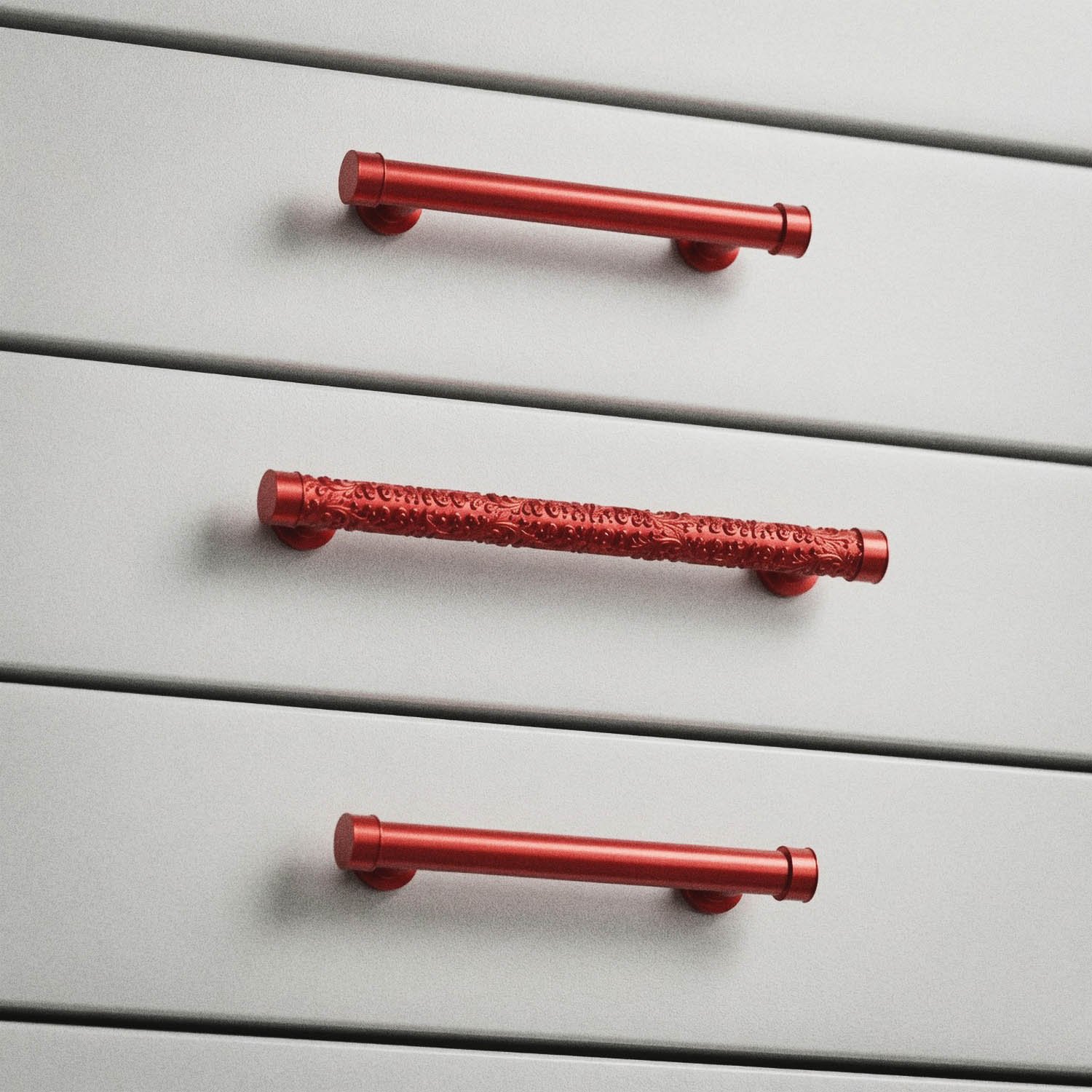
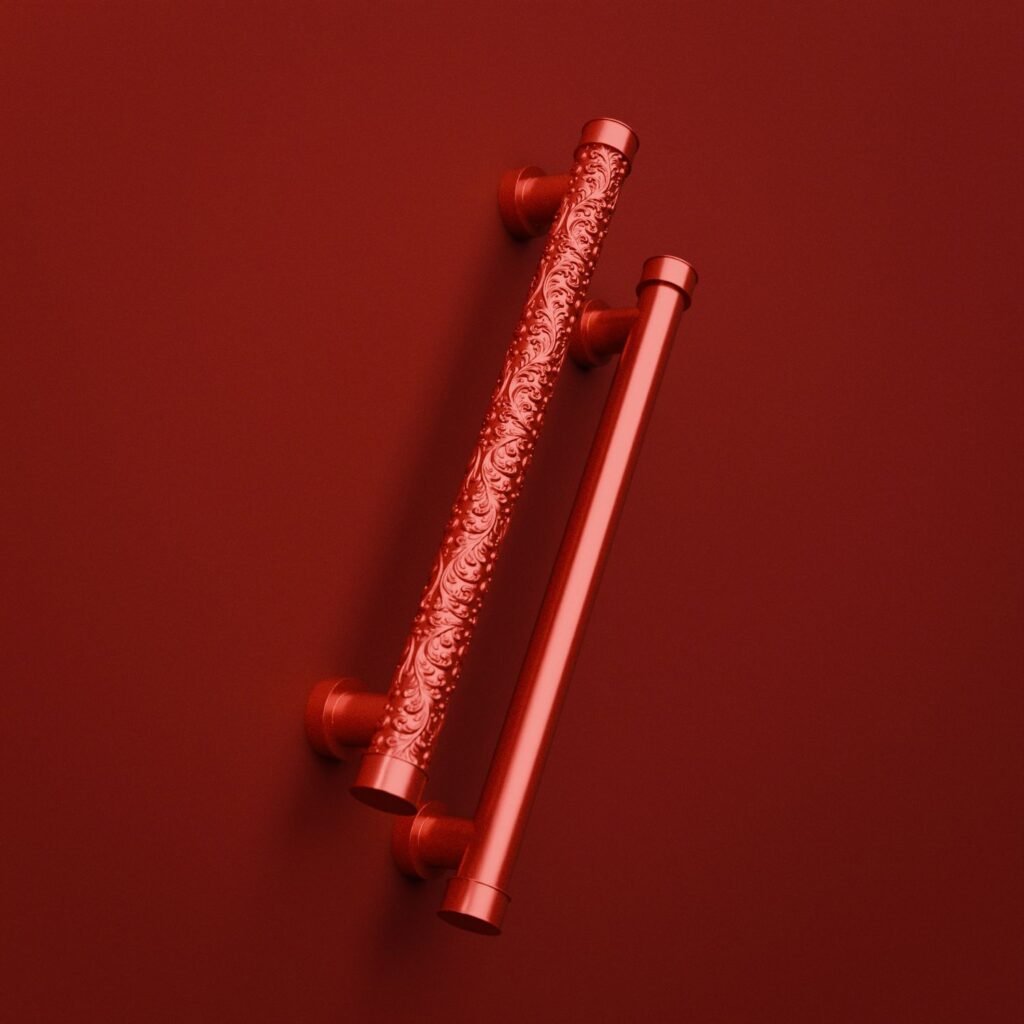
The good news is that Holdon red isn’t limited to a single silhouette. It sits as naturally on a bare, cylindrical shaft as on an ornamental composition rich with scrollwork: the color carries the statement, the form sets the degree of intensity.

Two Reds, Two Temperaments
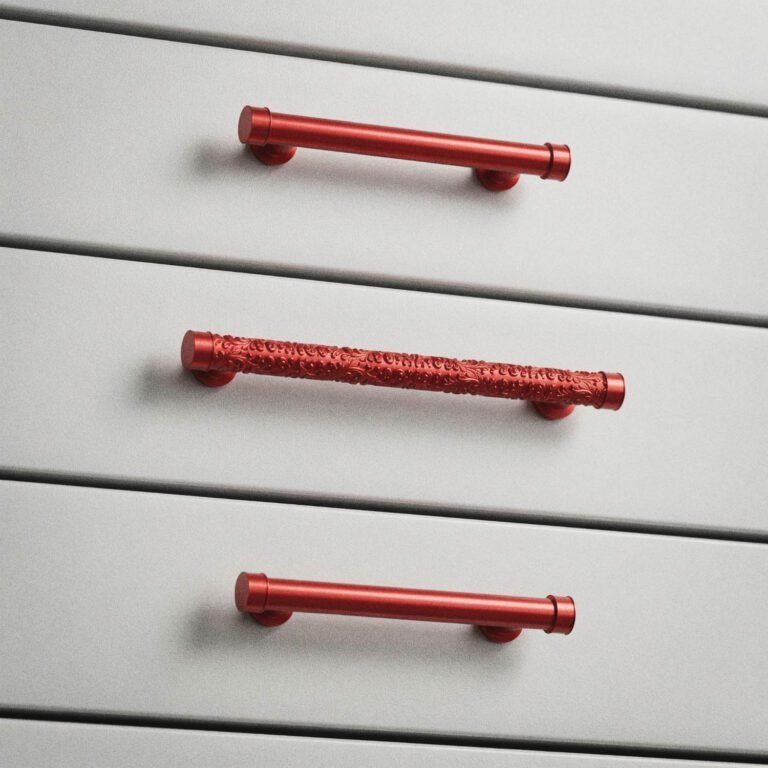
The Candy Red is a bioresin colored through and through: a deep, luminous red, somewhere between lacquer and pearlescent metal, its surface catching light differently depending on the angle. It’s the most direct way into color, provided you respect its nature: this resin is designed for living spaces, bedrooms, closets, or living rooms, and stays clear of humid settings or heavy use spaces like a kitchen or bathroom.
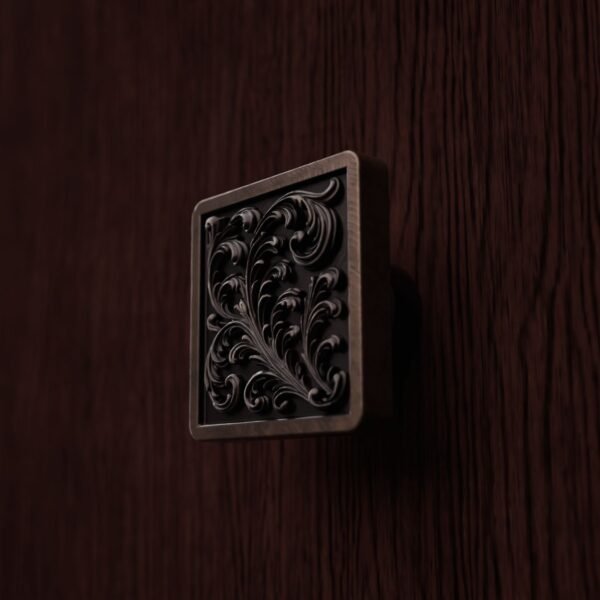
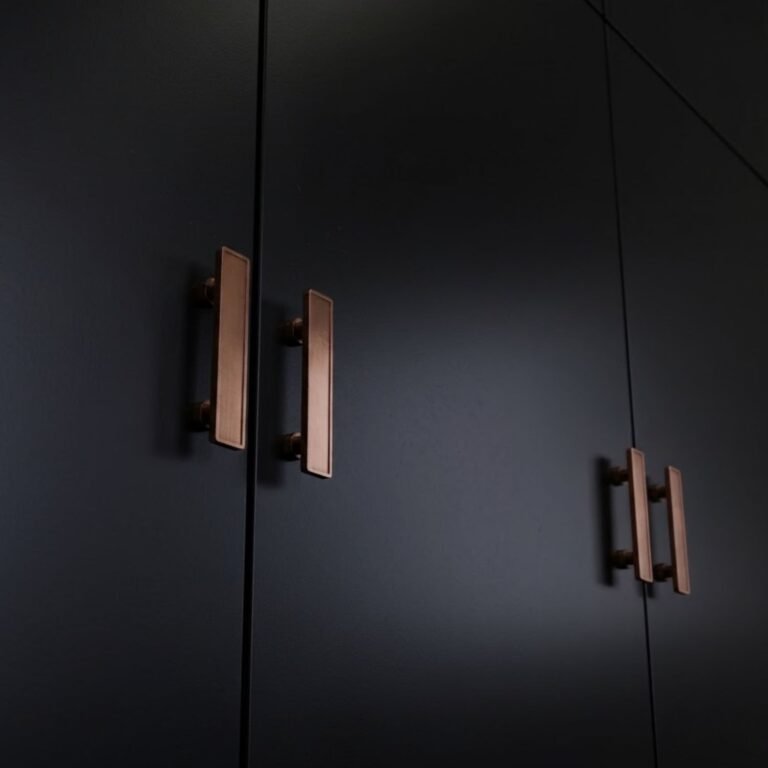
The Antique Copper tells an entirely different story. This hand applied patina deepens the relief and brings out rich, brownish orange tones, more organic, almost inhabited by time. Satin Copper, without the patina, holds the same glowing warmth in a cleaner finish. Both stand up to a kitchen, a bathroom, a heavy door, or a hard working drawer: the logical compromise when you want red throughout the house, including where the resin has to stop.

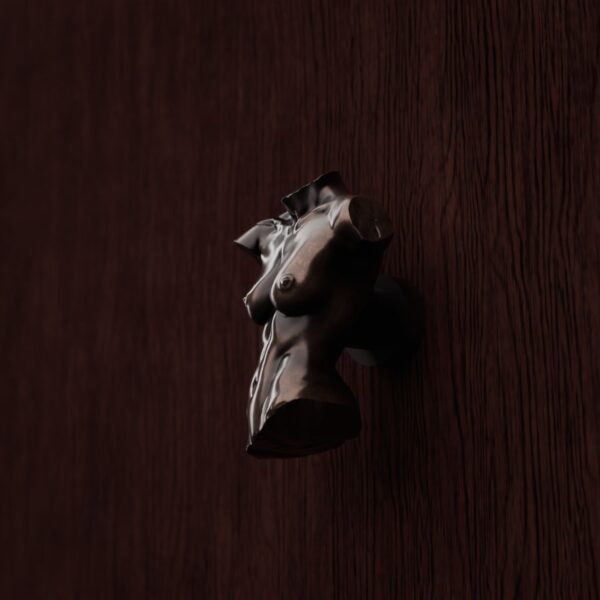
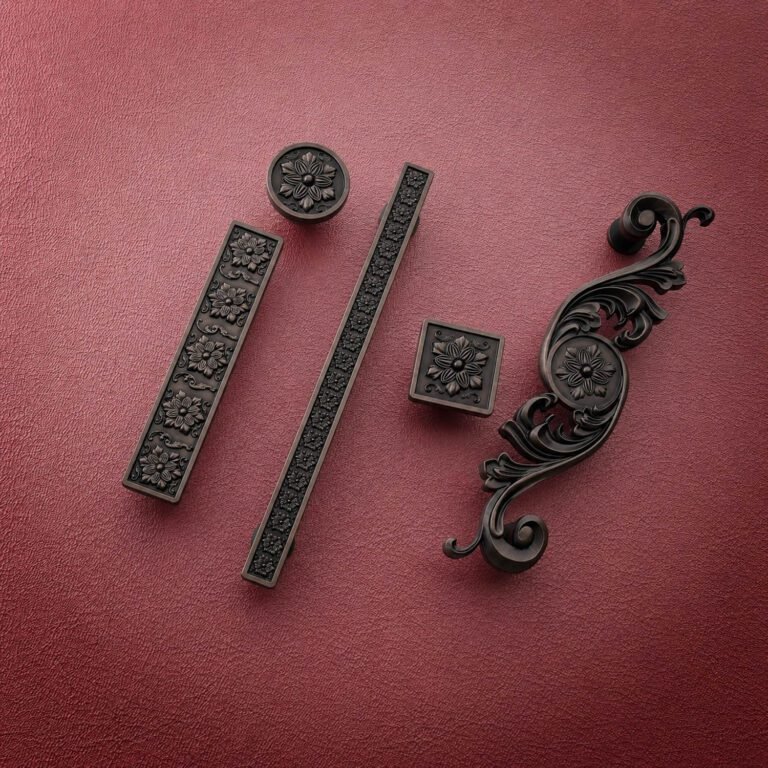
Red can also be reserved for a single exceptional piece rather than repeated across every drawer. That’s the principle behind the Venetian Torso: an entire sculpture, a torso brought down to the scale of a hand, cast and patinated in Antique Copper. You don’t multiply it across an entire kitchen, you place it on the door, the dresser, or the entryway you truly want people to notice.

Where and how much red to use
On a white front, Candy Red keeps the whole space to itself: the effect is graphic, pop, very bold. On a matte black front, it takes on an almost lacquered character instead, more glamorous. Tone on tone with a burgundy or deep plum piece, you get a rich, sophisticated harmony. The one rule to remember: a bold hue pitted against another equally bold one cancels itself out, it’s better to let red have the stage alone.
Antique Copper plays a different, more muted register. It feels at home against warm woods, golden oak, teak, natural beech, and builds a very organic tone-on-tone harmony with a terracotta or rust toned front. Paired with sage green or off white, it creates an almost Mediterranean mood. Against cool grays or very minimal lacquers, on the other hand, it can feel out of place: this patina needs a material that answers it.
Pattern also plays into the dosage. An Essential silhouette lets red occupy the whole visual space; a pattern like Scrollwork, one of the oldest in the Western ornamental repertoire, adds a relief that the copper’s patina brings out even further.

Points to keep in mind before choosing
- Dry rooms (bedroom, closet, living room): Candy Red in bioresin, the most accessible entry point into red.
- Kitchen, bathroom, heavily used drawer: Satin Copper or Antique Copper, a slight extra cost but no restrictions on use.
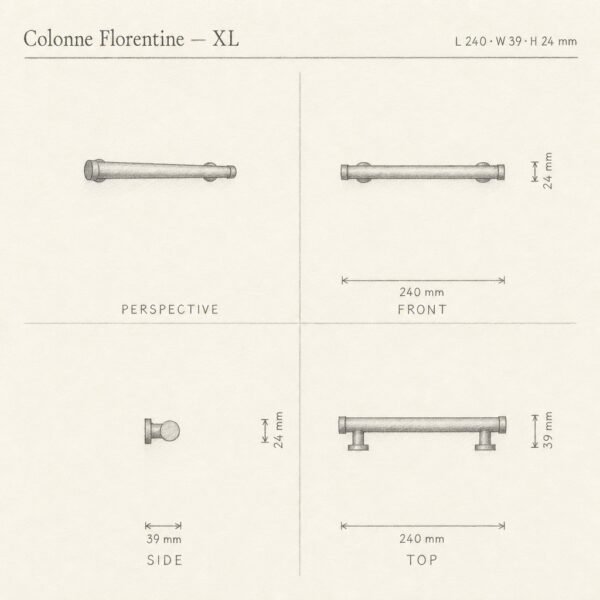
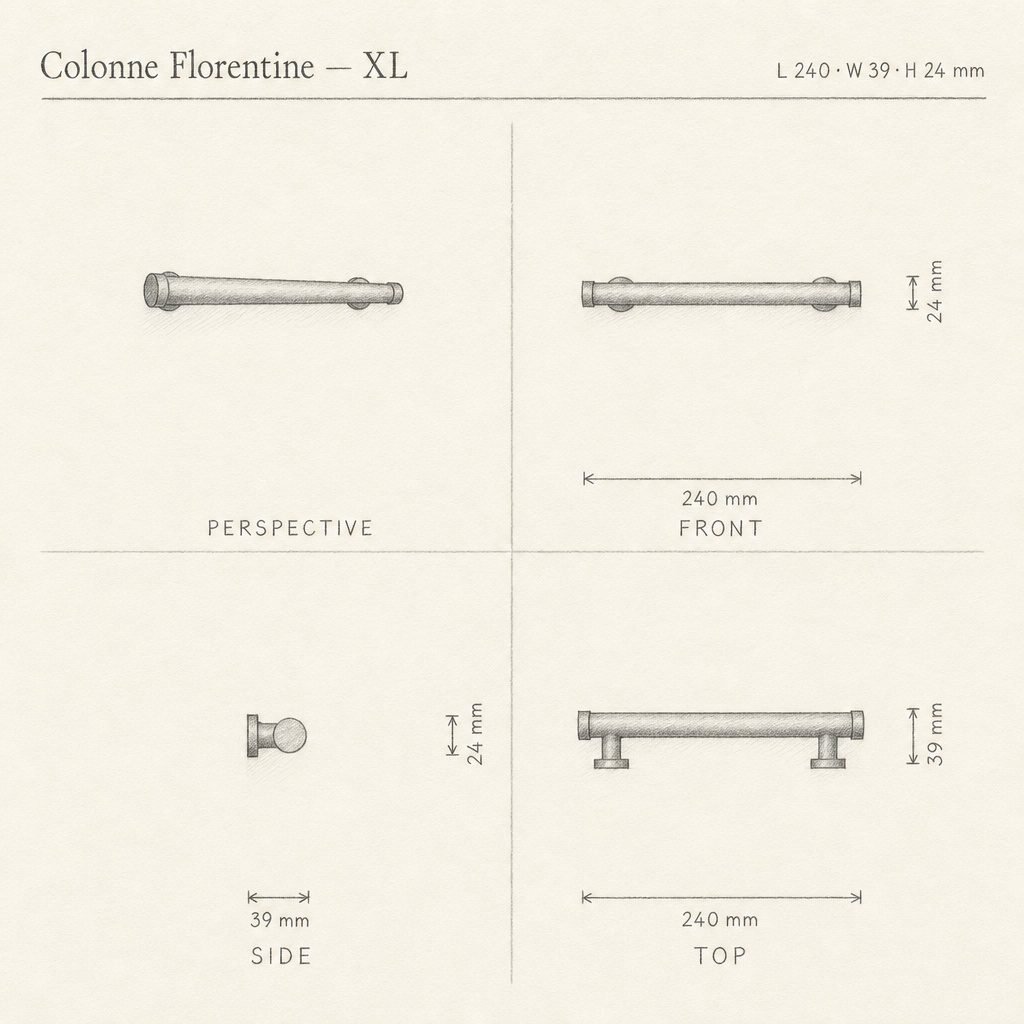
- Sizes and center-to-center: the Florentine Column comes in four lengths, from S to XL, with center-to-center spacing from 96 to 192 mm.
- Matching with the front: a neutral or dark background lets red express itself fully; bold hues placed side by side cancel each other out.
At Holdon Paris, red is never a gamble: it’s a material chosen with full knowledge of its uses, vivid resin for a decorative accent, patinated copper for a presence that holds up in wet rooms. As with the catalog’s other bio based colors, it all depends on the use you expect from it. You can explore all our red handles or browse the entire catalog filtered by red.
Practical questions
Does red work in every room of the house?
No, it depends on the material. Candy Red in bioresin is reserved for dry rooms: bedroom, closet, or living room. For a kitchen or bathroom, go with Satin Copper or Antique Copper, in metal, which stand up to humidity and heavy use.
What sizes are available for a Florentine Column?
It comes in four sizes, from S to XL, with center-to-center spacing of 96, 128, 160, and 192 mm, enough to cover anything from a small drawer to a large front.
How do you care for an Antique Copper handle?
A soft cloth is enough for everyday care. The patina keeps evolving slightly over time, which is exactly the charm of this finish, more alive than a fixed metal.
Is there a more affordable red option?
Yes: Candy Red in bioresin is the most direct entry point into red, with no extra cost compared to the other shades in the range. Satin Copper or Antique Copper involve a slight premium, offset by a durability that makes them suitable for the kitchen and bathroom.