Restyling an IKEA Kallax with Designer Handles
The Kallax owes its success to a grid that goes straight to the point: square, stackable cubbies that need no door or ornament. It’s an object that owes everything to logic and nothing to decoration, squarely in the tradition of a Scandinavian functionalism that turned the absence of frills into a style of its own. That neutrality is a strength, but it also leaves a gap. As soon as you close the Kallax with doors or drawers, something is missing right where the hand should land: IKEA doesn’t supply a handle for its inserts, and the first generic batch you find rarely does the piece justice. Yet it’s the one detail in this system that welcomes a real point of view, understated or bold. Here’s how to choose one, without getting the center-to-center wrong.
A bare Kallax or one with inserts, the handle doesn’t play the same role
The original Kallax needs no handle: doors left open or closed by push-to-open, it lives in its own simplicity. The question really only comes up with door and drawer inserts, whether yours or a third-party maker’s, which do call for a real grip. Like the rest of the IKEA range, these fronts follow the so called “System 32” drilling pattern: center-to-center measurements that are multiples of 32mm, most often 96 or 128mm on a standard-width insert. That’s the measurement that should guide your choice, before the aesthetics. The principle is the same one we detailed for a Besta or a Pax wardrobe: the center-to-center leads, the aesthetics follow. Find our full selection of IKEA-compatible handles for the rest of the range.
Understated or statement, two stances for a piece that had none
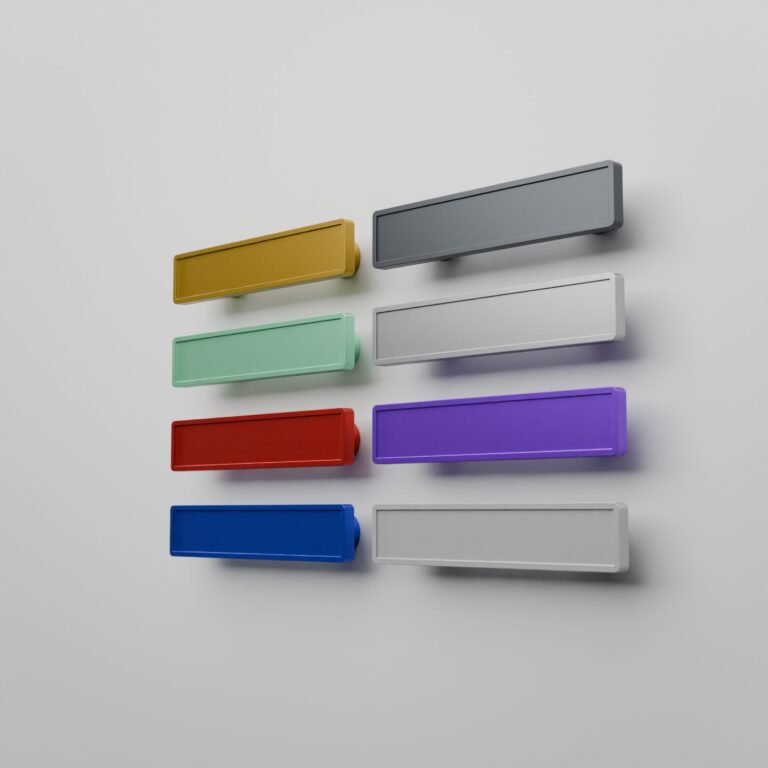
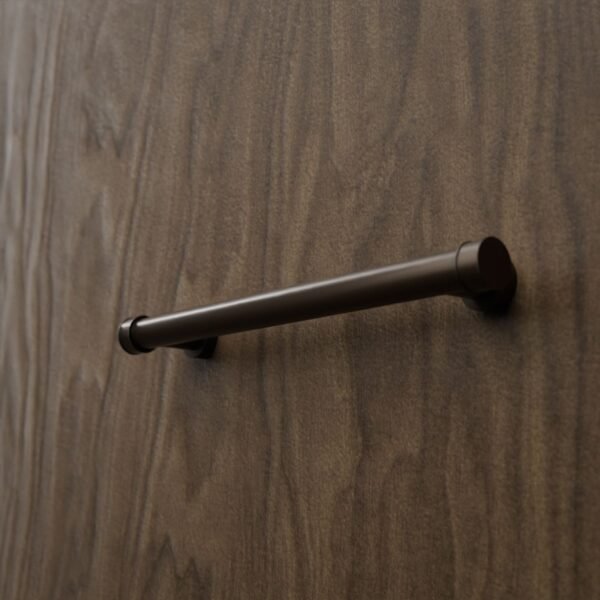
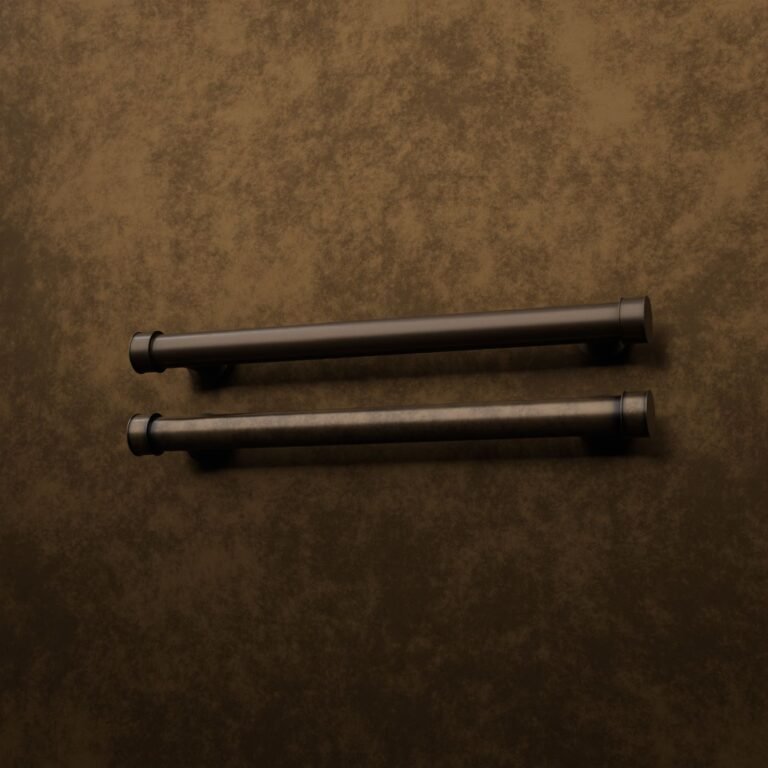
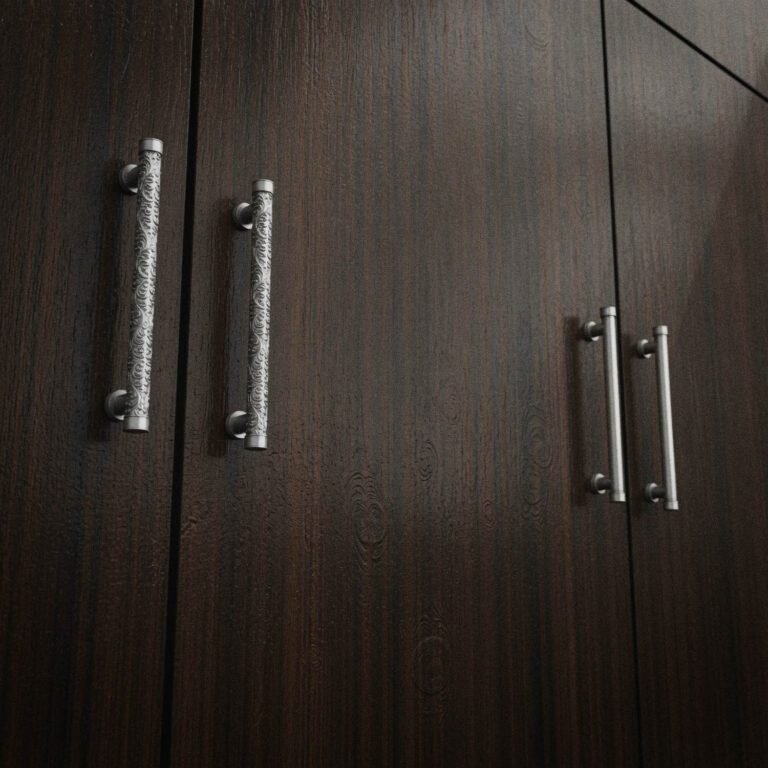
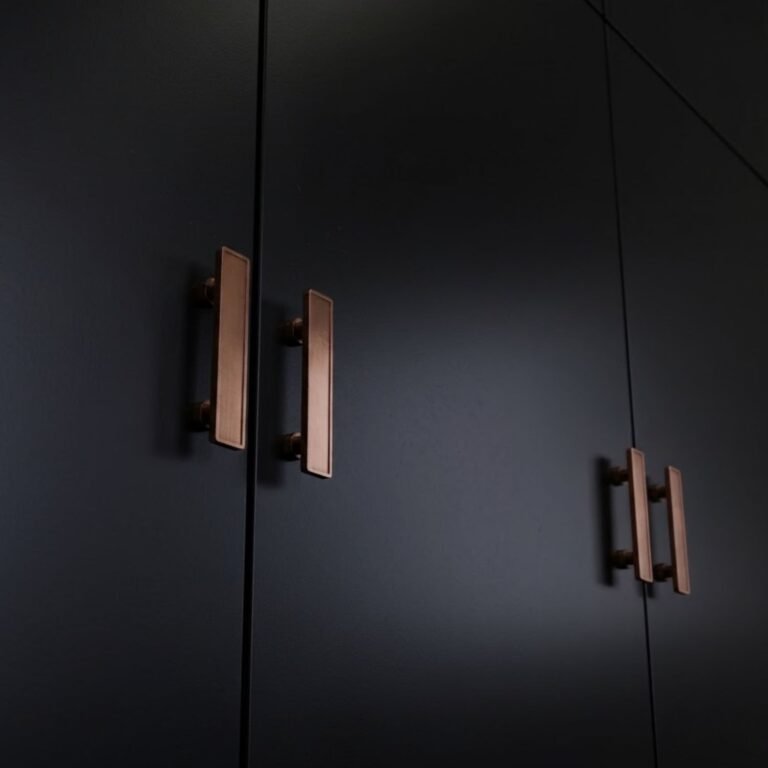
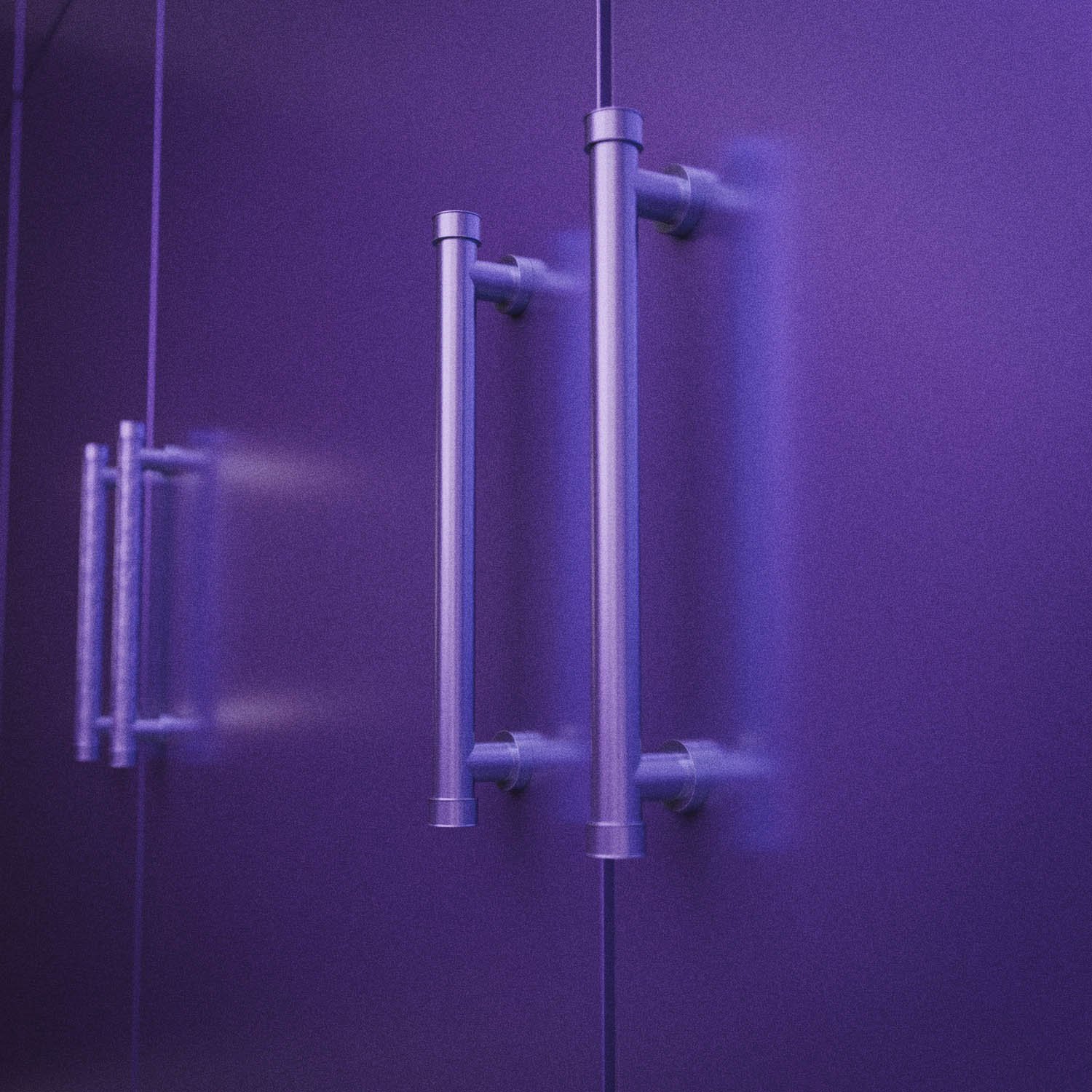
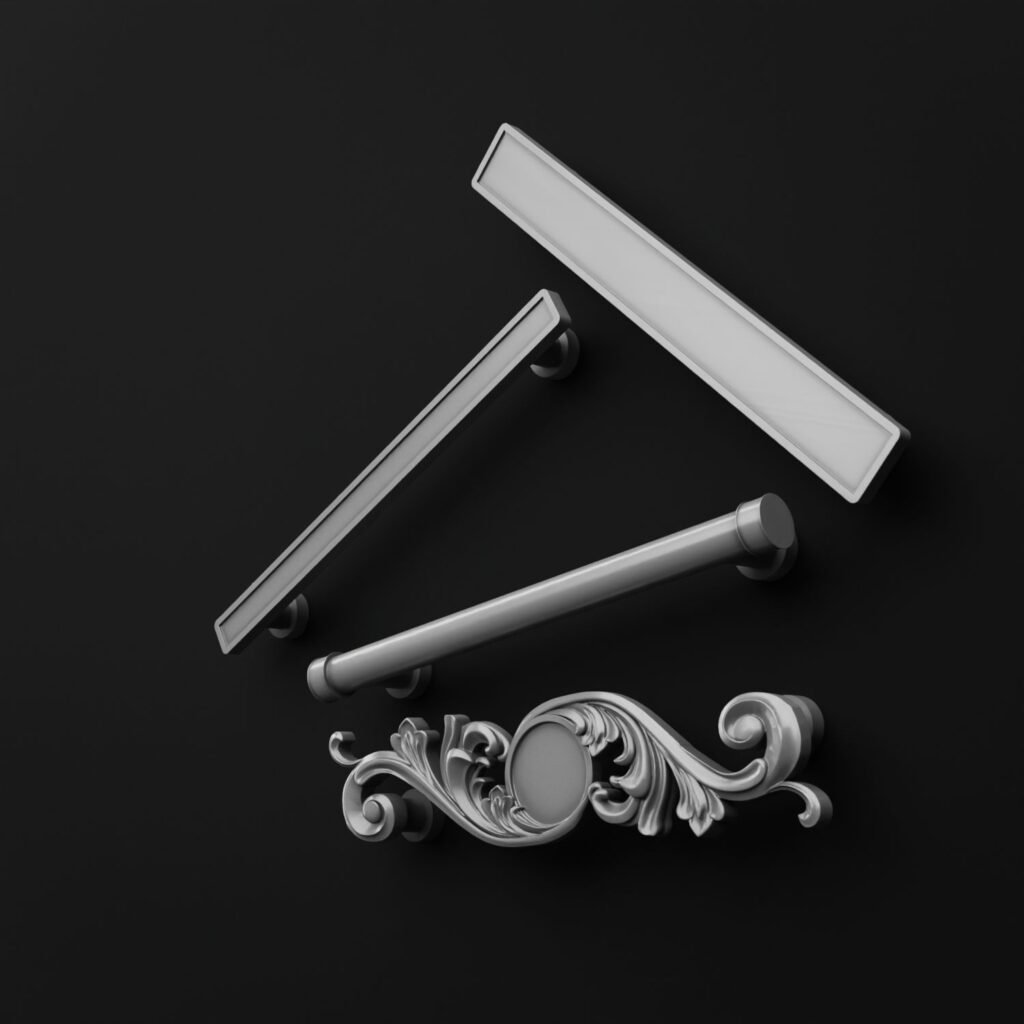
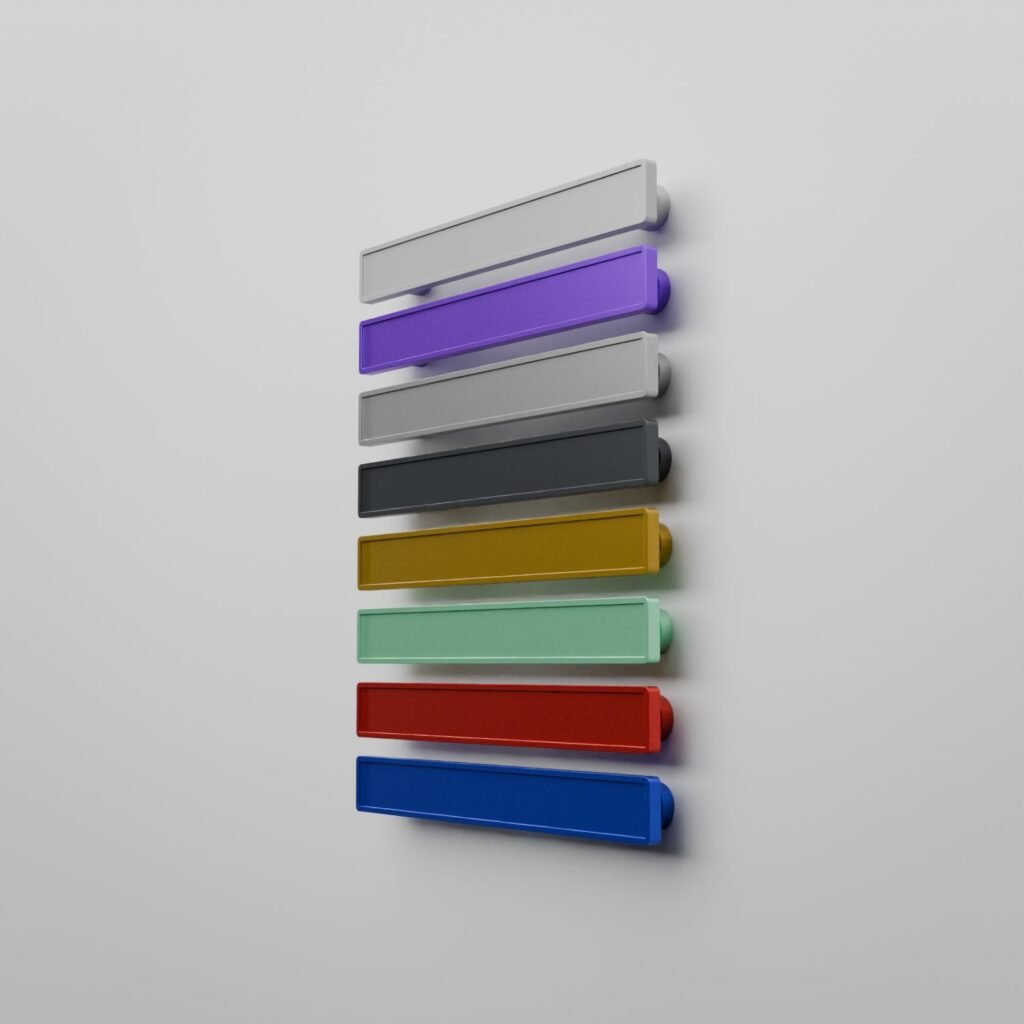
The Kallax naturally calls for restraint: a round knob, a slim bar, the Satin Aluminum finish that picks up the piece’s neutrality without ever contradicting it. The Classica Round or the Palazzo Bar, in this finish, extend the system’s logic rather than break it. But nothing rules out the opposite: the Kallax, precisely because it says nothing on its own, takes very well to a bolder gesture. A Florentine Column with its cylindrical shaft, in a matte bronze that absorbs light rather than reflecting it, gives the piece a presence it never had. And for fronts repainted in a bold color, as many hacked Kallax units are, the bioresin holds its own in solid color: an Electric Blue or a dark lilac stand up to a flat coat of paint without ever competing with it.
Sizes and center-to-center distance, the measurement that matters before you order
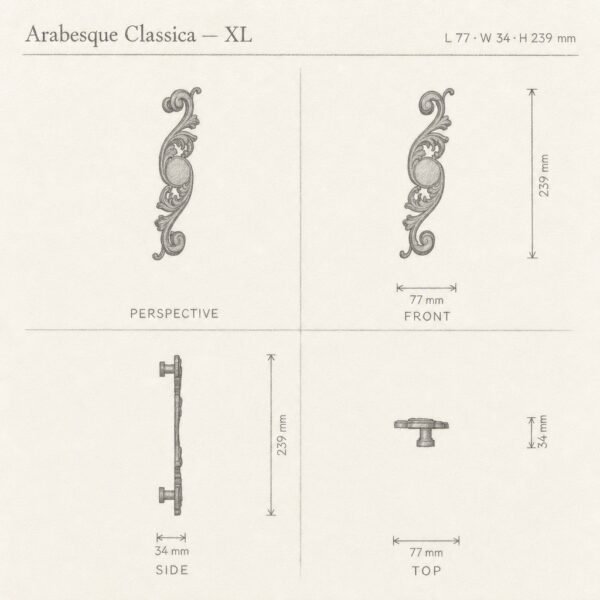
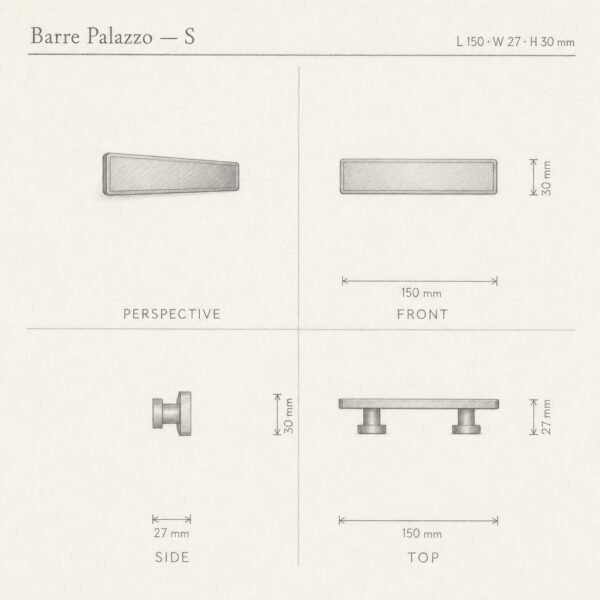
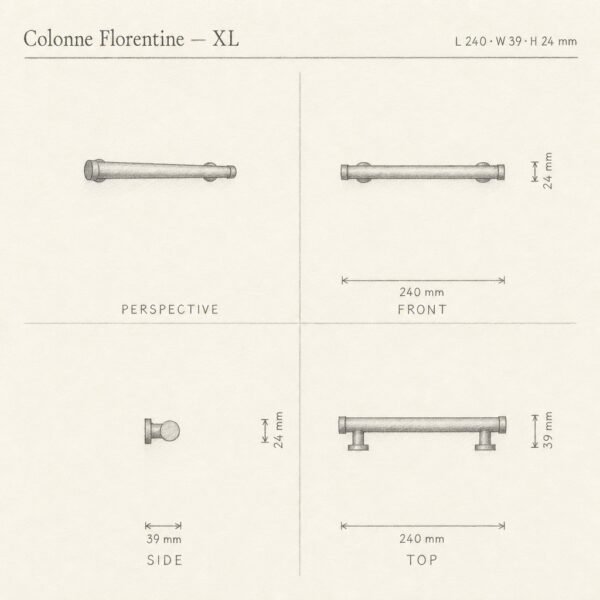
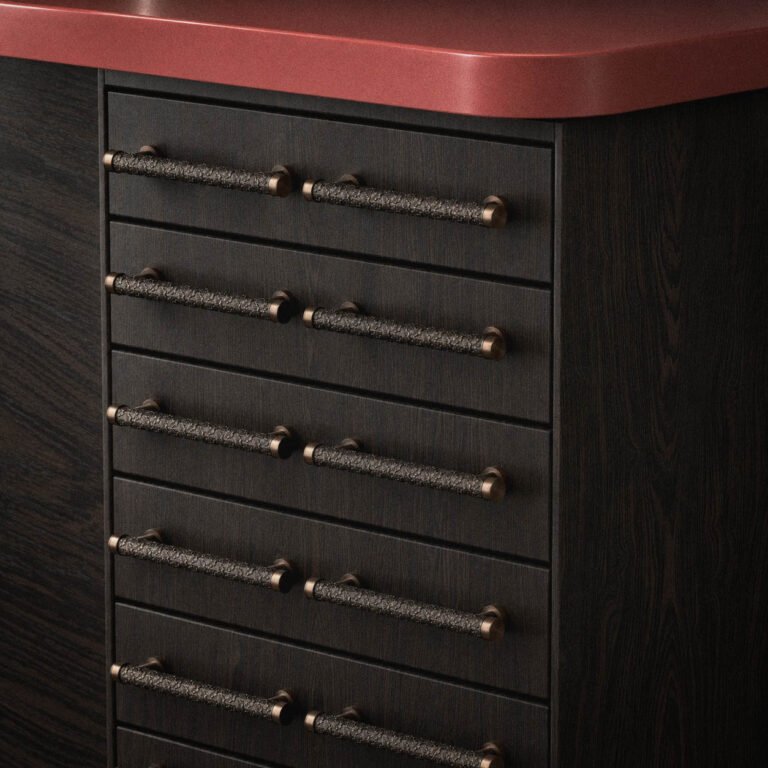
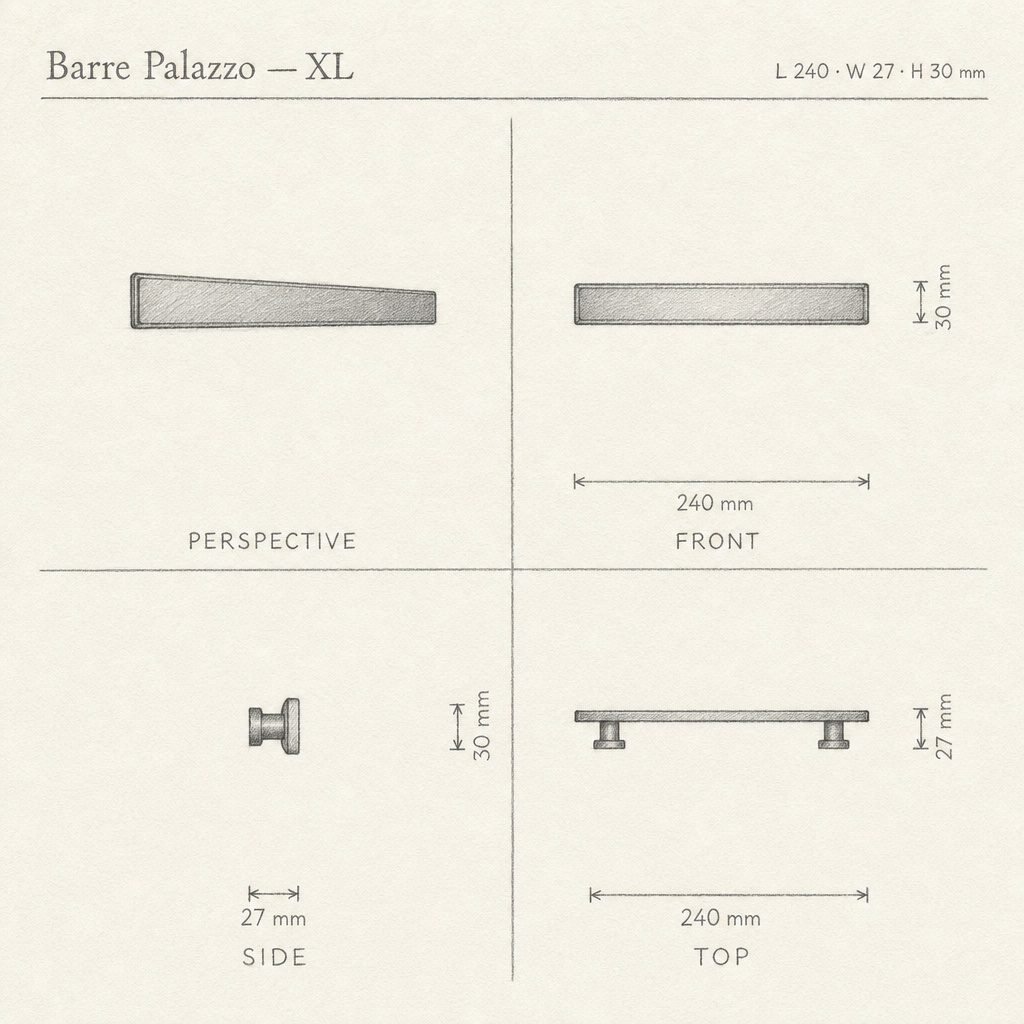
Kallax inserts don’t all share the same width, and the center-to-center spacing has to follow. The Palazzo Bar comes in four lengths, from 15cm with a single 96mm center-to-center, up to 24cm and 192mm, enough to cover a small drawer as well as a large door. The Classica Arabesque or the Florentine Column, more sculptural, follow the same logic across three to four sizes. The reliable measurement stays the same: measure the actual distance between existing holes, or between the planned centers on a new front, rather than trusting the visible length in a photo. The Kallax storage system documents these standard dimensions, a good starting point before you order.

Four handles for a personalized Kallax
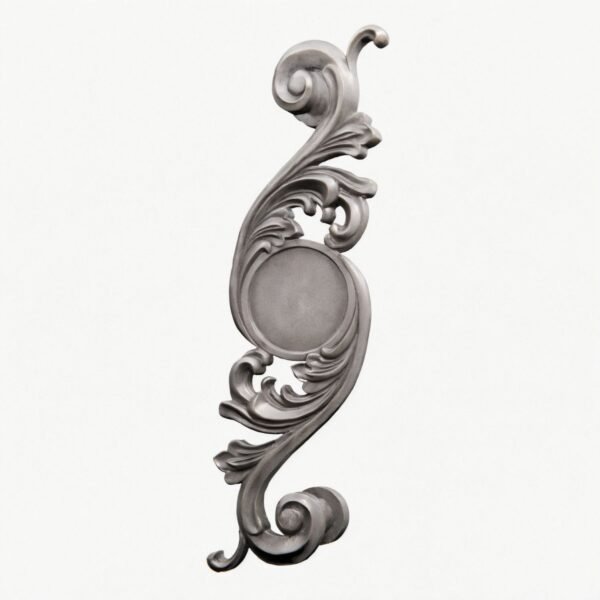
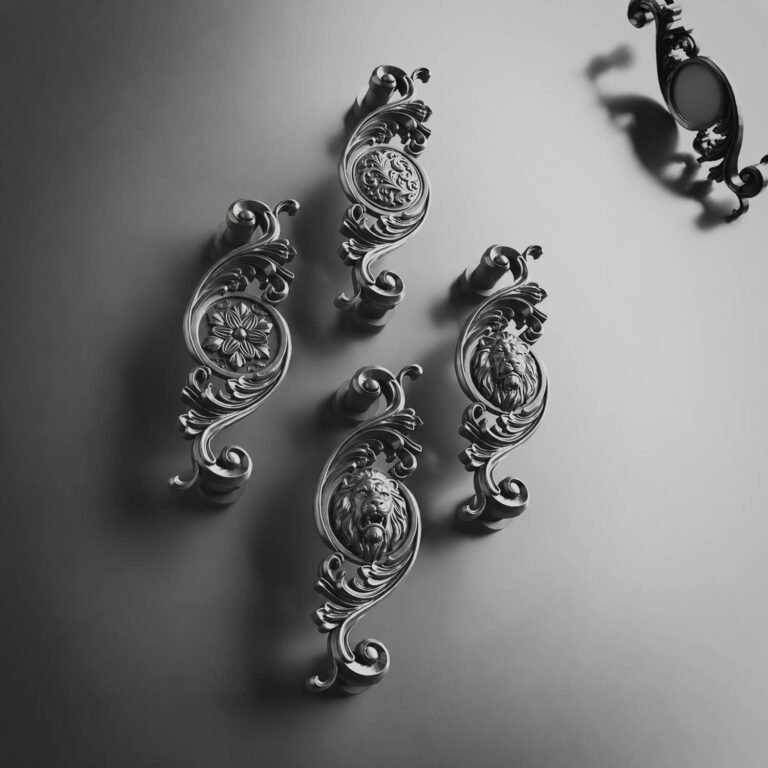
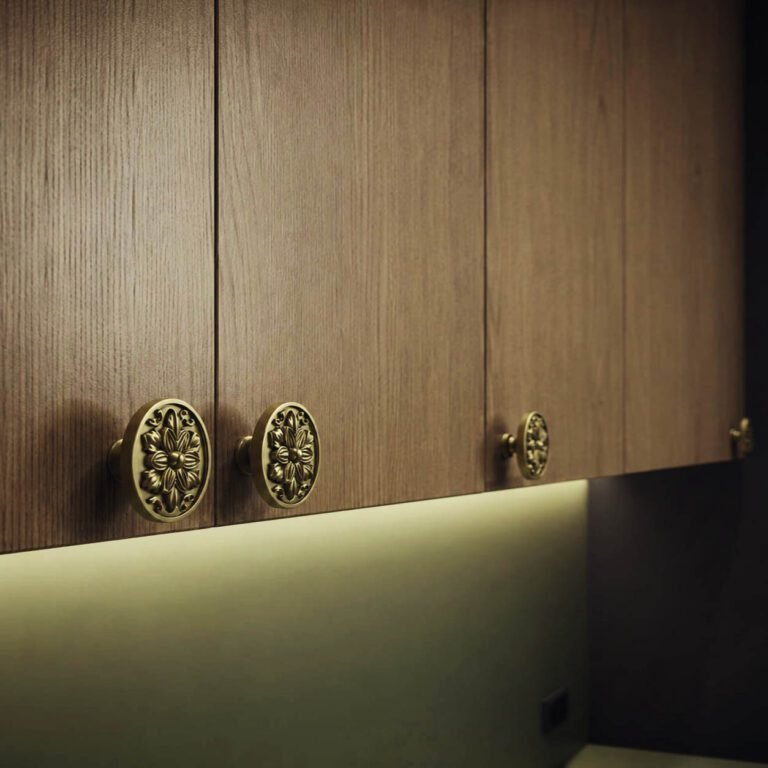
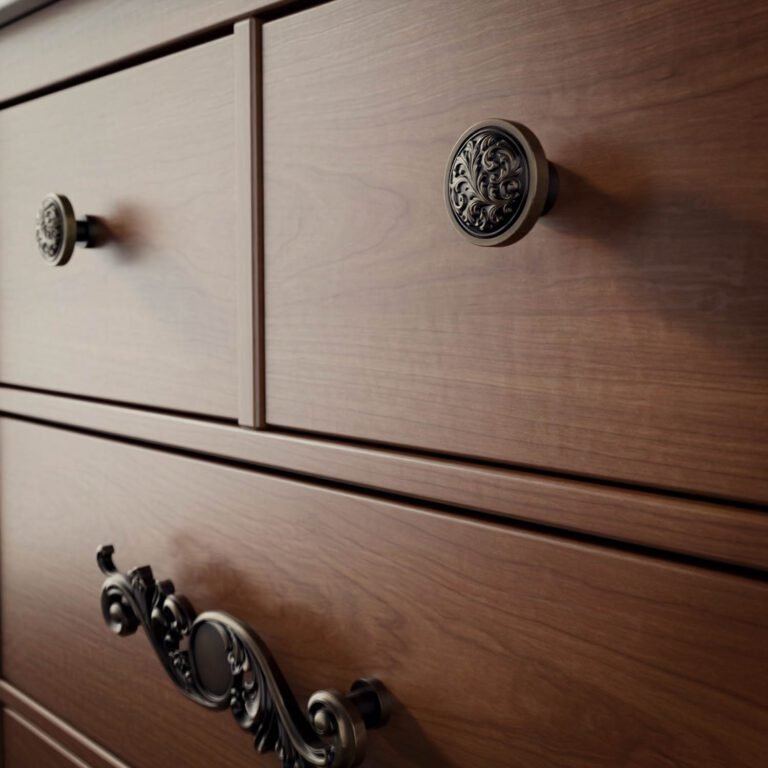
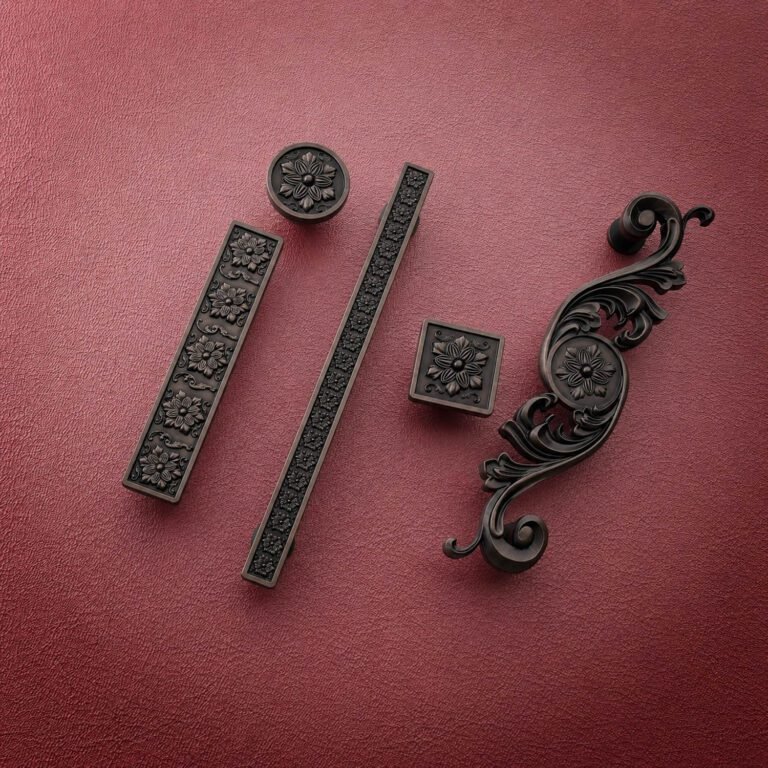
The Classica Arabesque, in Satin Aluminum, brings a touch of architecture to a flat front without ever tipping into pastiche: its scrolled cartouche stays legible even at a small scale. In satin aluminum, its most versatile finish, it pairs with white, gray, or light wood, the most common tones for Kallax fronts.


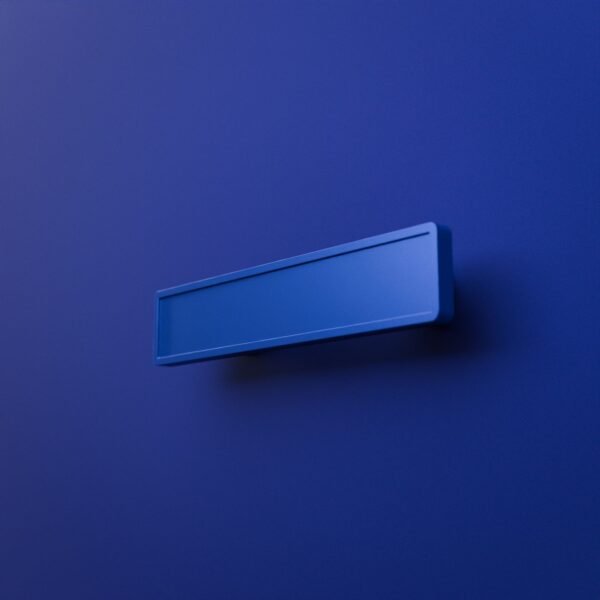
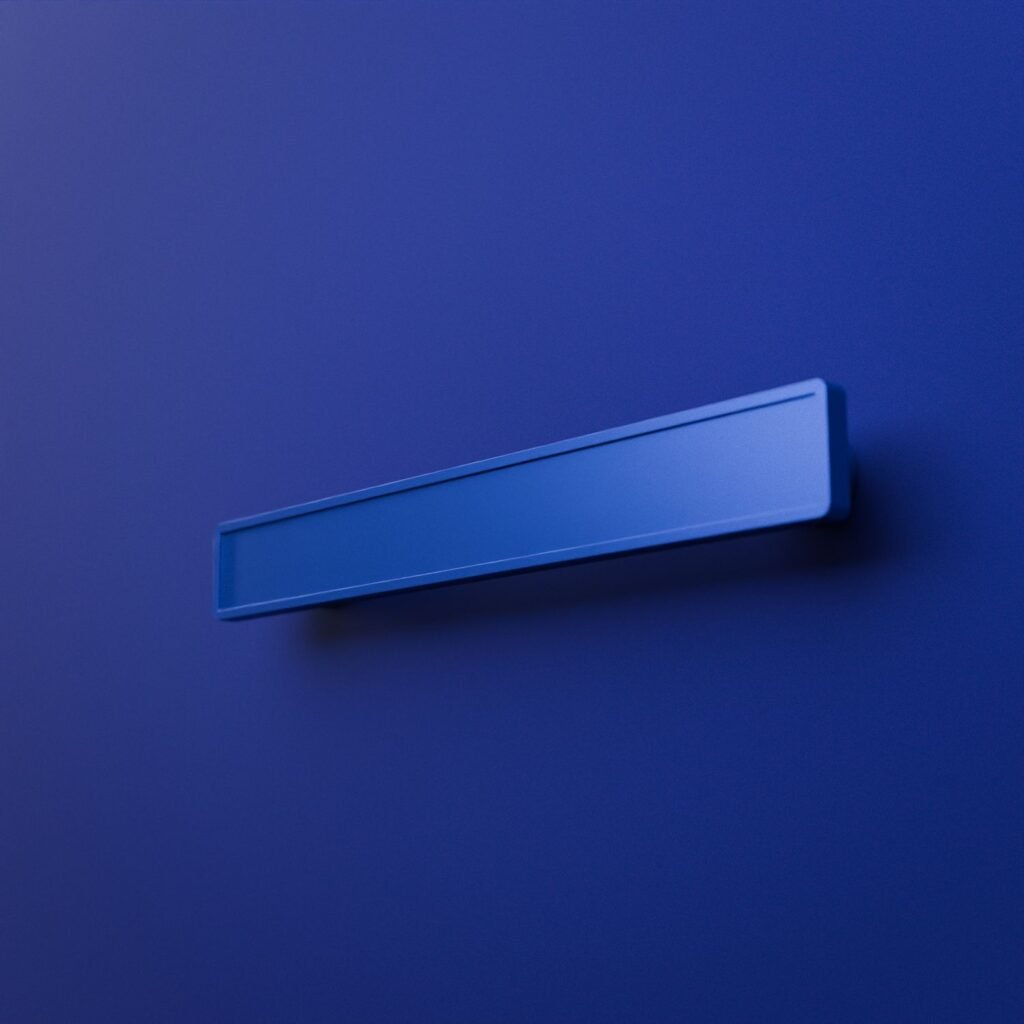
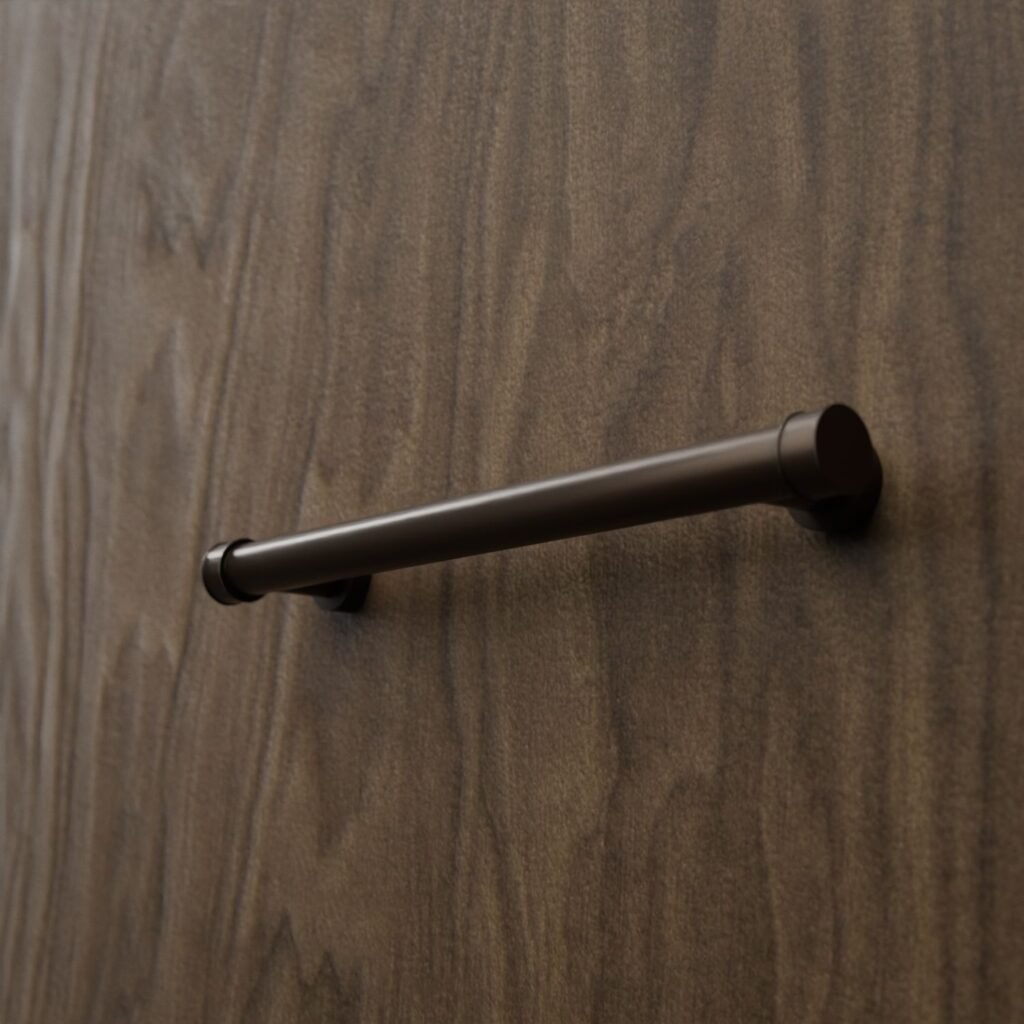
The Palazzo Bar, in Electric Blue, stretches the same architectural idea into a pull, in a bioresin with a pearled finish. A color that works best on its own, on a neutral front, white or natural wood: a single accent rather than an accumulation.
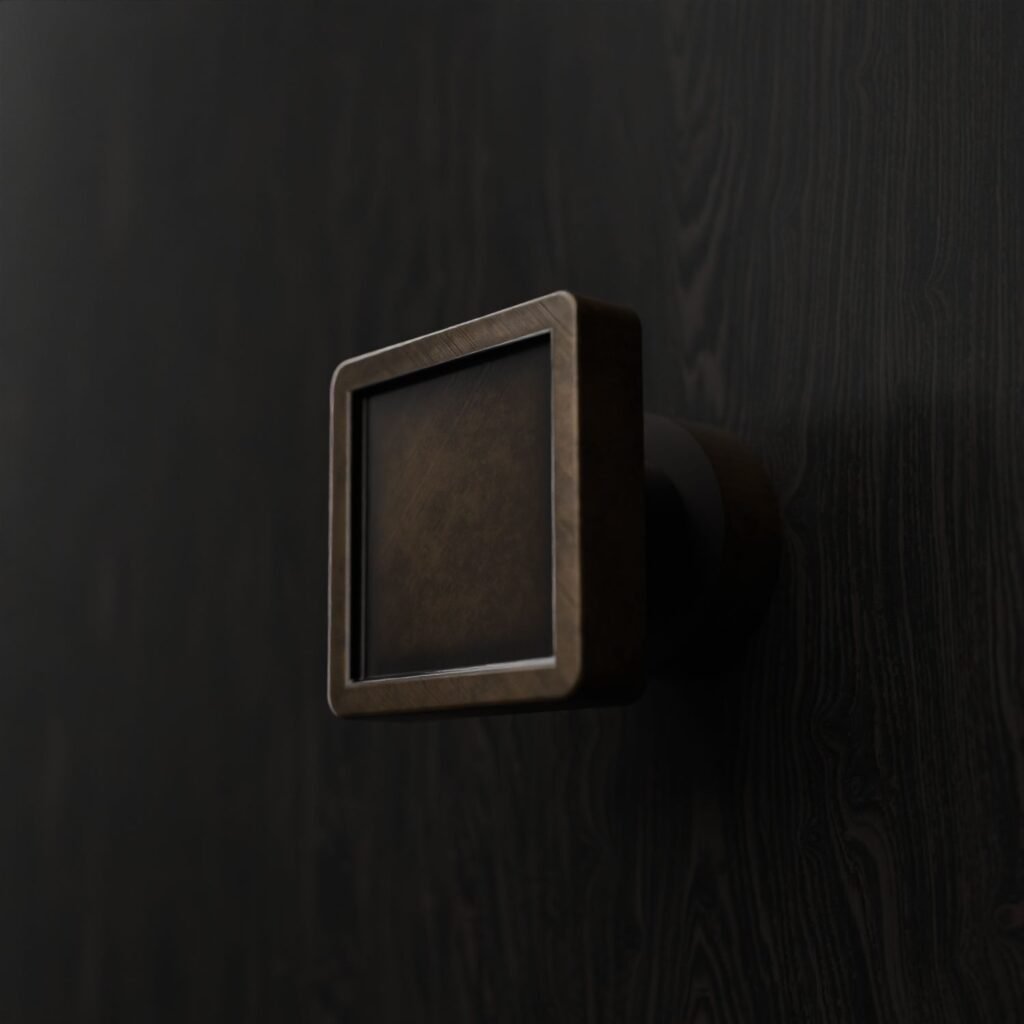
The Palazzo Square, in Antique Bronze, carries a hand-applied patina that deepens the relief and polishes the edges, the way use would. It feels at home on Kallax units in dark oak or walnut finish, the warm woods that give it the contrast it needs to stand out. The Florentine Column, in Matte Bronze, offers the most stripped-back cylindrical shaft in the range: a material that absorbs light rather than reflecting it, and pairs with nearly any front, from light wood to off-white.
- Center-to-center: 96mm for a small insert, 128 to 160mm for a standard drawer, up to 192mm on a large door
- Aluminum and bronze: hold up indoors in any room, easy to maintain
- Bioresin: reserved for dry rooms (living room, bedroom, closet), avoid in kitchens or bathrooms
- Knob (Palazzo Square, XS to L): a single drill hole, the most discreet solution for a small drawer
Frequently asked questions
What center-to-center should you choose for a Kallax handle with inserts?
Most often 96mm or 128mm on standard door inserts. Always measure the actual distance between your future drill holes rather than relying on the visible length of a handle in a photo.
Does a bioresin handle work well on a living room or bedroom Kallax?
Yes, that’s exactly the use this light, colorful material is designed for. It’s best avoided in the kitchen or bathroom, though, where humidity and heavy use call for a metal finish.
Knob or bar handle, which should you choose for a Kallax insert?
The knob, with a single drill hole, stays the most discreet choice on a small drawer. The bar handle, with two fixing points, offers a firmer grip on a door or a wide drawer.
How do you care for an aluminum or bronze handle day to day?
Both materials hold up well to everyday use and indoor humidity: a simple wipe is enough. Patinated bronze needs a little more attention to preserve the contrast of its hand-applied patina.
At Holdon Paris, every handle is made to order in Paris and ships in 5 to 10 days. Enough to give your Kallax the detail IKEA never planned for it.