Royal Sun, Shell, Florentine Medallion: What the Fall Lineup Adds to the Holdon Collection
A collection of ornament is never truly finished. This is how the great European houses built their decorative repertoire over the centuries: in small touches, a pattern added here, a shape revisited there, rather than in one definitive gesture. Each addition has to find its place among what already exists, or risk remaining an isolated curiosity.
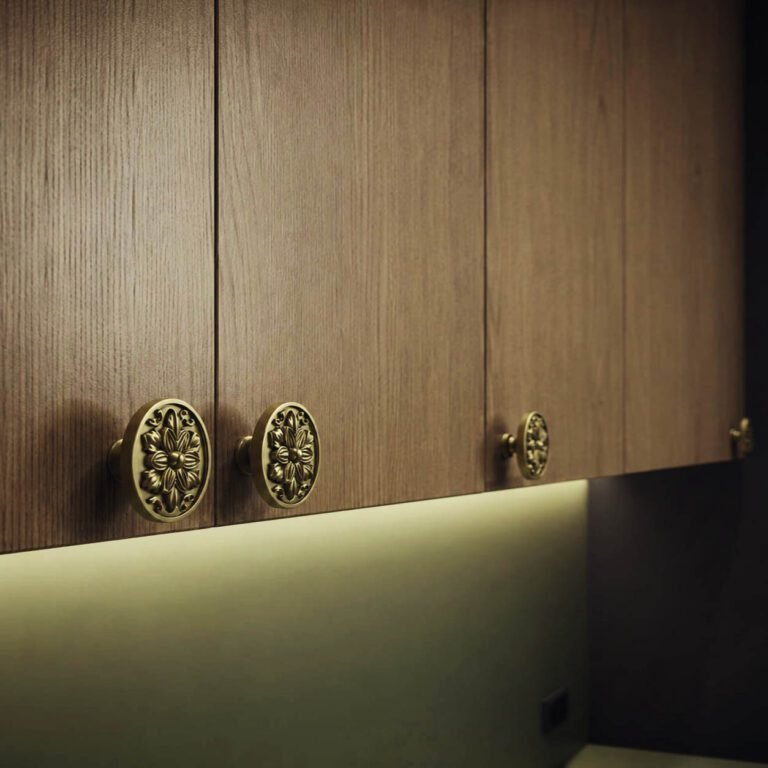
The Classica Europa collection grows the same way. This fall, it welcomes two patterns and one silhouette: Royal Sun, the emblem of the Sun King; Shell, a motif that has run through five centuries of ornament; and the Florentine Medallion, an oval knob shaped like a cameo. Along the way, several combinations still missing from the existing range have also been filled in.

Royal Sun, the sun of the Grand Siècle
When Louis XIV chose the sun as his emblem, he was not choosing a heavenly body but a face: that of Apollo, serene at the center of a radiant glory whose rays alternate, some straight as blades, others rippling like flames. The motif settled onto the gilded gates of Versailles, the pediments, the paneling, even the carved sterns of the king’s ships. Three centuries later, it remains the most immediate signature of grand French decor: an order that radiates from its own center.
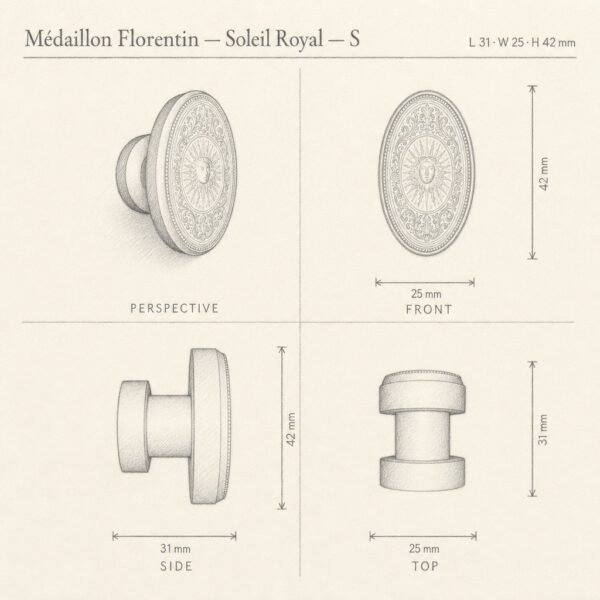
On a handle, this solar logic holds: the face sits at the exact center of the composition, the rays run toward the frame, and their alternating relief catches the light at every hour. The pattern already appears on the Classica Round and the Palazzo Square, and now joins the Florentine Medallion, where its oval closes the composition like a cameo’s frame.


Shell, the ornament the sea drew
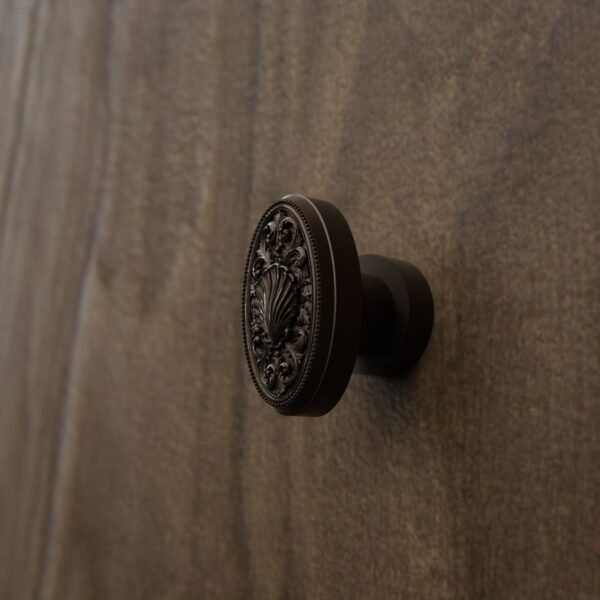
The scallop shell entered ornament before the ornamentalists did: a fan of radiating ribs, a hinge, a perfect symmetry, it was all already there. Pilgrims to Compostela wore it as an emblem, the Renaissance crowned its niches with it, and the eighteenth century made it the matrix of rocaille, to the point of naming an entire style after it. On a cabinet front, it works like an architectural ornament: the hinge anchors the composition, the ribs unfurl, and their deep hollow lets light run from one edge to the other.
Like Royal Sun, Shell can be applied to the Classica Round, the Palazzo Square, and the Florentine Medallion. A useful detail if you’re aiming for a bathroom or kitchen: metal finishes (copper, bronze, brass, satin aluminum) hold up to moisture and impact, bioresin remains reserved for decorative pieces, in drier rooms.

The Florentine Medallion, a medallion at the scale of the cabinet
The medallion is the shape of what shows itself: a domed field, an outline that borders and presents. Florence set the principle, with the tondo of the Quattrocento, those round reliefs Andrea della Robbia glazed between the arches of the Loggia of the Innocents, the same loggia from which the Florentine Column takes its shafts. Then the centuries stretched the circle into an oval: cameos, portrait miniatures, wood-paneled medallions. The Florentine Medallion inherits this lineage, ringed by a fillet that outlines its frame.
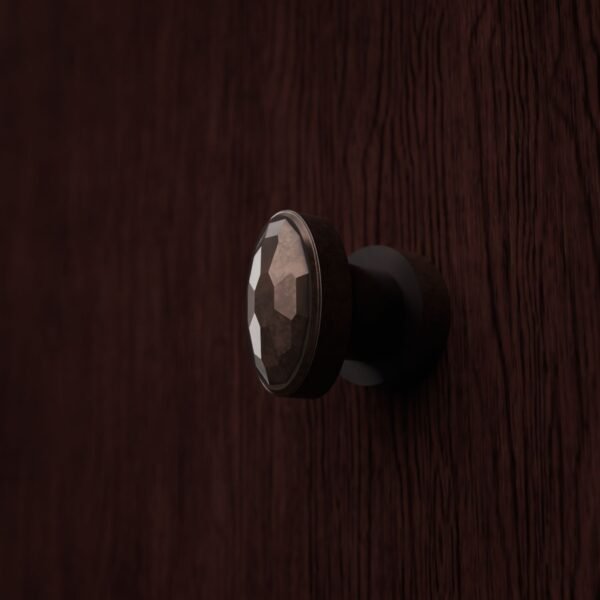
It’s a single-point knob that mounts in one motion on a drawer, a door, or a small cabinet. Its oval offers a freedom the round shape doesn’t have: set upright, it elongates the front, set on its side, it settles it. Bare, in its Essential version, its domed field lets material and light compose on their own. Ornamented, it becomes the exact setting for the pattern it carries.


A range that closes right along with it
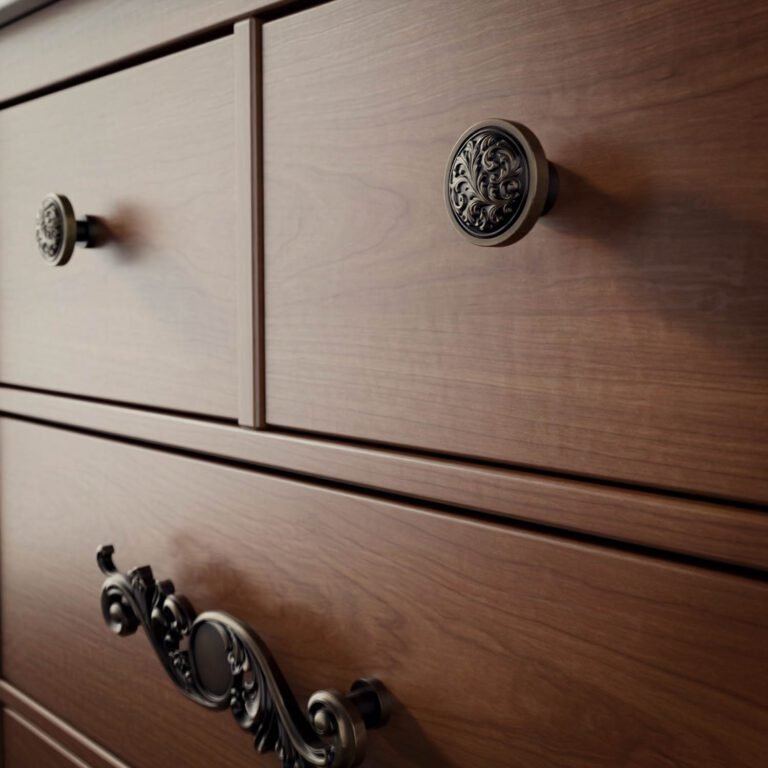
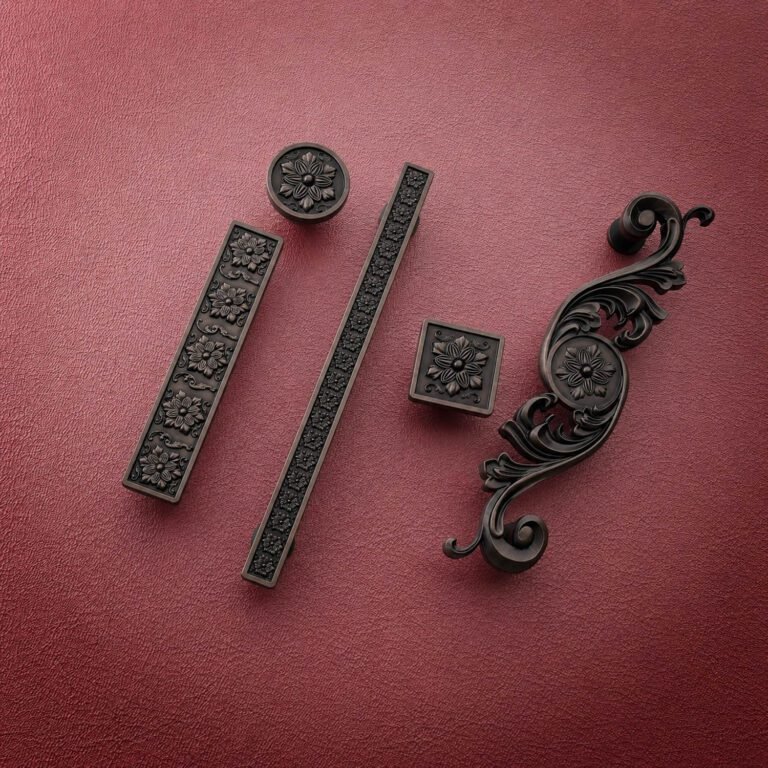
A new knob that would have to wait a year to carry the whole repertoire is never satisfying. The Florentine Medallion arrived, then, with most of the vocabulary already in place: Rosette, Sleeping Lion, Roaring Lion, and Scrollwork carry it, just like the two newcomers. See The Lion, Two Moods for the difference between the two leonine figures.
A few older gaps were also filled along the way, elsewhere in the collection: the Palazzo Bar now carries Sleeping Lion, and the Florentine Column welcomes Rosette, Roaring Lion, and Sleeping Lion. A silhouette that carries several patterns rarely tells the same story twice: that’s the subject of A Silhouette, Several Stories.
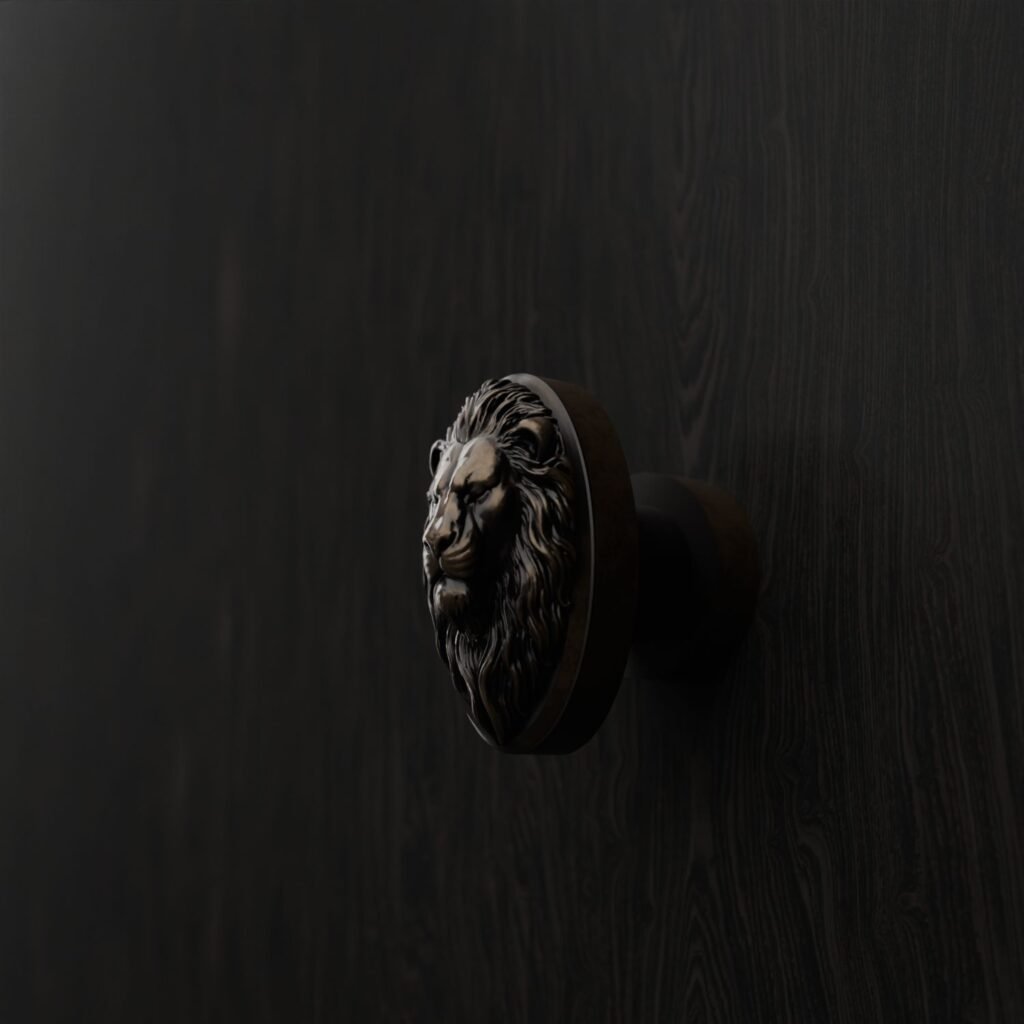


As for materials, these new pieces draw on the full Holdon palette: copper and bronze for warm patina, brass for a cooler shine, satin aluminum for a more contemporary look, and a wide range of bioresin for decorative pieces. Craving a deep blue without the price of metal? Bioresin does the job in a bedroom or closet, as long as it stays away from the kitchen and bathroom.


Frequently asked questions
Does the Florentine Medallion have one or two mounting points?
Just one: it’s a single-point knob, designed for drawers, doors, and small furniture, not a pull.
Which handles feature Golden Sun and Coquillage?
The Classica Round and the Palazzo Square, and now the Florentine Medallion.
Is Coquillage suitable for a bathroom?
Yes, in metal finishes (copper, bronze, brass, satin aluminum). Bioresin, more delicate, remains reserved for dry rooms.
What sizes are available for the Florentine Medallion?
From XS to L, about 2.4 to 3.75 cm wide depending on the size and pattern chosen.
Is the Florentine Medallion available in every pattern in the collection?
In most of the range from launch (Essential, Rosette, Sleeping Lion, Roaring Lion, Scrollwork, Golden Sun, Coquillage), with the same choice of finishes as the other Classica Europa silhouettes.
At Holdon Paris, a collection never grows just to grow: each pattern finds the silhouette where it belongs, and each silhouette gradually inherits the full repertoire.