Which Cabinet Handles for an Art Deco Interior
Art Deco was born in Paris in 1925, at the International Exhibition of Modern Decorative and Industrial Arts, and it introduced a new aesthetic: symmetrical lines, noble materials, a confident taste for the contrast between plain surface and sculptural ornament. In an interior inspired by it today, dark lacquer, fine wood, or a sober front play the role of backdrop. It’s often the hardware that carries the signature: a golden gleam, a worked relief, a handle conceived as jewelry rather than as a simple grip point.
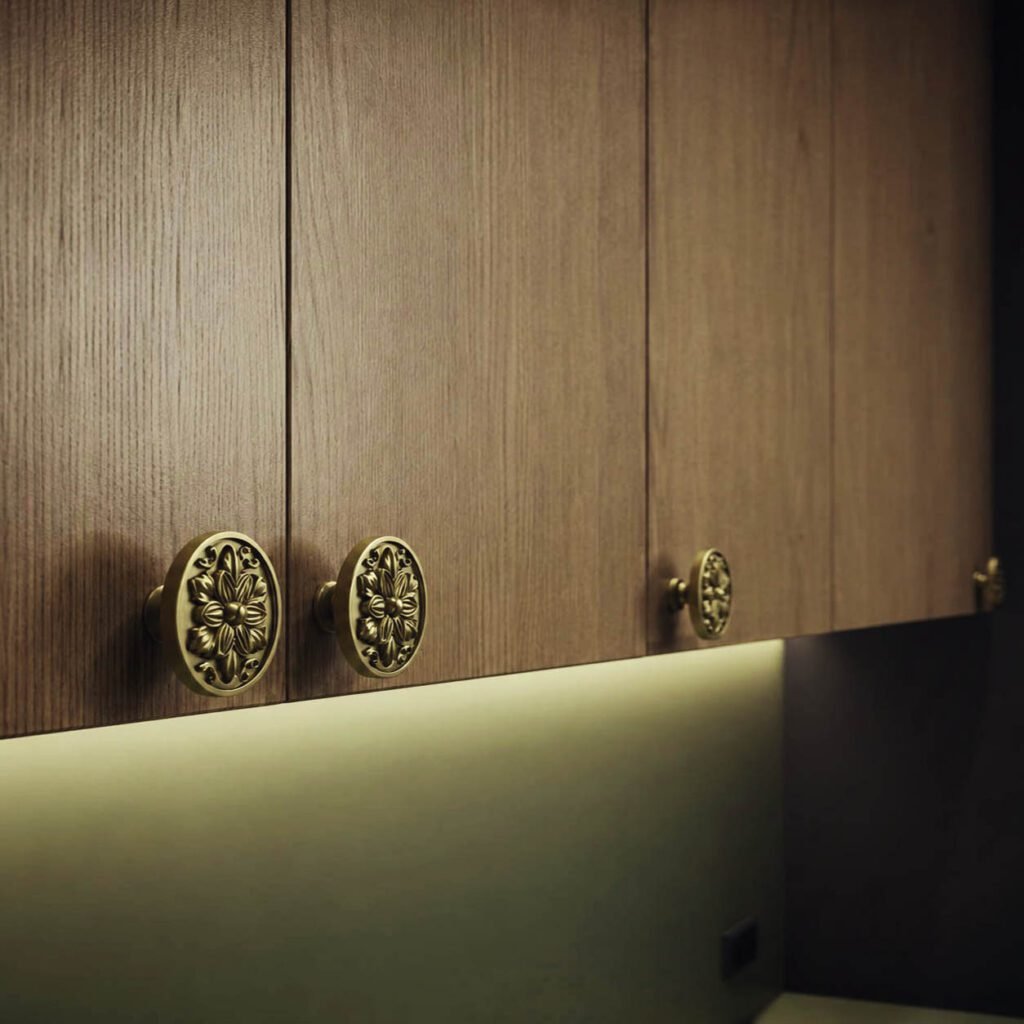
Brass and Bronze, the Metals That Carry the Style
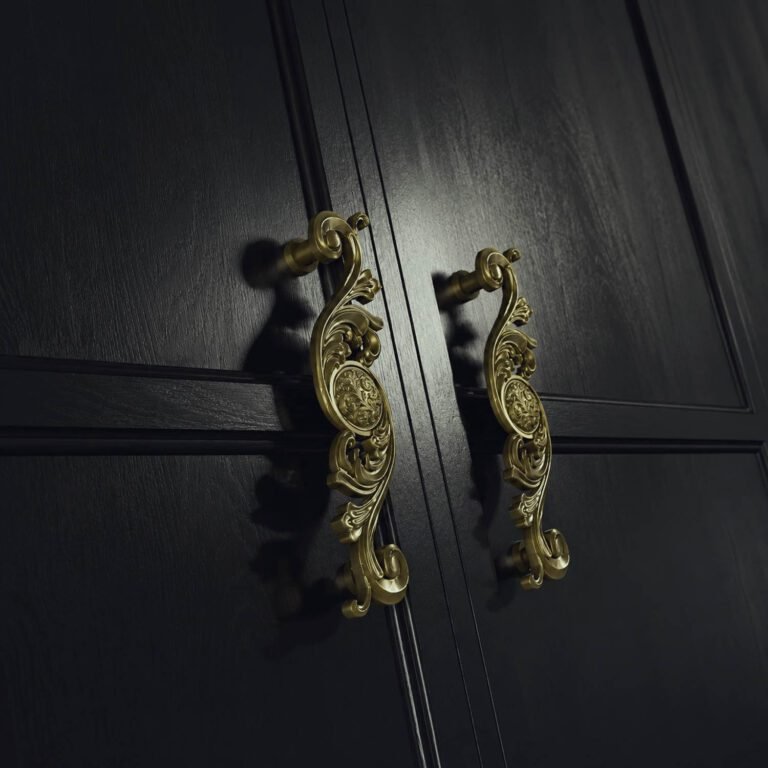
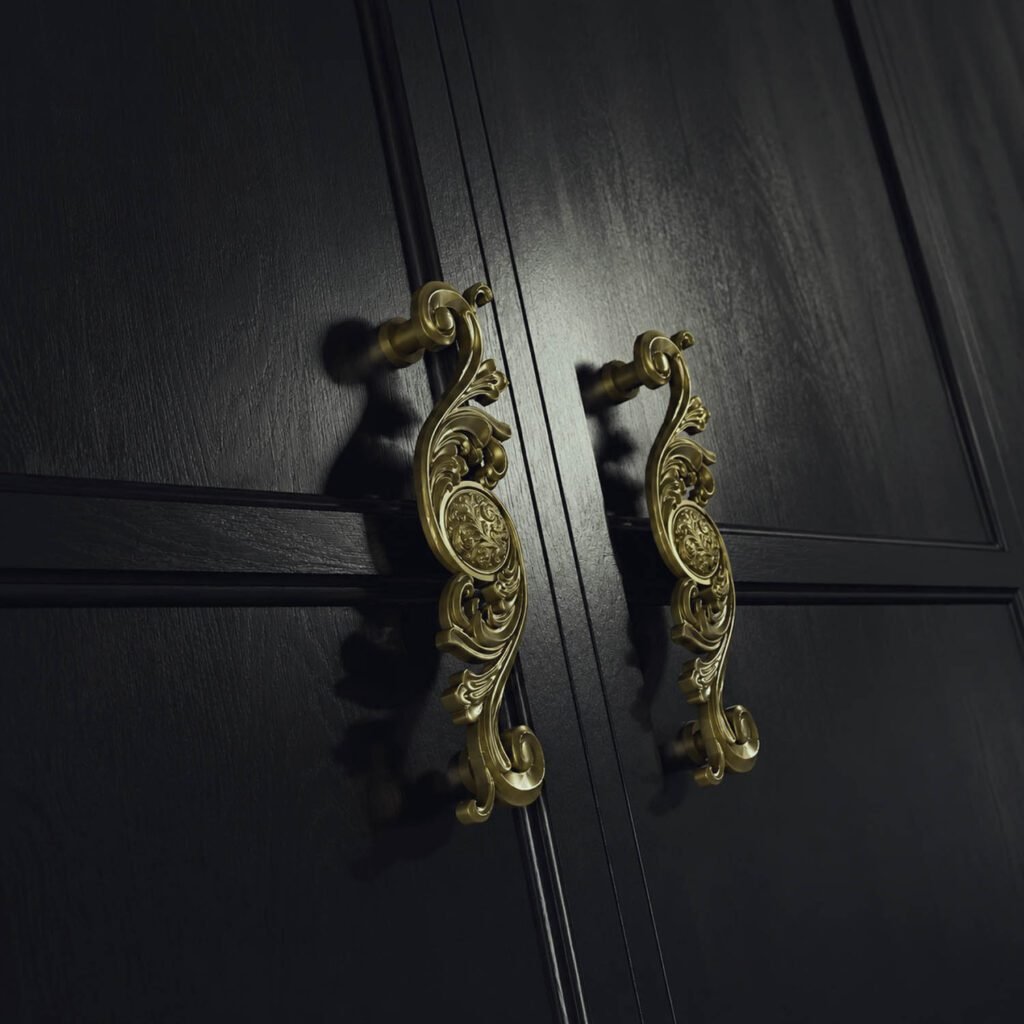
Satin Brass is the most luminous version of the golden metal: a surface polished to a soft sheen that captures the warmth of brass without ever turning harsh. Set against a black lacquered front, the contrast is crisp and graphic, almost a signature of the style. On light wood or off-white, the pairing becomes softer, more continuous. Either way, it’s this metal that turns a simple door into a detail worth noticing.
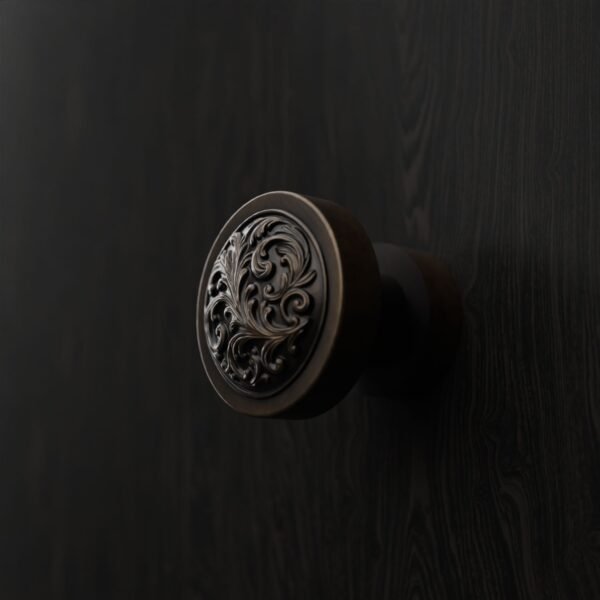
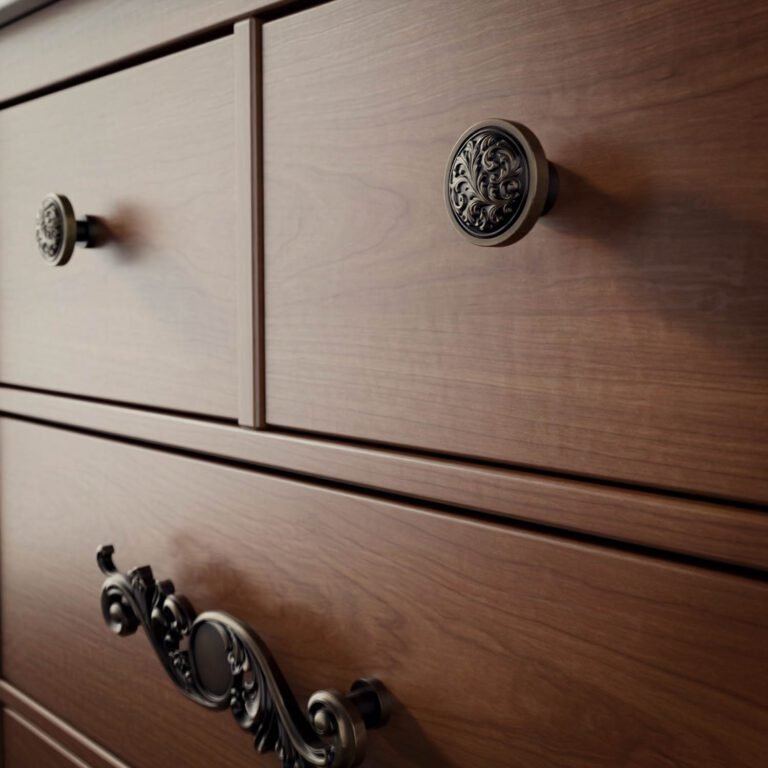
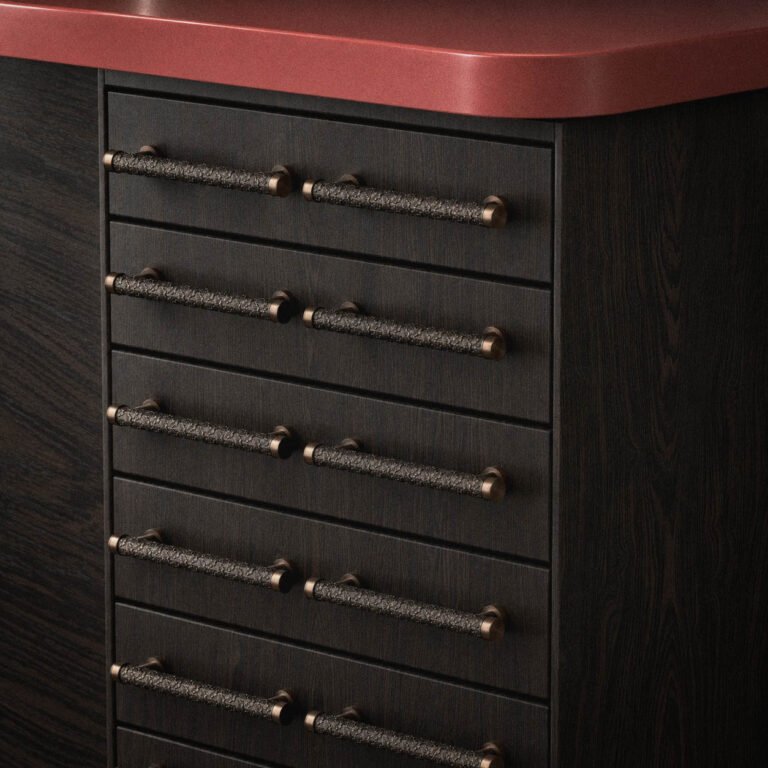
By contrast, Antique Bronze tells a different story. Its patina is hand-applied in the atelier: it deepens the relief, darkens the recesses, and naturally polishes the edges, exactly as time would on a piece that’s already old. The result carries a surface depth that no industrial finish can reproduce, and it pairs especially well with dark woods, deep lacquers, or tobacco-toned fronts.
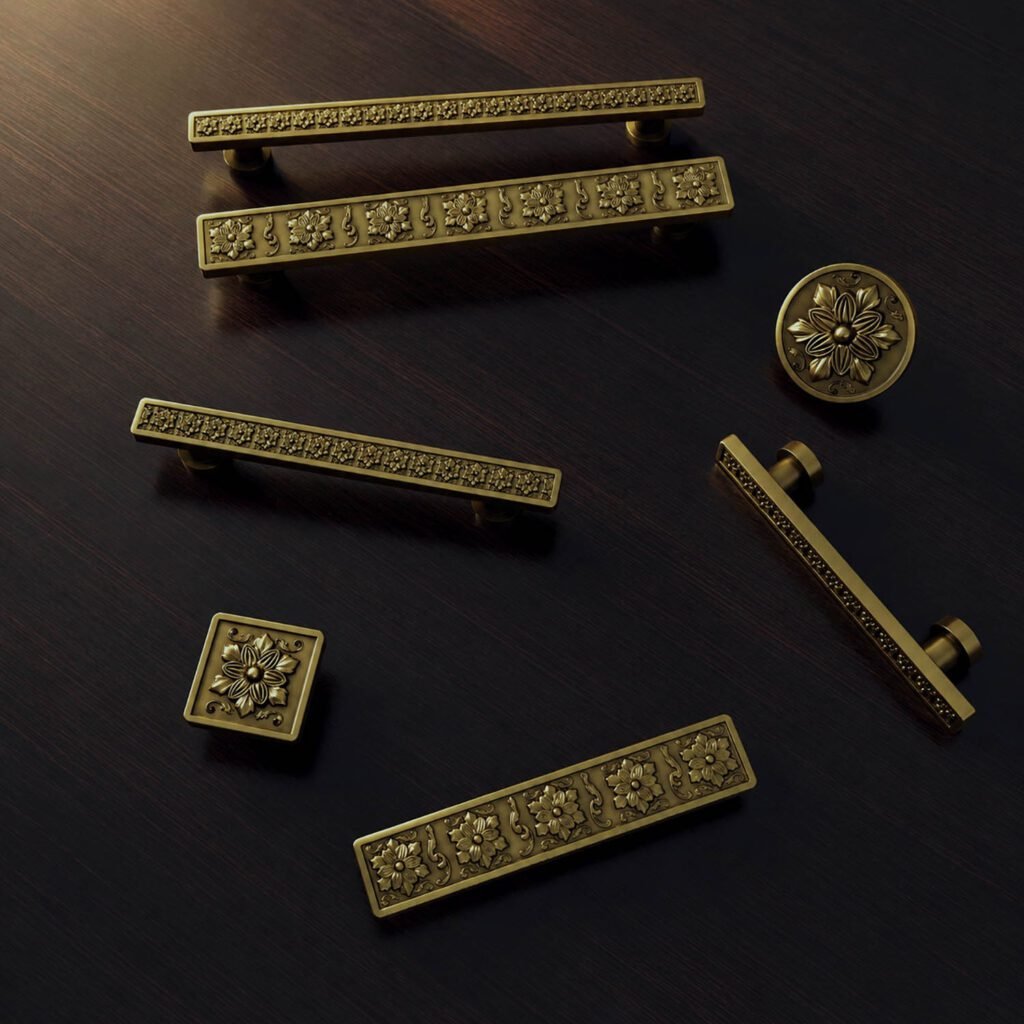
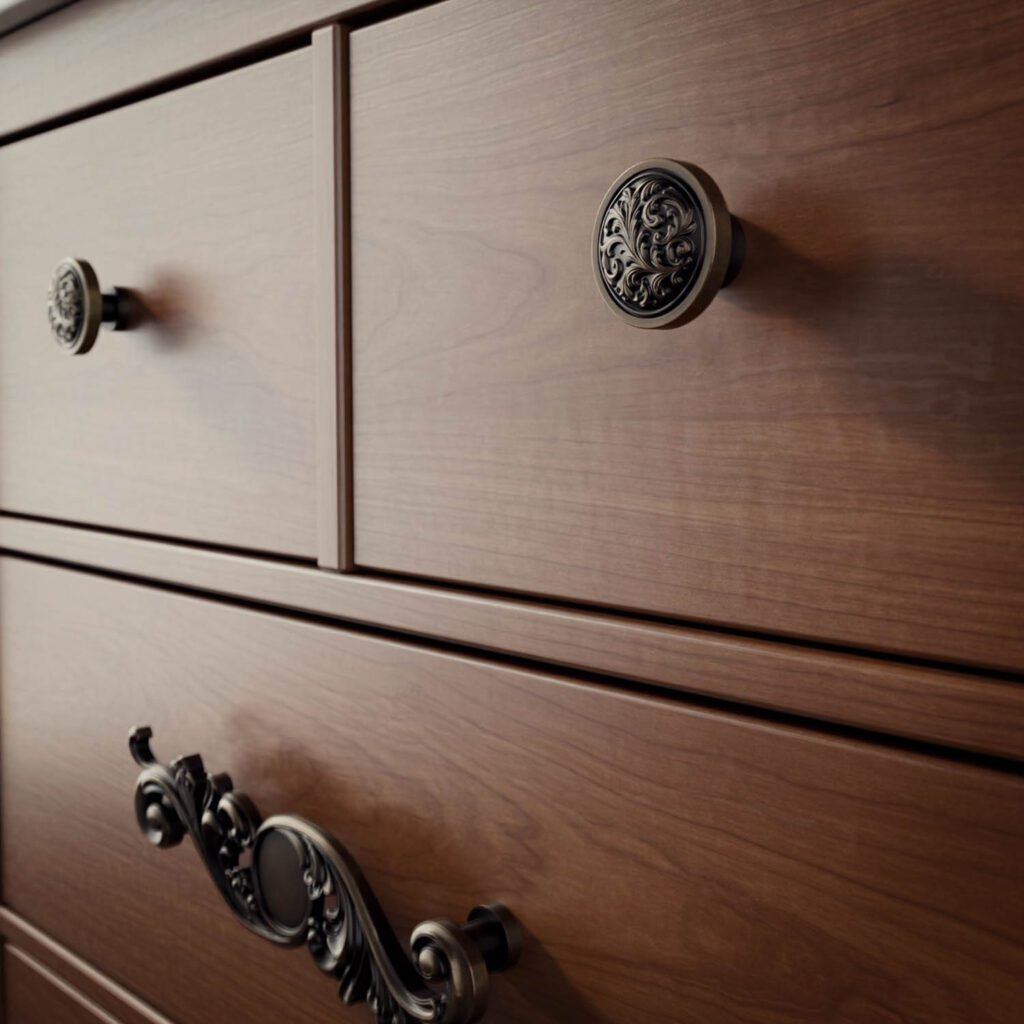
In between, Antique Brass offers a compromise: the same golden warmth as satin brass, but hand-patinated, with darker zones that deepen the relief. An option for those who want the Art Deco spirit without the too-perfect mirror shine, closer to the old hardware of a grand townhouse than to a brand-new piece.
Scrollwork and Rosette: Sculpted Ornament at the Heart of the Style
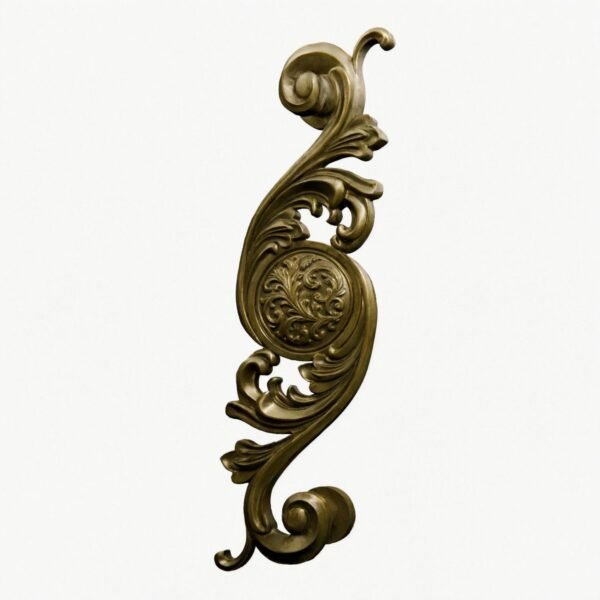
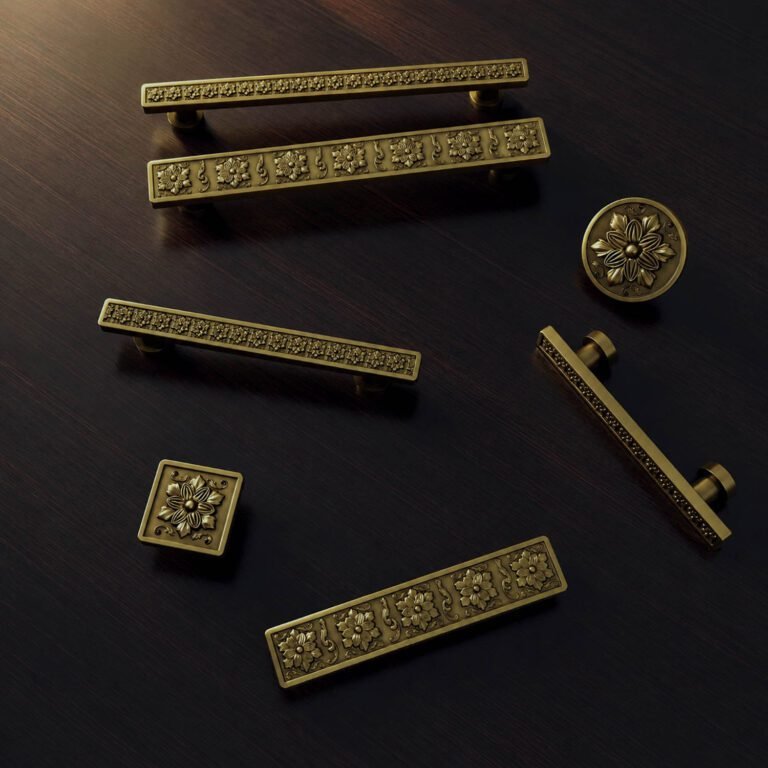
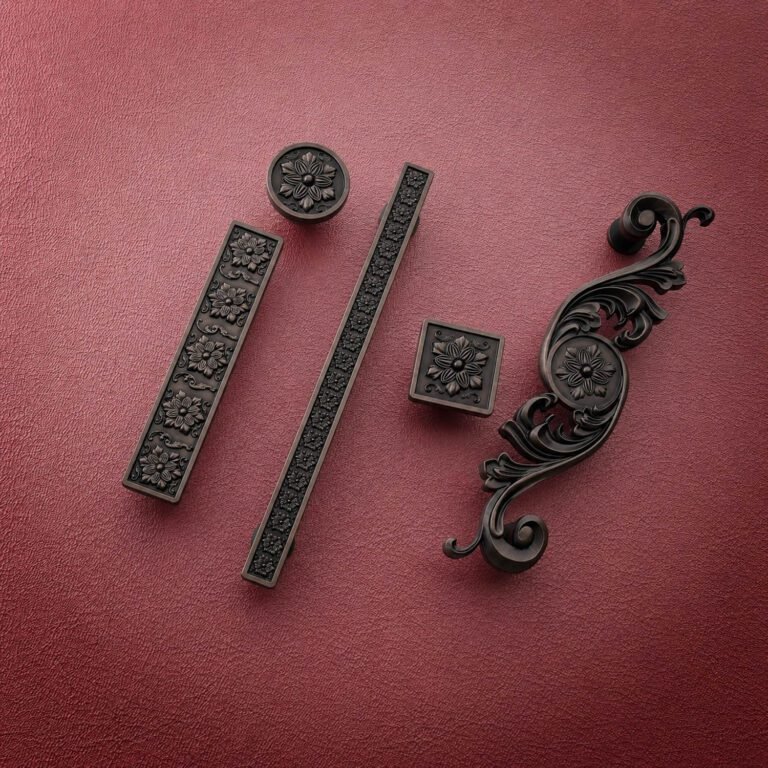
Art Deco didn’t invent ornament: it took the classical vocabulary and redrew it in cleaner, more symmetrical, more graphic surfaces. The Scrollwork pattern is a good example. It’s the oldest motif in Western ornament, running from Roman friezes to the paneling at Versailles to Art Nouveau ironwork: acanthus leaves in continuous volutes, layering and unfurling without ever contradicting each other. On a handle, it turns a functional object into a surface worth looking at closely, with details that reveal themselves differently depending on the light.
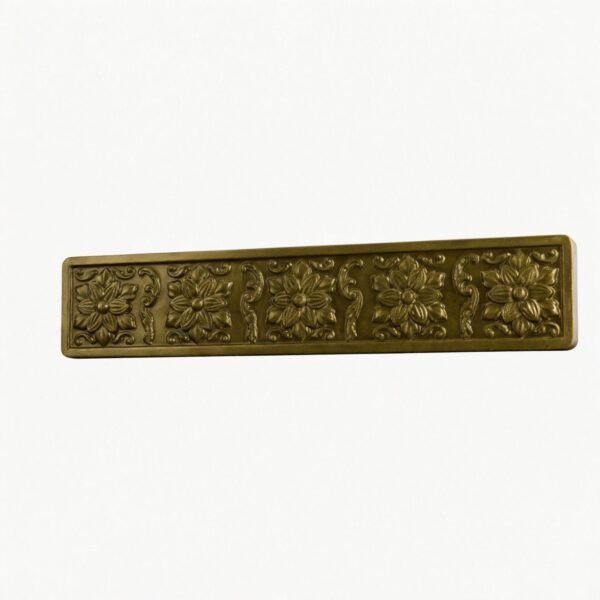
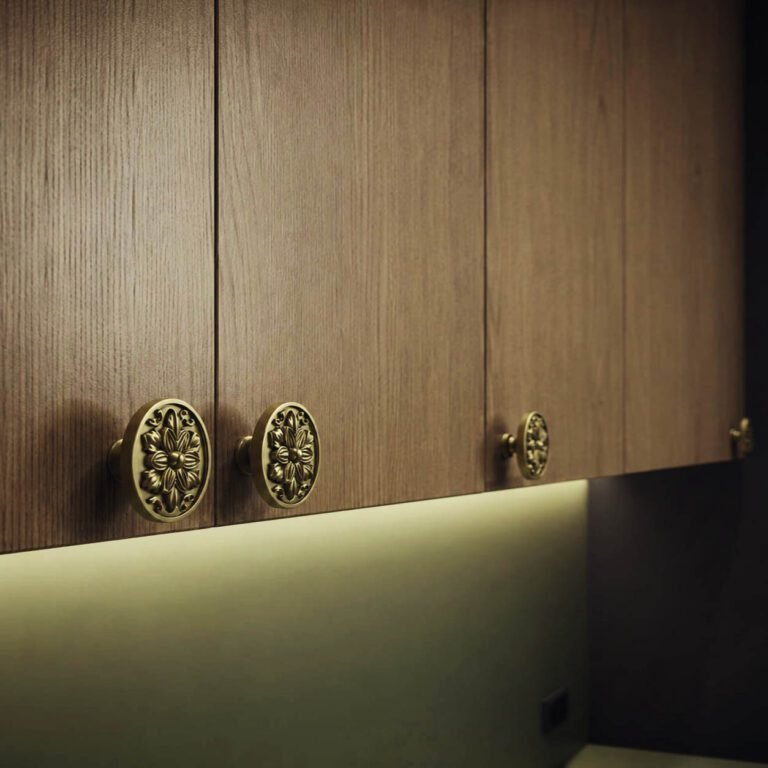
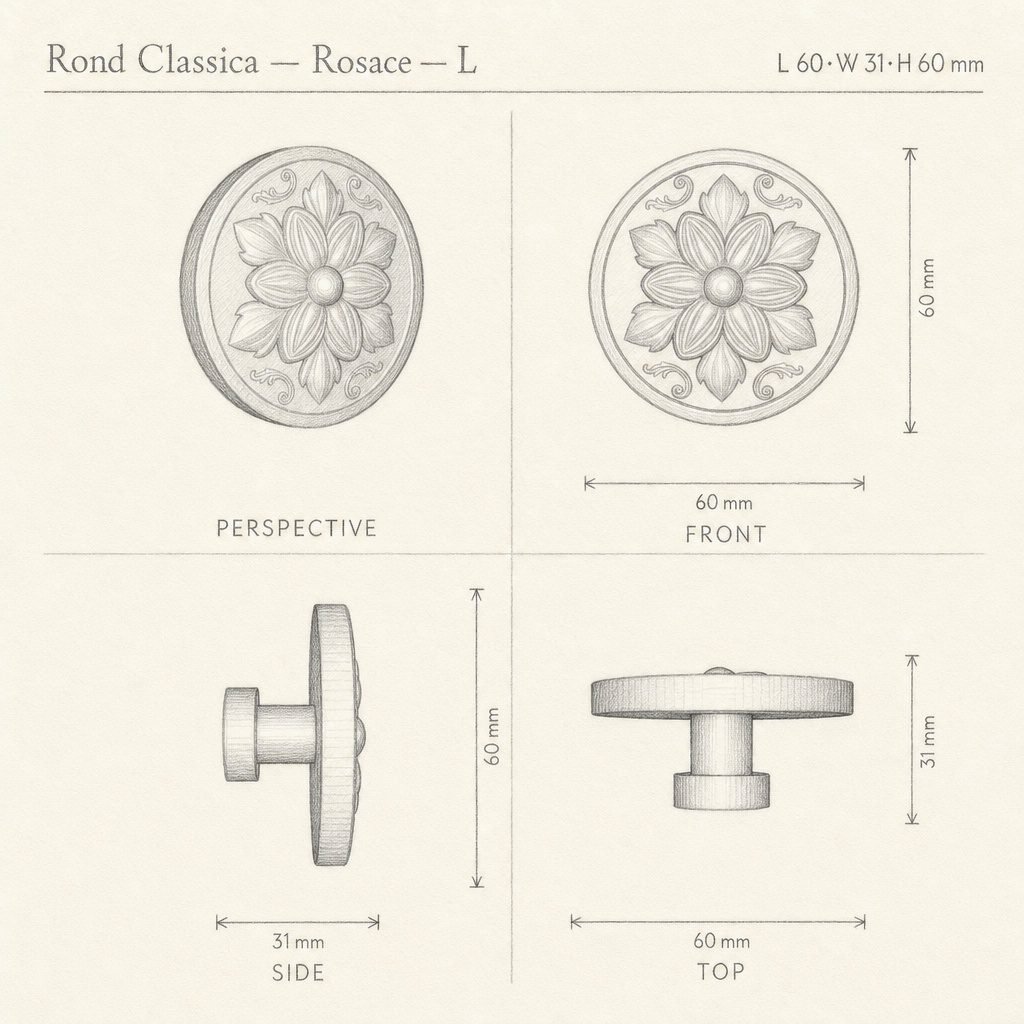
The Rosette plays a different tune: a stylized flower arranged in perfect symmetry around a central knob, once found on the ceilings of ancient temples as well as in the plaster rosettes of grand townhouses, from which chandeliers used to hang. Where the scrollwork runs and unfurls, the rosette closes in on itself: a radiant, calm order with no top or bottom, sitting right in any orientation without ever looking wrong. Two different logics of ornament, the same sculptural energy that Art Deco has always known how to stage.
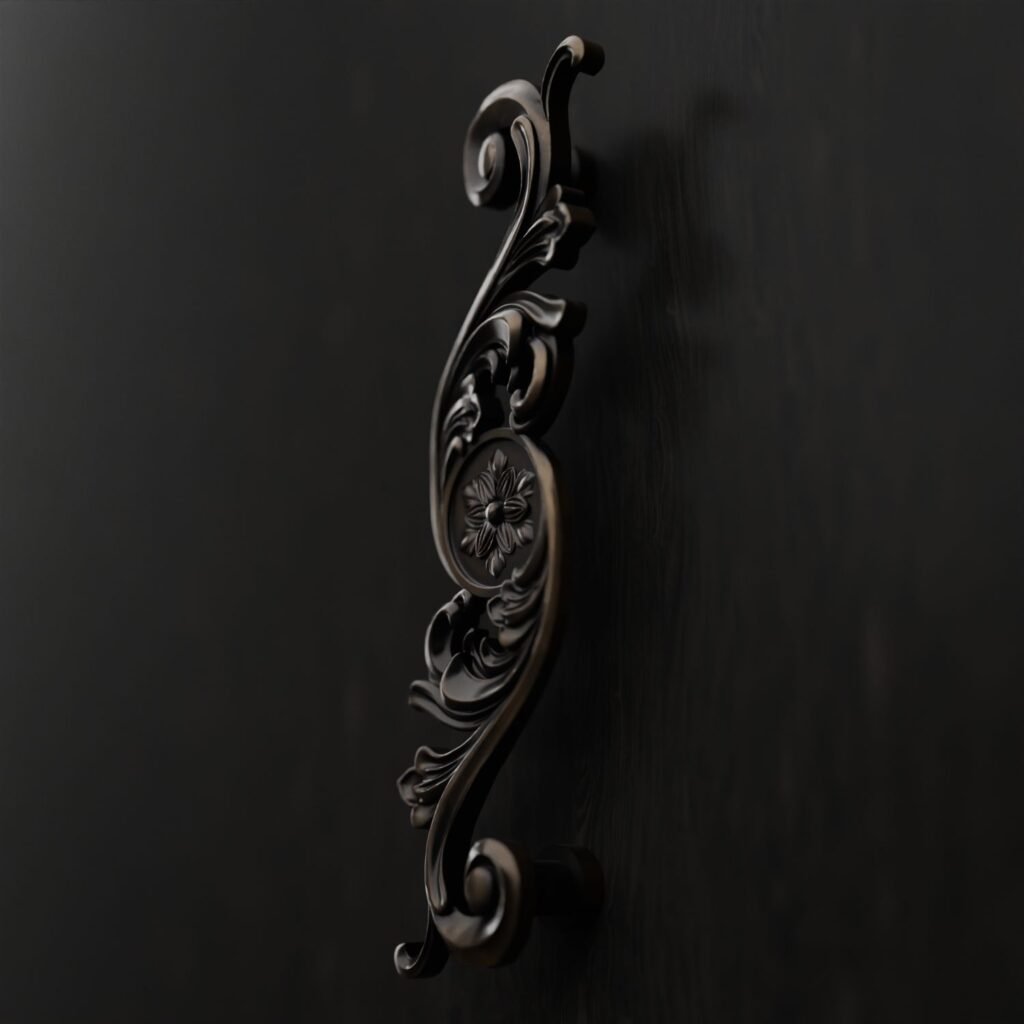
Which silhouettes to pair these patterns with
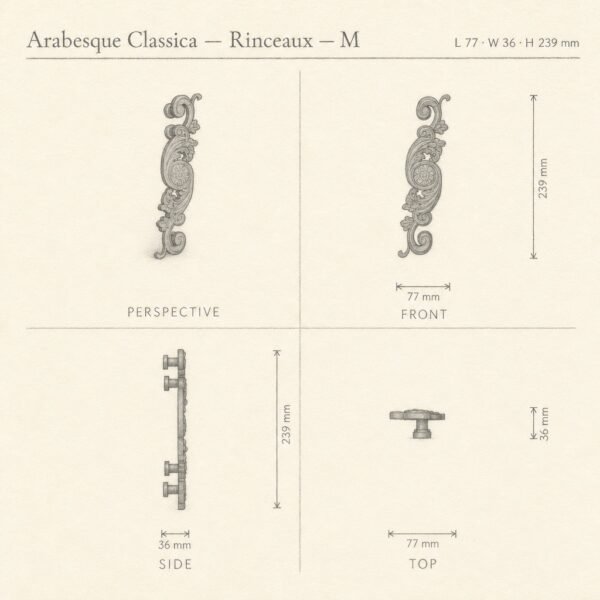
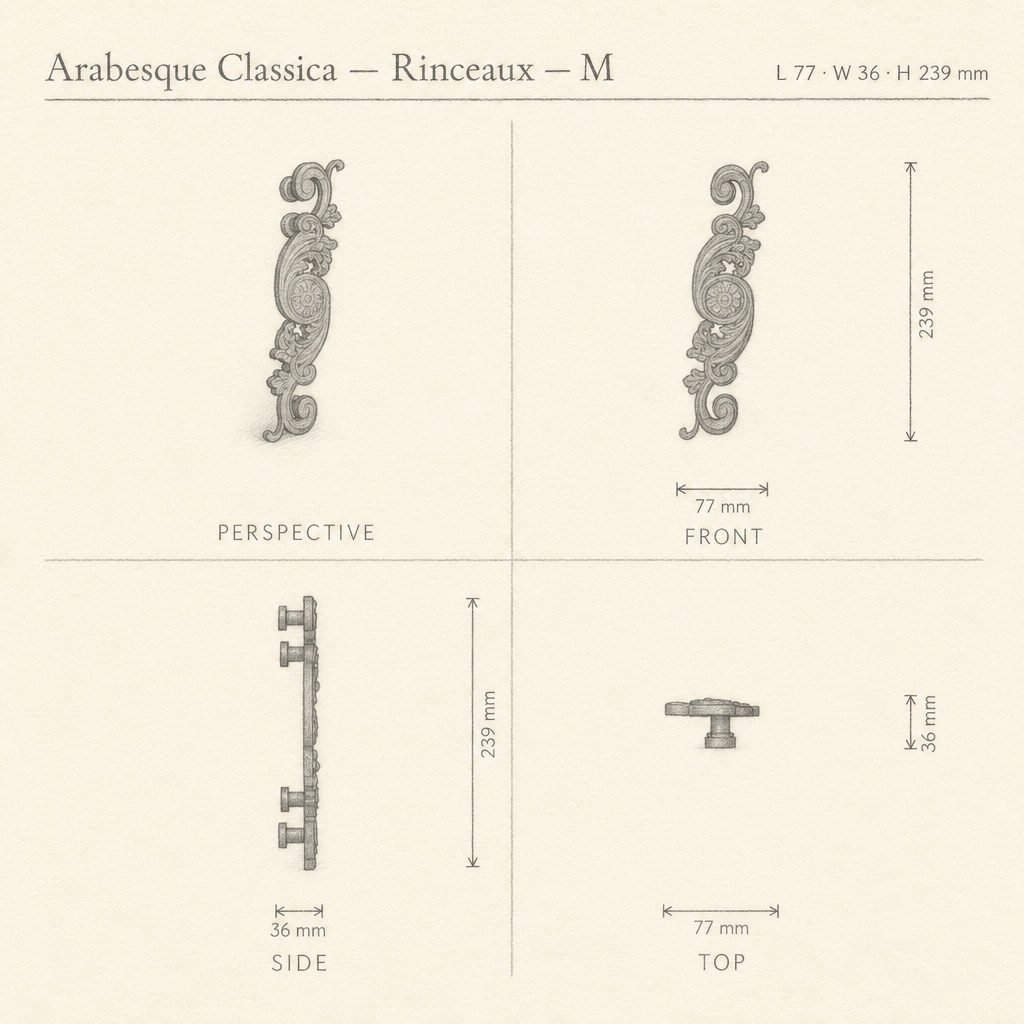
The Classica Arabesque was designed as a setting: a medallion cartouche framed by two symmetrical acanthus volutes, echoing the composition of townhouse pediments and antechamber paneling. The center stays open to hold a pattern, the Rosette for a small flourish, the Scrollwork for a botanical motif that folds back on itself, exactly the principle behind the success of ornamented cartouches from the Italian Quattrocento to the French ornamentalists.
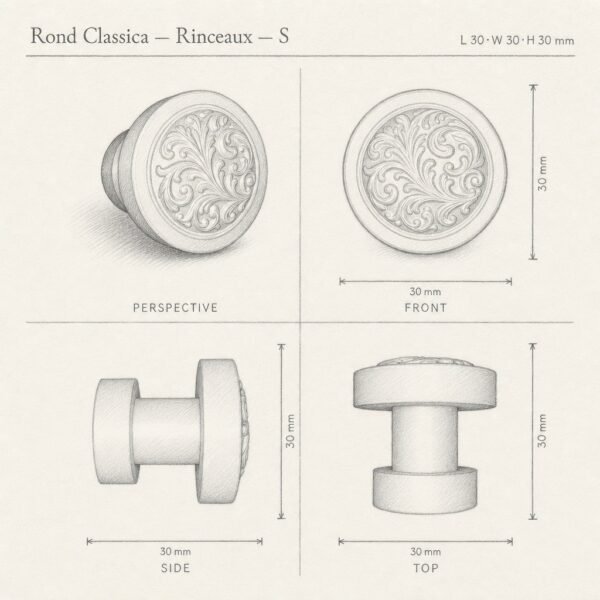
The Classica Round plays a quieter card: it’s the oldest and most universal shape in cabinet hardware, found on Louis XVI chests, Art Deco sideboards, and contemporary kitchens alike. Its curved profile creates a soft play of shadow that flatters any finish, without ever overwhelming the front.
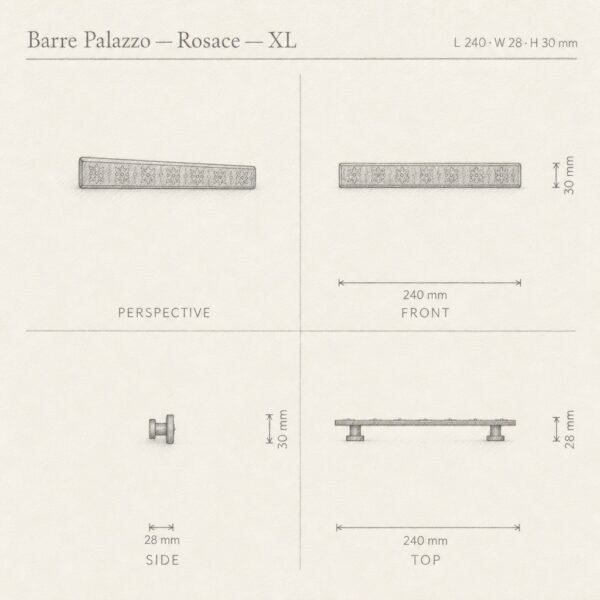
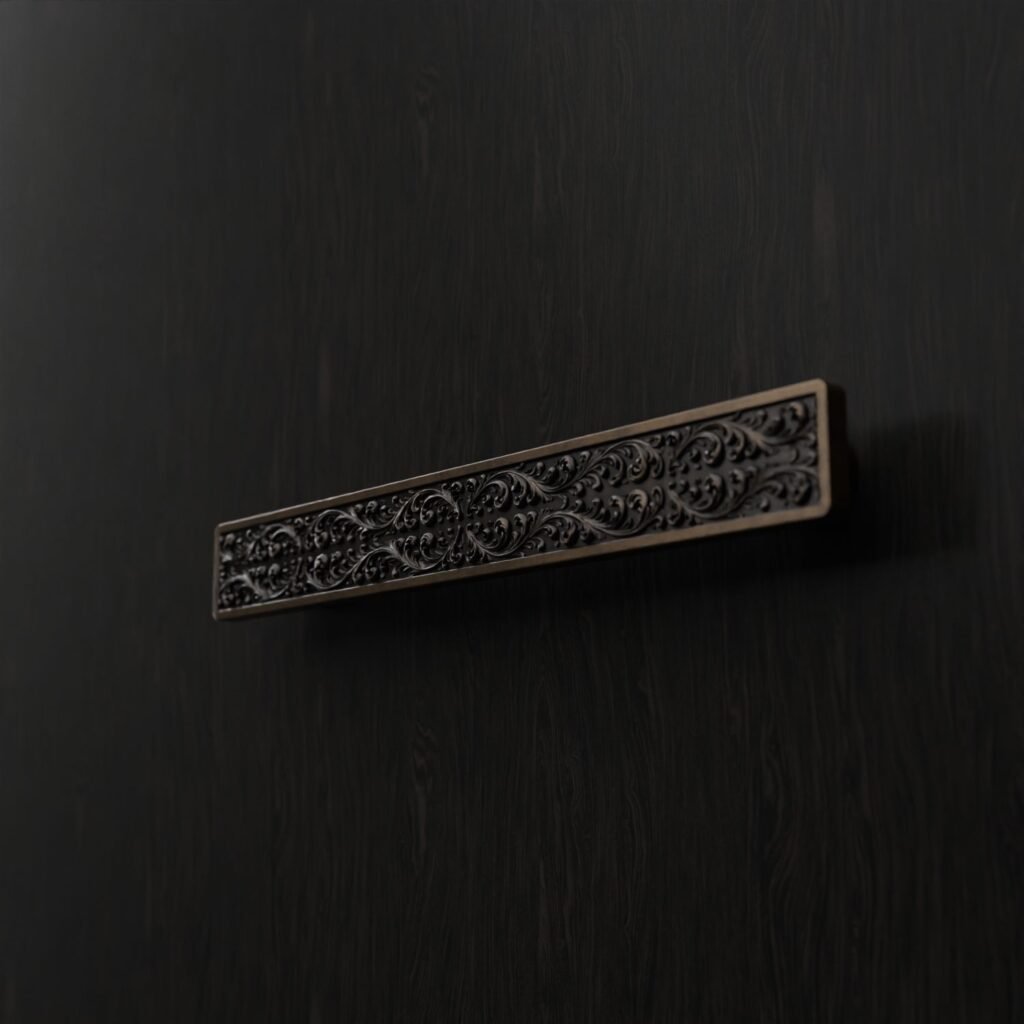
For a more architectural read, the Palazzo Bar draws on the vocabulary of Italian palazzo facades: a recessed frame that runs the full length of the bar and traces a line of shadow, like a stone band running across a facade. A horizontal, crisp presence that structures a large kitchen door or a wide drawer without ever losing its symmetrical rigor.
A few pointers before you choose
For comparison with other styles, we’ve also written about handles for an industrial-style interior, at the opposite end of the ornamental spectrum, and about choosing handles for a dresser, where silhouette and pattern play just as central a role.
At Holdon Paris, Satin Brass, Antique Brass, and Antique Bronze are available across every ornamental silhouette in the collection, from knob to bar. To browse the full cabinet handle catalog with filters by finish and pattern, everything is available online.
Practical questions
Which finishes work with an Art Deco interior?
Satin Brass and Antique Brass, for their golden sheen, along with Antique Bronze, for its darker, more textured patina. These finishes echo the crisp contrast between fine metal and a plain front that defines the Art Deco spirit.
What’s the difference between Satin Brass and Antique Brass?
Satin Brass is polished evenly, with a soft, continuous sheen. Antique Brass receives a hand-applied patina that deepens the relief and darkens the recesses, for a more aged, more contrasted look.
Do brass and bronze work in a kitchen or bathroom?
Yes. Brass and bronze hold up well against humidity and heat and are recommended for the kitchen, the bathroom, or a heavy door. They aren’t recommended for outdoor use exposed to the elements, though.
What center-to-center spacings are available on the Classica Arabesque and the Palazzo Bar?
The Classica Arabesque is available in 128, 160, and 192 mm center-to-center depending on size, and the Palazzo Bar from 96 to 192 mm. Classica Round knobs mount from a single point, with no center-to-center spacing.
Find your handles