Cabinet Handles for Dressers: the Decor Move That Changes Everything in a Bedroom
There’s a piece of furniture in every bedroom that you no longer really look at. You open its drawers every morning without a thought, you’ve moved it twice since moving in, and it’s blended into the decor to the point of nearly disappearing. The dresser. Sturdy, functional, often beautiful when you bought it, and yet it’s gone silent.
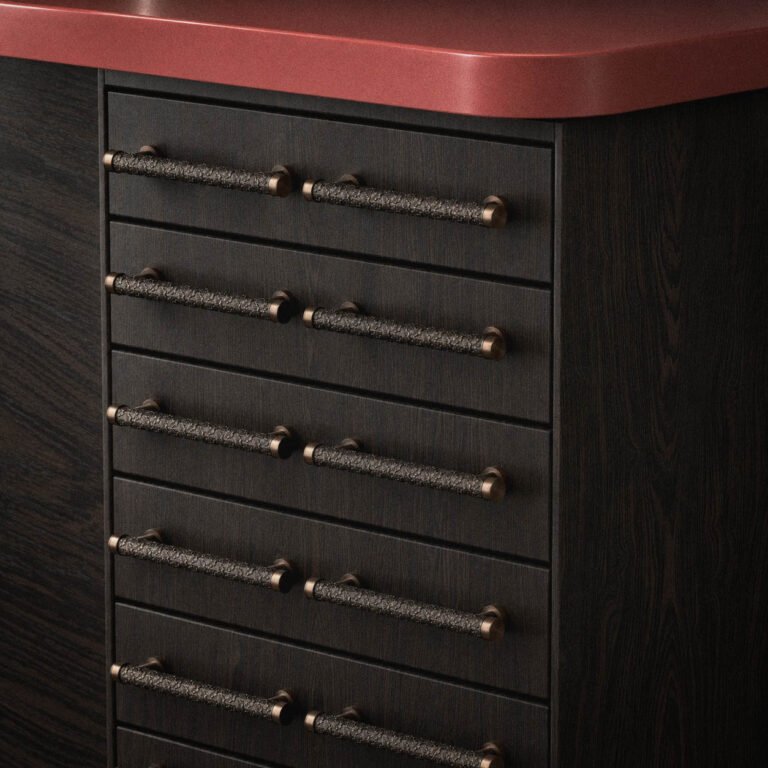
The good news is there’s a simple, quick, and reversible move to give it presence again: change its handles. Those few centimeters of material decide, on their own, whether a piece of furniture has character or stays a catalog object.
The best effect for effort ratio in decor
Repainting a wall, changing a light fixture, moving furniture: decorating often takes time, dust, and sometimes a real budget. Replacing a dresser’s handles requires none of that. No extra drilling if you keep the original center-to-center spacing, no paint, no moving. A screwdriver and ten minutes. It’s one of the rare decorating moves where the result so far outweighs the effort.
Which handle for which dresser?
There’s no single right answer, there’s yours. But a few pairings come up more often than others.
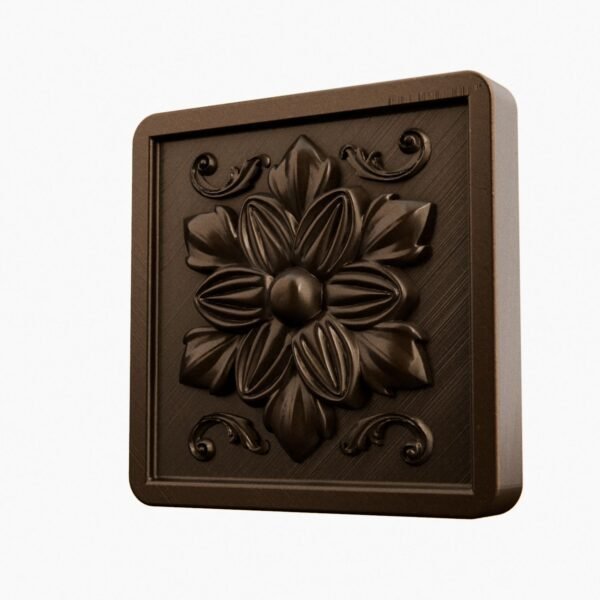
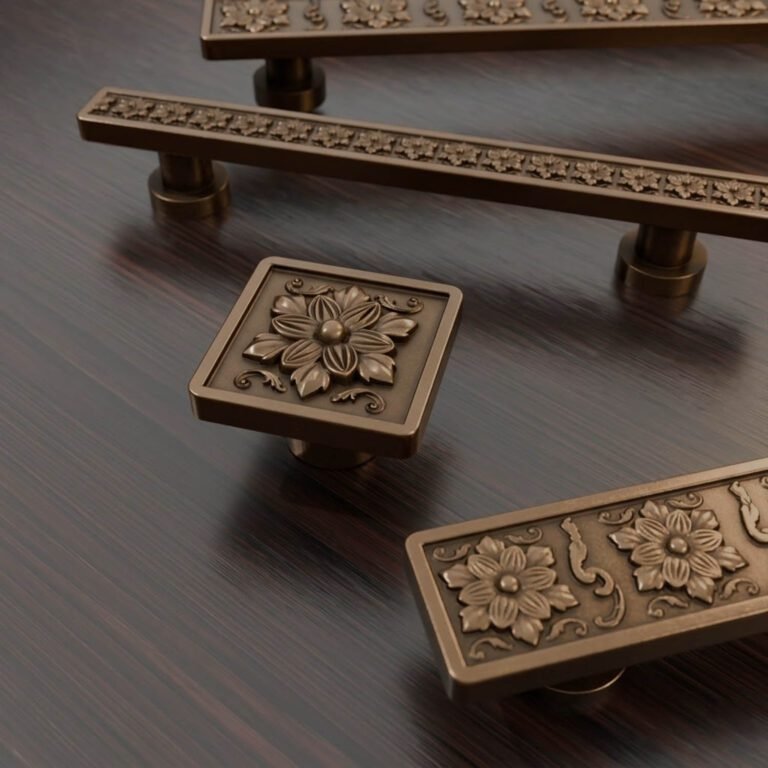
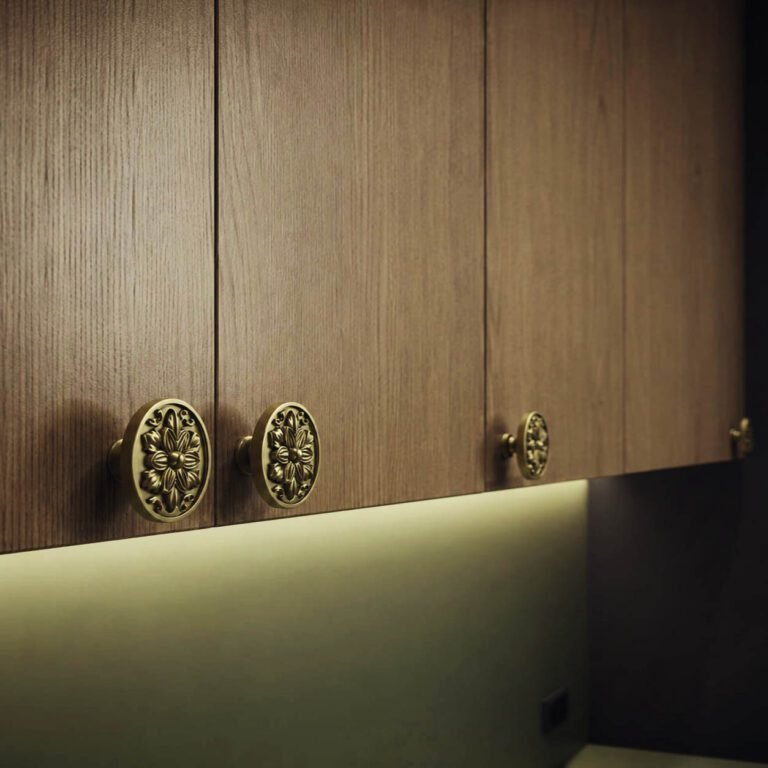
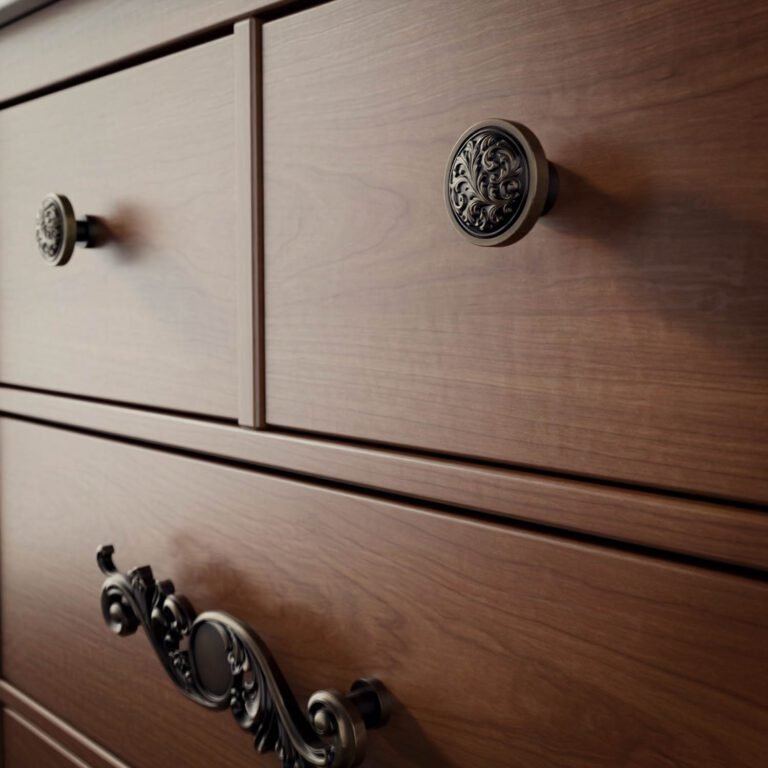
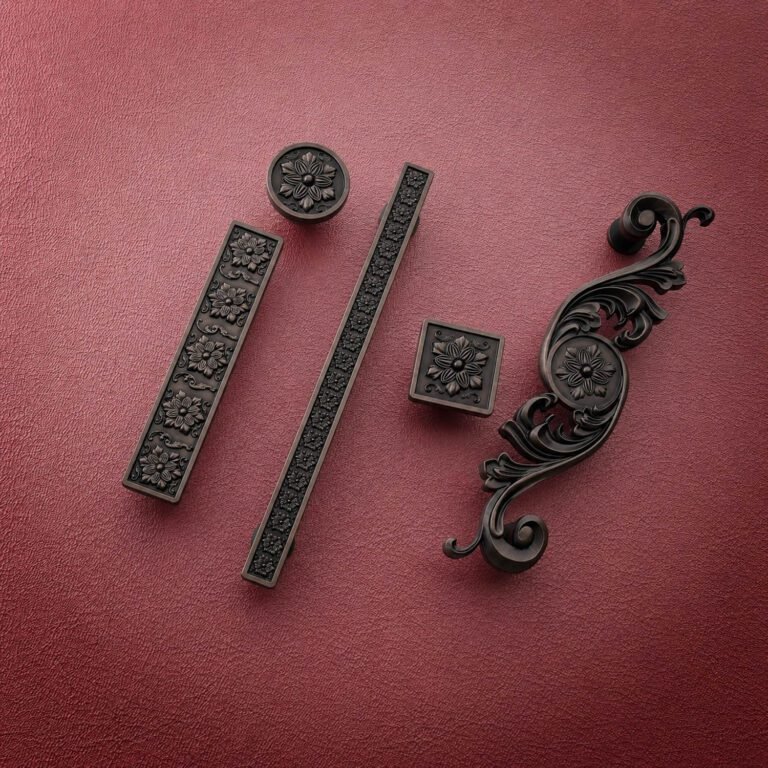
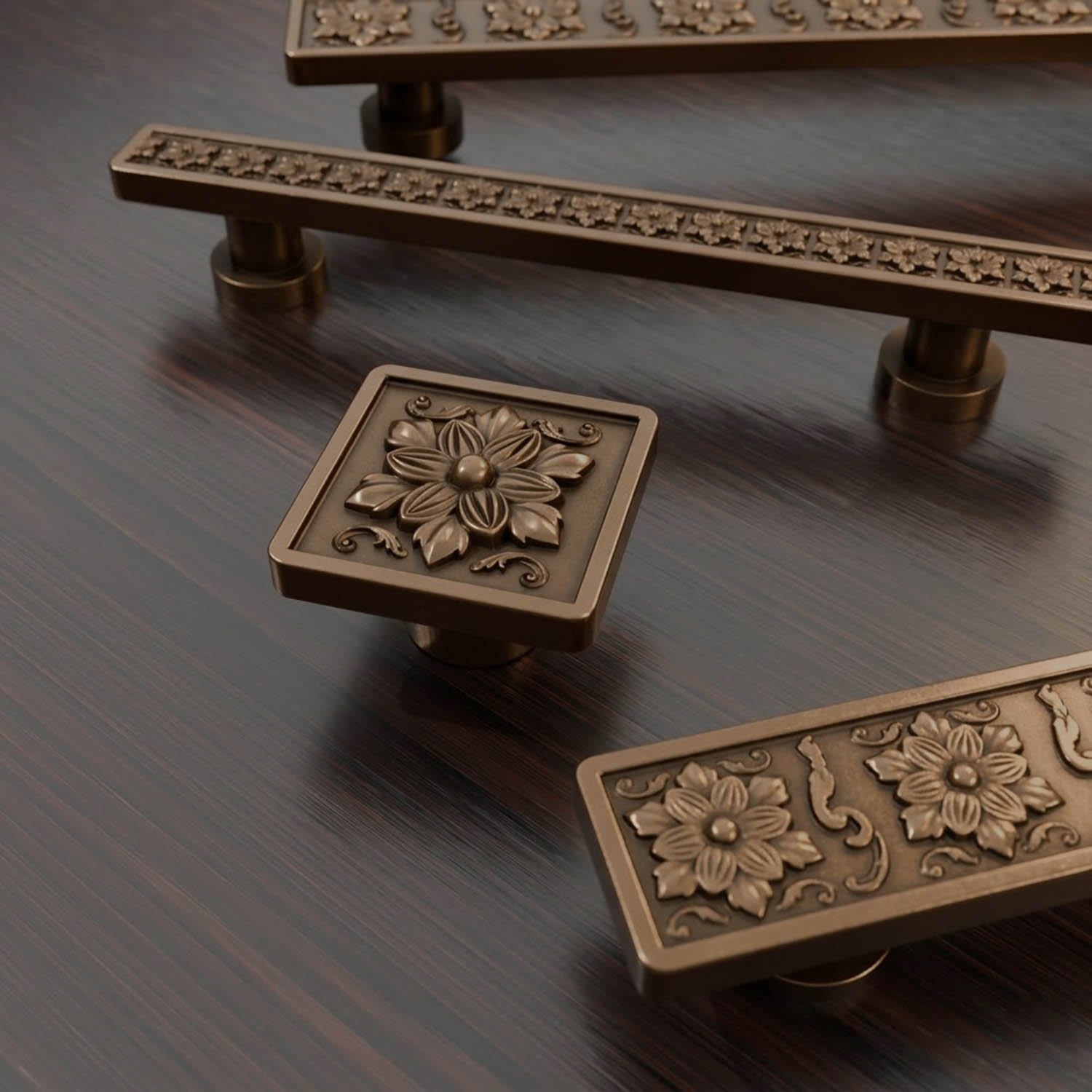
An antique or secondhand dresser usually has good bones and tired, dull handles that feel out of step with today’s interiors. This is where decorative hardware comes into its own. An ornamental knob in bronze, with its deep tones and irregular patina, enters into dialogue with the aged wood and moldings. It doesn’t betray the piece, it wakes it up, restoring the dignity it should never have lost.
A contemporary dresser, with smooth fronts and matte lacquer, calls for the opposite: a punctuation mark, not a fanfare. A simple knob in satin copper on a light front is enough to warm up the whole room; a clean silhouette extends the piece’s lines without weighing them down. What matters isn’t quantity, it’s that the finish is chosen, not just accepted.
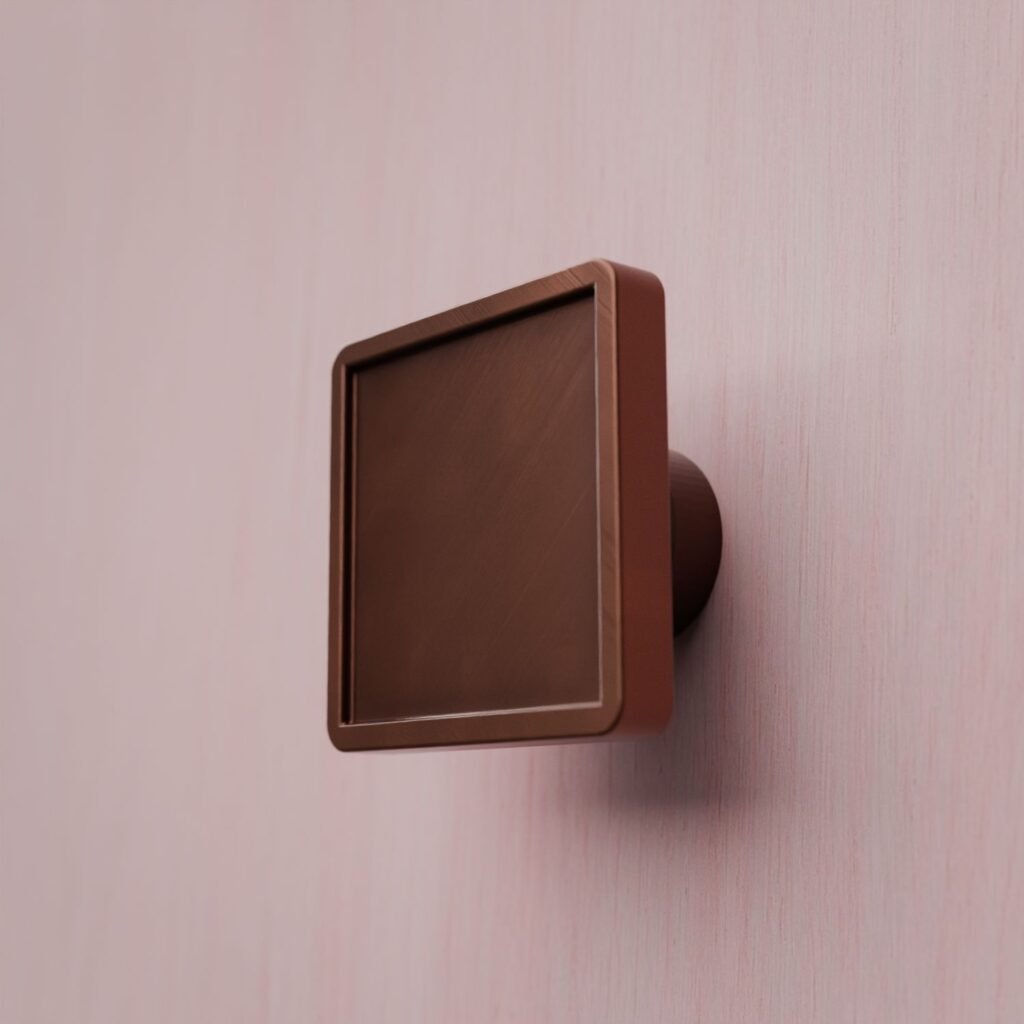
An IKEA dresser, a Malm or a Hemnes, is technically solid and aesthetically neutral. It does its job well, but it doesn’t tell a story. Its center-to-center measurements are standard: swapping the handles takes about twenty minutes, and a white Malm fitted with bronze knobs instantly stops being a catalog piece and becomes an object of its own.
Color, the luxury of a bedroom
This is where a bedroom differs from a kitchen or a bathroom. A dresser stays dry: no moisture concerns weigh on the choice of material. The door then swings wide open onto everything metals can’t do.
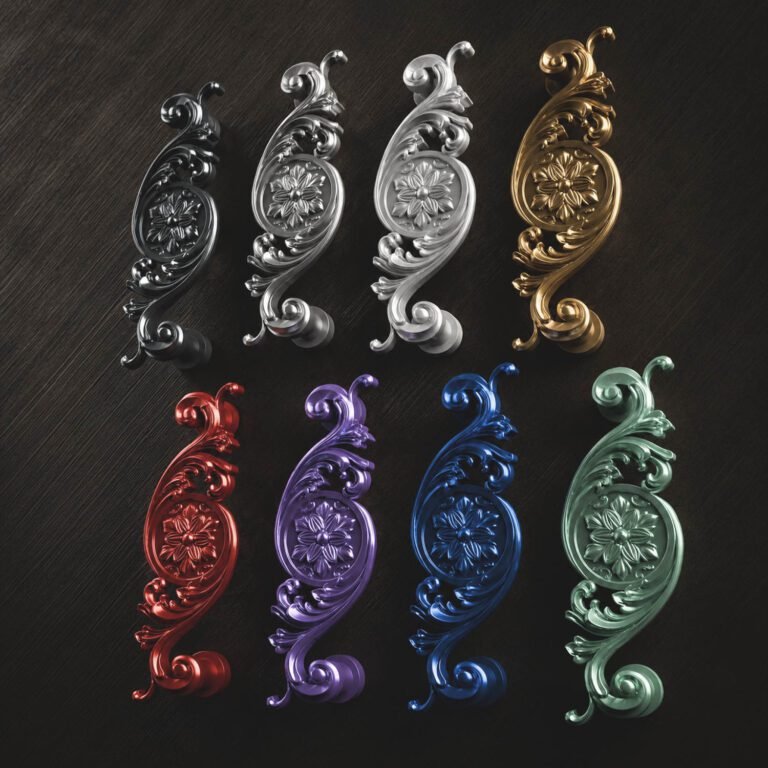
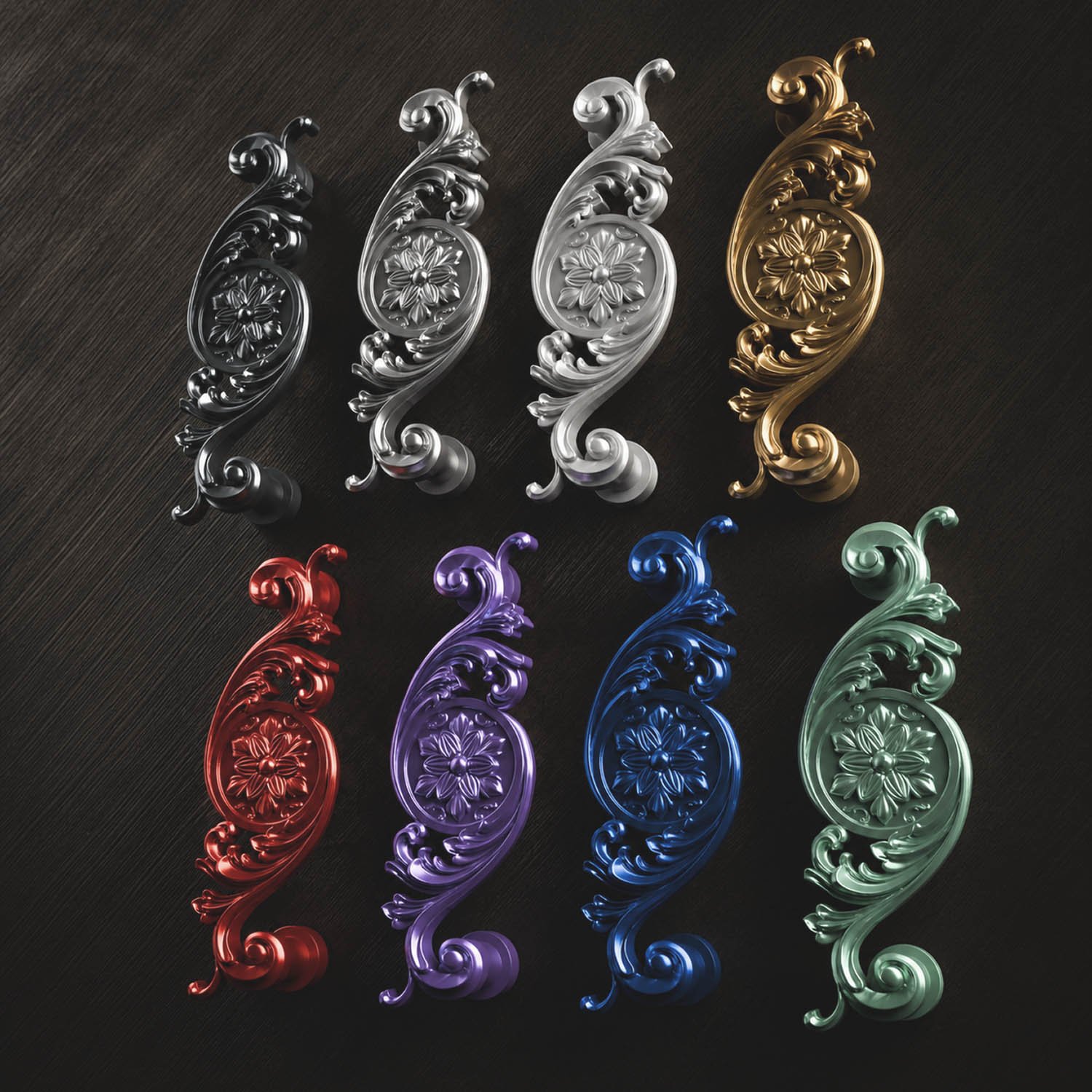
Our bioresin, the most accessible material in the catalog, opens up a palette of colors that bronze or copper could never offer: an electric blue, an emerald green, a deep purple, a bold red, an immaculate white. For a child’s room, a colorful interior, or simply for the pleasure of a piece that dares, it’s the freest and most affordable route. Metals, on the other hand, remain the choice of warmth and time: a bronze or copper that patinas gently, a brass that gilds the whole.
Center-to-center, the only measurement that matters
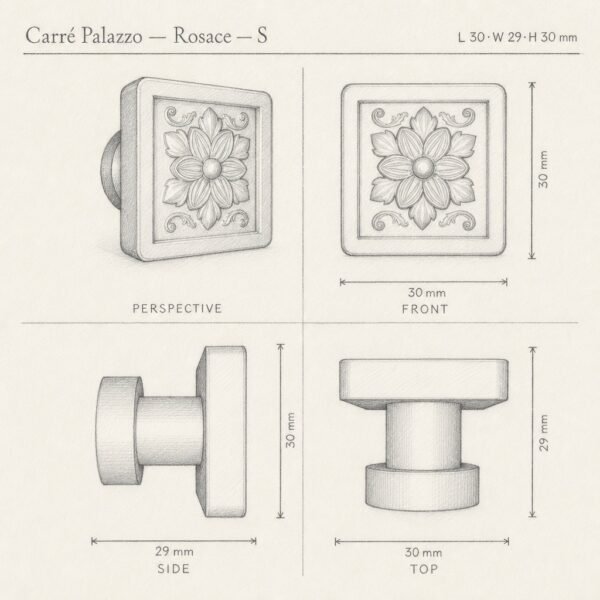
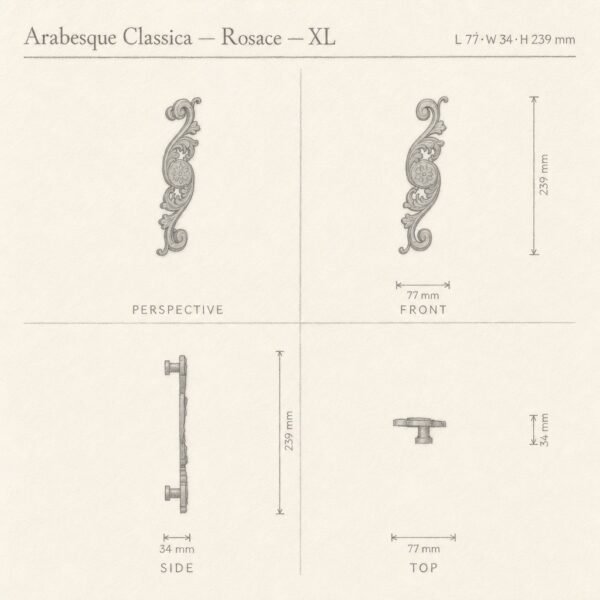
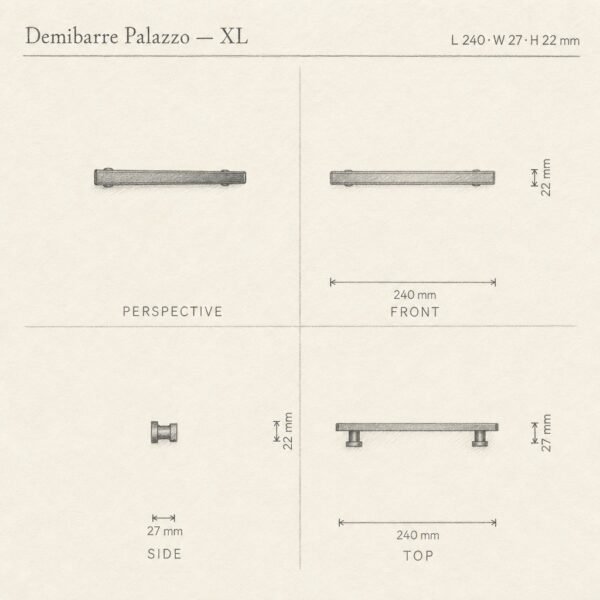
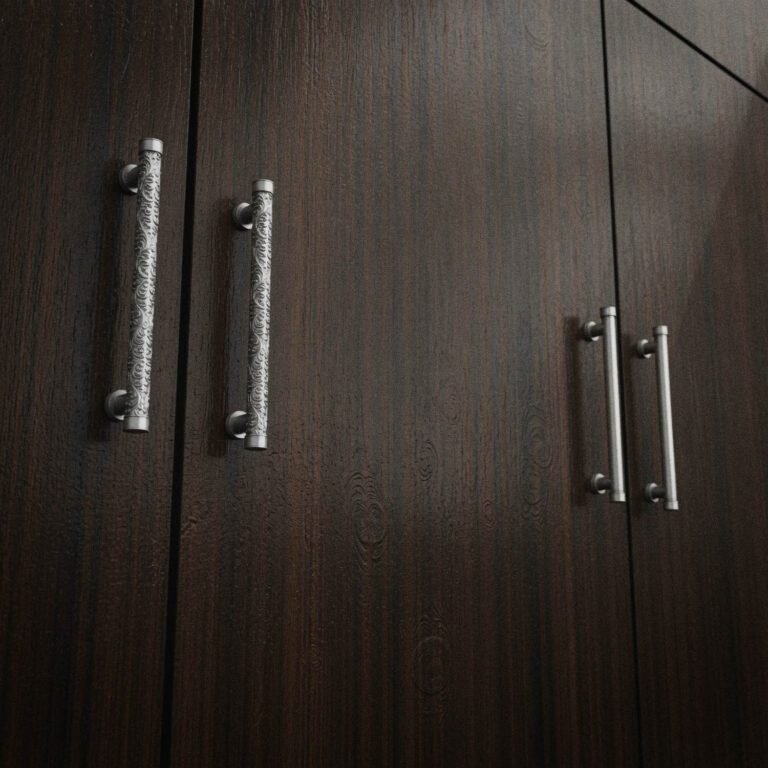
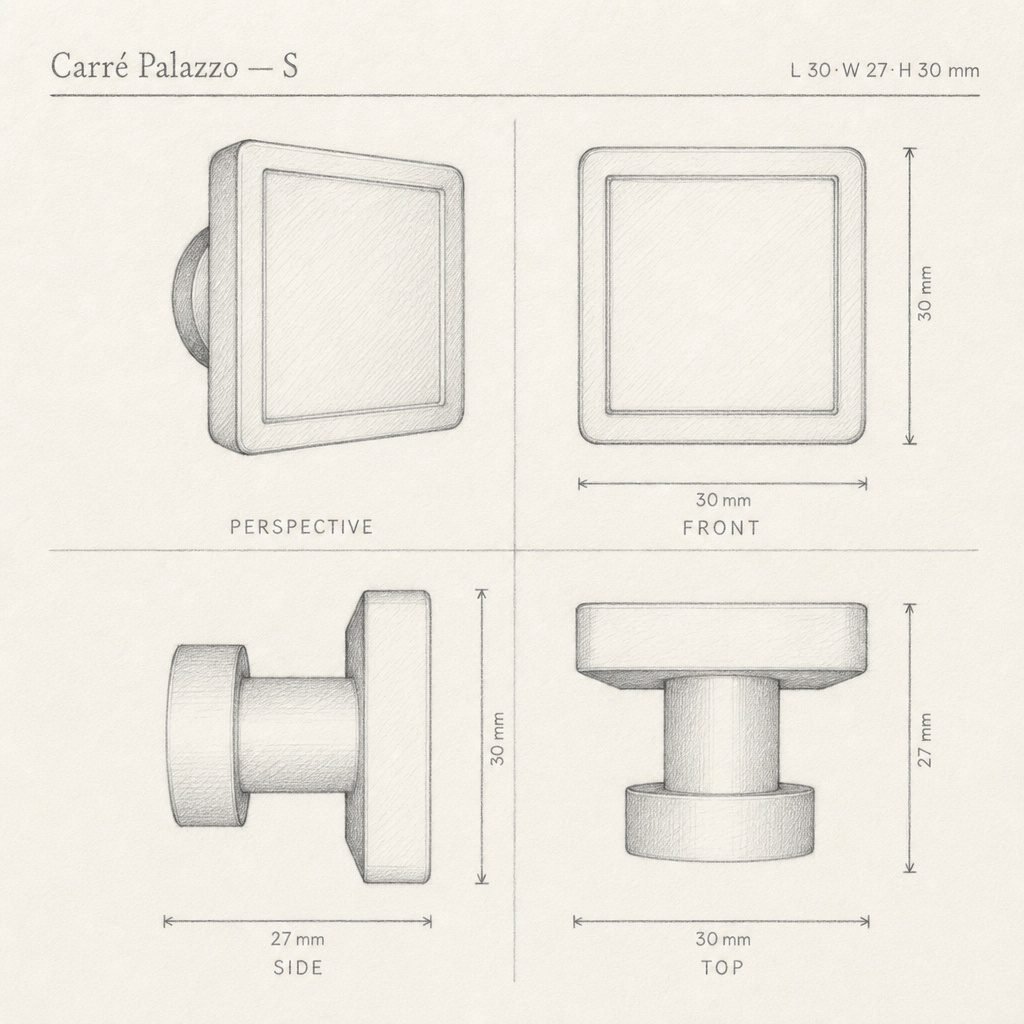
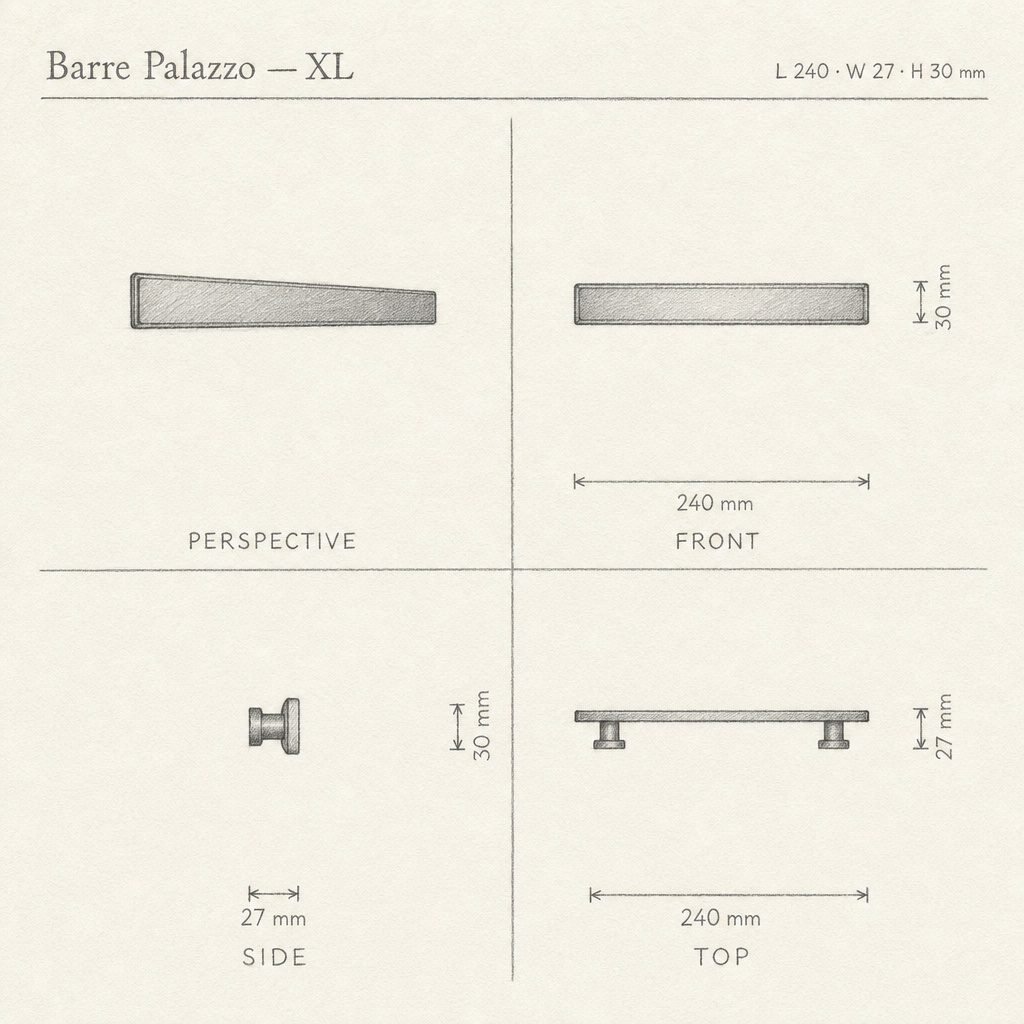
One technical detail before you order. The center-to-center, the distance between a pull’s two mounting holes, is the only measurement that counts. For a single-point knob, one centered hole is all you need. For a pull, measure from center to center of the two existing holes. Dressers most often use 96 or 128 millimeters, sometimes 32 or 64 on smaller drawers.
A few frequently asked questions
How long does it take to change the handles on a dresser?
About twenty minutes and a screwdriver. If the original center-to-center spacing is respected, no additional drilling is needed: remove the old handles, install the new ones.
Can you put colored handles on a dresser?
Yes, and it’s actually ideal. A bedroom is a dry room, with no humidity concerns: bioresin opens up a palette of colors there (blue, green, purple, red, white) that metals can’t offer, for furniture that dares.
What center-to-center spacing for an IKEA Malm or Hemnes dresser?
IKEA dressers use standard center-to-center spacing, most often 96 or 128 millimeters. The only measurement you need is the distance from the center of one existing hole to the center of the other.
What handle for an antique dresser?
An ornamental bronze knob, whose deep tones and uneven patina play off aged wood and moldings. It wakes up the piece without betraying it.
The handle, a bedroom’s final punctuation mark
In decorating, the details you touch matter more than the ones you simply look at. A dresser handle gets picked up ten times a day: with every touch, it says a piece of furniture was thought through and a bedroom was composed, not just furnished. It’s the final punctuation mark, the period that changes the meaning of the sentence.
At Holdon Paris, we make hand-finished knobs and bars in Paris, in bronze, copper, brass, aluminum, and bioresin, sized for standard center-to-center spacing and so for the vast majority of dressers on the market.