Wabi-sabi Cabinet Handles: Patinated Metal as Language
Wabi-sabi is a Japanese aesthetic sensibility that finds beauty in what is incomplete, imperfect, ephemeral. Not the beauty of the new and the polished, but that of patina, of wood that has lived, of ceramic that has crackled. In a wabi-sabi interior, materials are chosen for the memory they carry, tones that seem to belong to the earth. And hardware, in this world, is not a background accessory: it’s one of the rare elements able to introduce something precious, something crafted, without betraying the register.
Copper and bronze: the metals of time
In the wabi-sabi philosophy, there’s something that can’t abide industrial perfection. A chrome metal, a brushed steel, a plain aluminum: materials that strive to stay identical to themselves, that resist wear. Copper and bronze, by contrast, evolve. They absorb light differently depending on the hour. They oxidize where the hand touches them most often. They accumulate, unapologetically, a history of surfaces.
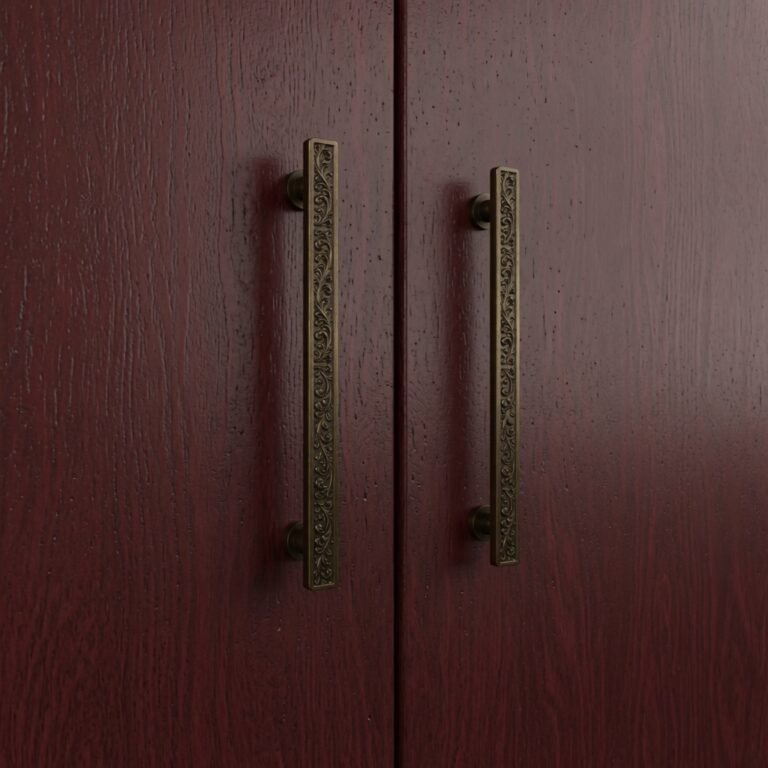
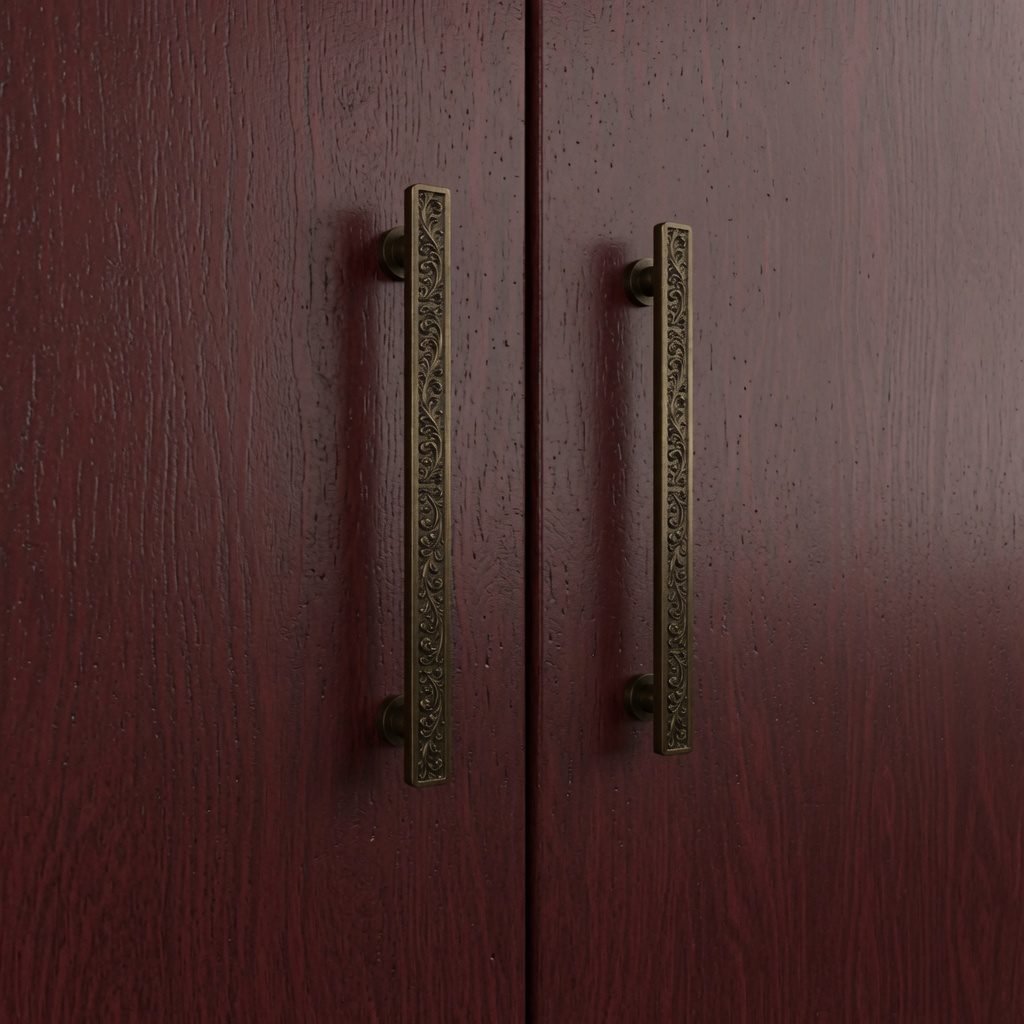
This is what’s known, in Holdon Paris finishes, as hand-applied patina. Antique Copper and Antique Bronze aren’t trying to imitate the look of new: they embrace a controlled wear, a directional oxidation, slightly polished high points contrasting with deeper recesses. The result is an object that seems to have always been there, carrying a presence without trying to prove it.
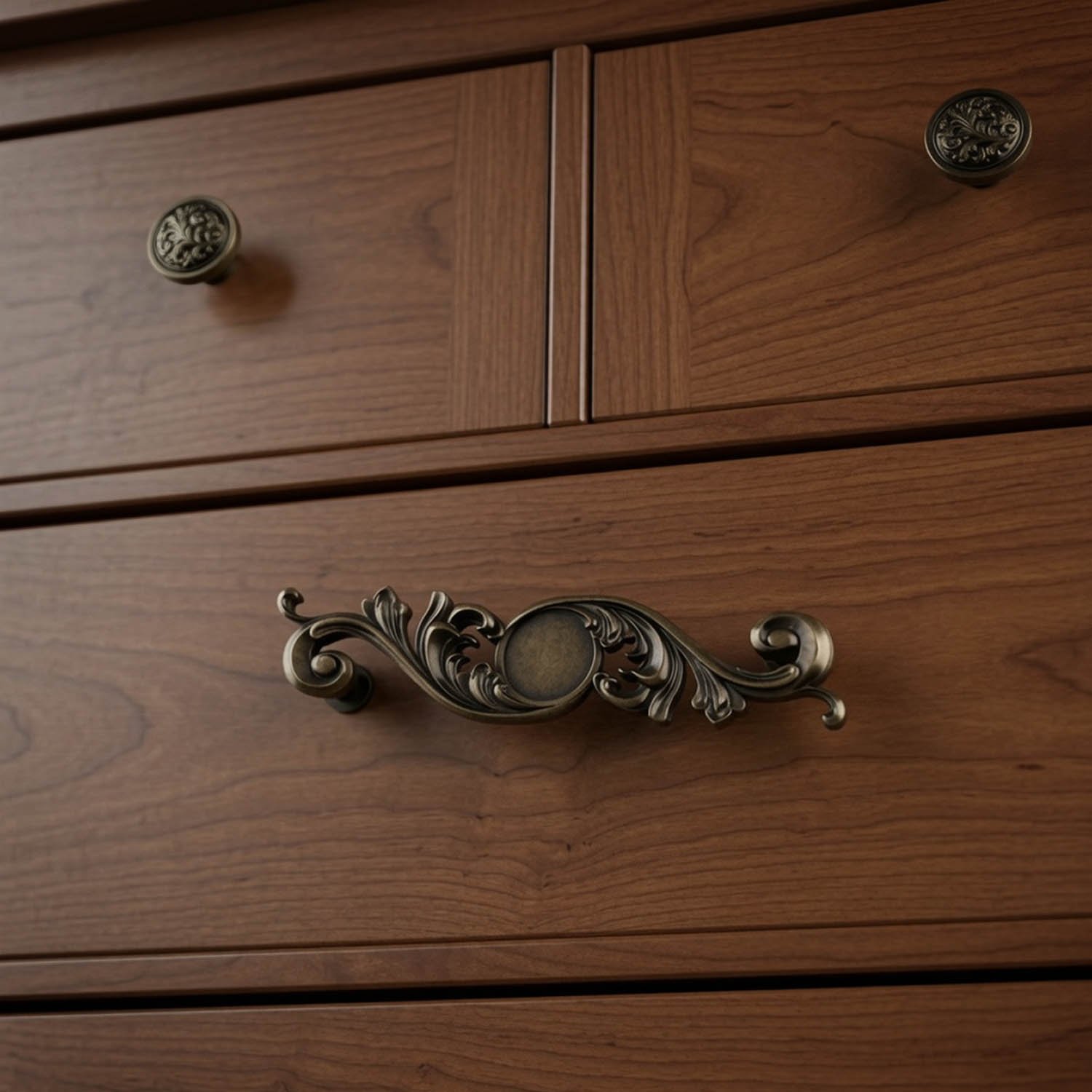
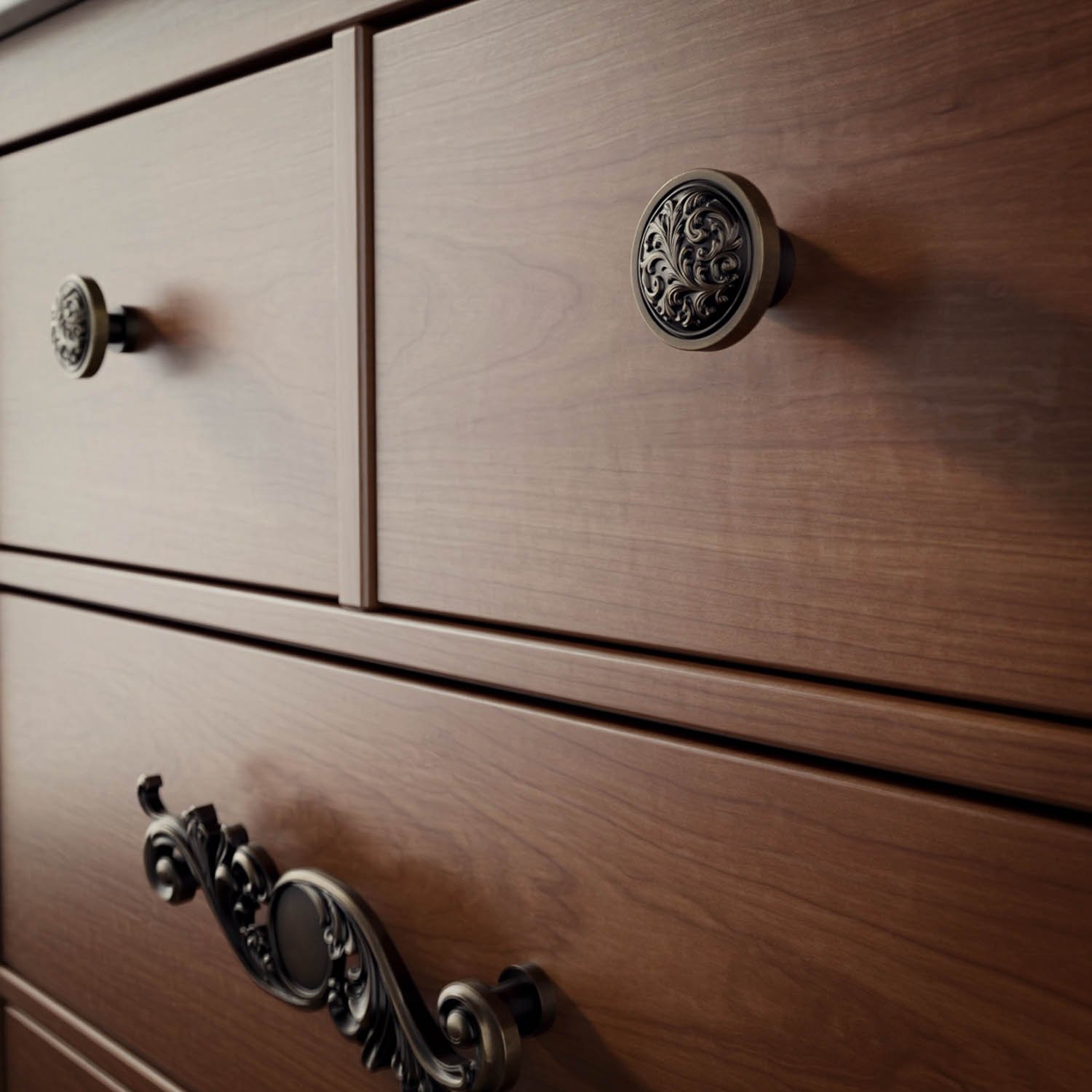
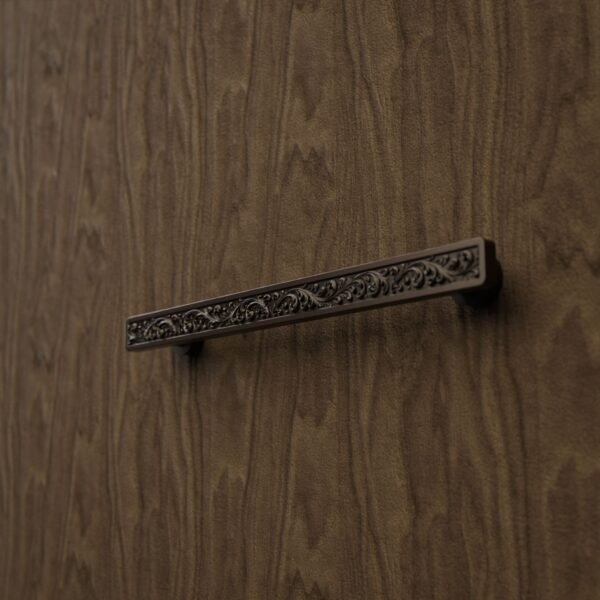
On a walnut or natural oak piece, the match is almost immediate. The warm wood absorbs the golden brown tone of antique bronze as if the two had been chosen by the same hand. No contrast sought, no staging: two materials that belong to the same sensory register.
Which Finish to Choose for a Wabi-Sabi Interior?
A few finishes stand out naturally in this world. Each has its own character, its own pairing with cabinet fronts, its own register.
Antique Copper is the most glowing. Its slightly oxidized brownish orange surface catches the light with something alive, organic. It warms everything it touches: warm woods (golden oak, natural beech, teak), terracotta or rust fronts. Paired with a brushed oak piece, the result feels very natural, very coherent. It works as well in the kitchen as in the bathroom, on a living room sideboard as on a bedroom dresser.
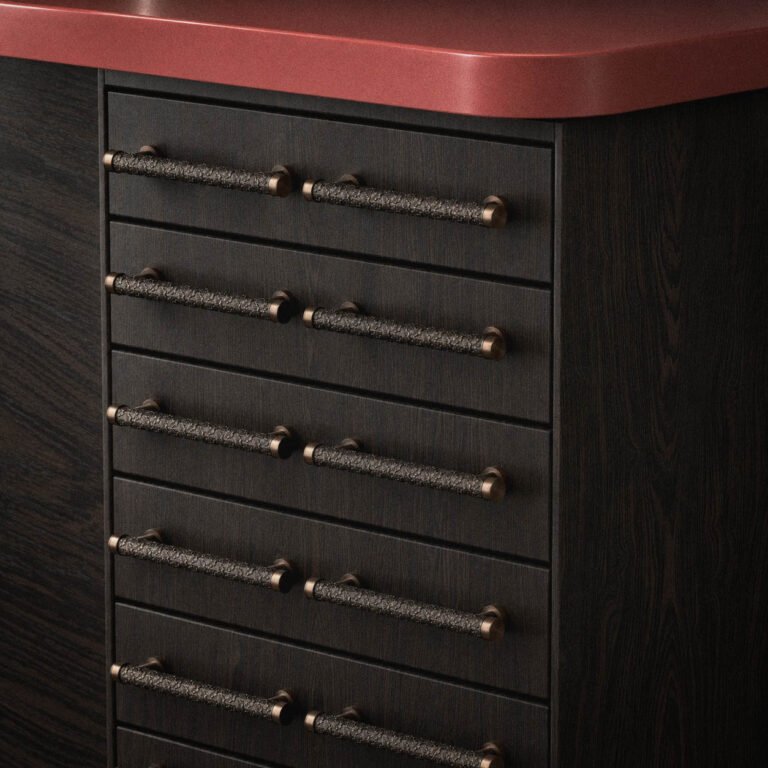
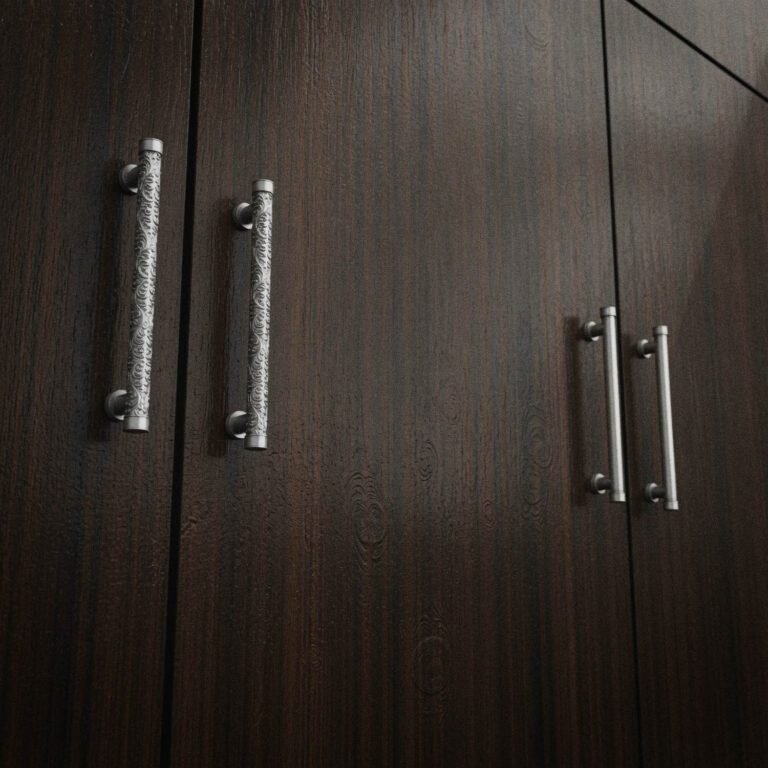
Antique Bronze is more narrative. Hand-applied in the atelier, it carves into the relief, reveals the hollows, gently polishes the raised points, exactly as wear would have done on an antique piece. The result is warm, golden brown, with some areas lightly oxidized and others subtly luminous. It feels at home on walnut, smoked oak, or deep black lacquer.
Matte Bronze is the most contemporary version of bronze. Without shine or pronounced patina, its slightly textured surface absorbs light rather than reflecting it. It’s the most versatile metal finish: light wood, off white, linen gray, natural fronts. For a wabi-sabi leaning toward more restraint, it’s often the best starting point.
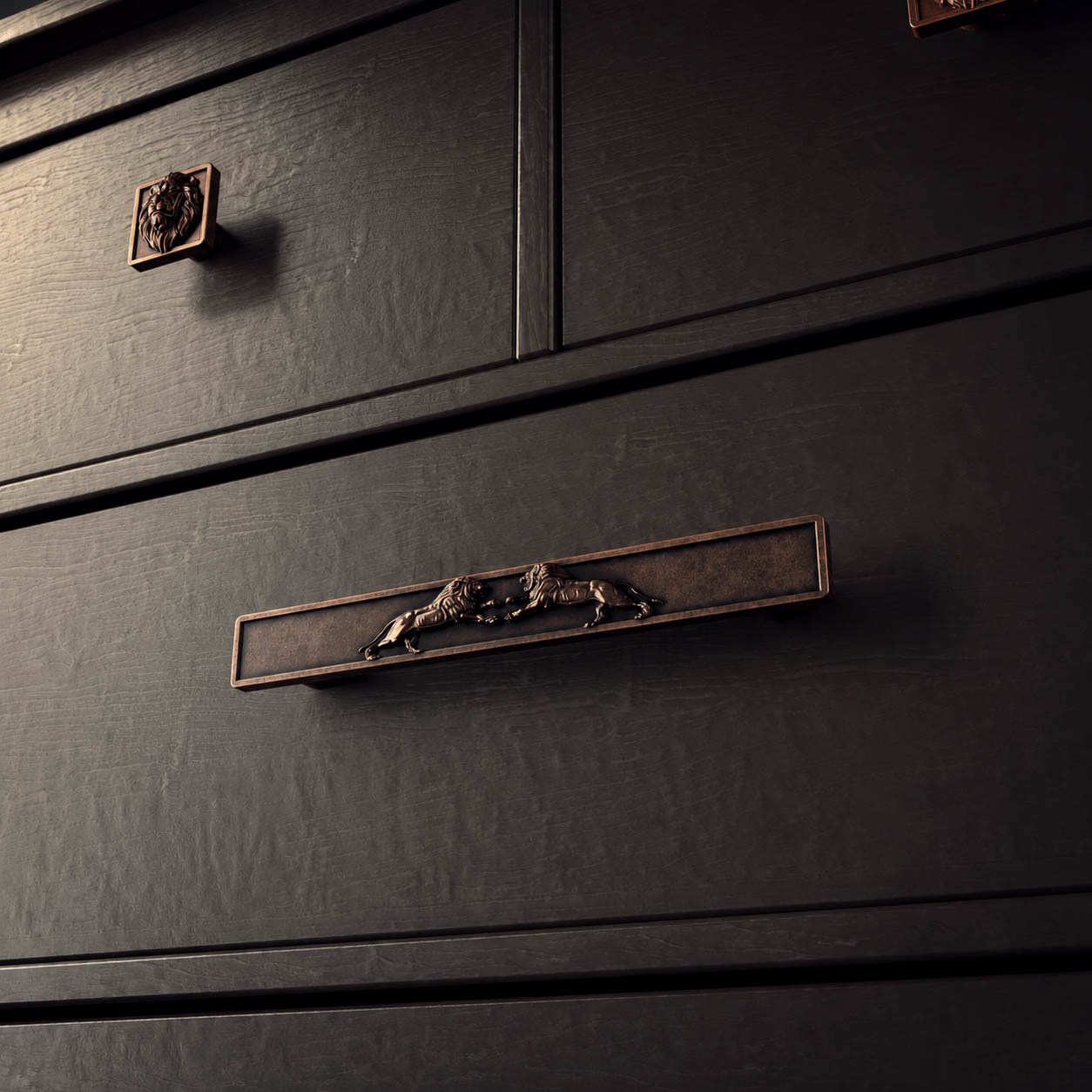
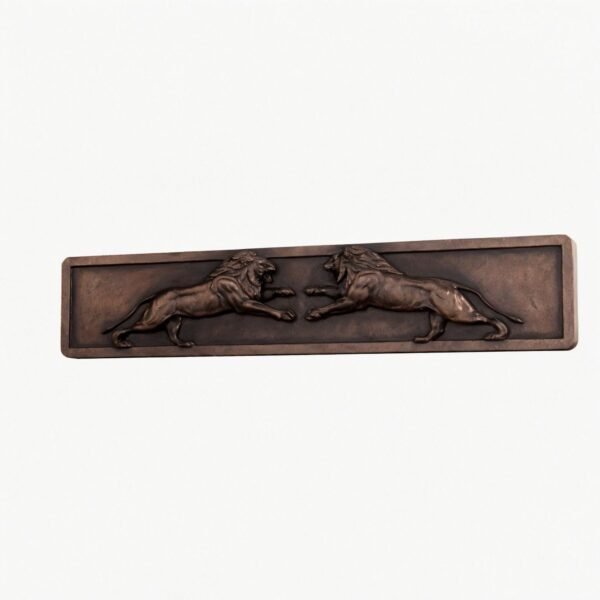
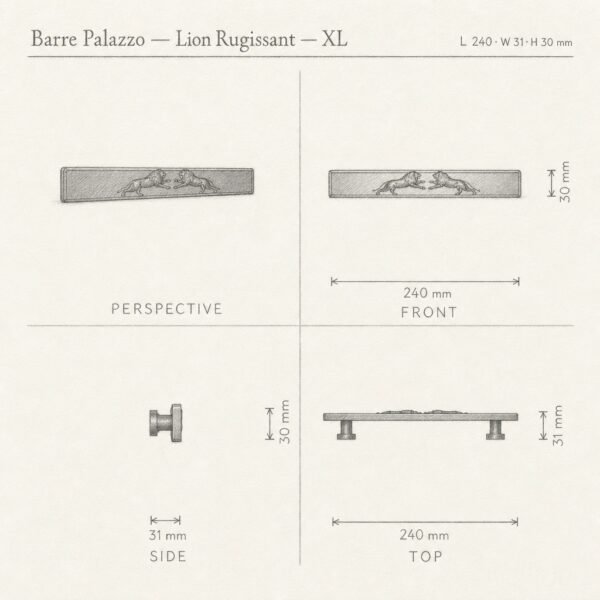
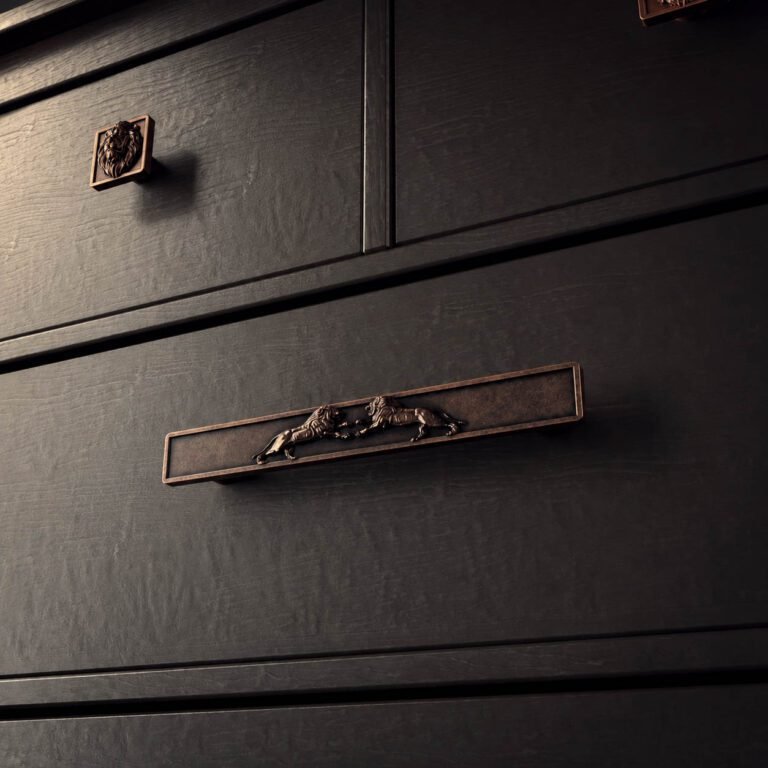
On a piece painted deep black, antique copper creates a warm, dramatic contrast. The lion figure sculpted into the metal takes on a particular presence there: a handle that looks more like a small sculpture than hardware, playing exactly the role wabi-sabi expects of a well-chosen object.
Which Silhouette for a Wabi-Sabi Interior?
A common assumption holds that wabi-sabi demands total simplicity, minimal form, the absence of pattern. That’s true of a certain wabi-sabi, the kind that leans toward japandi or Scandinavian style. But the Japanese aesthetic of imperfection isn’t afraid of pattern: it’s afraid of pattern that rings false, of ornament that tries to impress rather than simply exist.
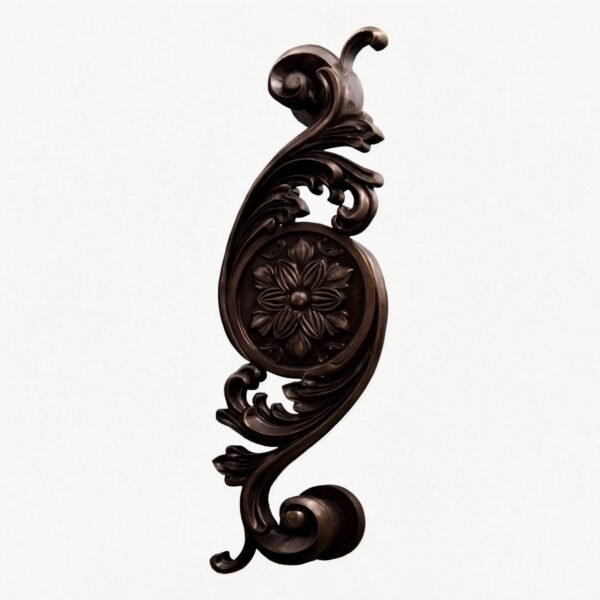
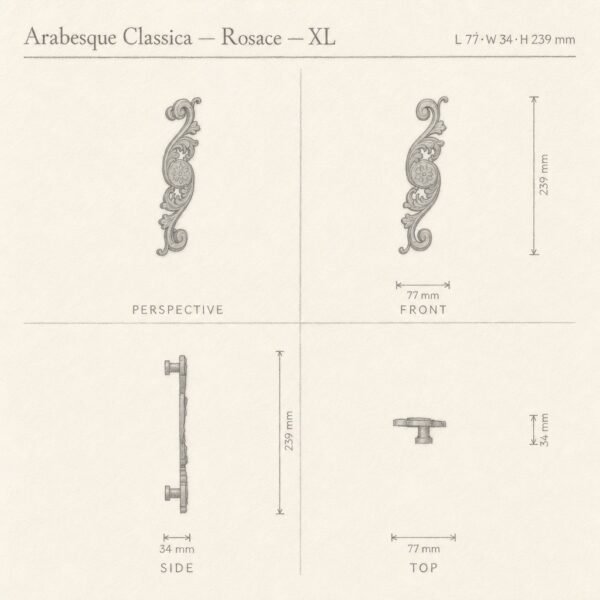
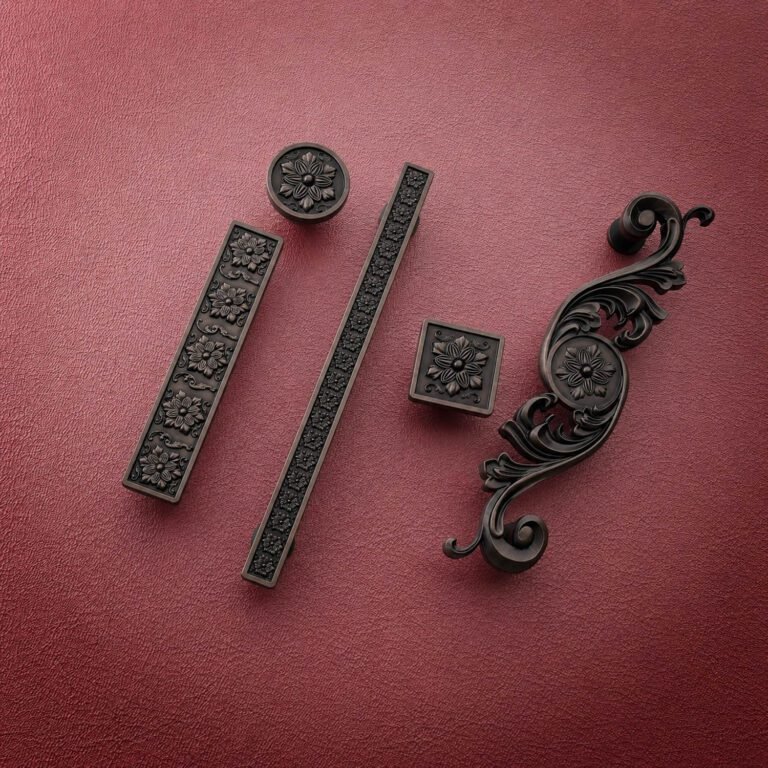
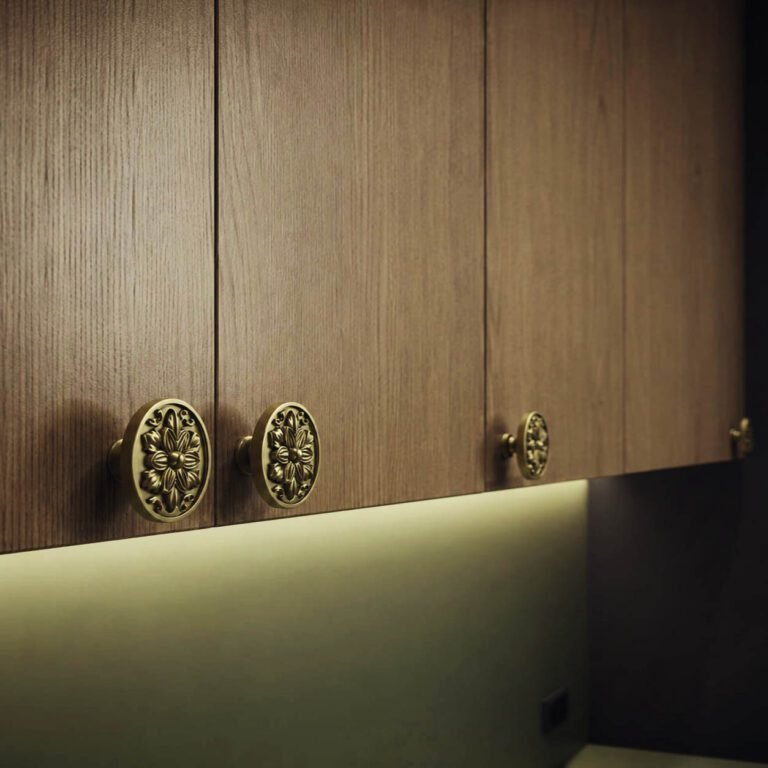
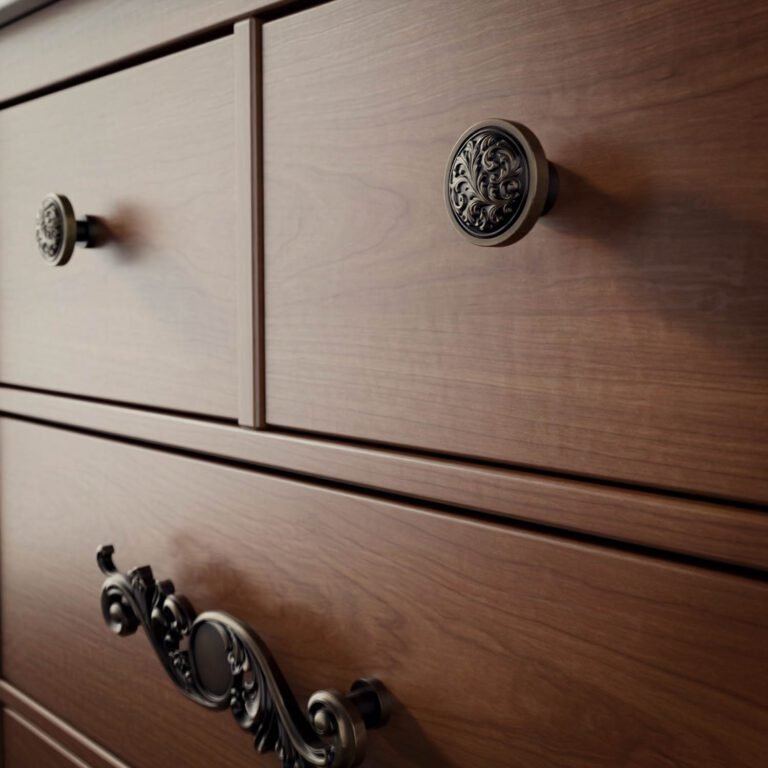
Organic motifs have something natural about them that fits this world effortlessly. Scrollwork, its acanthus leaf volutes unfurling in continuous rhythm, reads more like a natural texture than a constructed ornament. Rosette, a perfectly symmetrical radiating flower, evokes a crystal or a dried flower. Both of these patterns, in a patinated finish, shed their demonstrative ornamental quality for a more discreet, more natural presence. They work as well on a Classica Arabesque handle as on a Classica Round knob.
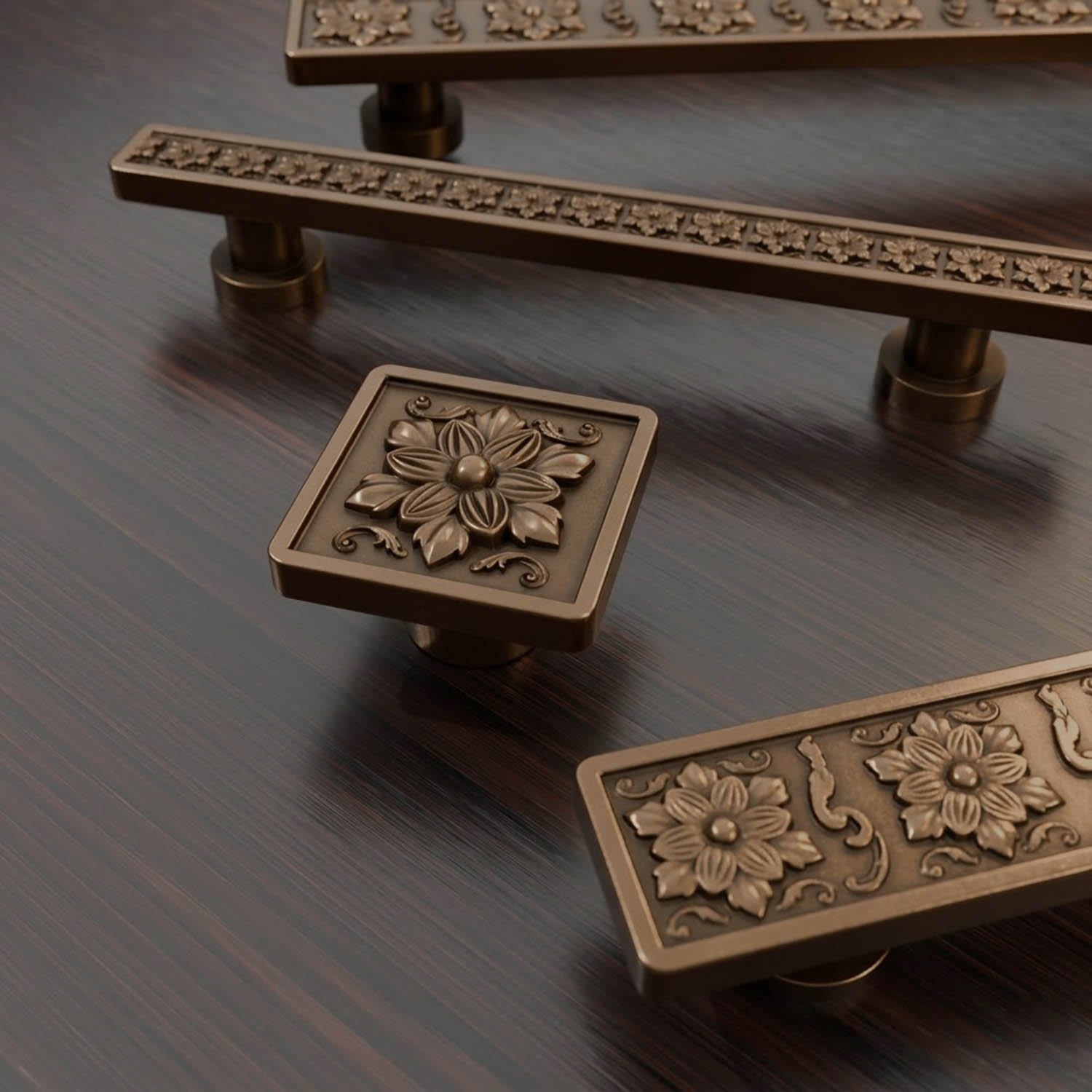
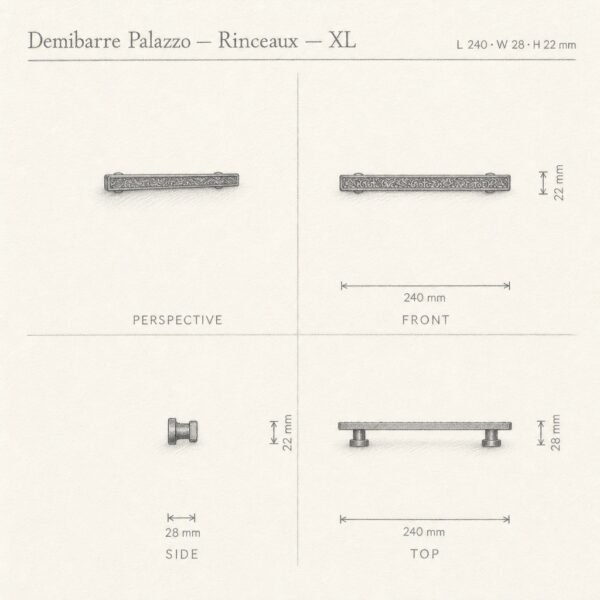
For a more architectural wabi-sabi, the Palazzo family silhouettes (Square, Bar, Slim Bar) bring a restrained geometry. Their raised frame, softened corners, and slightly recessed front face: a handle that reads like architecture at small scale, with no ornament to clutter the line. Paired with Matte Bronze, this restrained geometry produces something at once very contemporary and very wabi-sabi.
A few pointers before you choose
- For warm wood furniture (walnut, oak, teak): Antique Bronze is the first choice. Antique Copper for the warmest, most glowing tones.
- For dark painted furniture (black, charcoal, dark gray): Antique Copper creates a warm, dramatic contrast. Antique Bronze pairs well with deep brown or khaki tones.
- For light furniture (off-white, whitewashed wood, linen): Matte Bronze is the most fitting metal finish. It brings warmth without overpowering.
- Center-to-center (c/c): bars and slim bars are available with center-to-center spacing from 96 to 192 mm depending on the model, compatible with most standard doors and drawers. Knobs mount at a single point, with no center-to-center measurement.
- Kitchen and bathroom: copper and bronze hold up well to humidity and heat. Bioresin finishes are reserved for dry rooms.
If you’d like to dig deeper into material choices in other settings, we’ve published a guide on handles for an industrial interior and another on handles for a dresser, where patinated finishes play a central role.
At Holdon Paris, Antique Copper, Antique Bronze, and Matte Bronze are available across every silhouette in the collection, from knob to bar. To browse the full cabinet handle catalog with filters by finish, everything is available online.
Practical questions
What handles suit a wabi-sabi interior?
The patinated finishes, Antique Copper, Antique Bronze and Matte Bronze, are the most in keeping with the wabi-sabi aesthetic. These metals carry a visual memory and evolve with use, like the natural materials around them. At Holdon Paris, they are available on every silhouette in the collection.
What is the difference between Antique Copper and Antique Bronze?
Antique Copper has warm, glowing reddish-orange tones, vivid and full of life, particularly suited to golden woods and terracotta fronts. Antique Bronze is warm brown and golden, hand-applied in the workshop, with more pronounced relief between the recesses and the raised details. It pairs better with dark woods and black lacquers.
Can copper and bronze be used in the kitchen or bathroom?
Yes. Copper and bronze offer good resistance to moisture and heat. They are recommended for the kitchen, bathroom, living room and heavy doors. Bioresin finishes are reserved for dry rooms.
What center-to-center distances are available for Holdon bars?
Bars and slim bars are available with center-to-center distances of 96, 128, 160 or 192 mm depending on the model. This makes them compatible with most standard fronts. Palazzo Square and Classica Round knobs are fixed at a single point, with no center-to-center distance.