Repainting Your Kitchen Cabinets: The Handle That Finishes the Job
Repainting your kitchen cabinets has become the go-to move for transforming a room without touching the boxes or the countertop: a new color on the doors and drawers, and the kitchen looks different in a weekend. But once the paint is on and dry, a problem often shows up: the old handles, worn, mismatched, or simply missing on fronts that never needed them, clash with the freshness of the new color.
This is where the final step happens, the one that’s easy to overlook when planning the project. A handle isn’t an accessory added as an afterthought: it’s the detail that visually closes the work, that shows whether the front was rethought or just repainted. This step deserves the same care as the others: a center-to-center that avoids new drilling, a finish that answers the chosen color, and a pattern that sets the tone, understated or more assertive.
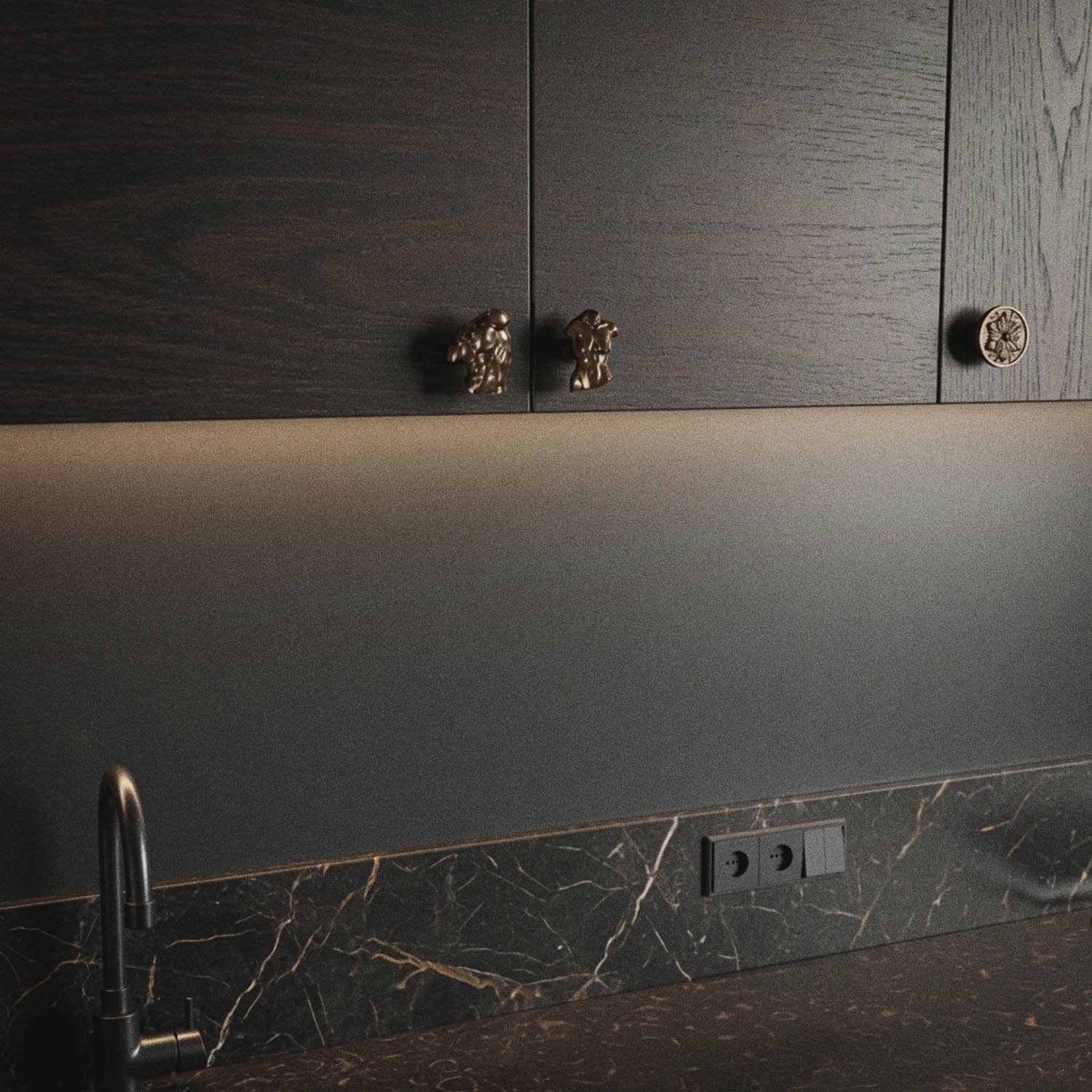
Center-to-center, the reference point that avoids redrilling a fresh front
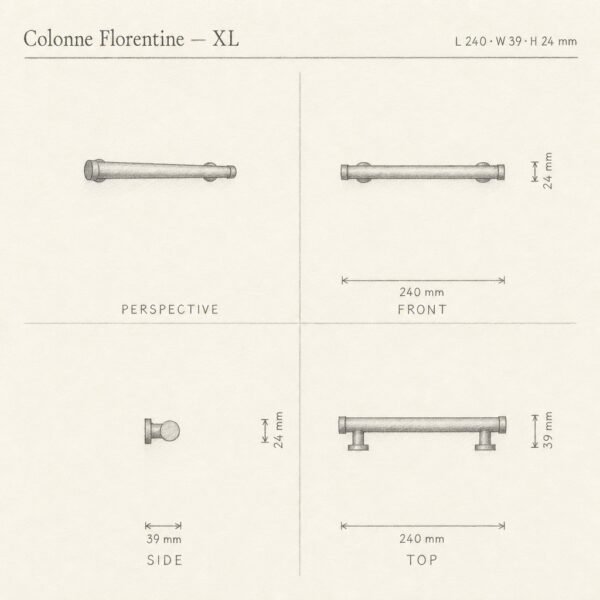
Before choosing a new handle, one number matters more than looks: the center-to-center, the distance between the two mounting screws on a bar pull. The most common standards in kitchens run from 96 to 192mm. Keeping the same center-to-center as the old hardware avoids drilling new holes into a front you just repainted. Going the other way, from a knob, a single screw at the center, to a pull, means new drilling: entirely doable on a repainted front, since prepping the surface will have already touched up the finish around the existing holes anyway.
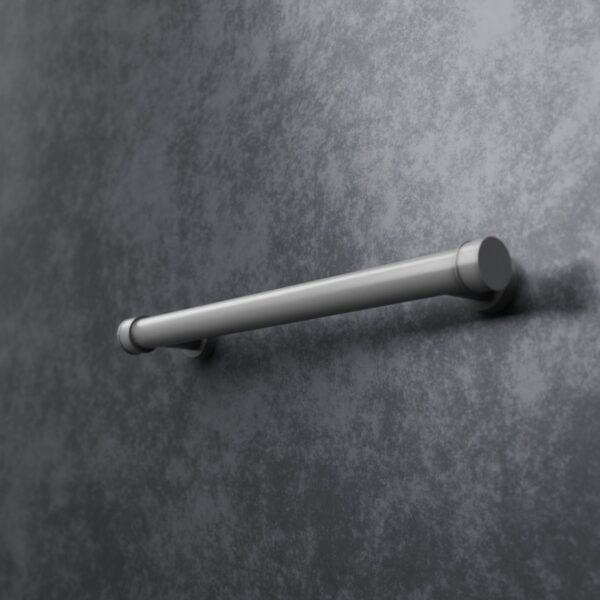
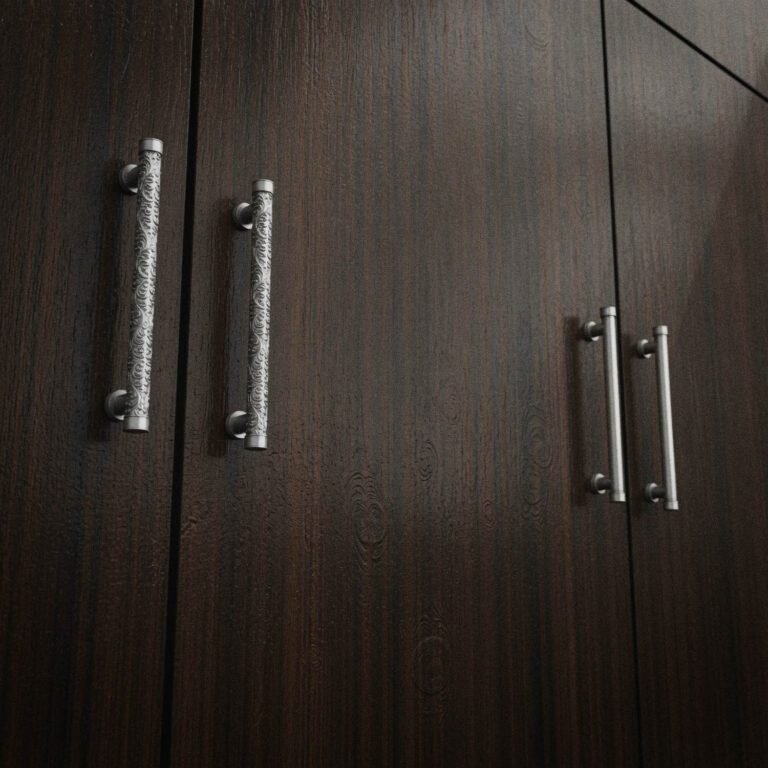
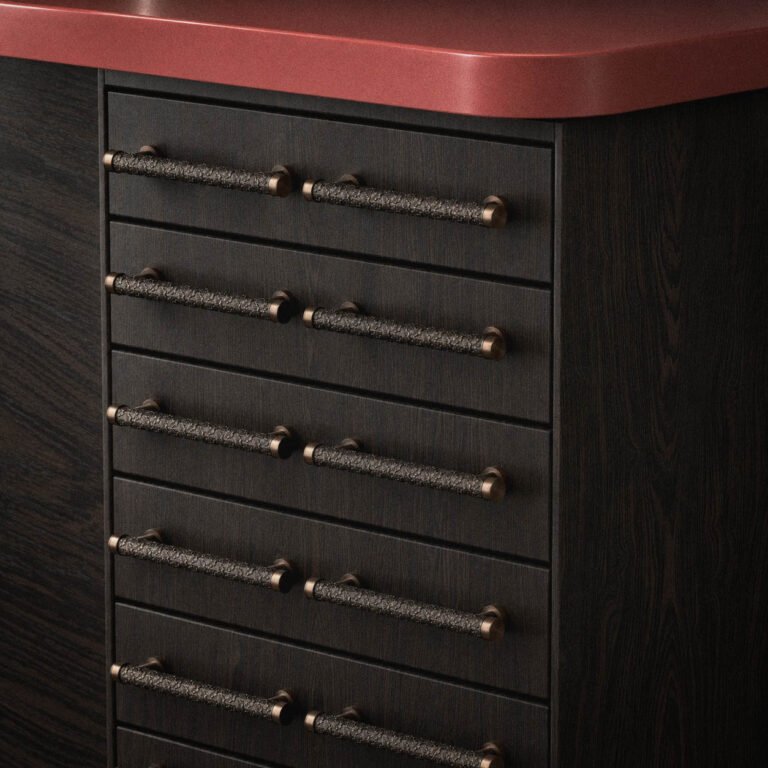
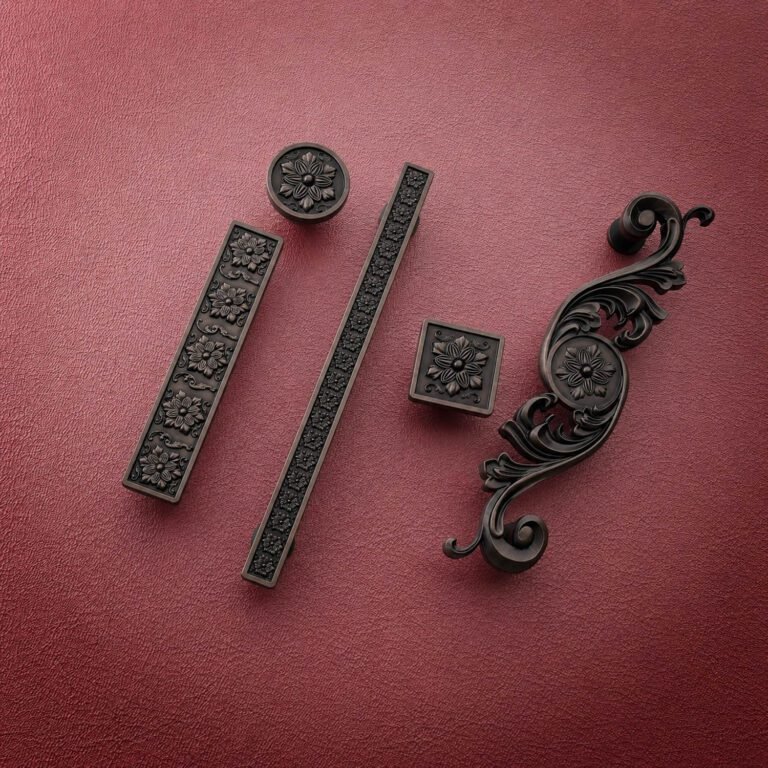
Within a single silhouette, the center-to-center never changes, even when the pattern does. The Florentine Column keeps its bare shaft in its Essential version or takes on applied Scrollwork: the mounting point stays identical from one size to the next, only the surface design evolves.
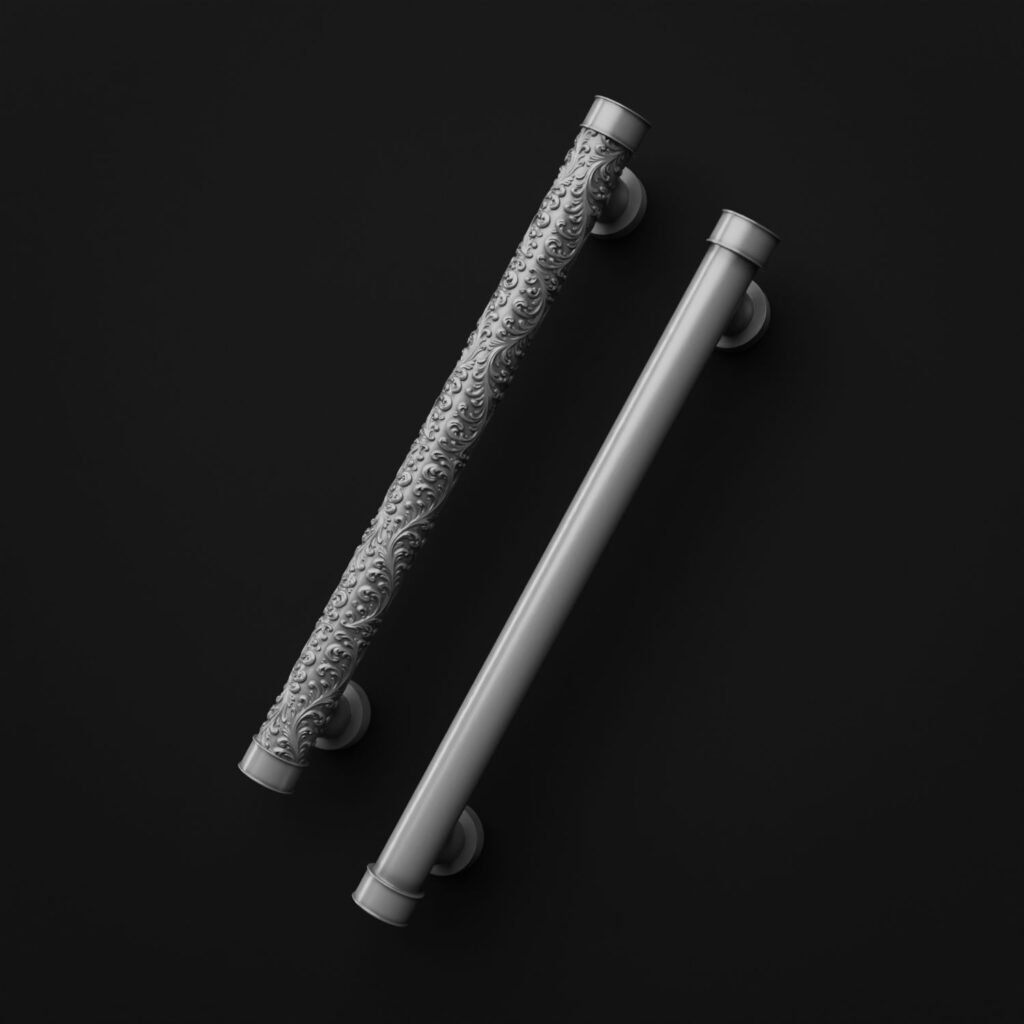
Satin aluminum or antique patina: matching the finish to the new color
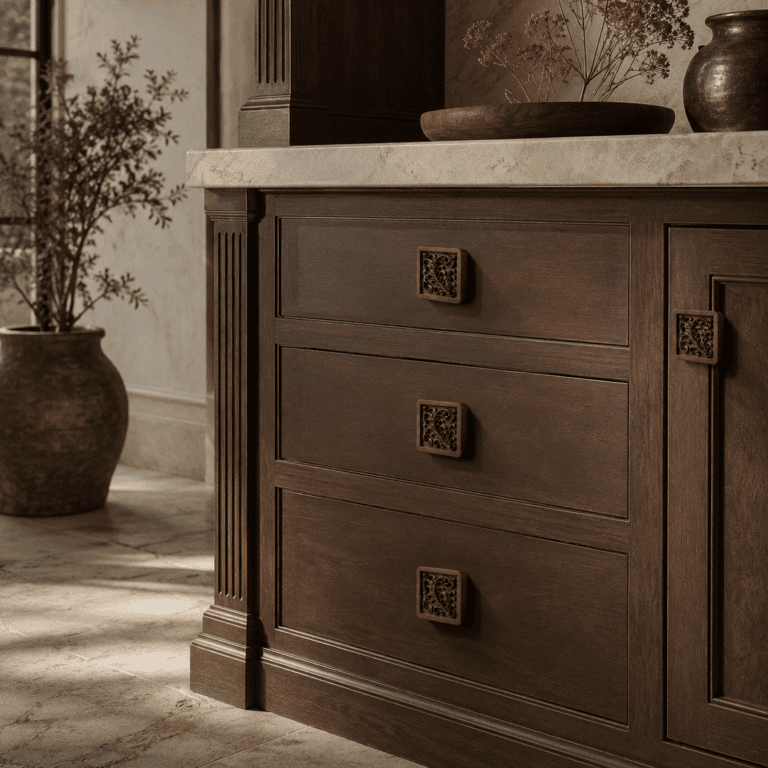
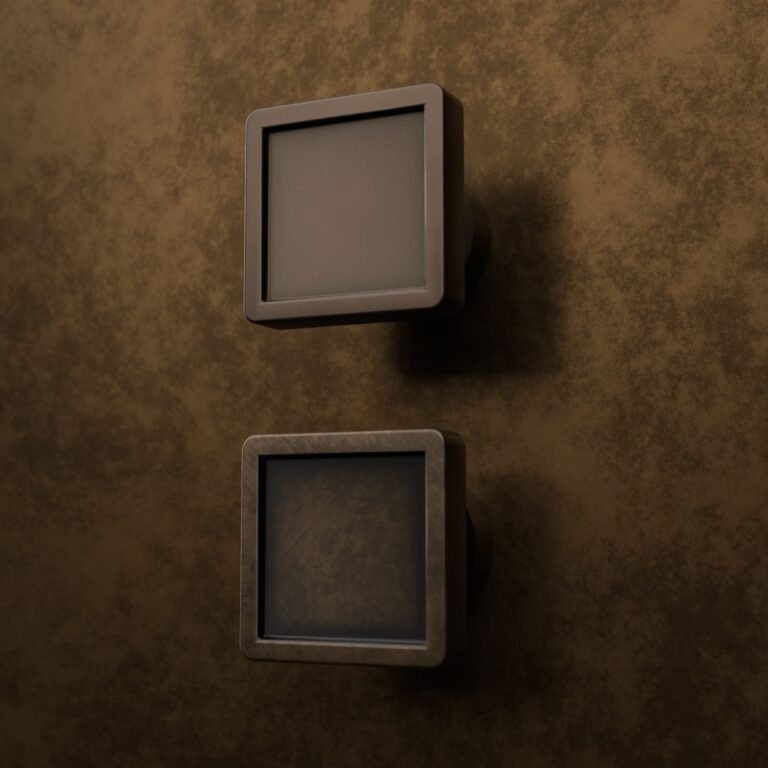
The paint color chosen for the fronts largely dictates which hardware finish will work. On an off-white, a pearl gray, or a repainted light wood, the Satin Aluminum remains the safe bet: a silvery, luminous tone, understated, that pairs effortlessly with any cool, contemporary palette. On a darker front, in sage green, terracotta, or dark wood, antique patinas (bronze, brass, copper) take over: hand-applied in our Paris atelier, they warm up the color instead of competing with it.
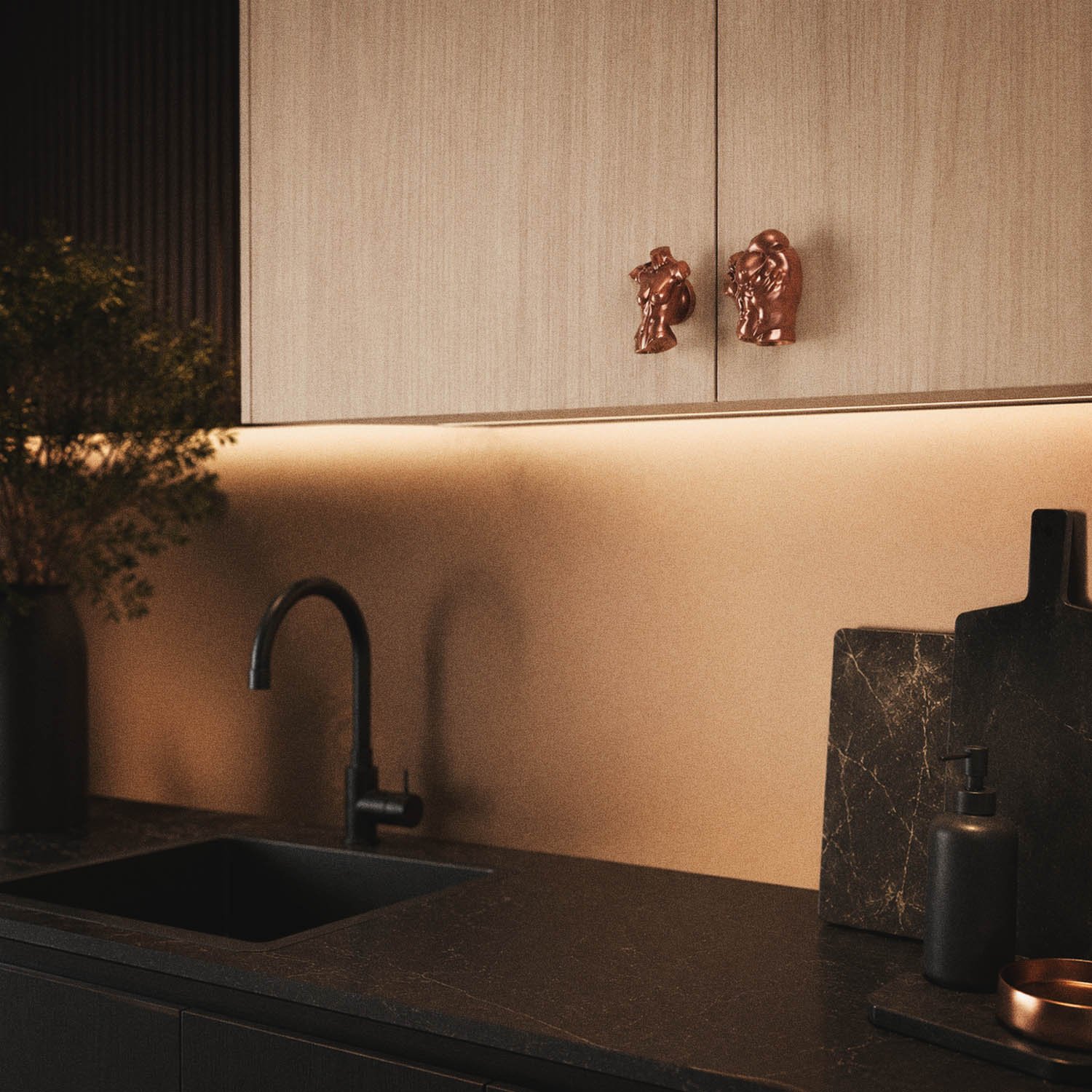
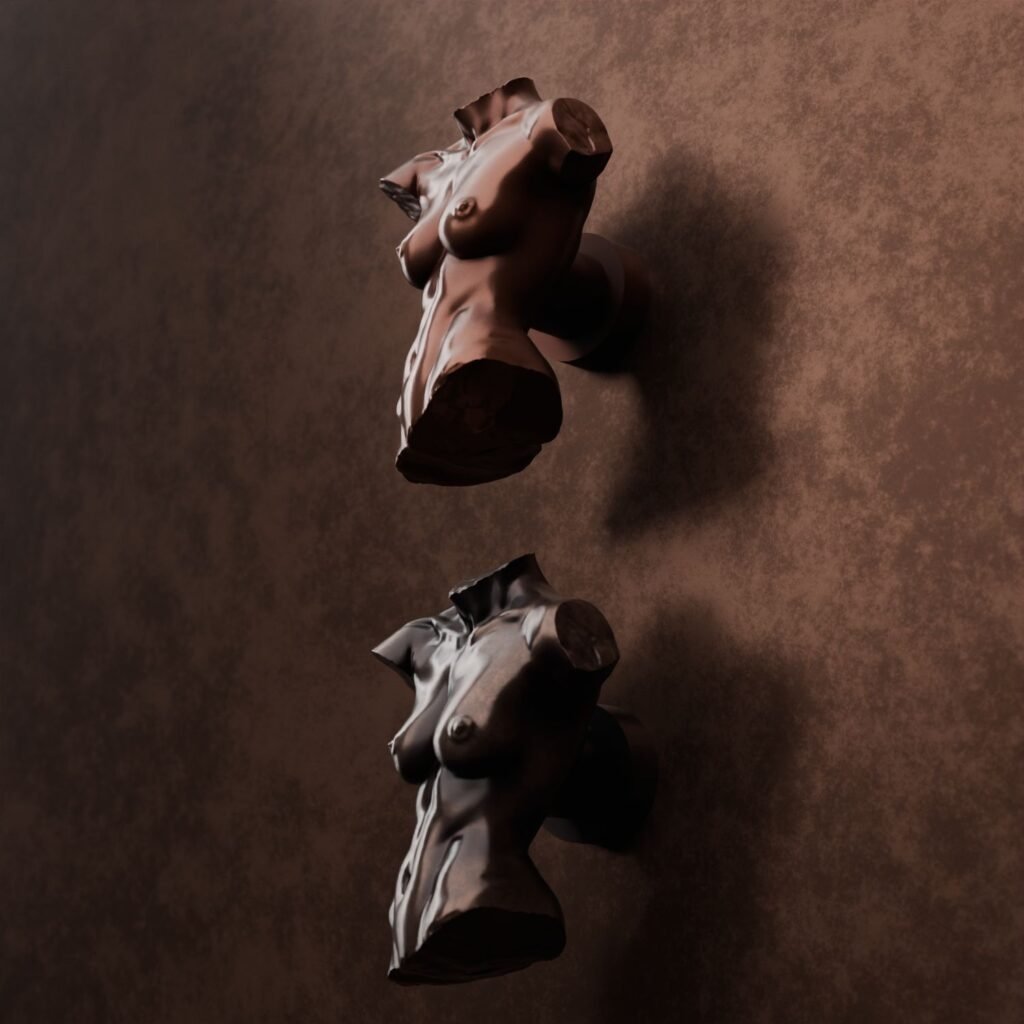
Sculptural knob or clean line: two ways to sign a repainted front
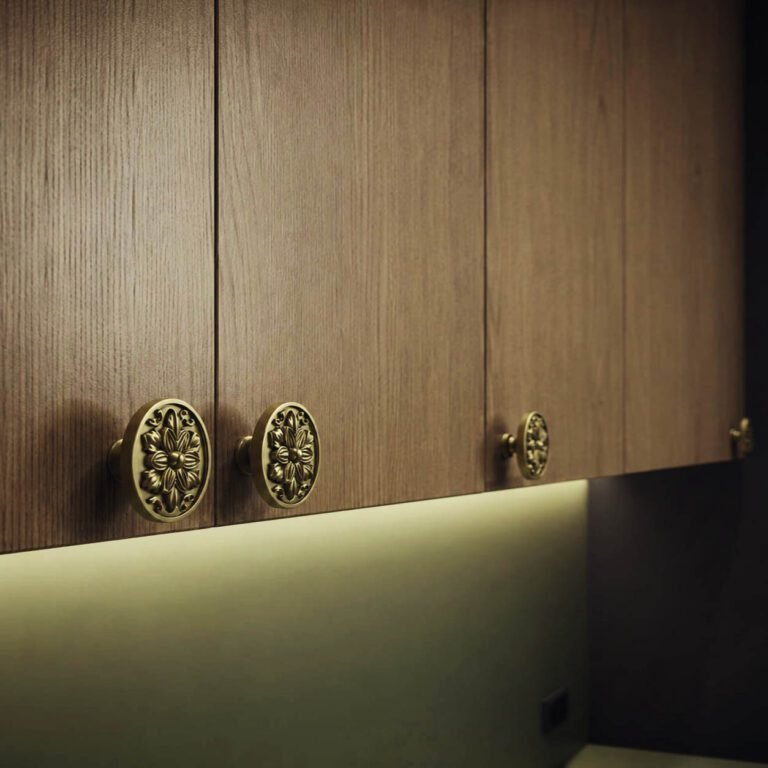
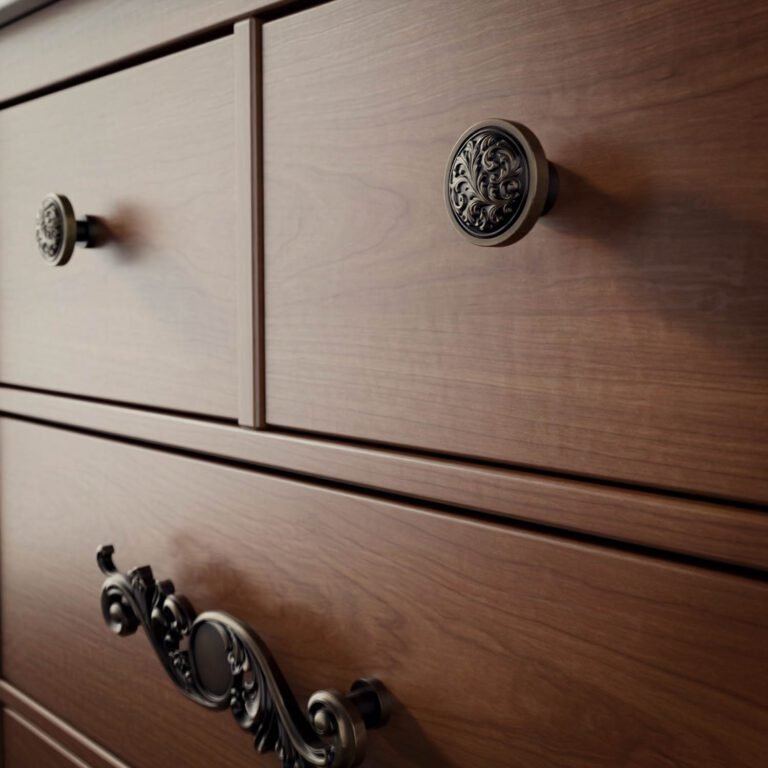
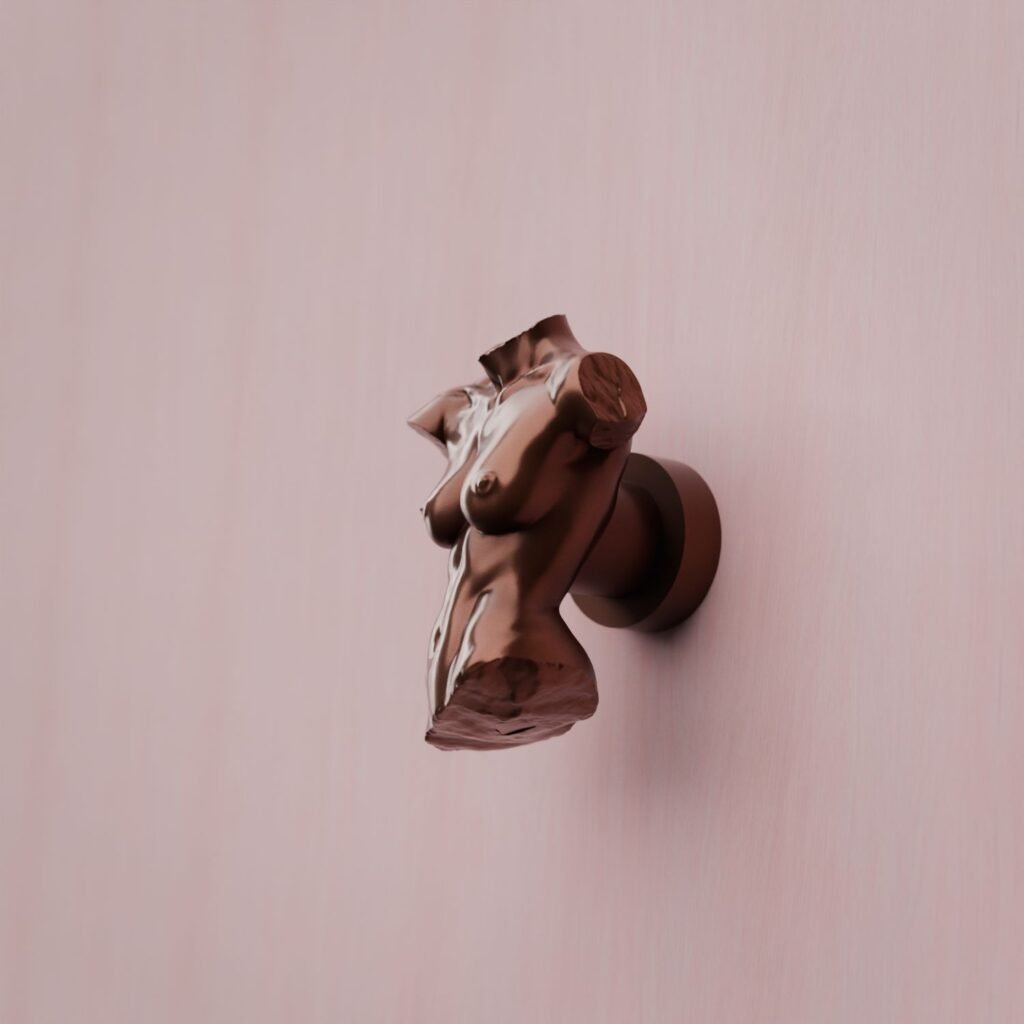
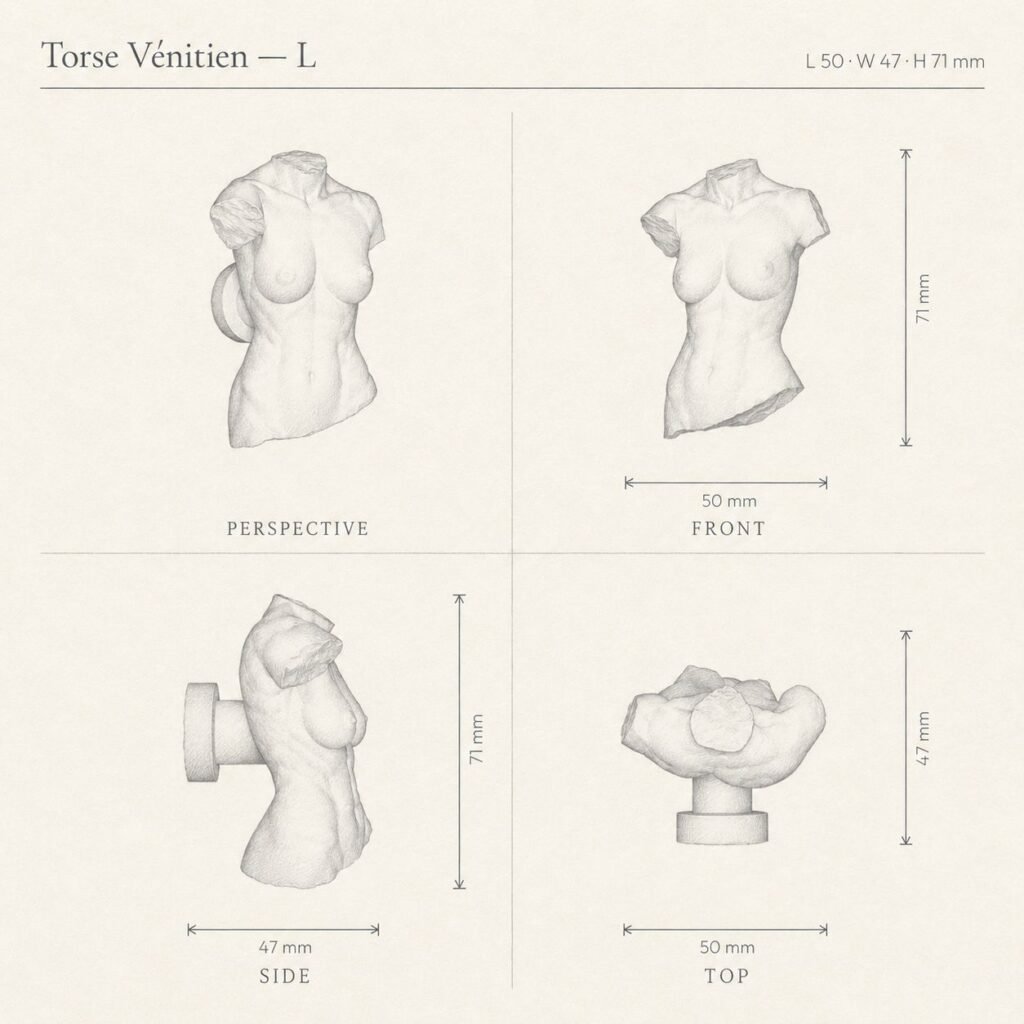
Once the finish is chosen, what remains is the gesture. Two logics coexist. The clean line, carried by the Essential range or by a Florentine Column with a bare shaft, installs across every front without ever drawing attention: it lets the fresh color speak on its own (our guide on industrial style handles explores this aesthetic further). On the other hand, a Statuary pattern, an antique torso scaled down to the size of a hand, rarely appears across an entire kitchen: it’s concentrated on a single door or the center drawer, the piece you want to highlight, while the neighboring fronts stay more discreet to give it room.
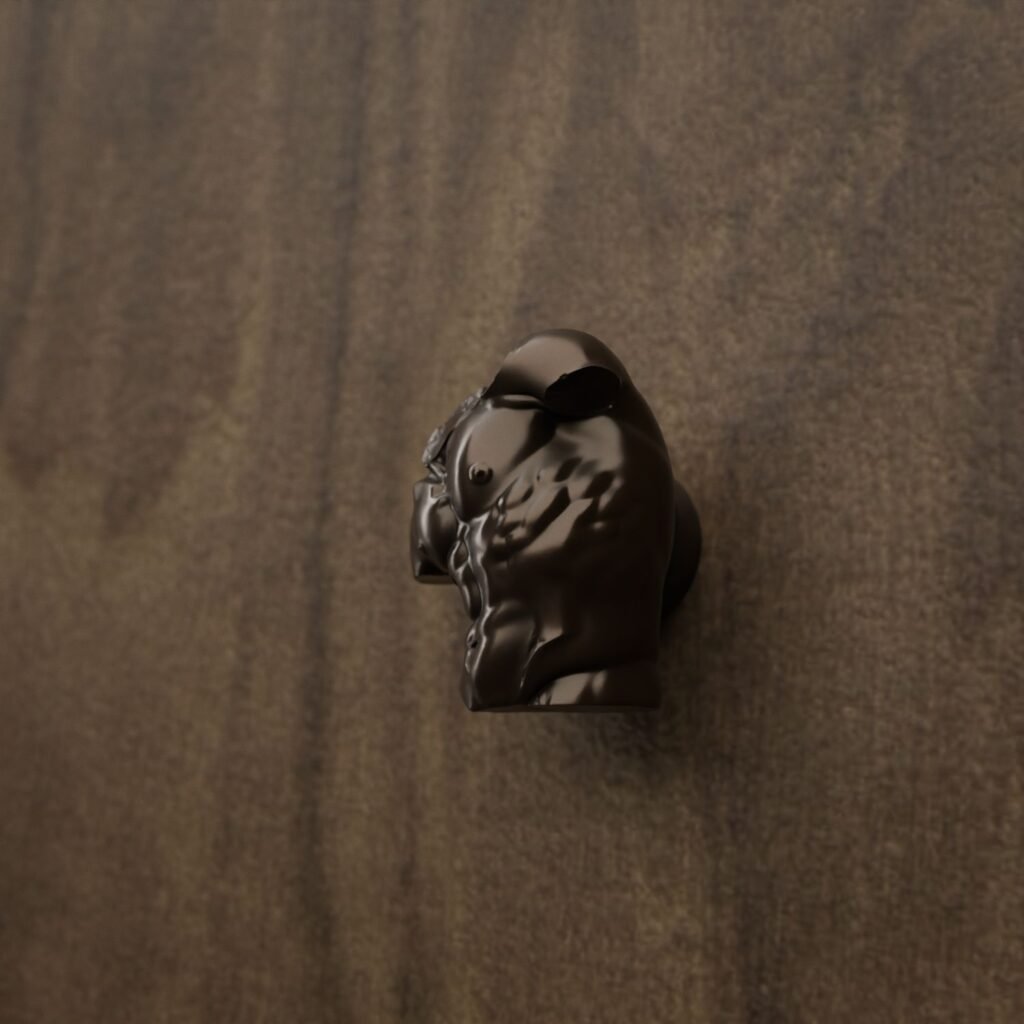
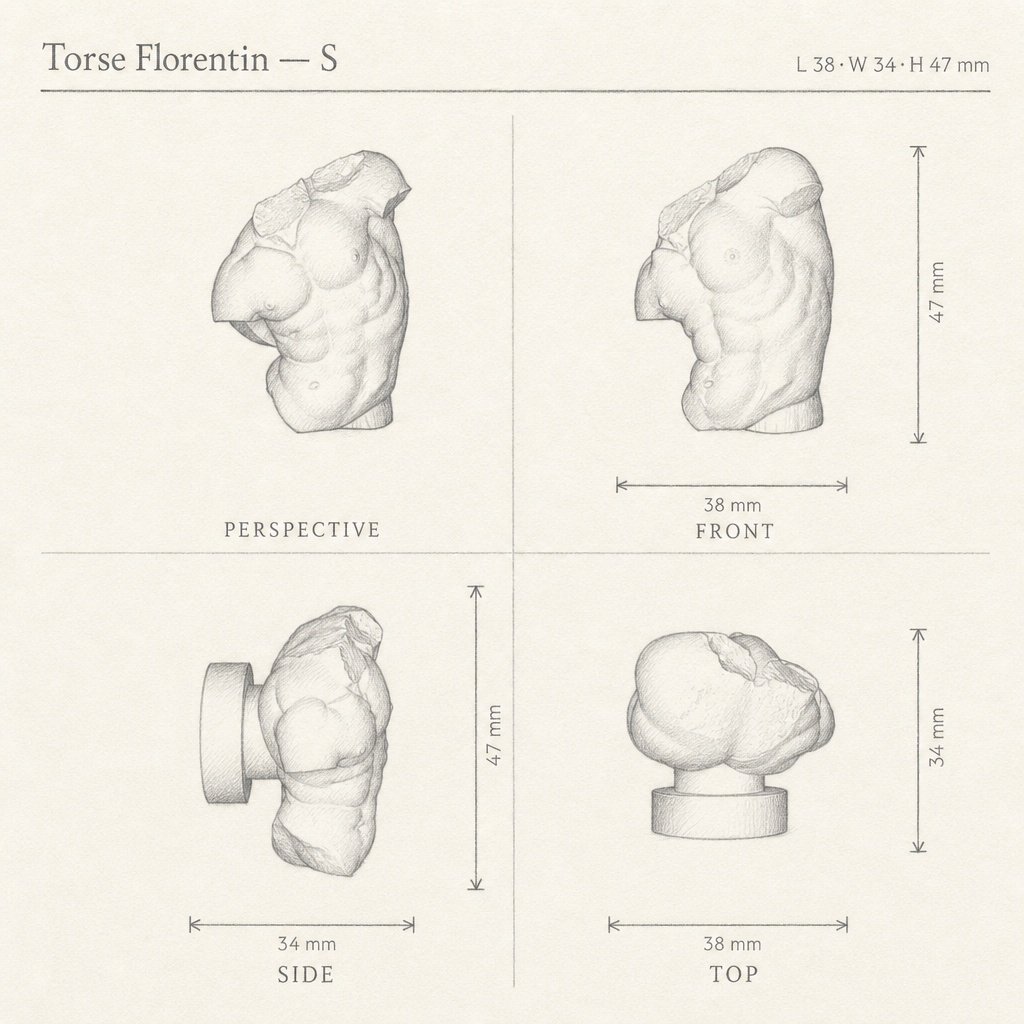
The Venetian Torso echoes the Florentine Torso on the same principle, with a softer roundness: both are reserved for a single standout piece rather than an entire kitchen.
The ornamental gesture in context, from contemporary to classic
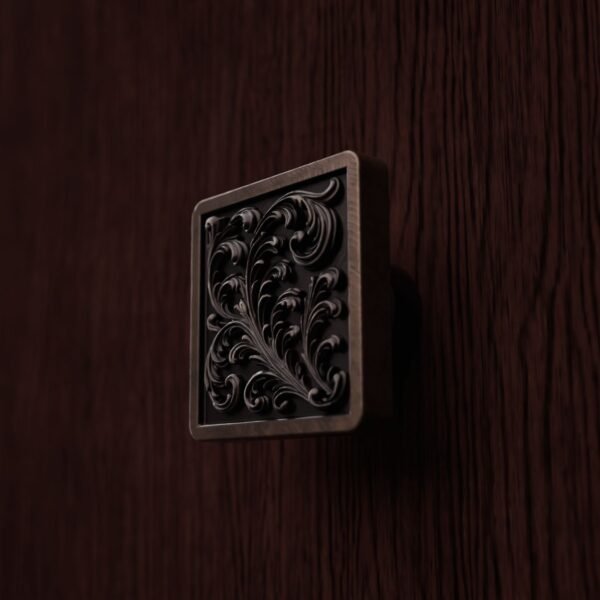
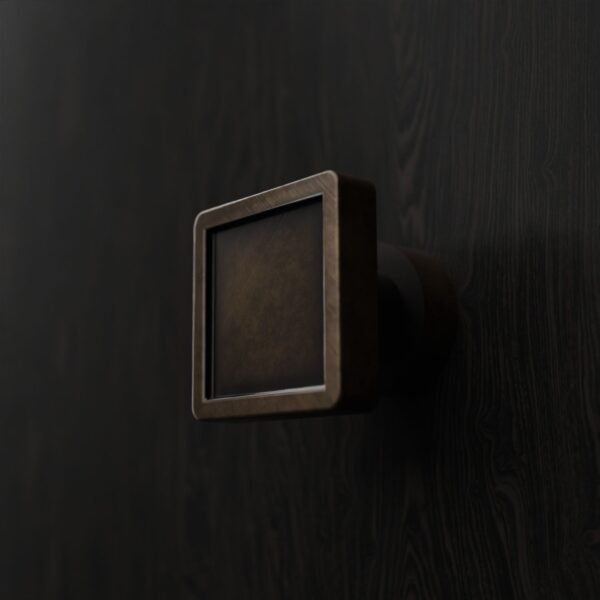
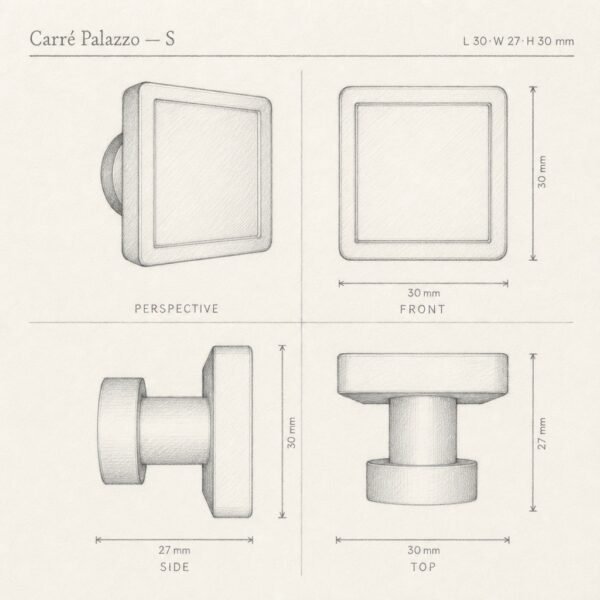
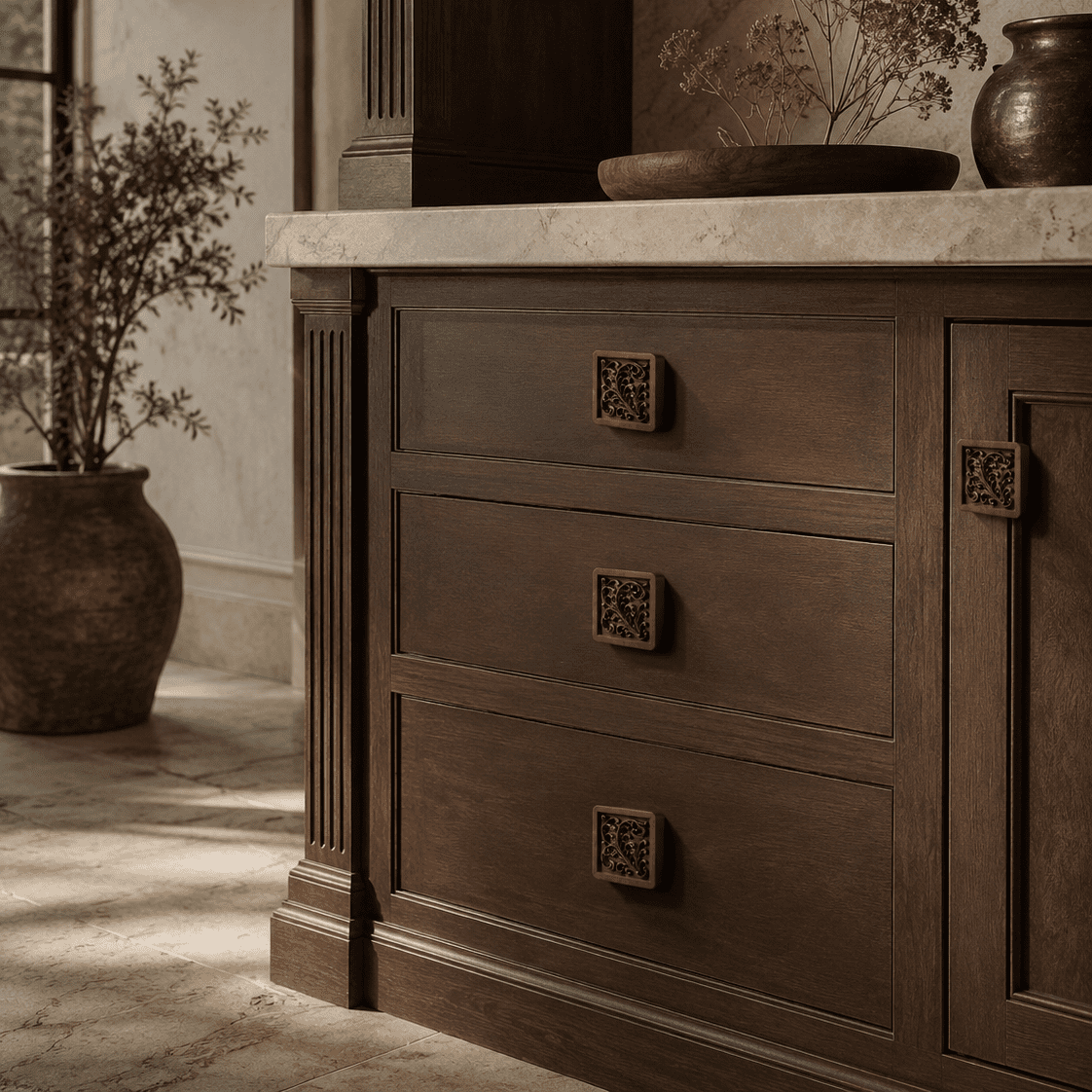
This interplay between restraint and ornament also shows up on more architectural silhouettes. The Palazzo Square keeps its softened corners and stepped frame, whether it wears the Scrollwork pattern in relief or stays bare in the Essential version: the same geometry works as well in a contemporary kitchen as on more classic furniture repainted in a deep hue. The same standard center-to-center principle applies to repainted or replaced IKEA fronts too, a case we cover in our guide to IKEA kitchen fronts.
A few pointers before you order:
- Measure the center-to-center spacing (or note the absence of drilling) before choosing a new handle
- A cool color calls for Satin Aluminum, a warm or dark color calls for a patina (bronze, brass, copper)
- Reserve a sculptural pattern for one or two key fronts rather than the whole kitchen
- Allow 5 to 10 business days to receive your order
At Holdon Paris, each handle is cast and hand-patinated in our Paris atelier, in several finishes and sizes, to complement a repainted front rather than compete with it. A detail that makes the finishing touch feel like it was always there.
Frequently asked questions
What center-to-center should you choose to replace a kitchen handle?
The most common center-to-center sizes in kitchens range from 96 to 192 mm, depending on the width of the door or drawer front. The simplest approach is to measure the existing center-to-center and choose the same value, so you don’t have to redrill a freshly painted front.
Which finish holds up best to kitchen humidity and splashes?
Aluminum, brass, bronze, and copper are all designed for kitchen use, including humid areas. Aluminum remains the easiest to maintain of the four; aged patinas (antique bronze, brass, copper) need a bit more attentive care, but gain character over time.
Can you mix a sculptural knob and a pull on the same repainted piece of furniture?
Yes, it’s even one of the house’s signatures: a silhouette comes in several patterns, creating handles that are recognizable from afar, yet different up close. A Statuary knob on a center door and an understated Florentine Column on the neighboring drawers work beautifully together, as long as you keep the same finish.
How long does it take to receive new handles after placing an order?
Allow 5 to 10 business days for the standard catalog, enough time to install them as soon as the paint on your fronts has finished drying.