Changing Your IKEA Kitchen Fronts: Which Handles to Choose
In the history of furniture, the handle wasn’t always the cabinetmaker’s domain. The blacksmith or founder who supplied a door’s ironwork practiced a distinct craft, often more delicate than the joinery it came to finish: a signature added separately, conceived apart, fitted last. The Victoria and Albert Museum holds entire collections of this small decorative hardware. This division of roles never truly disappeared. It lives on today, almost unchanged, within the ecosystem built up around IKEA kitchens.
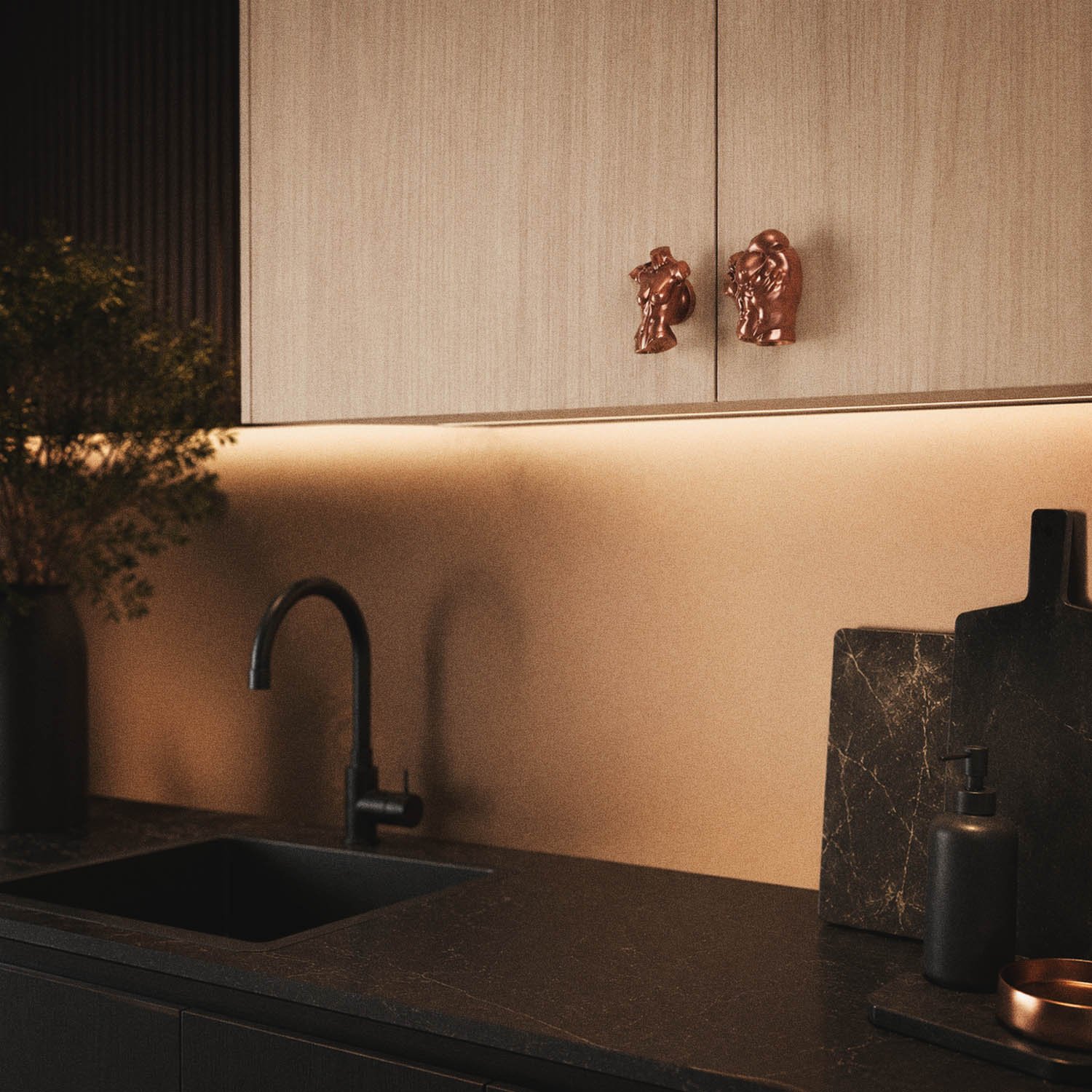
Manufacturers like Superfront, Plum, and Reform offer custom fronts designed to screw directly onto existing Metod cabinet boxes, with no structural rework. The cabinet box stays, sturdy and affordable; only the visible face changes. But a new front, however well made, usually leaves the same question open: which handle to put on it? That’s exactly the role the ironworker once played, finishing what the carpenter had started.
A new front, a cabinet box that stays
The principle is the same across all these manufacturers: keep the IKEA cabinet box, often the sturdiest and most affordable on the market, and replace only the visible face. This split between structure and facing changes the handle’s role: it’s no longer dictated by the furniture manufacturer, it becomes a choice in its own right, just like the color of the front itself. We’ve already covered how to choose handles for an original IKEA kitchen; on a custom front, the logic stays the same, with one extra check: making sure the drilling follows the same standard as the original cabinet box.
Center-to-center spacing, the only measurement that matters
Manufacturers of IKEA fronts almost all follow the so-called “System 32” standard, the same one that governs Metod cabinet boxes: hole spacing falls into center-to-center distances that are multiples of 32 mm. On a bar pull, this results in recurring measurements of 96, 128, 160, or 192 mm between the two fixing points. On a knob, a single hole is enough, no measurement needed. Before ordering, always measure the actual distance between your future holes rather than relying on the visible length of a model in a photo.
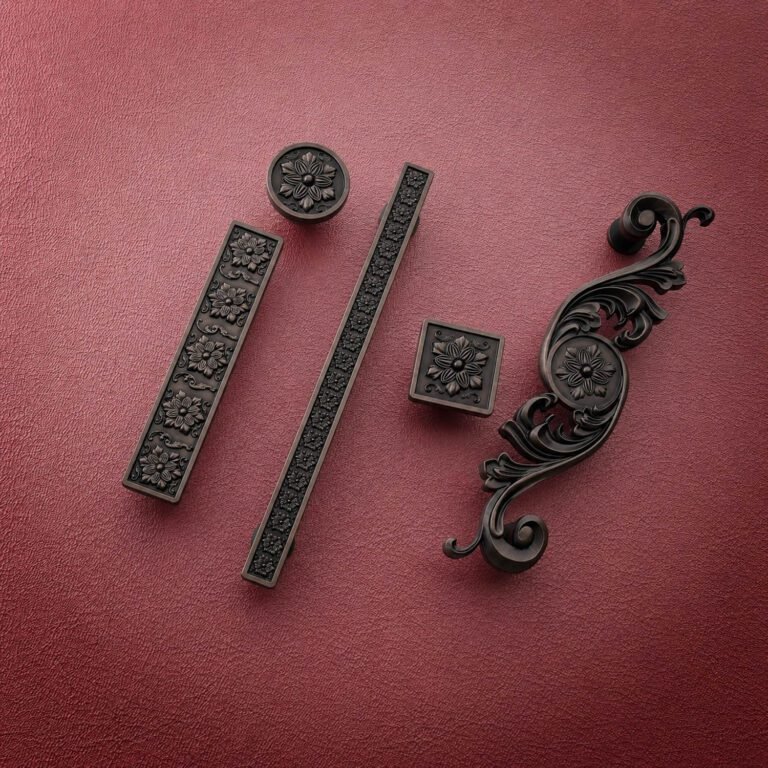
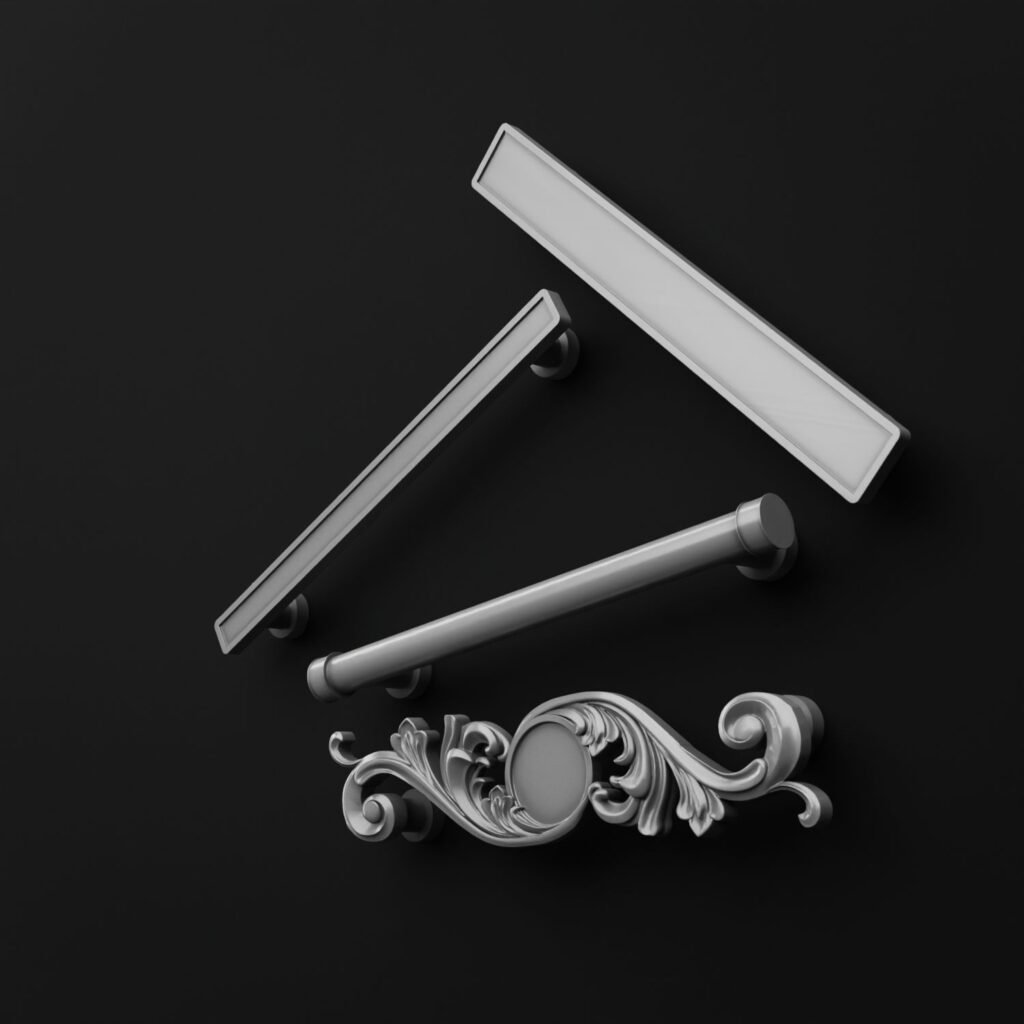
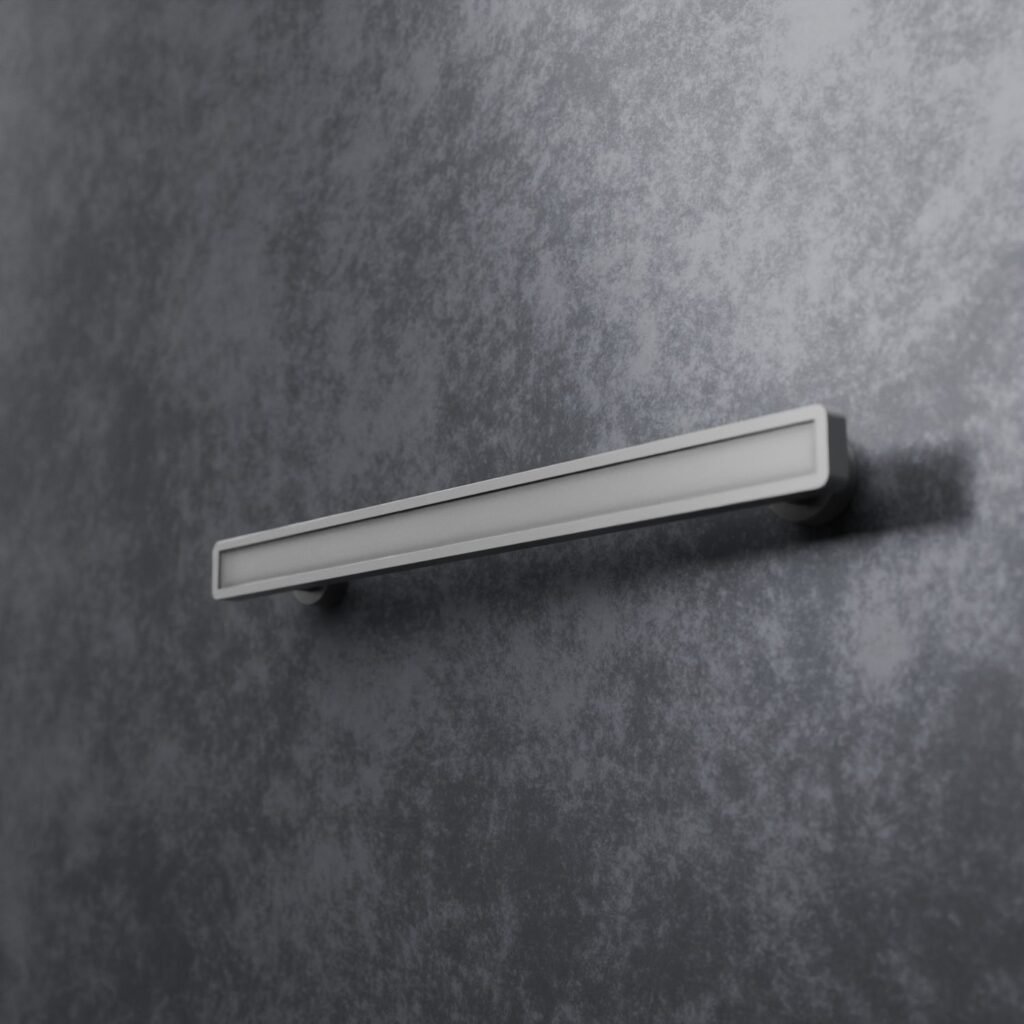
- Palazzo Bar: several lengths, from small drawers to large cabinet doors, to cover standard center-to-center spacings.
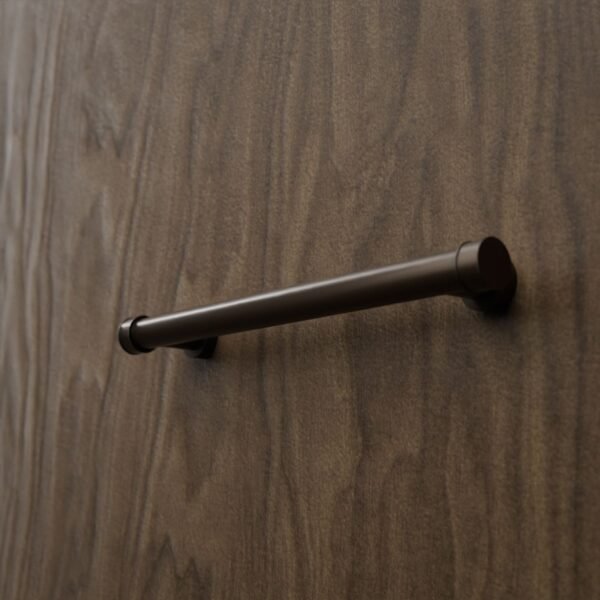
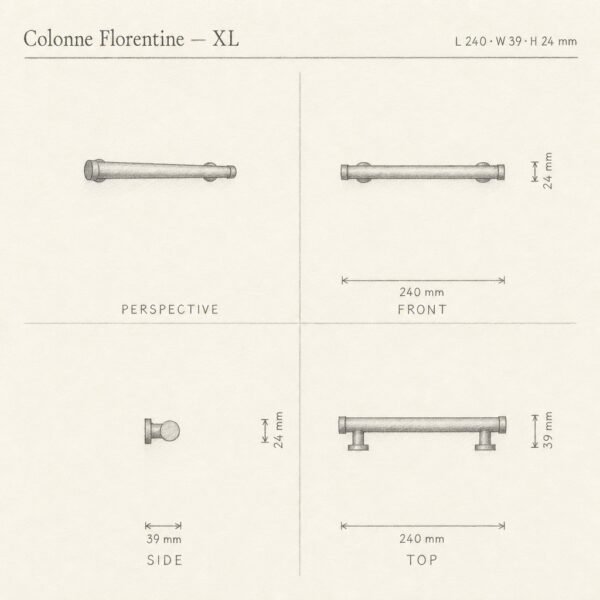
- Florentine Column: from a short version to an XL version, each calibrated to a precise center-to-center spacing.
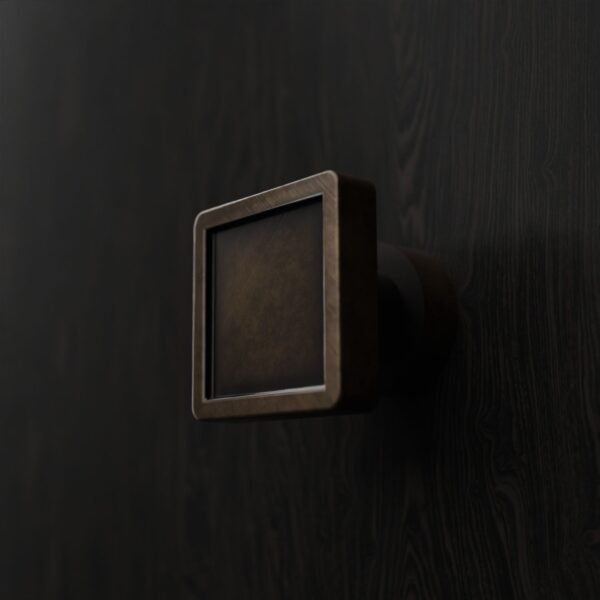
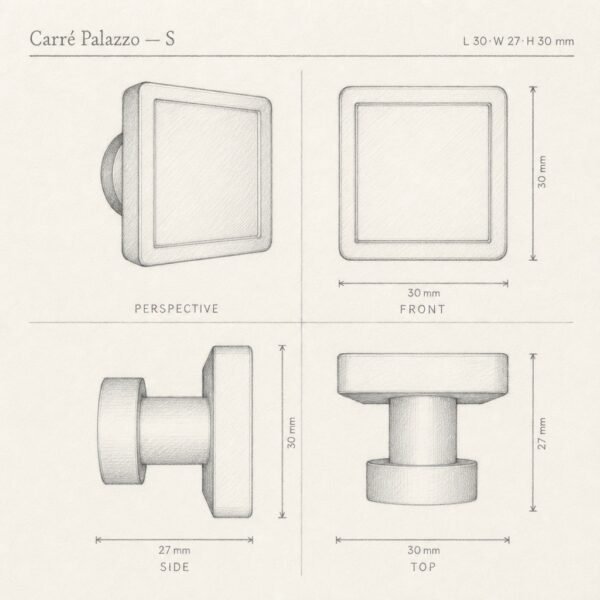
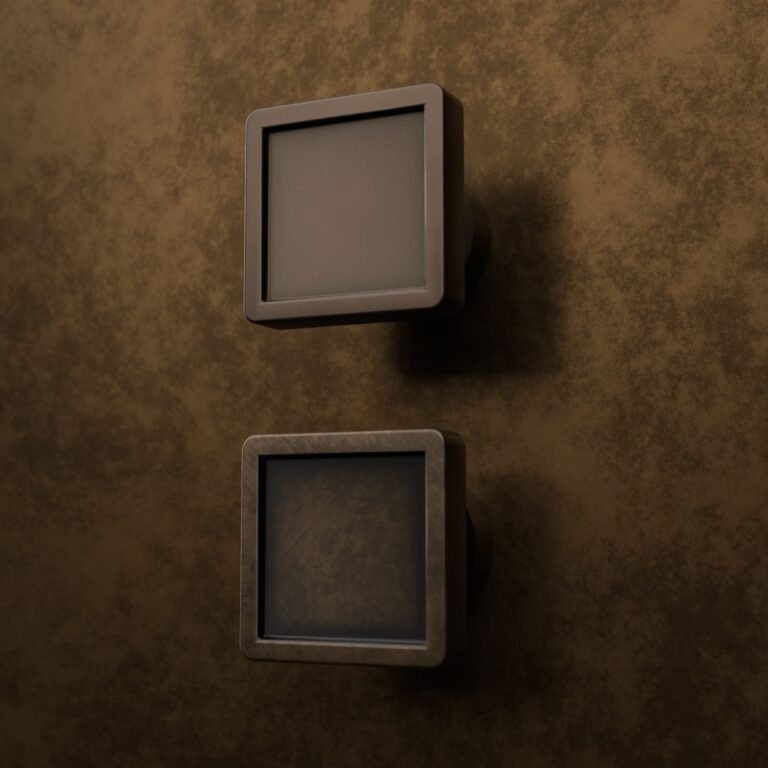
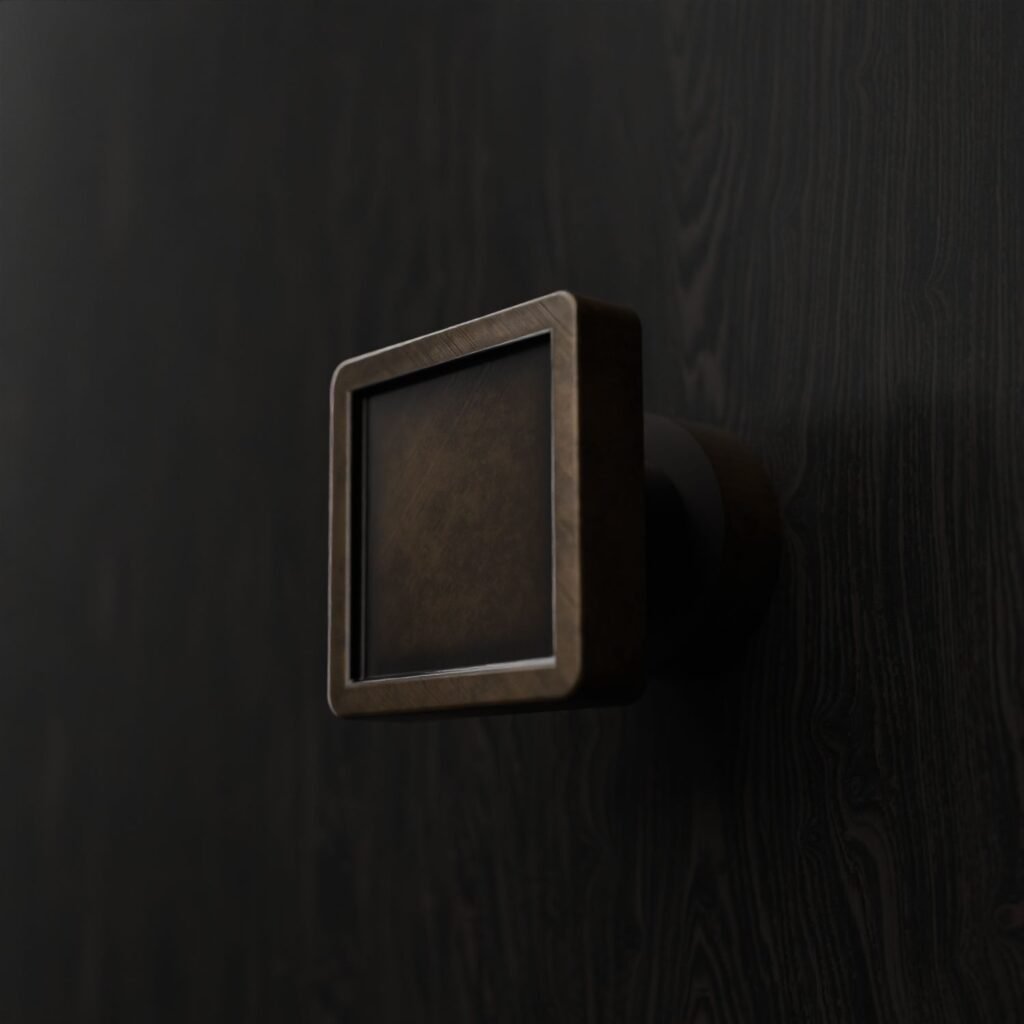
- Palazzo Square, as a single-point knob: perfect for a narrow door or to punctuate a row of low drawers.
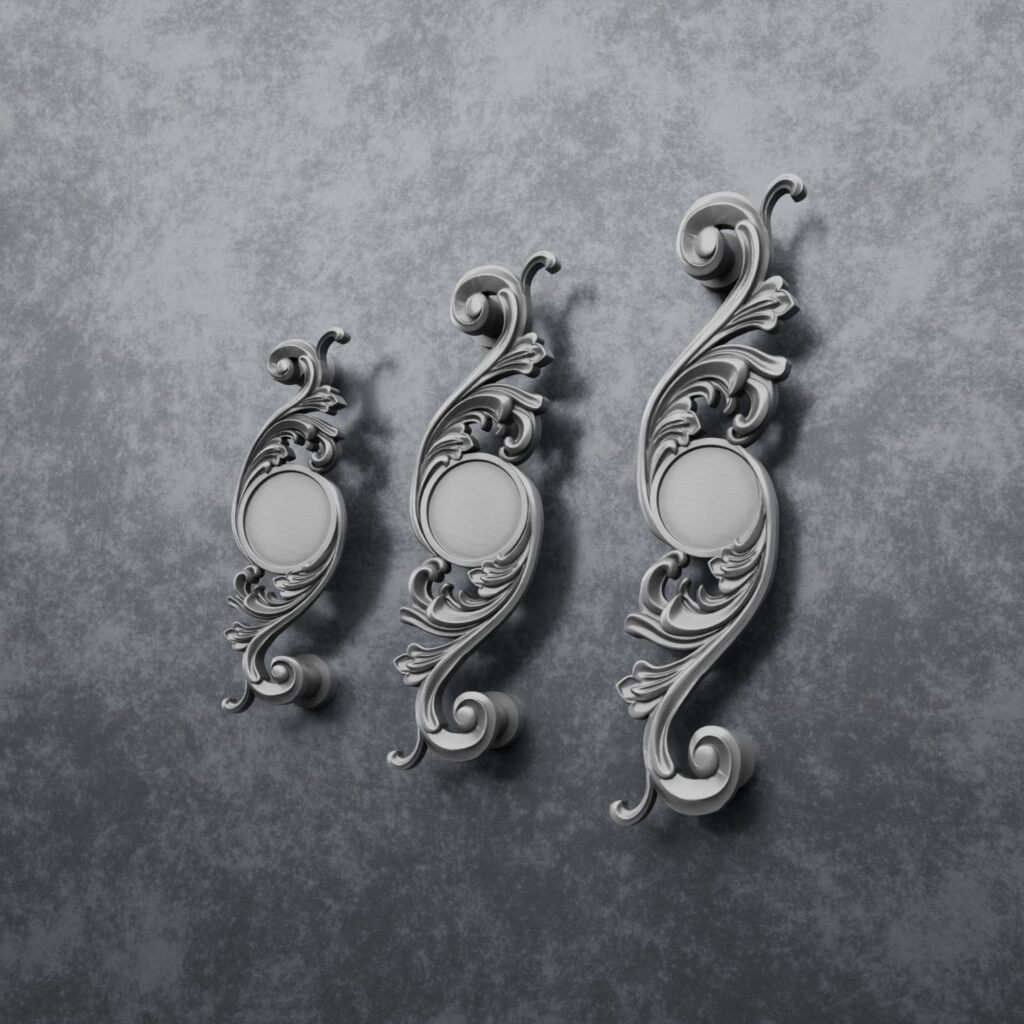
Satin aluminum or bronze: two languages for a custom front
A kitchen, unlike a closet or a living room, imposes a clear material constraint: the handle must withstand moisture and the repeated impact of intensive daily use. Metal remains the only reasonable option here; our bioresins, reserved for dry rooms, have no place on a kitchen front. Two metal languages dominate our catalog, and both pair beautifully with a custom front.
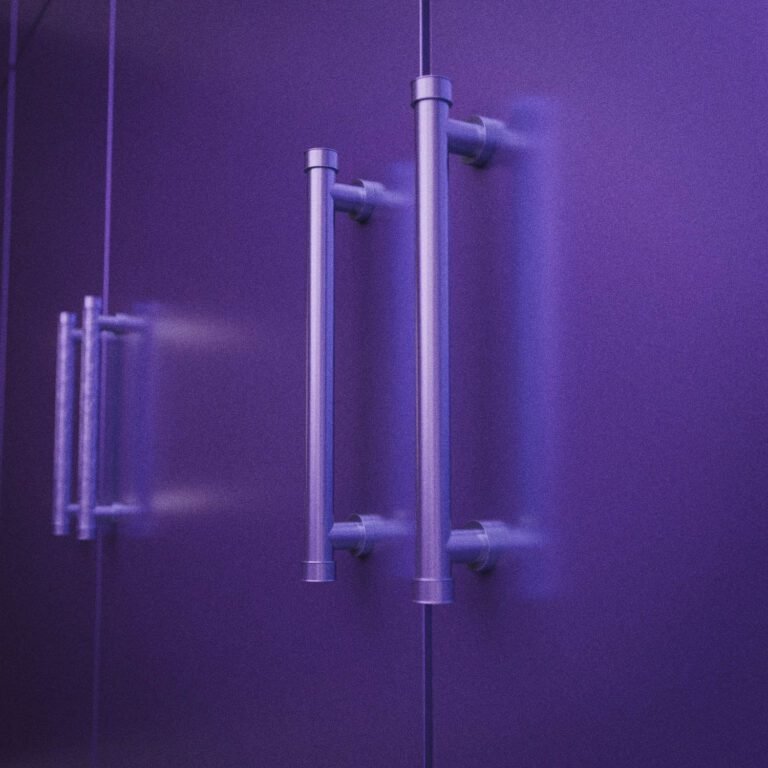
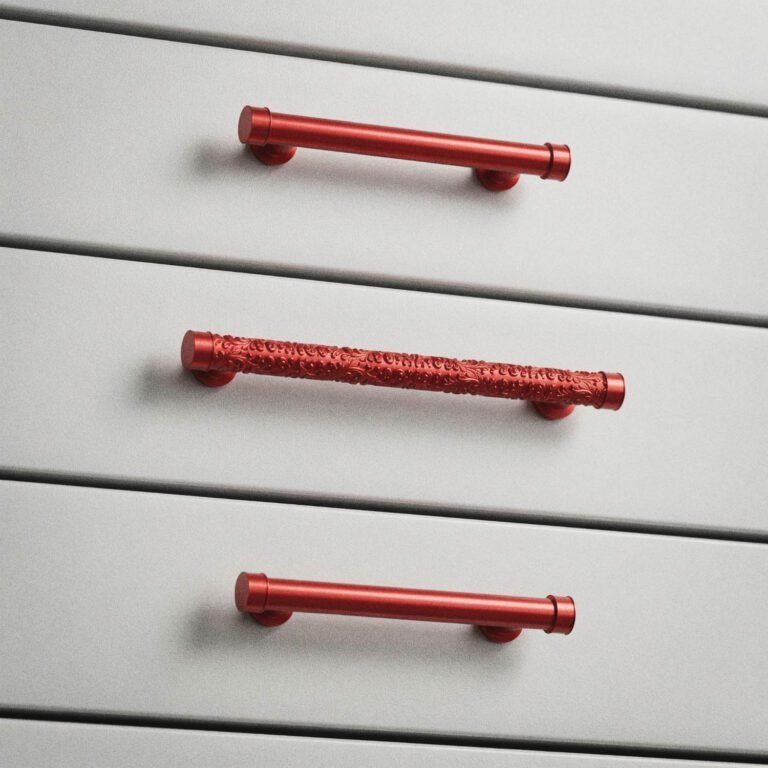
Satin Aluminum is our easiest finish to coordinate: white, gray, light or dark wood, it adapts without effort. Applied tone on tone on a pearl gray or brushed silver front, it gives a very architectural result, understated as hardware but very present in the hand. It’s also the most accessible entry point in our metal finishes, a smart choice if you’re outfitting an entire kitchen at once.
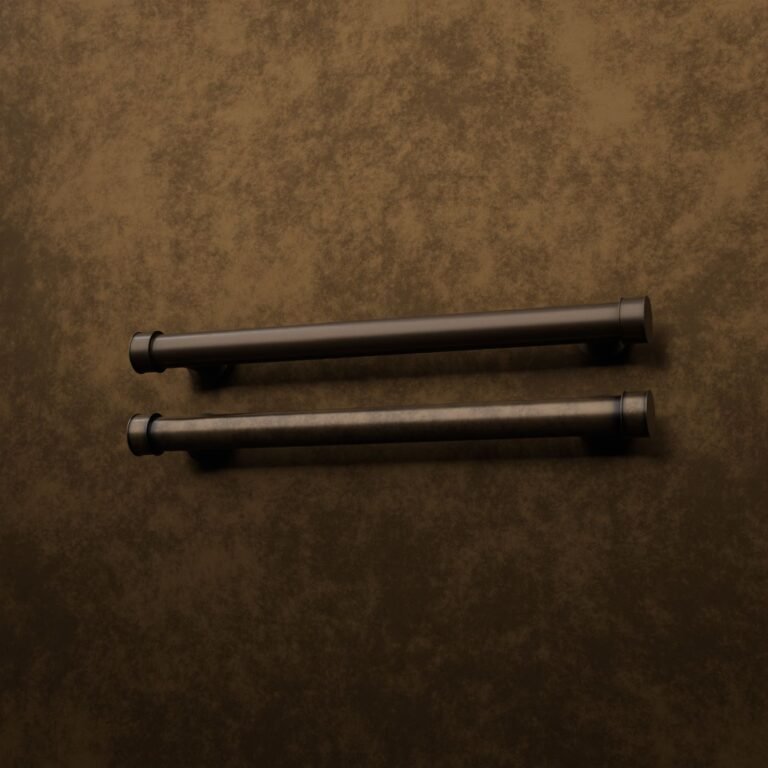
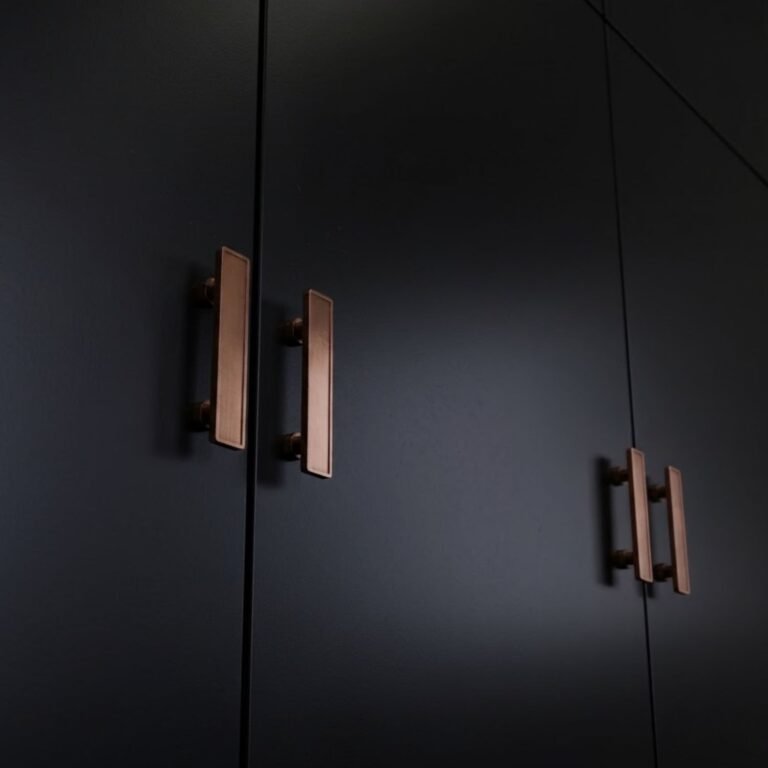
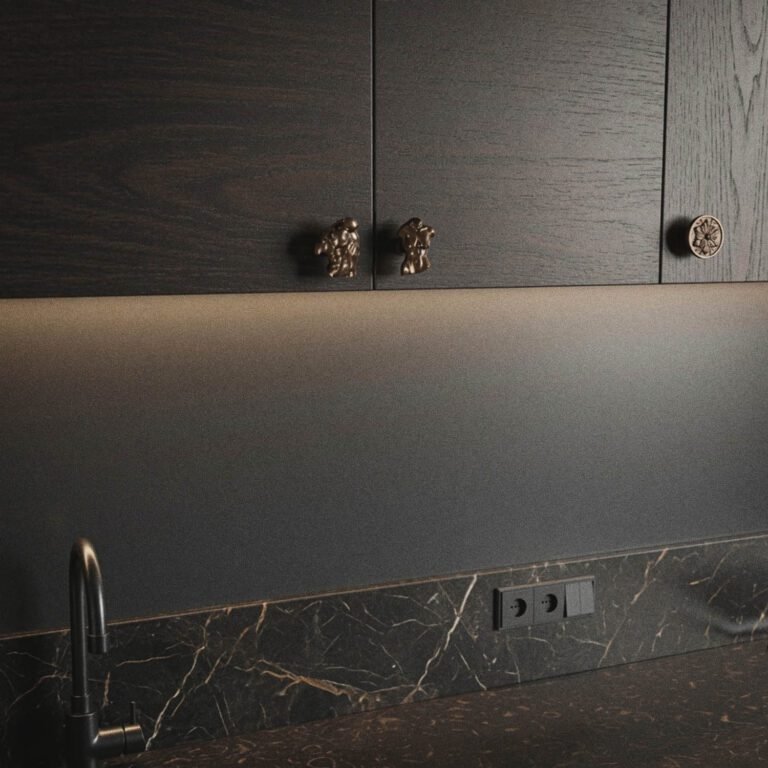
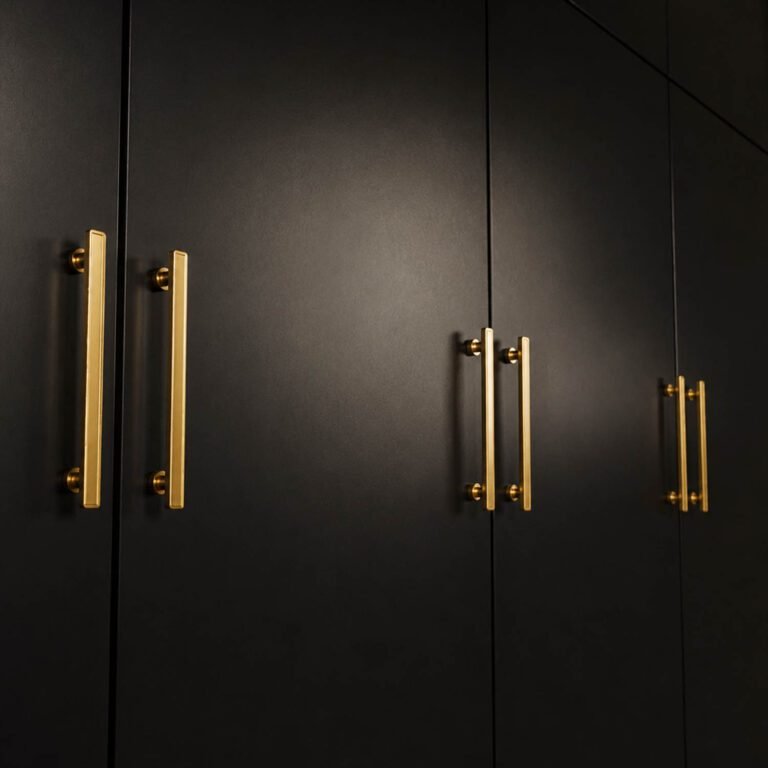
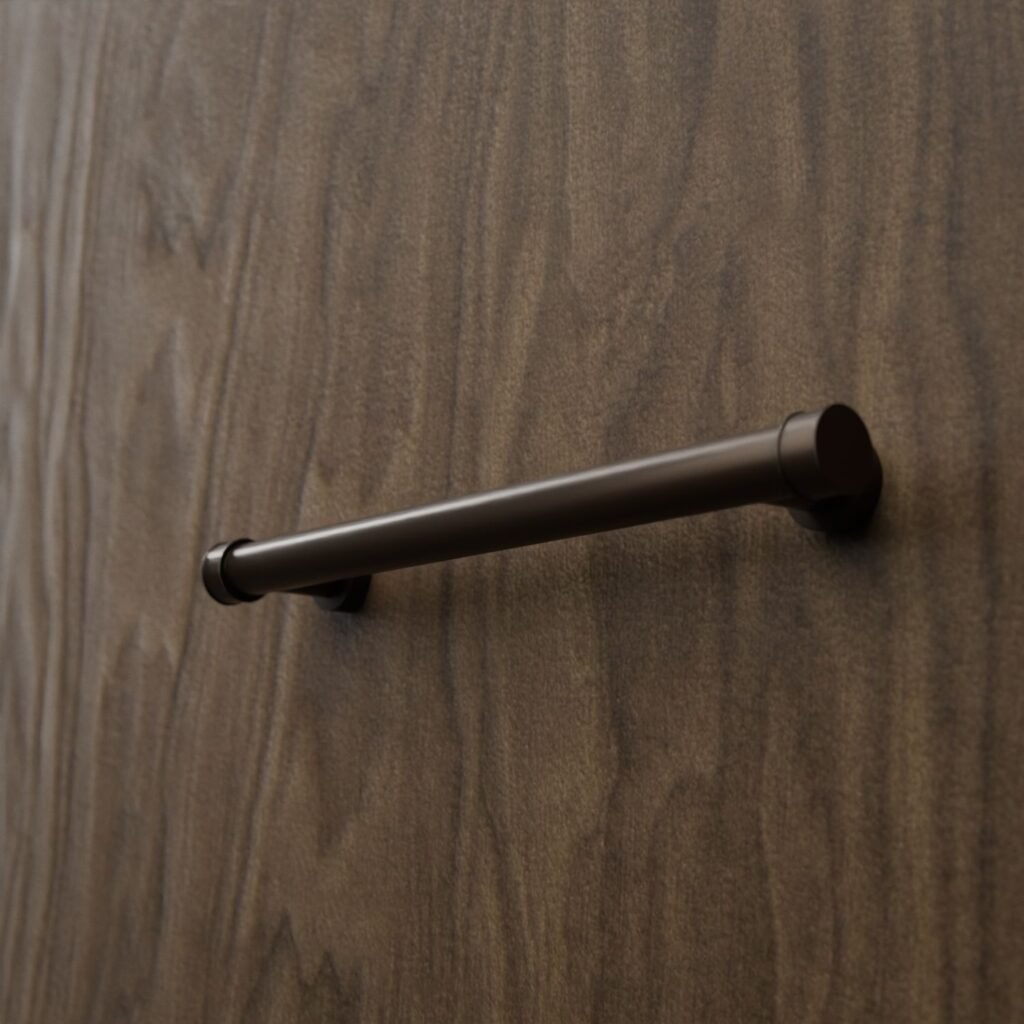
Matte Bronze takes the opposite approach: a warm brown tone, without sheen or pronounced patina, that pairs with almost anything, from light wood to linen gray. Its more narrative cousin, Antique Bronze, carries a hand-applied patina that deepens the relief and polishes the edges: it feels at home on darker fronts, smoked oak, walnut, or deep black lacquer, where it finds the contrast it needs to truly stand out. Both are premium finishes, best reserved for fronts where you want the handle to be noticed as much as the color itself.
A custom front can transform the look of an IKEA kitchen in a single day, no construction work, no contractor. The handle, though, is what closes the loop: it’s the gesture that remains, the one you repeat without a thought every time you open a cabinet. At Holdon Paris, we make these handles by hand in our Paris atelier, designed to fit both IKEA’s original cabinet boxes and the fronts that come to dress them. We’ve also covered the topic in detail for a Pax wardrobe, if your project extends beyond the kitchen.
Practical questions
Are Holdon Paris handles compatible with Superfront or Plum fronts?
Yes. These manufacturers drill their fronts to the System 32 standard, the same one used for IKEA’s original cabinet boxes. Just check the center-to-center distance listed by the front’s manufacturer and choose the matching Holdon size.
What center-to-center distance should you choose for a custom kitchen front?
The most common center-to-center distances are 96, 128, 160, and 192 mm, always multiples of 32 mm. On a front that’s already drilled, measure the actual gap between the two holes rather than the visible length of the old handle.
Can you install a metal handle directly on a new front?
Yes, with no extra steps. If the front isn’t drilled yet, hardware placement is entirely up to you: drill wherever suits you, using a 4 mm bit for the M4 screw.
Why avoid bioresin for a kitchen handle?
This light, pearlescent material is designed for dry rooms like a bedroom or a closet. A kitchen exposes the handle to humidity, heat, and heavy use: our metal finishes, aluminum, bronze, brass, or copper, hold up far better over time.
What is the easiest finish to match with a light IKEA door front?
Satin Aluminum. Its luminous gray tone pairs with white, gray, and light woods without ever competing with the door front.