Japandi Style: Why the Handle Is the Detail That Changes Everything in a Minimalist Interior
There’s a paradox at the heart of Japandi style. It’s an aesthetic of restraint (pale wood, clean lines, a palette of neutrals), and yet what sets a well-done Japandi interior apart from simple, cold minimalist decor is precisely its details. An imperfect ceramic piece. A washi paper lamp. Visible wood grain. And, this is the best-kept secret of the trend taking over in 2026, a cabinet handle chosen with rare intention.
In an interior where every object has to earn its place, the handle is no longer a detail. It becomes one of the only accents allowed. Its responsibility is immense.
Japandi in 2026: warm minimalism, not cold
Japandi is not a passing trend. This fusion of Scandinavian minimalism and the Japanese philosophy of wabi-sabi has become the contemporary answer to an oversaturated era. Where pure Nordic minimalism could feel clinical, Japandi adds warmth, patina, and imperfection embraced as beauty.
In practice, a Japandi kitchen means fronts in light oak or satin linen, countertops in natural stone, pendant lights in paper or matte black metal, and (this is where it all comes together) handles that bring the room’s single metallic accent.
This economy of material forces a choice. When you get only one visible metal element, it had better be beautiful. It had better age well. It had better tell a story.
Which materials work for Japandi handles?
Not all metals are equal for this. Japandi has its preferences, and they follow directly from the philosophy behind it.
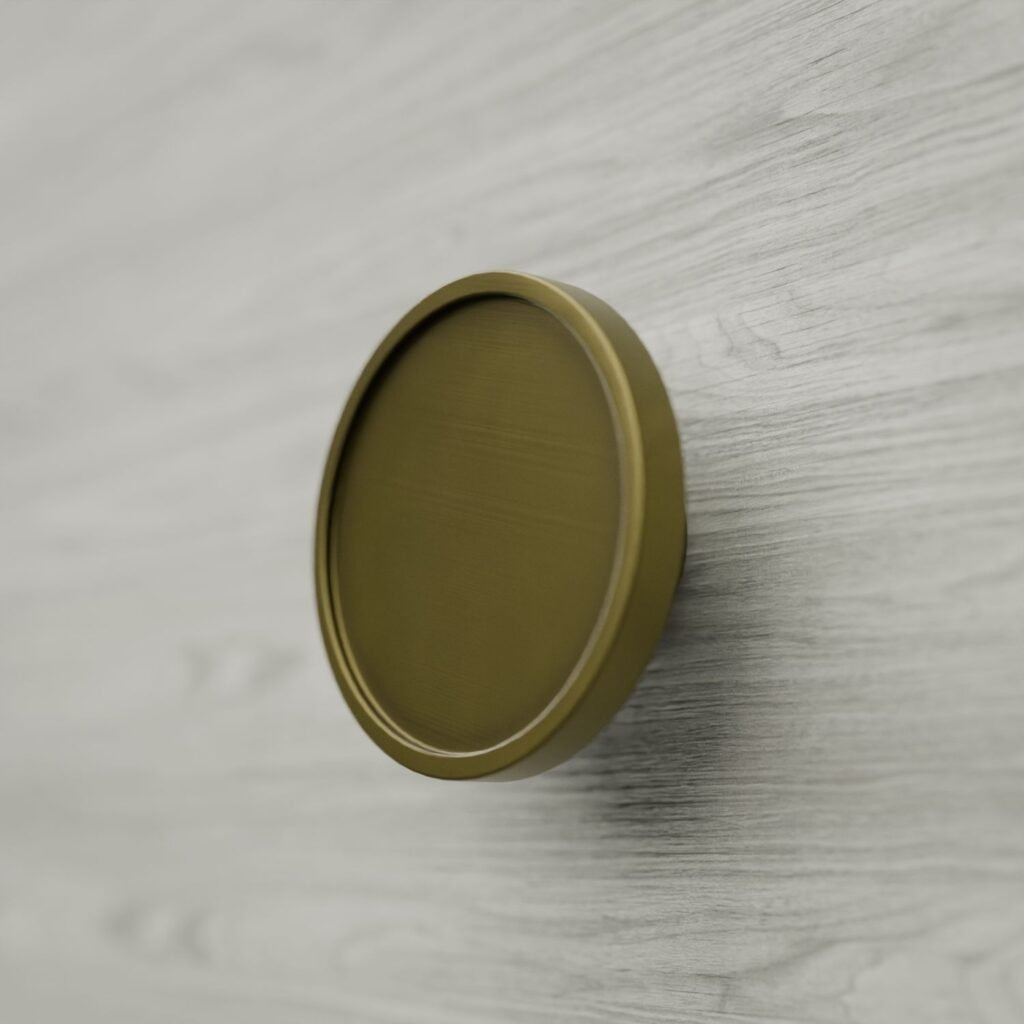
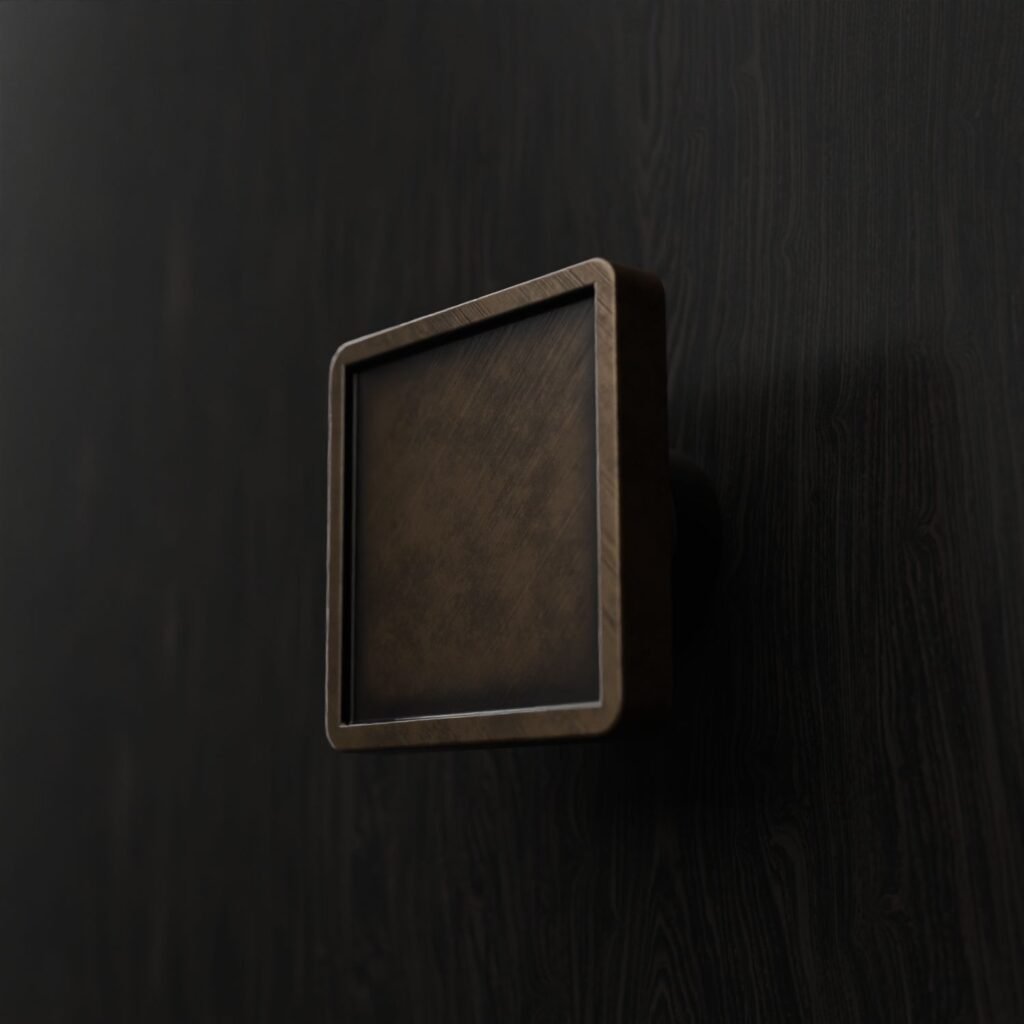
Brushed brass: the finish that warms without shouting
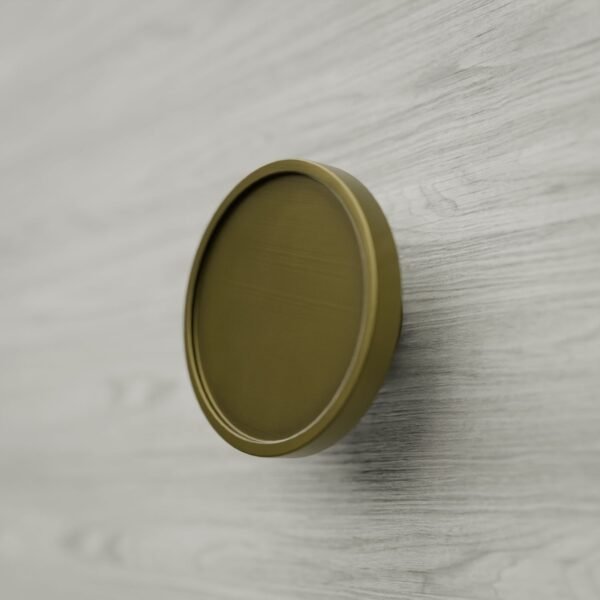
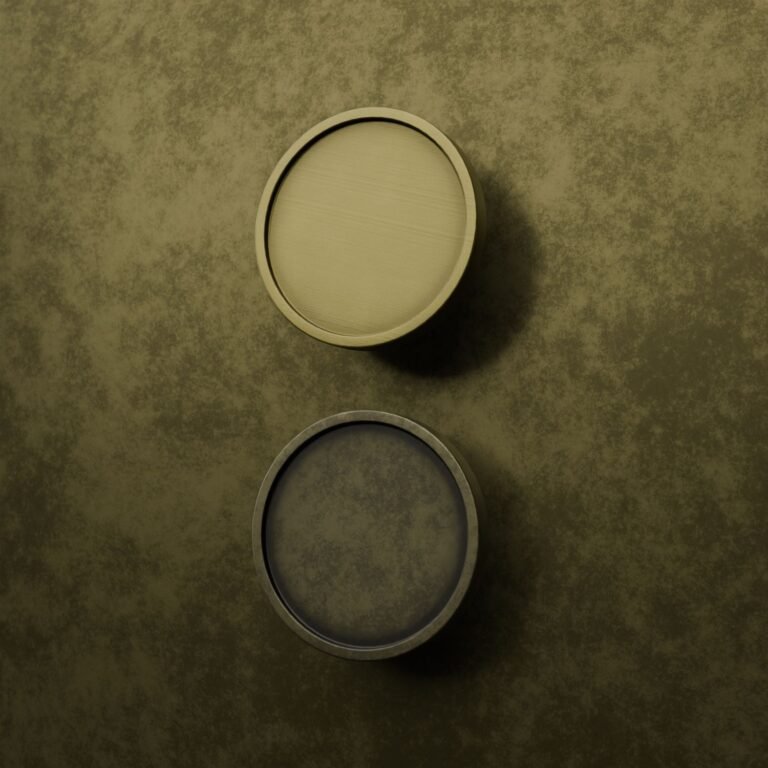
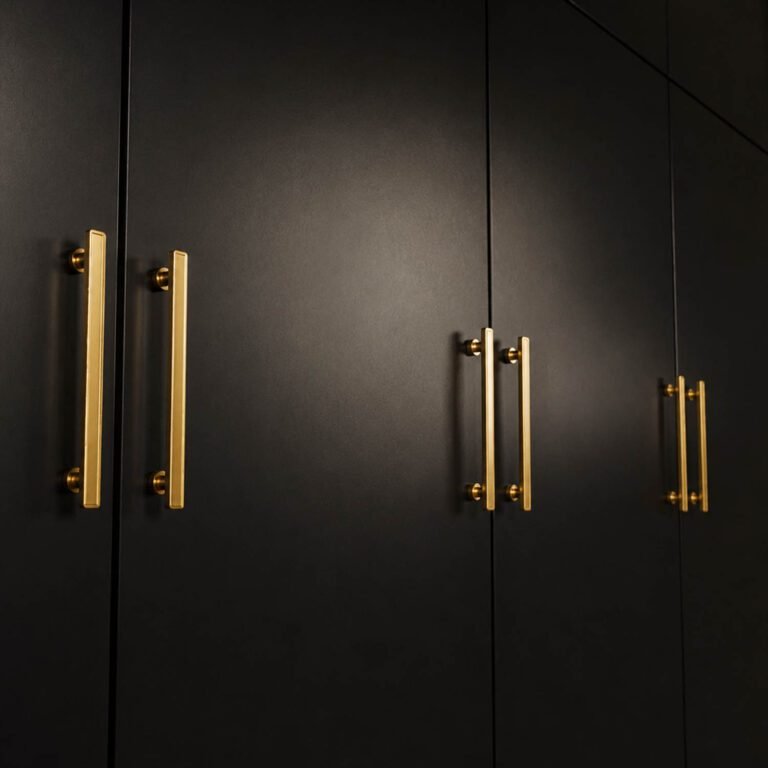
Brushed brass is, without question, the standout finish of 2026 in Japandi interiors. Its tempered gold tone (neither too yellow nor too showy) pairs beautifully with light woods, stoneware ceramics, and raw linen. It brings warm light without the fanfare of polished brass.
Its greatest quality, above all, is the way it ages. Over the months, brushed brass develops a light patina, almost imperceptible at first, that gives it a character all its own. This evolution is exactly what wabi-sabi seeks: beauty that settles in with time, carrying the honest marks of use.
Patinated bronze: quiet depth
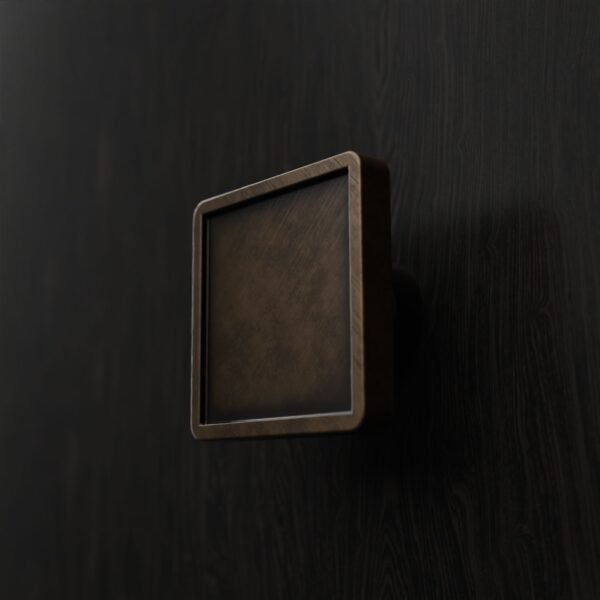
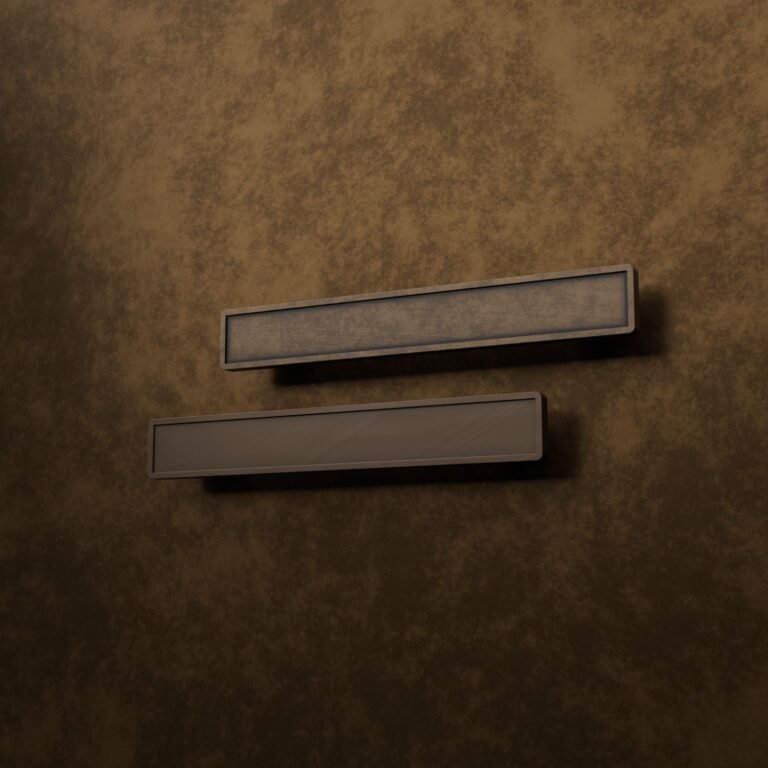
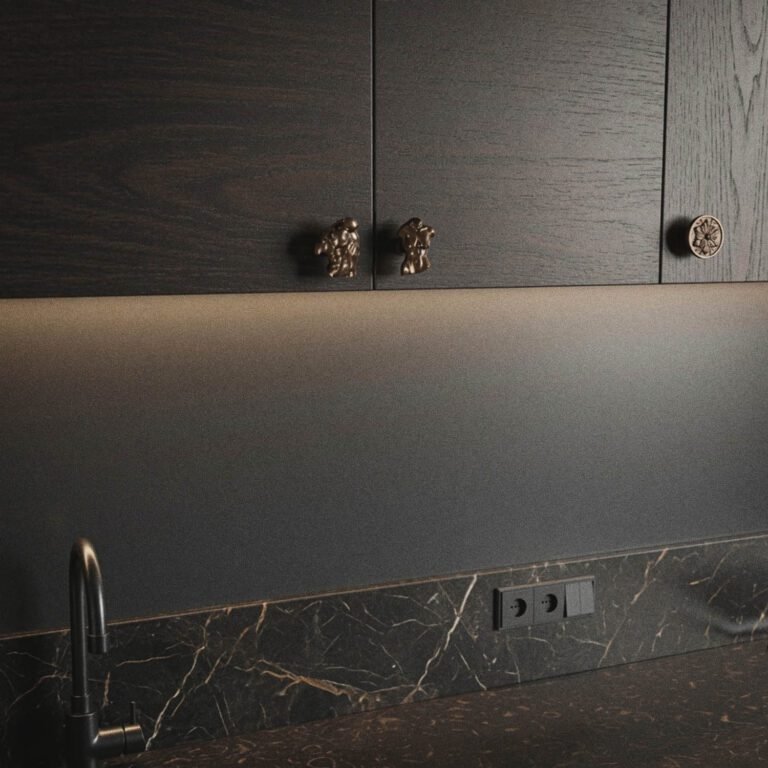
Bronze is more understated than brass, darker, more introspective. Its palette runs from warm brown to nearly black tones. In a Japandi interior already built on many light tones, bronze works as a visual anchor (a point of gravity that keeps the composition from feeling too weightless).
On a light oak dresser, on an oiled ash sideboard, on the fronts of a pale linen kitchen, a patinated bronze handle becomes the element that structures the eye. Its presence is calm, its beauty doesn’t try to seduce.
Matte black: the graphic accent
Rarer but remarkably effective, matte black (whether cast iron, patinated steel, or blackened bronze) works in Japandi interiors that embrace a bolder graphic touch. On an off white cabinet or very pale oak, a black handle creates an almost calligraphic contrast, reminiscent of the tea ceremony’s aesthetic: precision, restraint, intention.
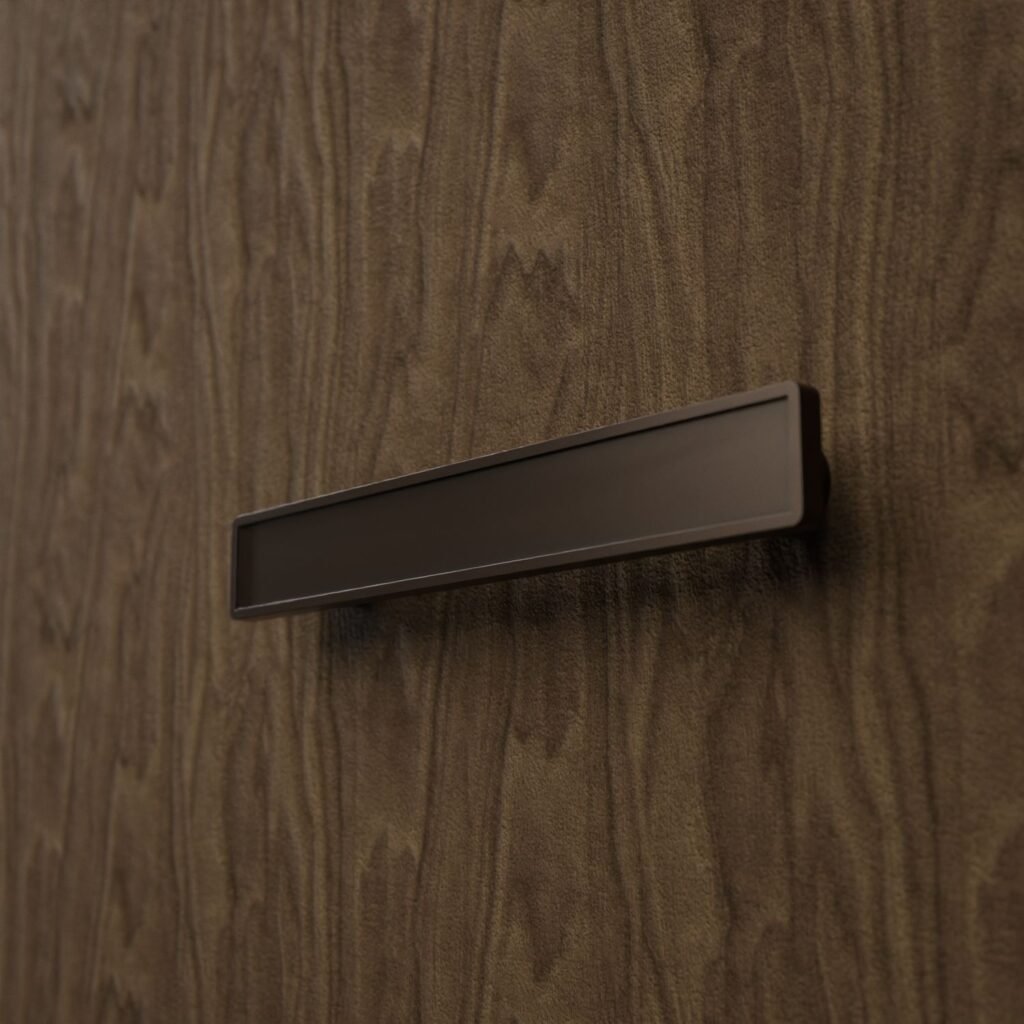
Form and Proportion: The Less But Better Rule
Beyond material, the shape of the handle is what distinguishes a successful Japandi from a generic one. Three principles guide the choice.
Favor soft lines, not just geometric ones
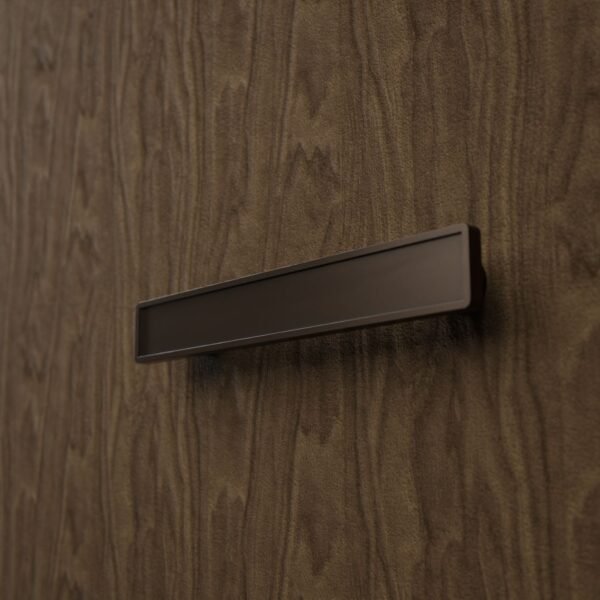
Japandi rejects the cold rigor of strict modernism. A purely rectangular pull bar with sharp angles can feel too technical. A bar with slightly rounded ends, or a hand sculpted handle with its own small imperfections of making, fits naturally into the aesthetic you’re after.
One handle family per room
In a Japandi interior, consistency matters more than variety. Avoid mixing a brass bar on the kitchen with a chrome knob on the living room sideboard. Choose one family (a material, a finish, a logic of form) and keep it throughout the room. The eye needs somewhere to rest.
The right size
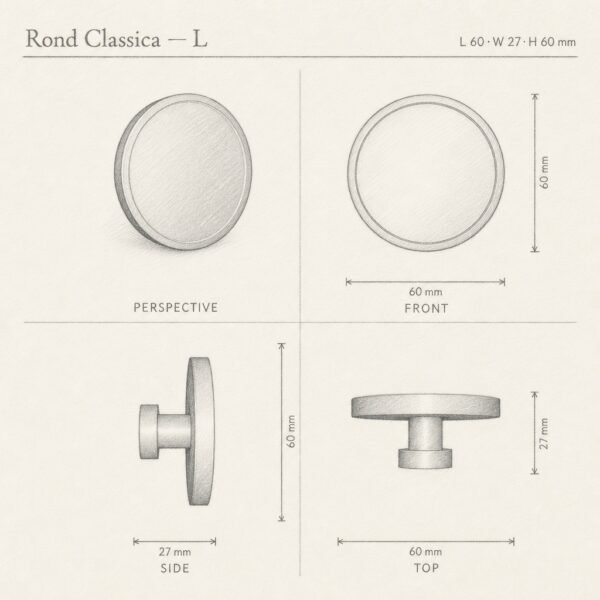
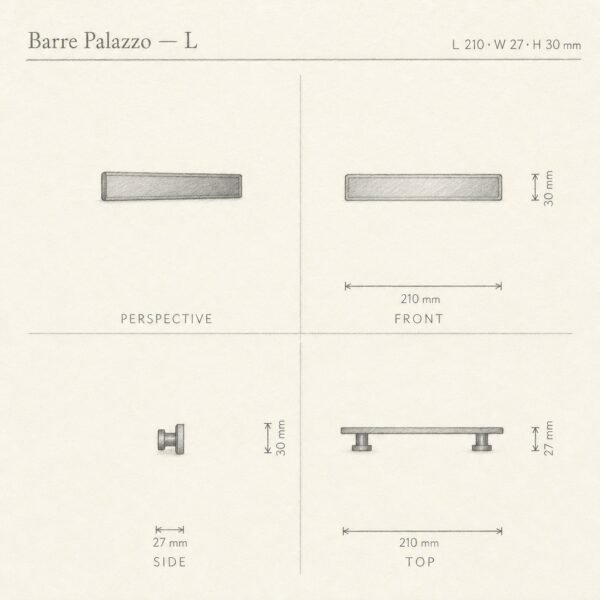
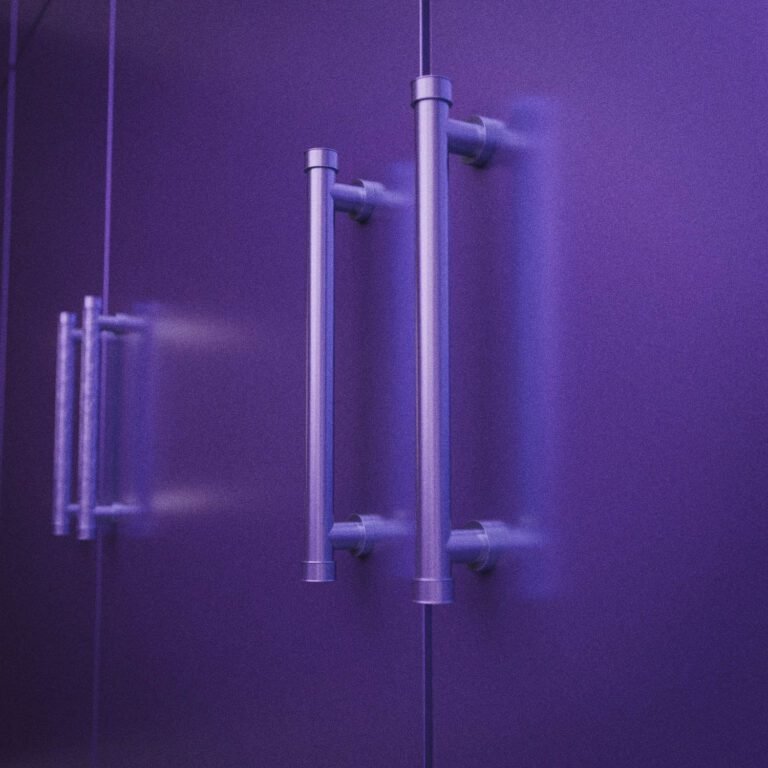
A Japandi handle is rarely tiny, but never imposing. It’s sized to match what it opens. On a large drawer front, a generous 128 or 160 mm pull. On a small sideboard, a substantial single point knob. Proportion is everything: it reflects the respect you show the piece.
Embracing Imperfection: What Wabi-Sabi Changes in Hardware
This is perhaps the most subtle point. Wabi-sabi celebrates pieces that aren’t perfectly identical, that carry the traces of their making, that are willing to age.
This philosophy is the polar opposite of industrial hardware, where every piece off the mold is supposed to be identical down to the millimeter. In a Japandi interior, a handmade handle, whose patina will vary slightly from one piece to the next, isn’t a flaw: it’s a signature.
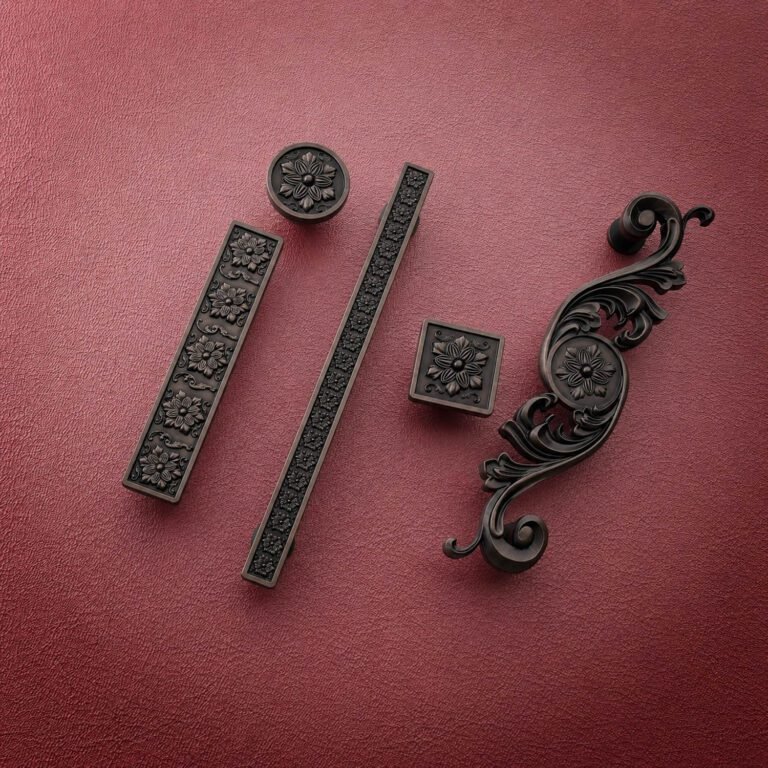
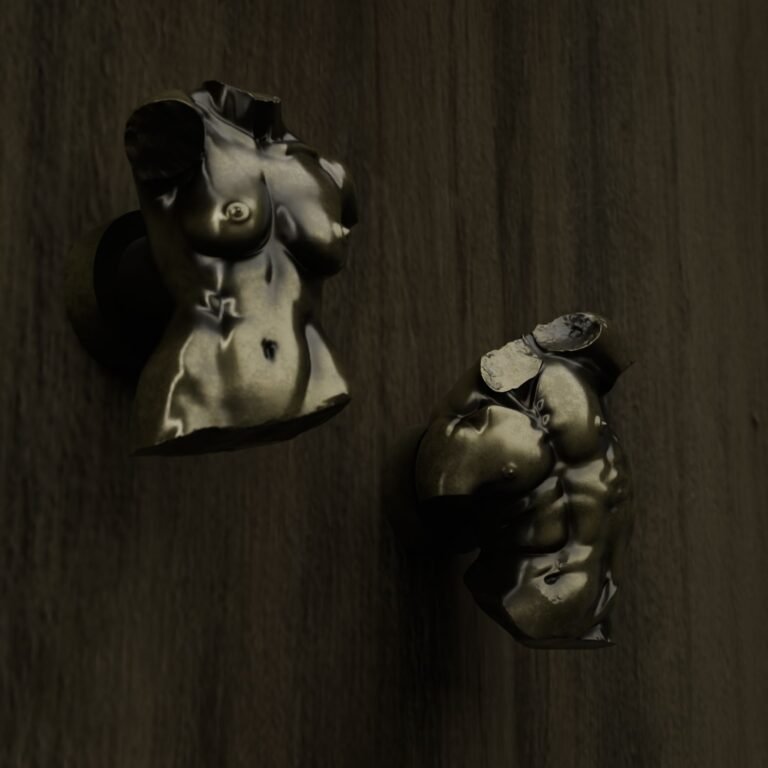
This is precisely the philosophy that guides our work at Holdon Paris. Our bronze, copper, and brass handles are designed digitally, cold-cast, then hand-polished and patinated in our Paris workshop. No two handles of the same model will ever be perfectly identical. Each carries a slight variation in tone, a nuance of patina. This singularity is intentional: it belongs to the long tradition of handmade objects, which accept that every piece is a little unique.
How to bring Japandi handles into your home, without redoing everything
The great advantage of Japandi is that it doesn’t require a full renovation to make its way in. A few targeted touches are enough.
Start with a central piece of furniture in the room: the dresser in the bedroom, the sideboard in the living room, the kitchen as a whole. Replace the existing handles with brushed brass models, bronze, or matte black. Check the center-to-center measurement before ordering: most standard furniture uses 64, 96, or 128 mm centers, perfectly compatible with quality hardware.
Once the central piece is transformed, take a look. Very often, this single change calls for the others: the lamp, the mirror, the coat hook will naturally align with the new palette.
Japandi is built this way, through successive touches. Not through rupture, but through intention.
Holdon Paris: handles designed for calm interiors
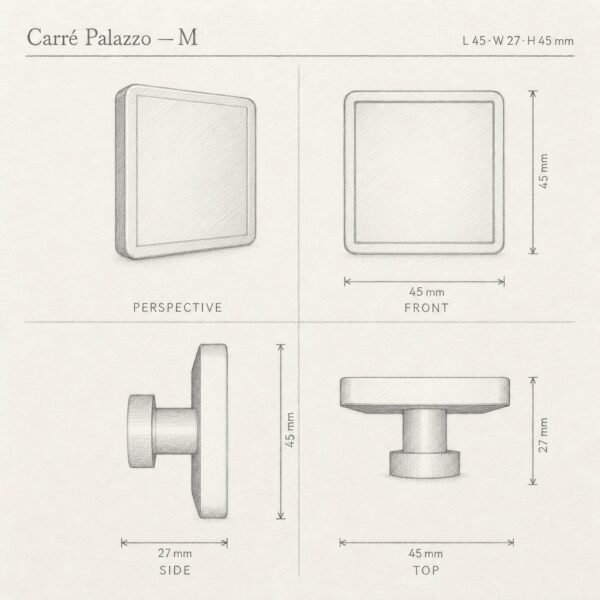
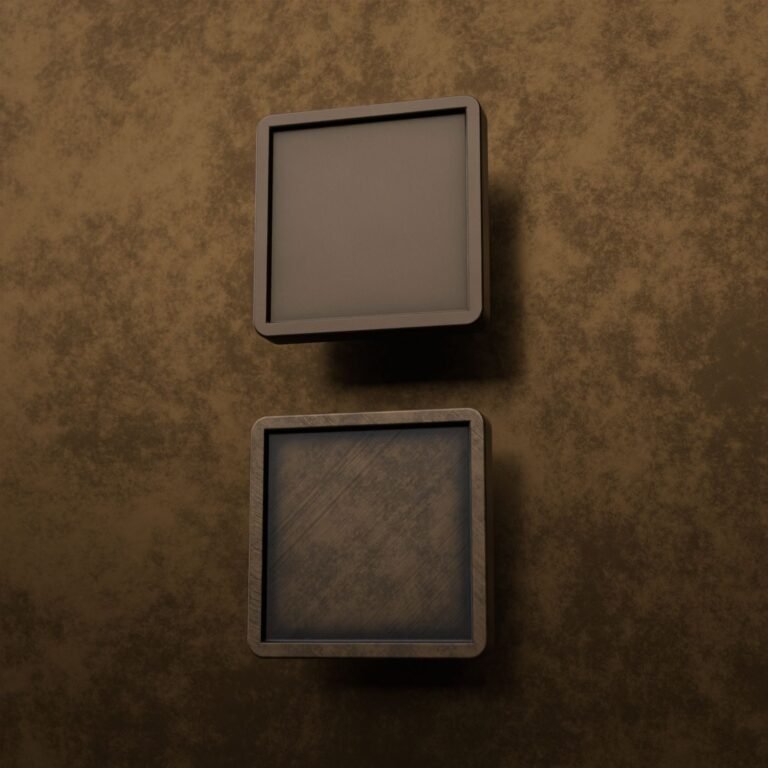
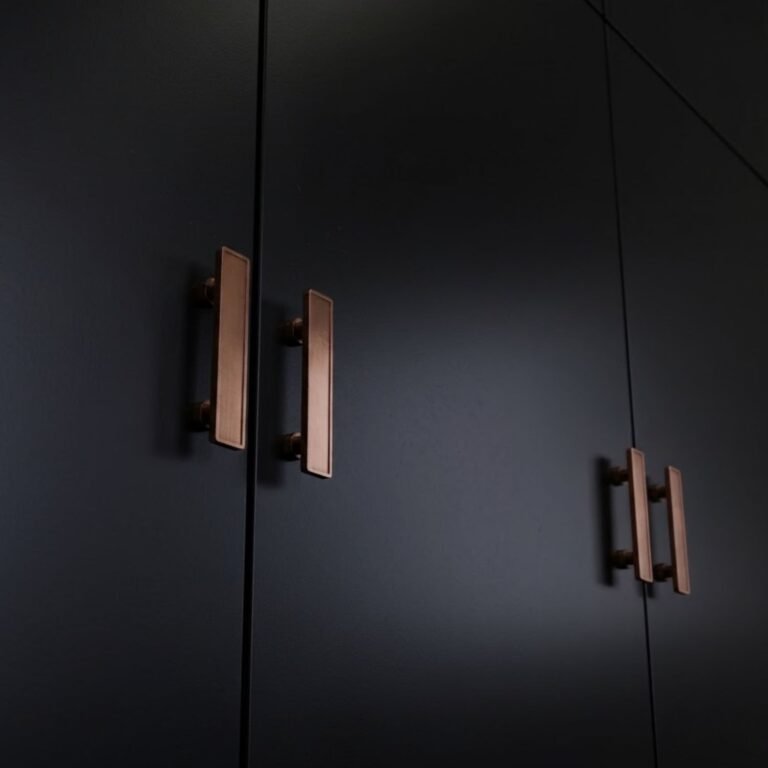
At Holdon Paris, we design and craft cabinet handles in bronze, copper, and brass in Paris, whose shapes and finishes find their place in Japandi interiors. Our first collection, Palazzo Square, offers sculptural pieces with patinated finishes (antique bronze, satin copper, brushed brass) compatible with IKEA, Plum, and Superfront fronts and most standard furniture on the market.
If the Japandi spirit speaks to you and you’re looking for the handle that will bring the perfect accent to your interior, discover our collections or sign up for our newsletter to hear about upcoming pieces.