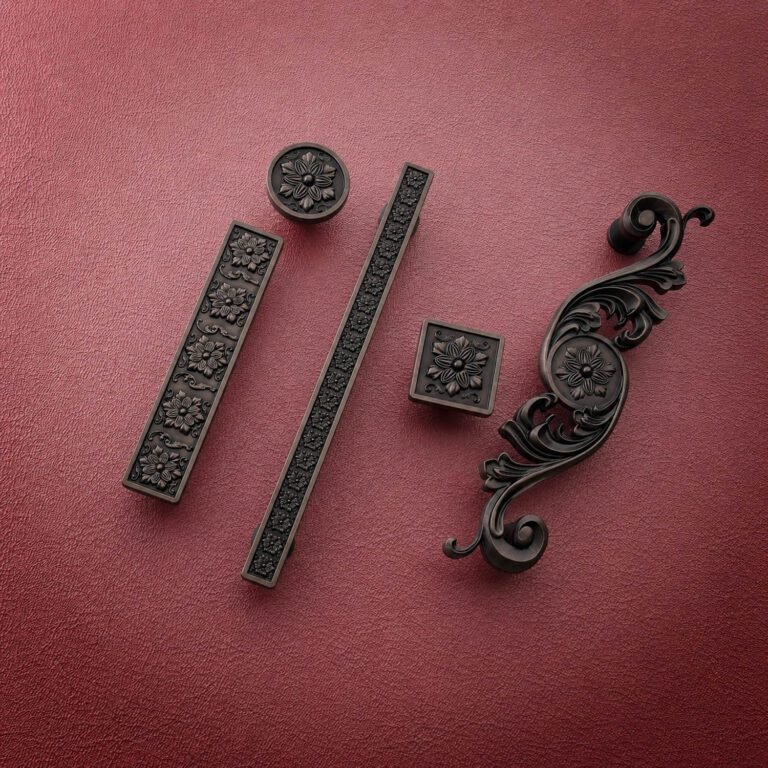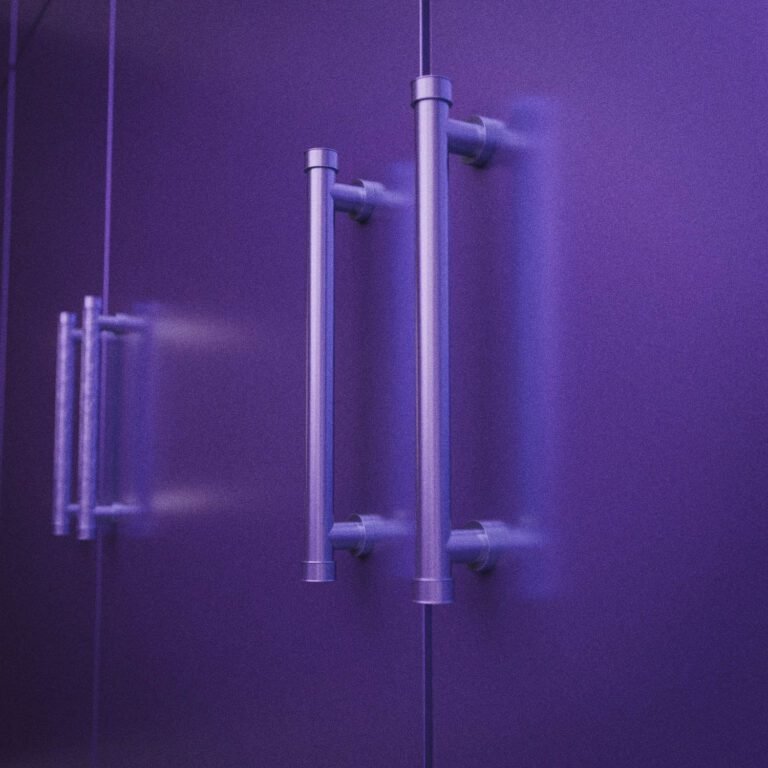
Handles for an IKEA Faktum Kitchen: How to Modernize It
At the turn of the 1950s and 1960s, German furniture makers solved a problem that seemed minor: where to drill a front so it could take any hinge, any handle, without redoing the calculations each time. The answer, a regular drilling spacing soon nicknamed the “32 system,” became the common grammar of the entire flat-pack furniture industry, IKEA foremost. A standardized front is a front you can redress without rebuilding everything.
Faktum carried that logic for nearly two decades, until 2013, when Metod succeeded it in the catalog. Sturdy cabinets, interchangeable fronts, original handles reduced to the bare minimum: the system never relied on hardware to stand out. The result is that thousands of Faktum kitchens are still running today, structurally sound, with fronts that have aged visually without any real reason to replace them. The handles, mounted with two screws or a single point depending on the case, are the most direct lever for transforming the room without touching anything else.

Measure before you choose: center-to-center spacing is unforgiving
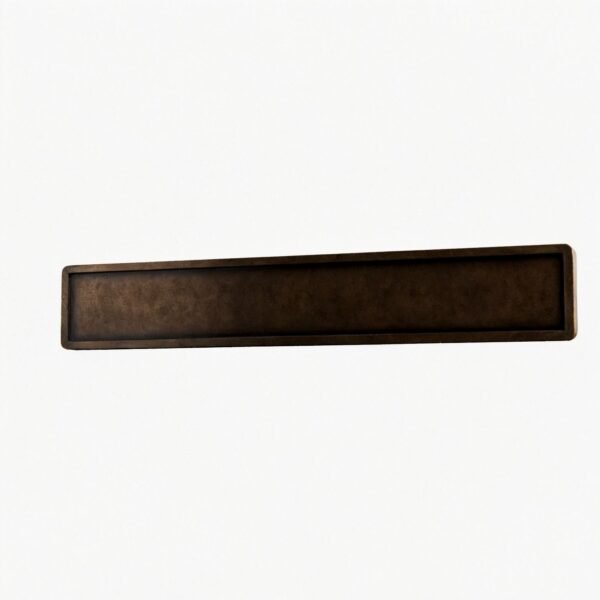
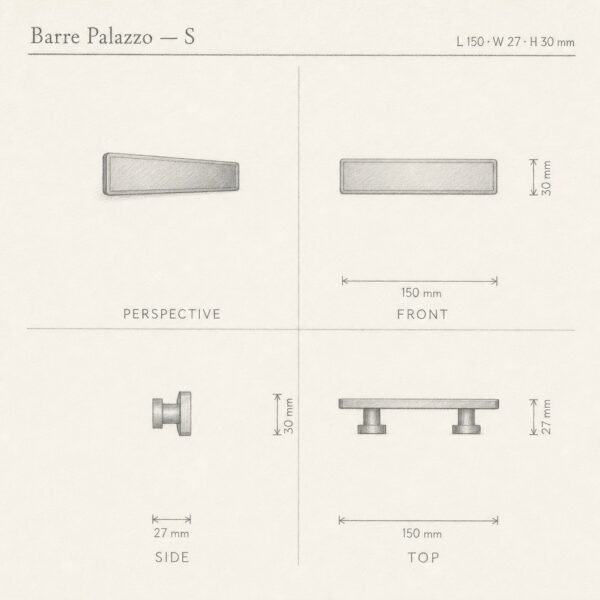
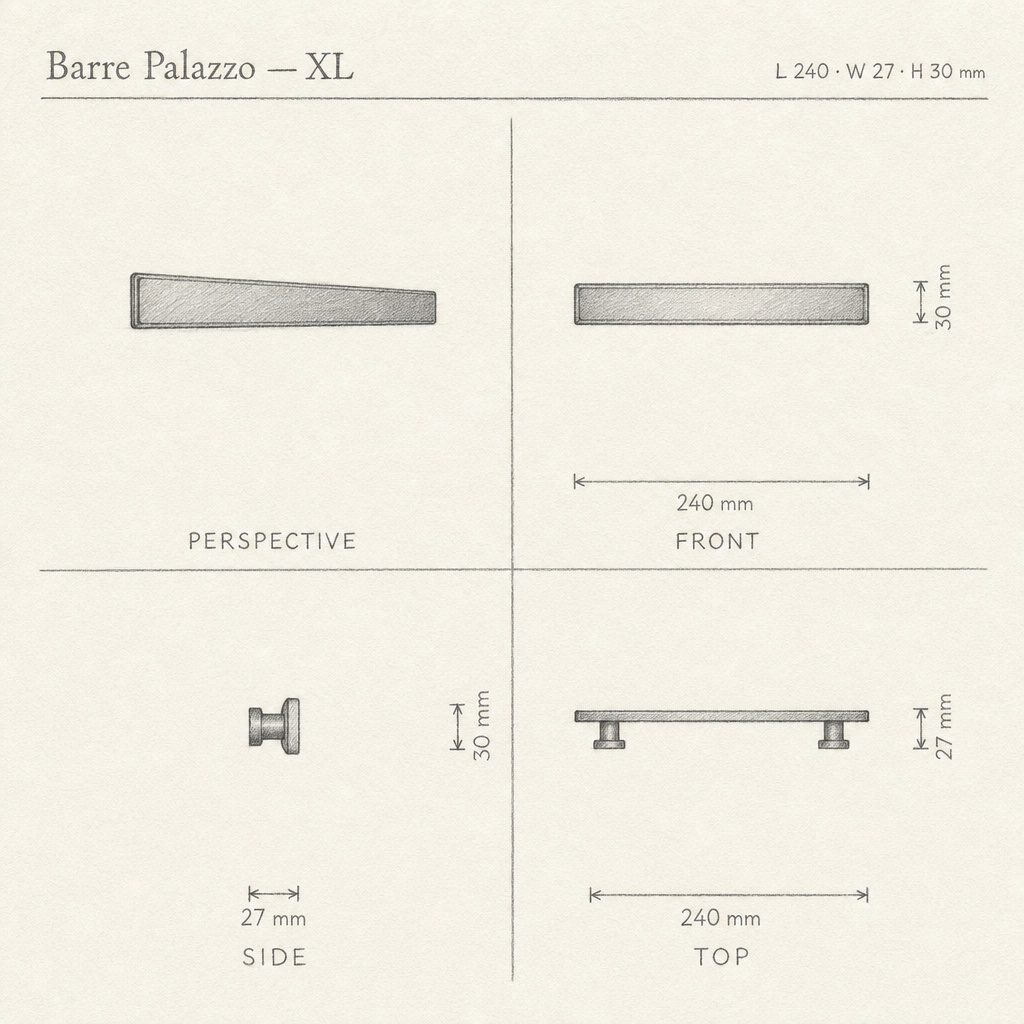
A Faktum front has two types of drilling. A single point, for a knob: no distance constraint, it mounts wherever you like. Two points spaced a fixed distance apart, the center-to-center, for a bar handle: and that’s where everything hinges. The 32 system that Faktum followed, like Metod today, works in 32 mm increments: 96, 128, 160, 192 mm are the spacings you find most often on an IKEA kitchen. The Palazzo Bar, for instance, comes in exactly these four sizes, from the S with just one extra screw up to the XL that holds a large upper cabinet door.
Before you order, measure the center-to-center of your current handles, from the center of one screw to the center of the other. If the number isn’t a round one, a folding ruler and some patience will do: the detailed measuring and installation guide lives on the handle installation page, no need to repeat it here. Just keep in mind the rule that avoids any disappointment: matching the exact center-to-center of what’s already there avoids re-drilling the front.
Finishes that hold up to steam and grease
A kitchen sets its own conditions: cooking steam, greasy splashes, repeated cleaning. Aluminum and bronze hold up very well, with comparable resistance to impact and moisture and excellent heat tolerance. Bioresin, with its brighter colors, stays reserved for dry rooms: it has no place on a kitchen front, however appealing its palette.
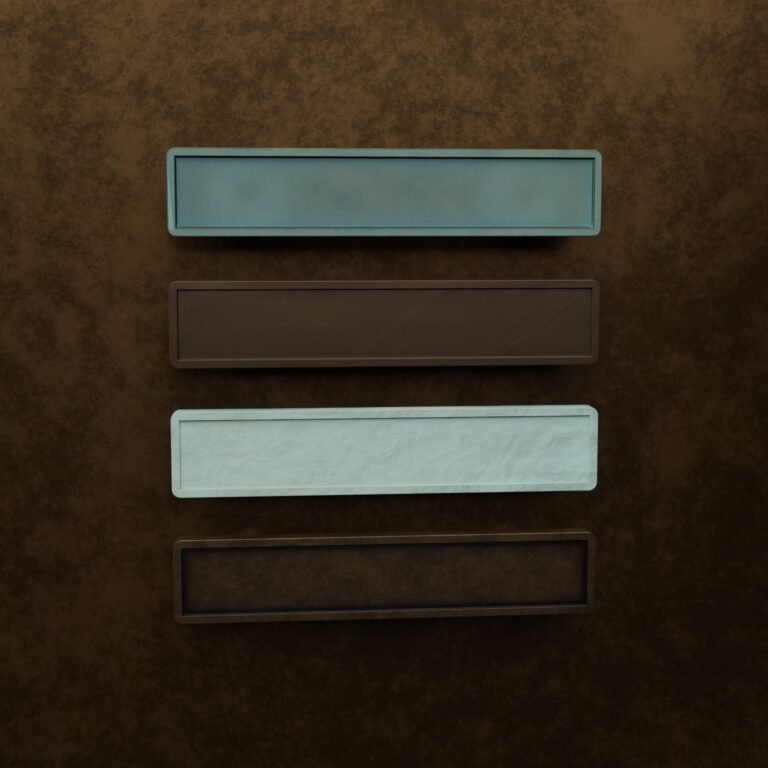
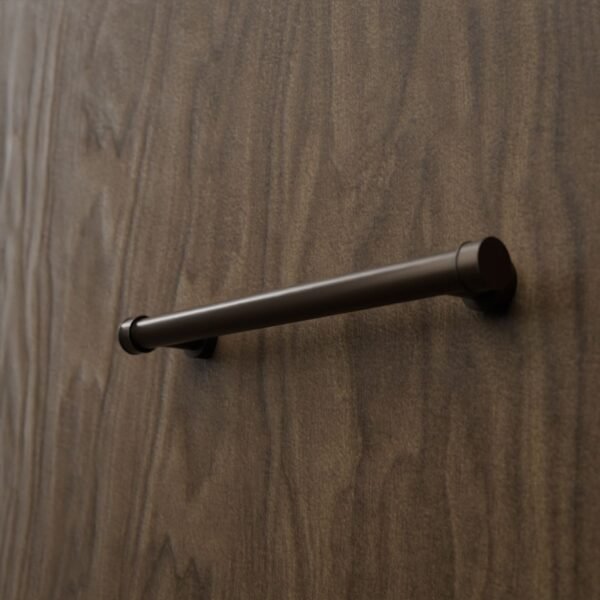
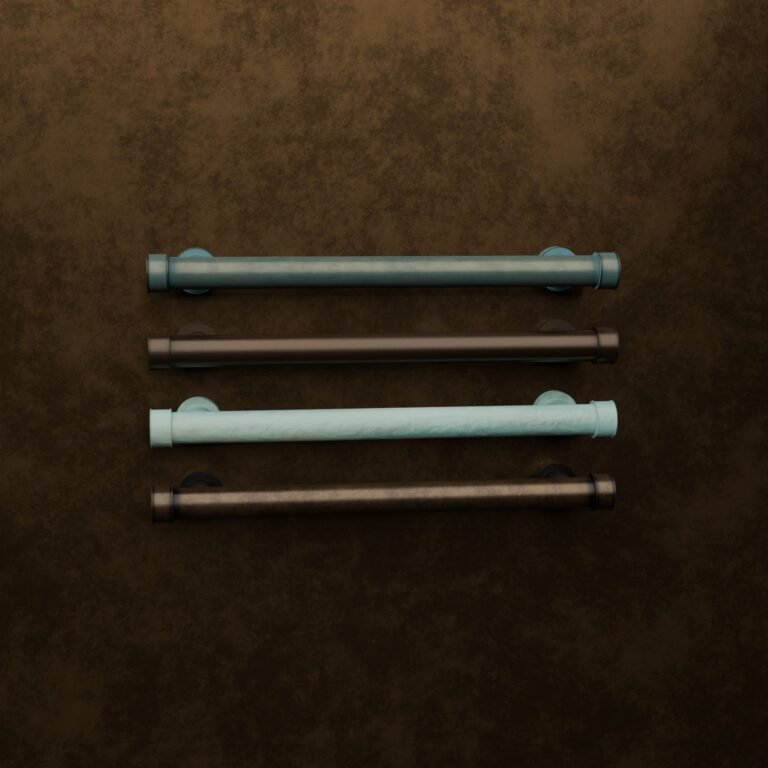
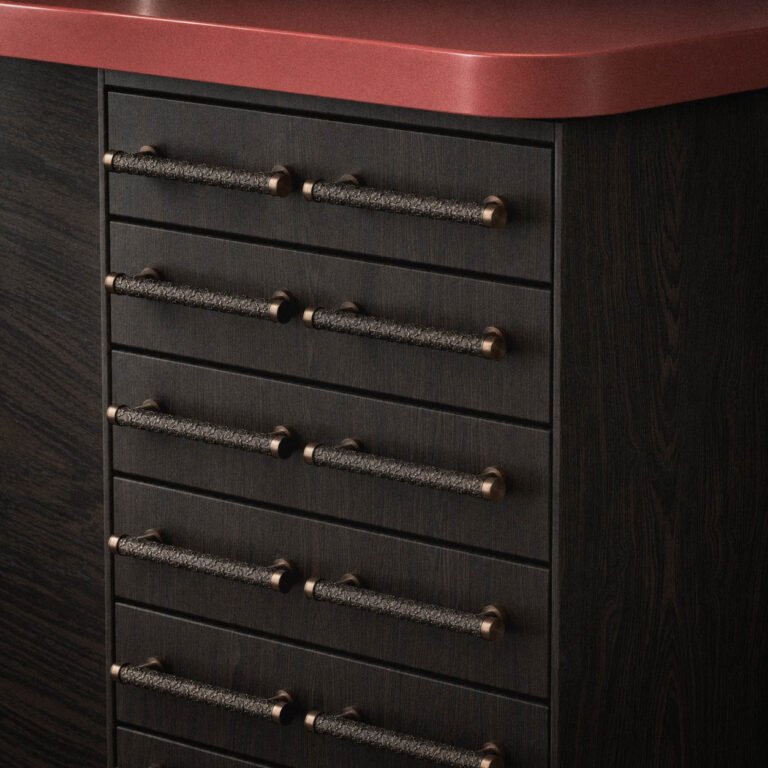
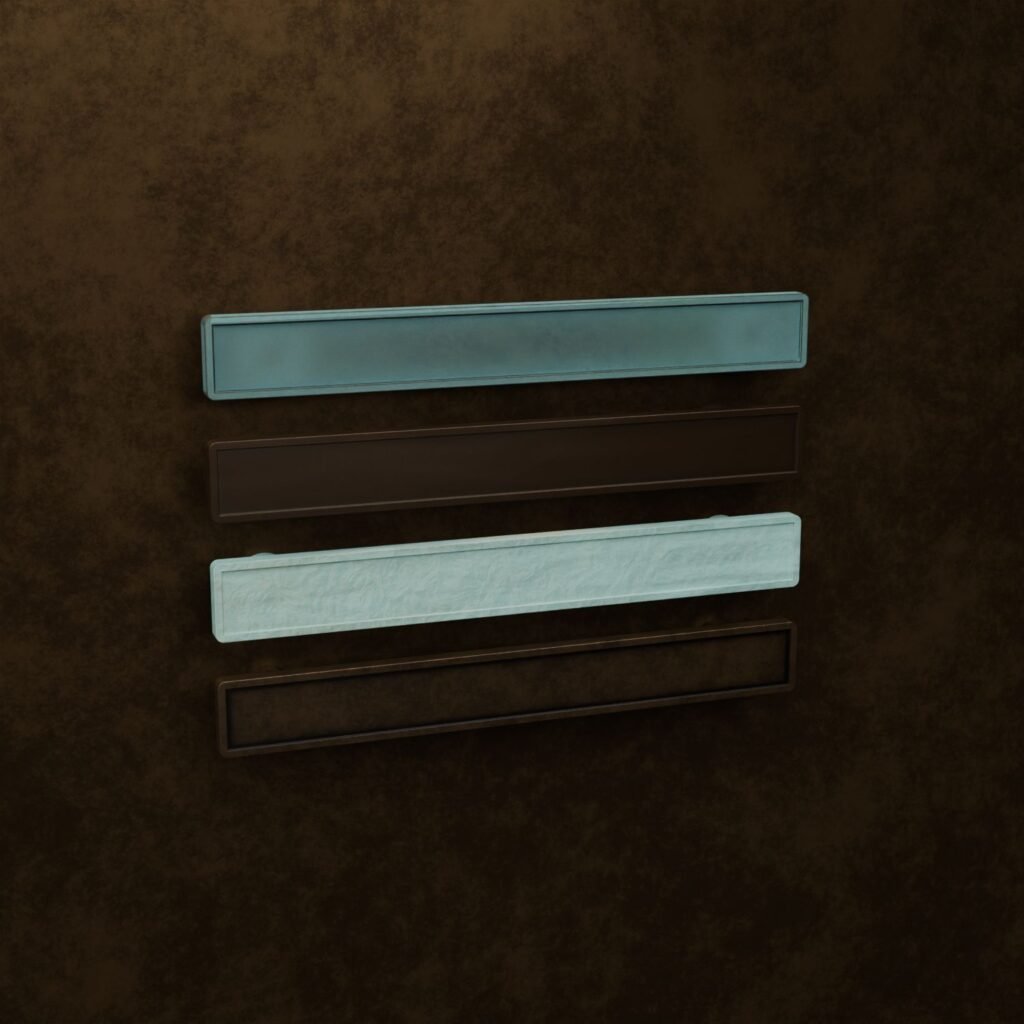
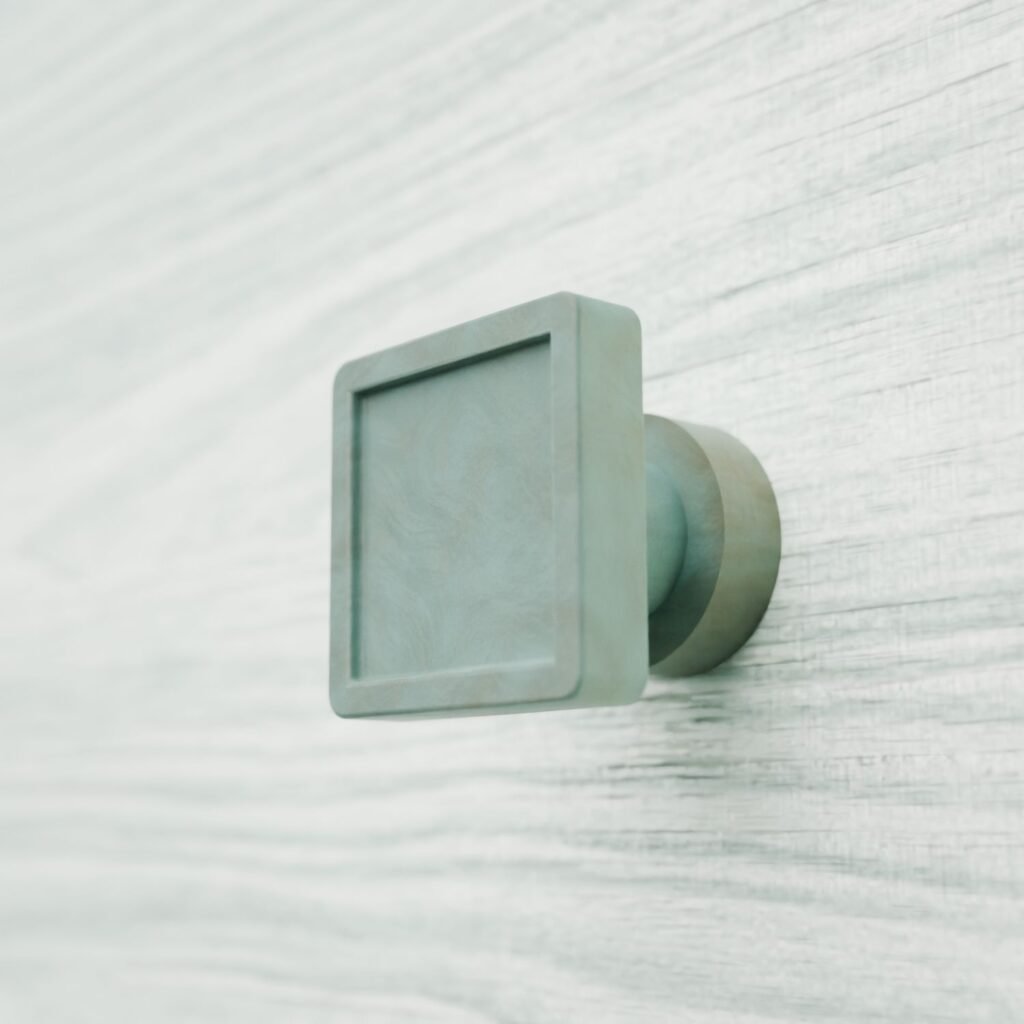
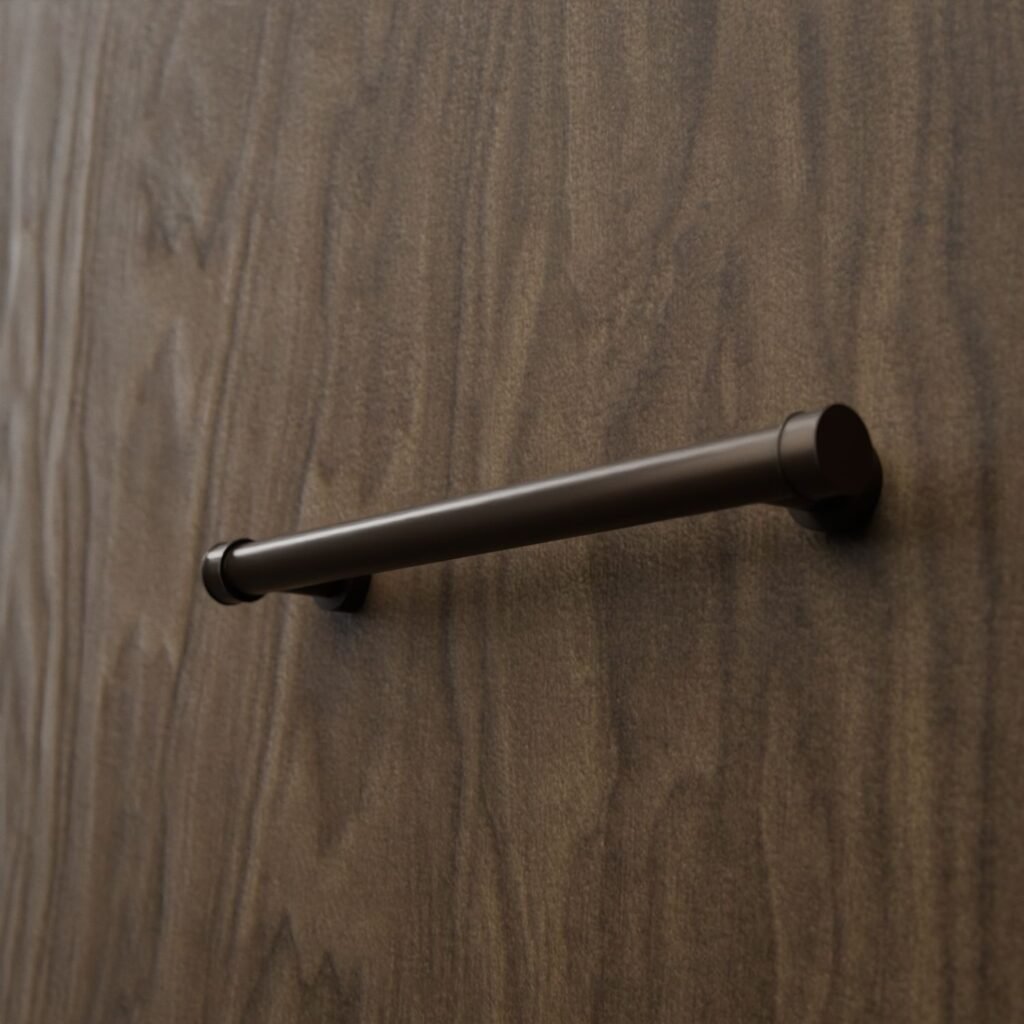
Between the two metals, the difference lies in the finish. The Satin Aluminum diffuses light with a uniform softness, neither mirror nor matte: the easiest finish to pair, whatever the color of the front. The Antique Bronze, meanwhile, carries a patina applied by hand in the atelier, which deepens the relief and polishes the edges the way wear would, for a look that seems to have always been there. The Submerged Bronze goes even further, with blue-green reflections that evoke metal left underwater for a long time: a touch of character on an otherwise understated front.
Bar, square knob, or slim bar: the silhouette follows the front
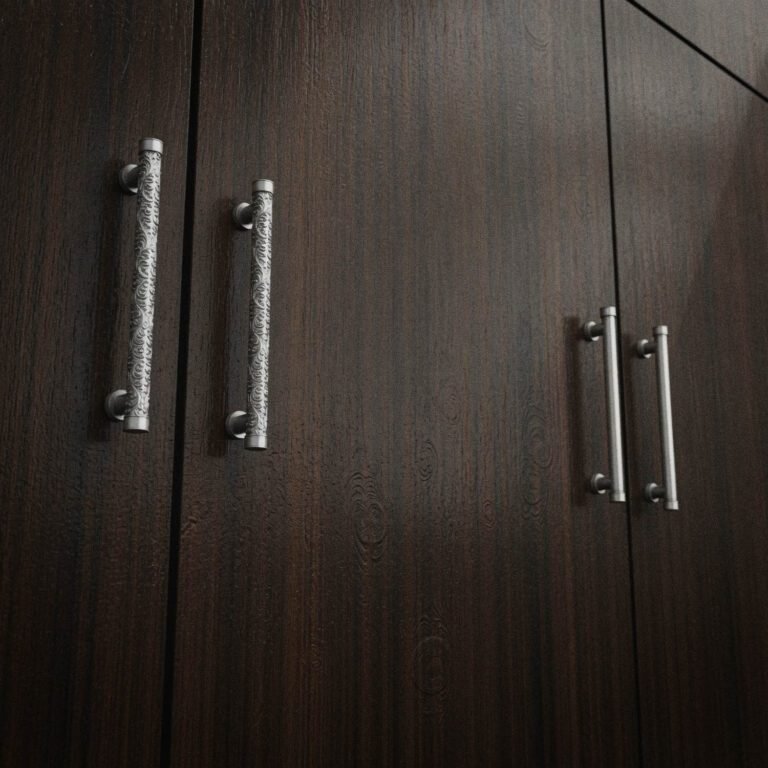
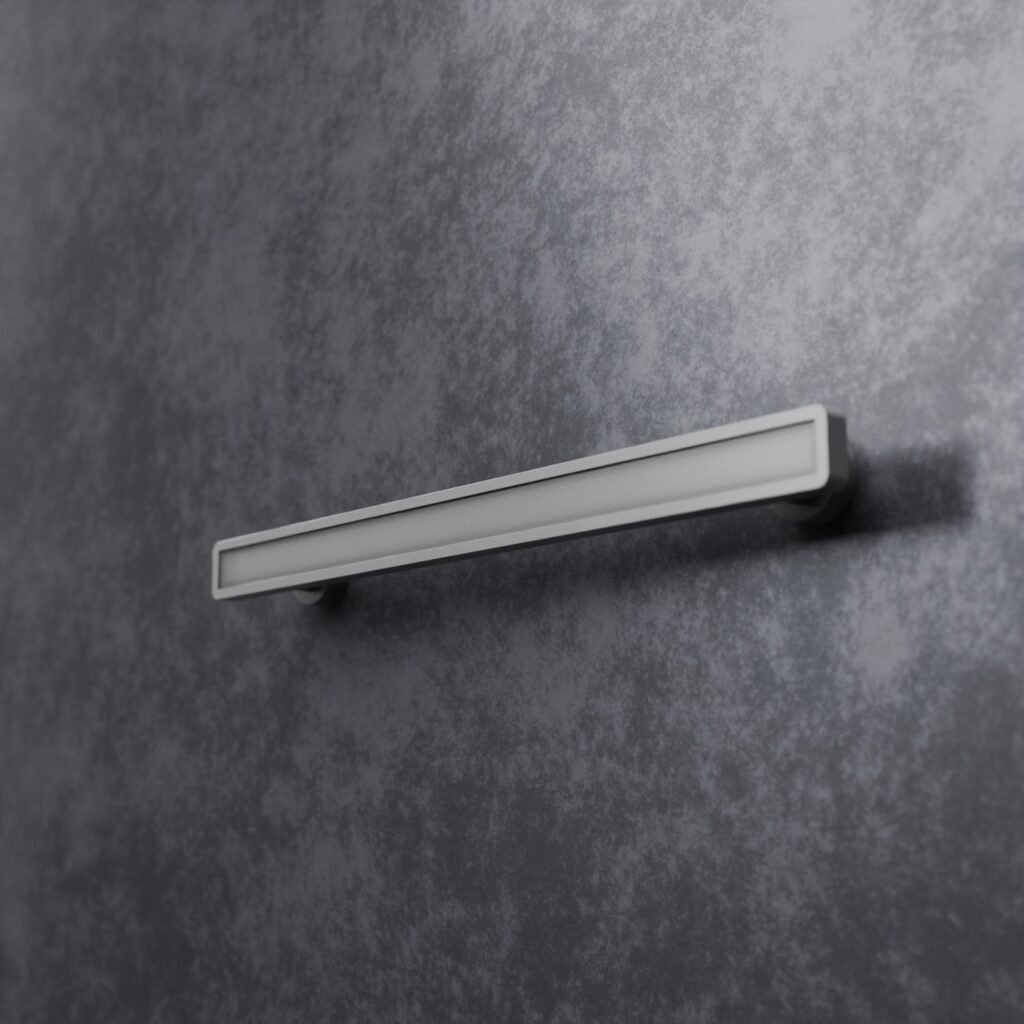
Not every Faktum front calls for the same piece. On a large upper cabinet door, a confident bar like the Palazzo Bar holds its own: clean lines, softened corners, a horizontal presence that works as well in the kitchen as on a low cabinet. On a shorter front, the Palazzo Slim Bar takes the same design and scales it down to fit doors that call for less.
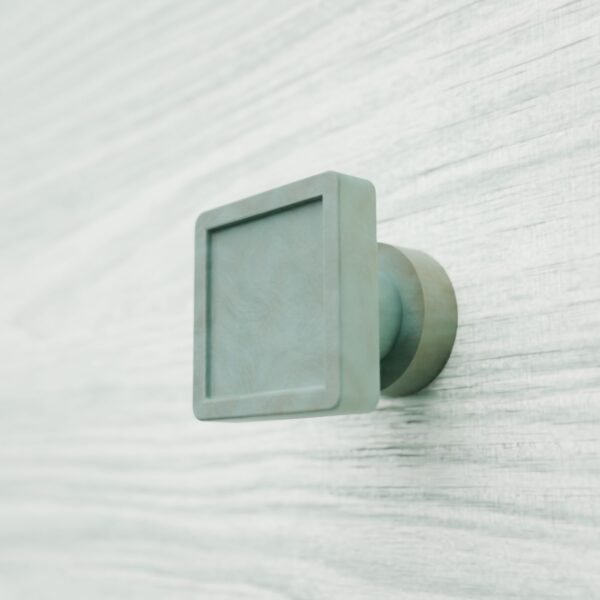
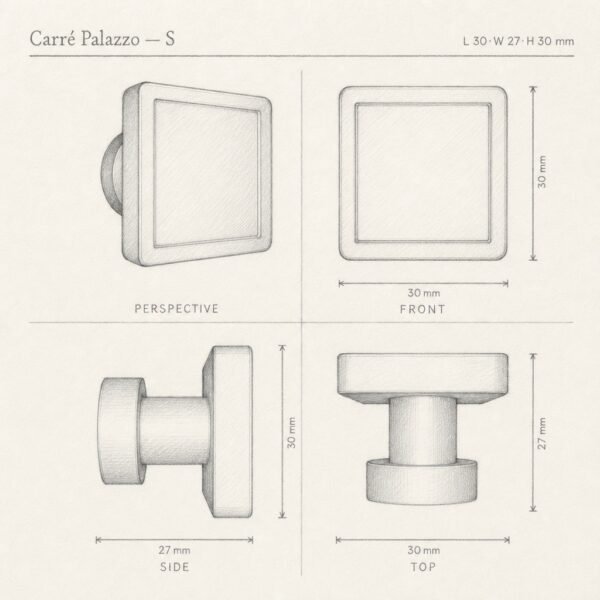
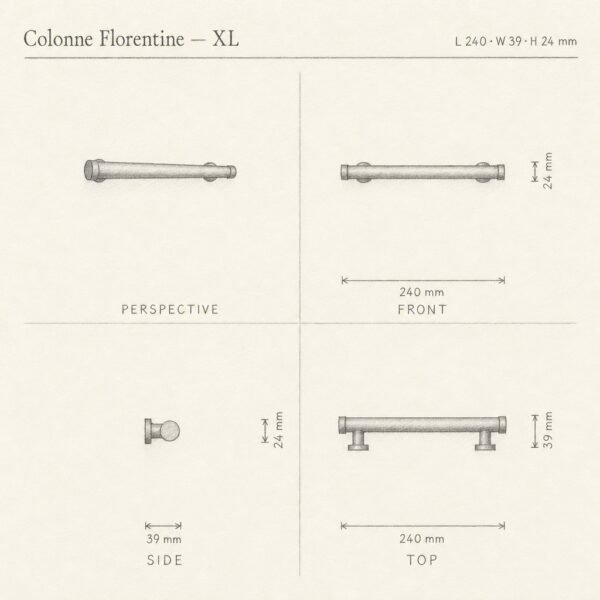
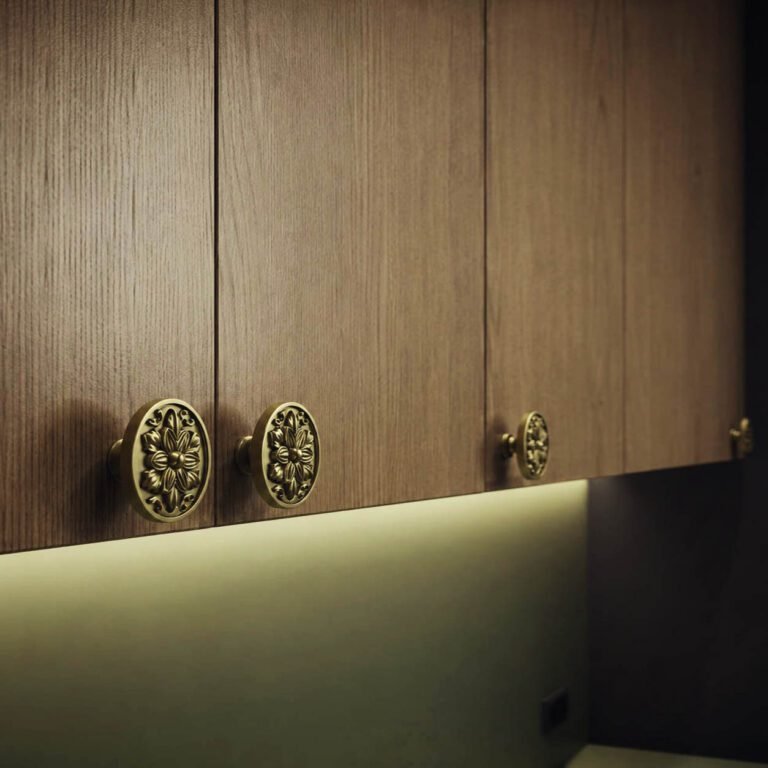
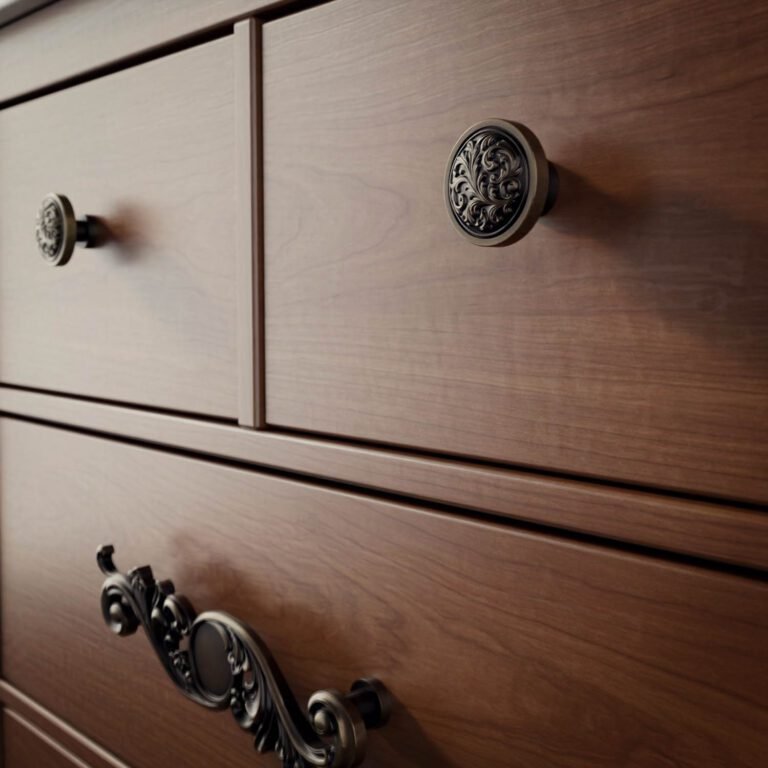
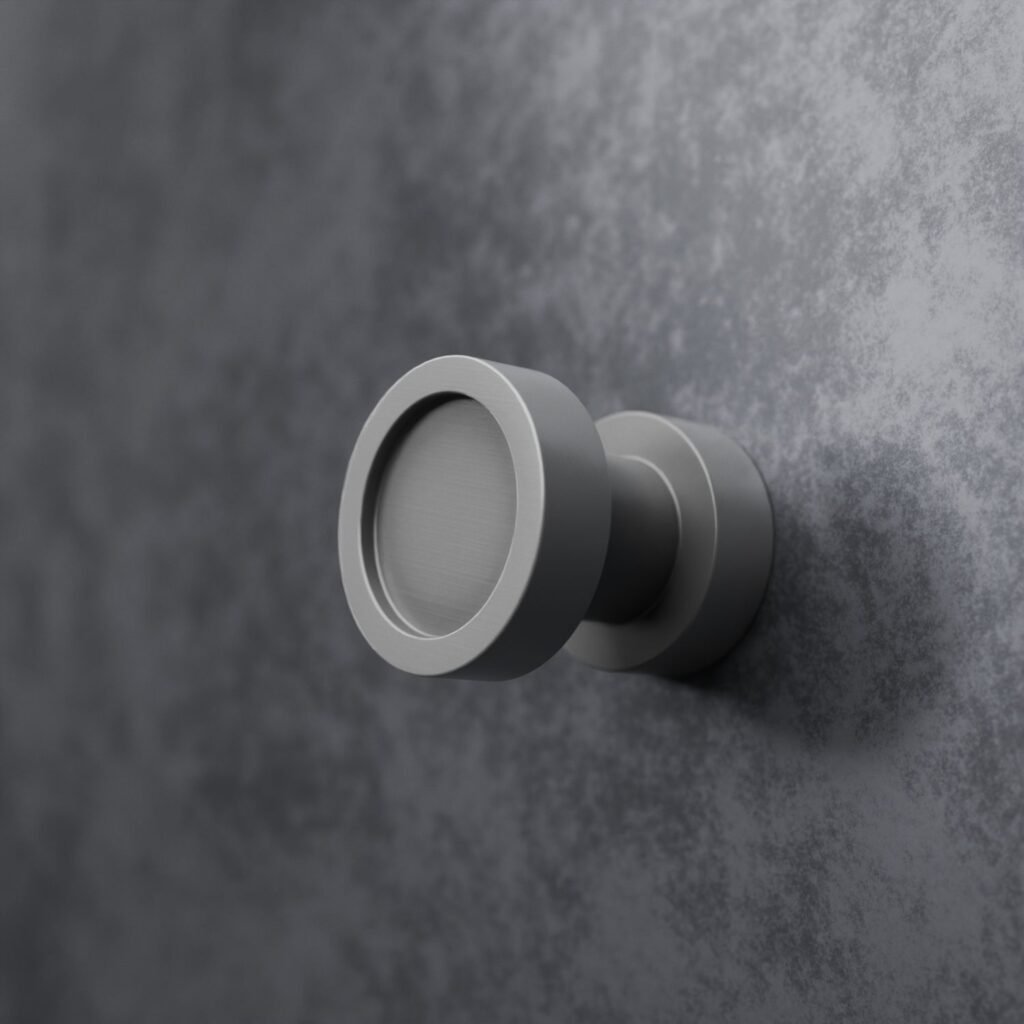
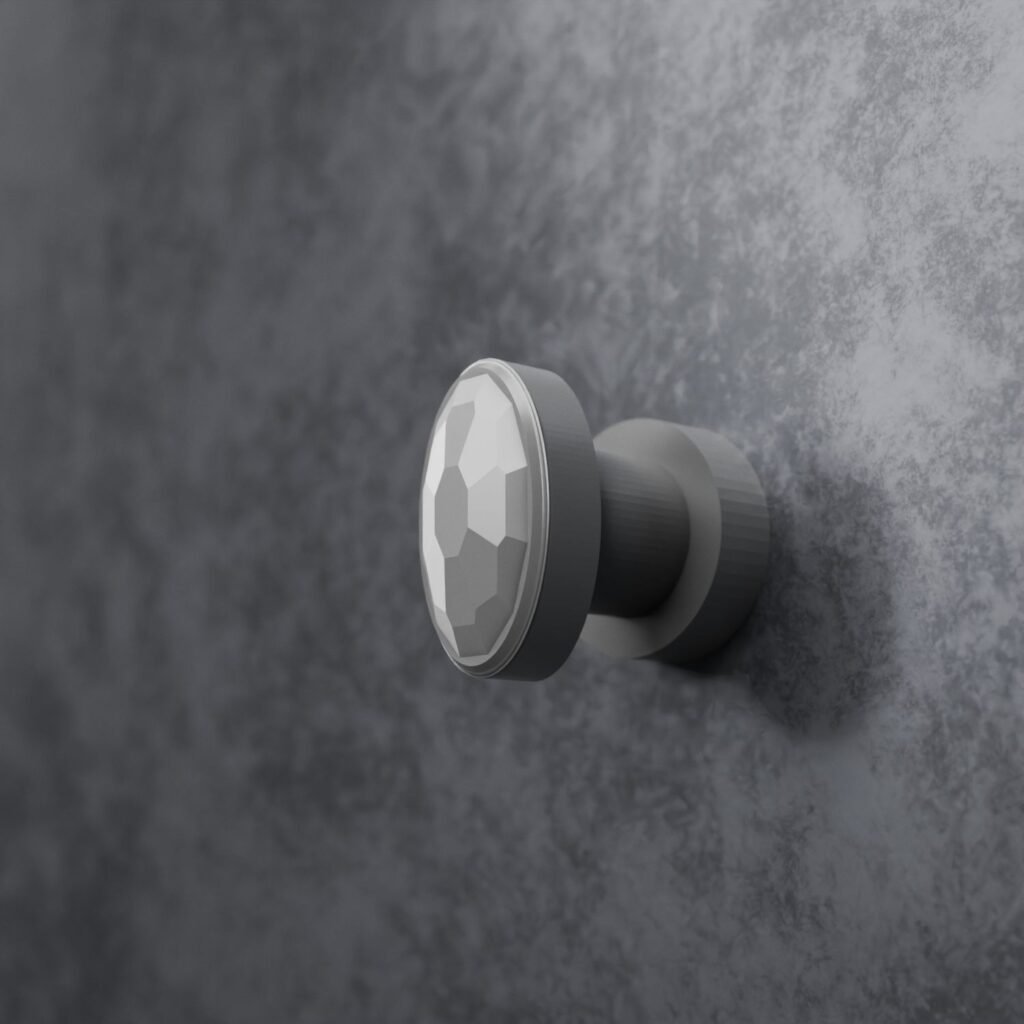
For narrow drawers, the knob is the natural choice: no center-to-center to respect, just a single fixing point. The Palazzo Square offers a precise square geometry, with a raised frame that plays with shadow. If you prefer a rounder line, the Florentine Column takes the same center-to-center bar principle but in a cylindrical shaft, sculptural without a single engraved pattern on it: it’s the material alone, brushed bronze or satin aluminum, that does the work.
A budgetary choice, too
On a whole kitchen, the number of handles to replace quickly weighs on the decision. Satin Aluminum remains the most accessible entry point, with a bright, light metal finish that works as well on a white door as on light wood. Bronzes, hand patinated, cost more but carry a surface depth no industrial finish can match: a tradeoff between budget and material that can be settled front by front, not necessarily the same way across the whole kitchen. There’s nothing stopping you, for instance, from reserving bronze for the most visible upper doors and aluminum for the lower drawers.
What to keep in mind before you order
- Measure the center to center spacing of your current handles before ordering.
- In the kitchen, stick to a metal finish: aluminum, bronze, brass, or copper. Bioresin is best kept for dry rooms.
- A bar comes in sizes from S (one extra screw) to XL to match the real width of your Faktum doors.
- For a narrow drawer, the knob sidesteps any center to center constraint.
- Plan for 5 to 10 business days to receive your handles, across all catalog finishes.
Frequently asked questions
Are Holdon handles compatible with a Faktum front?
Yes, as long as the center-to-center you choose matches the one already drilled into the front, or you opt for a knob, which has no distance constraint.
Which material works best for a kitchen?
A metal: aluminum, bronze, brass, or copper. All hold up well against humidity, impact, and the heat of a kitchen, unlike bioresin, which is reserved for dry rooms.
Can you mix a knob and a bar on the same kitchen?
Yes, it’s actually a common practice: a bar on the larger doors, a knob on the narrow drawers, so as not to overload a small front.
Do Faktum fronts need to be redrilled?
Only if the center-to-center you choose differs from the one already drilled. Measure your current handles before ordering to avoid this.
How long does it take to receive your handles?
Allow 5 to 10 business days for catalog finishes.
Faktum never tried to draw attention to itself: it was a cabinet, honest and well built, designed to hold something other than itself. Years later, that’s still true, and it’s exactly what makes it possible to give it a new look without touching what already works. At Holdon Paris, we believe the handle is the most direct turning point, and the most reversible one too, for taking back control of a kitchen you never chose to replace as a kit.
Other IKEA kitchens deserve the same treatment: our chronicle on changing the fronts of your IKEA kitchen covers the current system, and the one on choosing design handles for your IKEA kitchen broadens the topic to all compatible ranges, found on the IKEA compatible handles page.