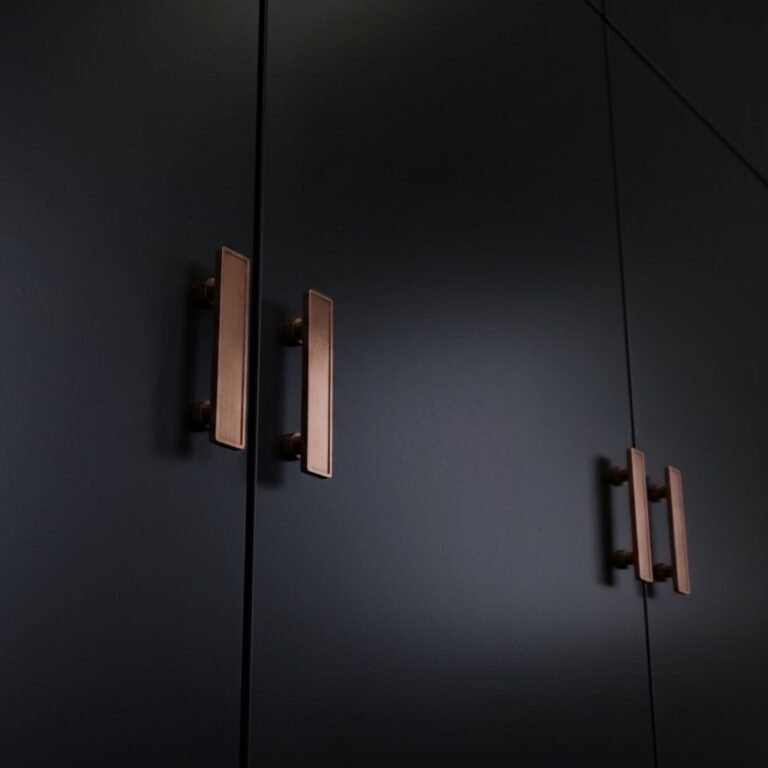
How to Clean and Revive Brass Handles Without Damaging Them
Brass has this particular quality of moving through every trend without ever really leaving the decorative vocabulary behind. From Haussmann era woodwork to the most contemporary kitchens, that warm golden tone, somewhere between discreet gold and honey, remains one of the surest ways to give a piece of furniture a more precious look than it actually has. But a golden sheen also draws the eye to whatever dulls it: a fingerprint, a film of kitchen grease, dust settled into a carved relief. Hence a very practical question, typed thousands of times every month: how do you clean brass handles without ending up damaging them?
The answer isn’t quite the one you’ll find in old grandmother’s tips for raw, untreated brass hardware. And that’s exactly where the key point lies: the right approach depends on the finish you’ve chosen, and some methods known for making brass “shine” are precisely the ones to avoid on a piece that has been hand patinated and finished.
Antique Brass, Satin Brass: different care logics
At Holdon Paris, brass comes in several finishes that are cared for in very different ways. Satin Brass is polished to a soft, stable sheen: its surface doesn’t change over time, it simply needs to stay clean and neat. Antique Brass, on the other hand, carries a hand-applied patina, with darker areas in the recesses that give the piece the look of having already lived a little. This patina is alive: it can shift very slightly over the years, and that’s intentional. The most common mistake is trying to “clean” it like a stain, with abrasive polish, when it’s actually an intended effect that should be preserved instead.
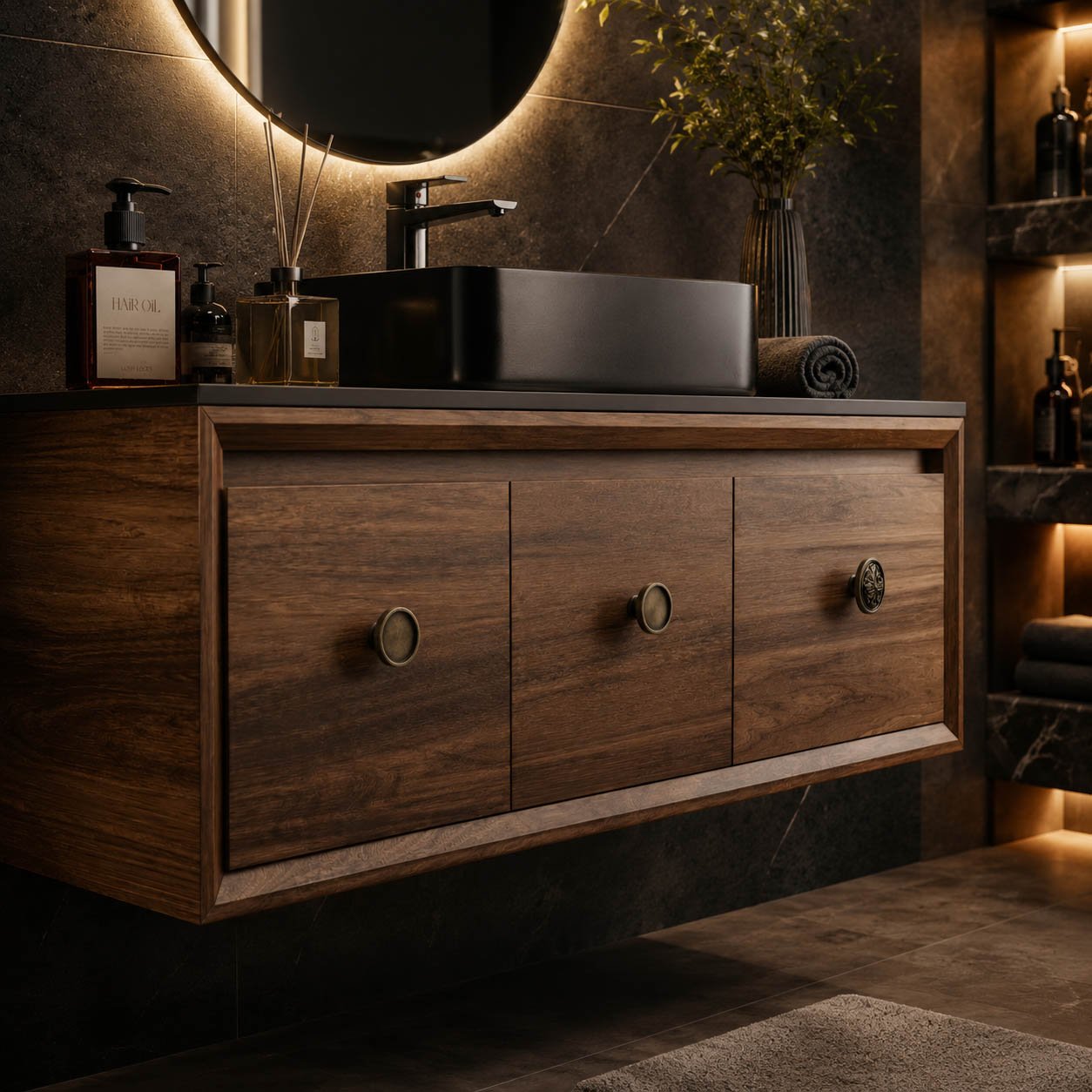
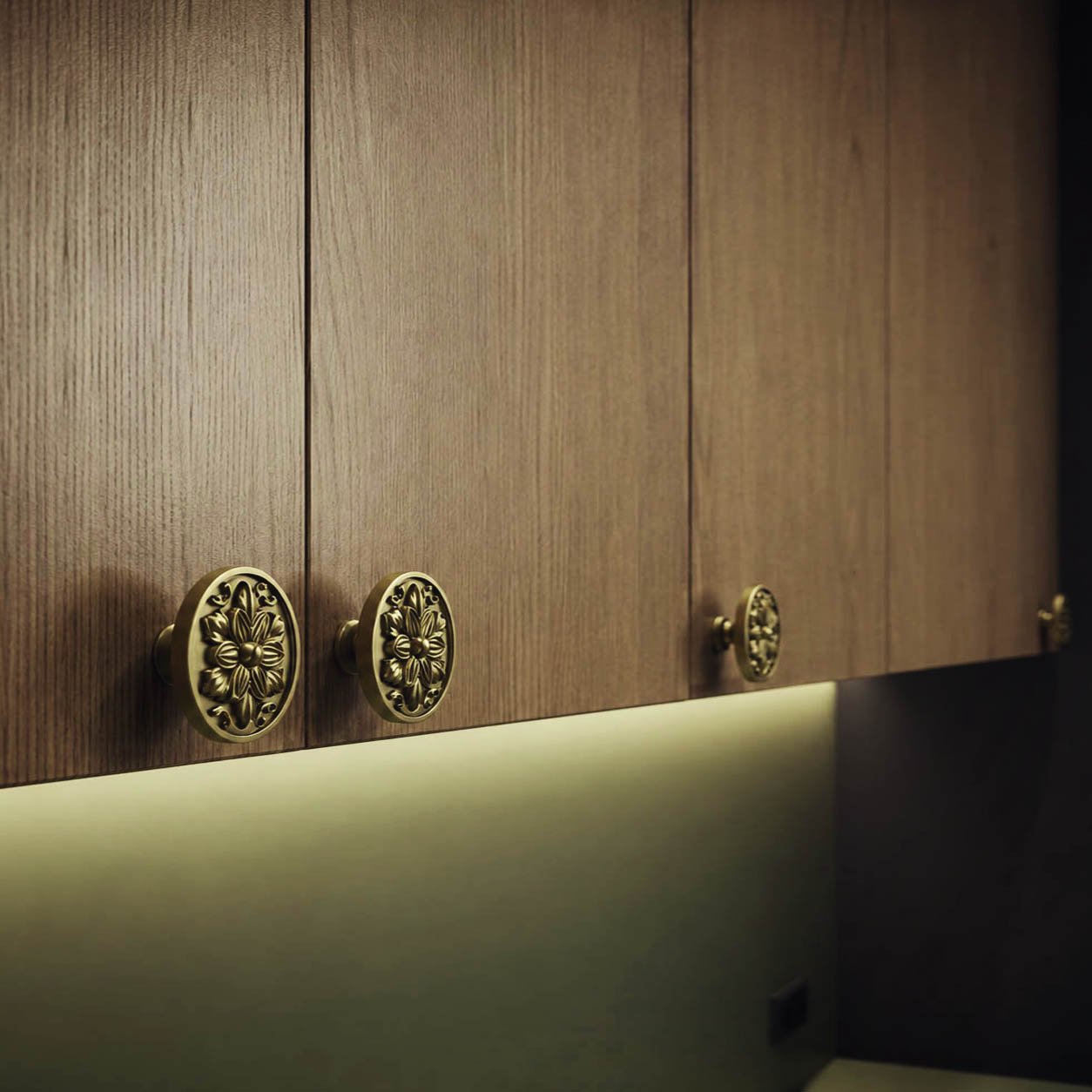
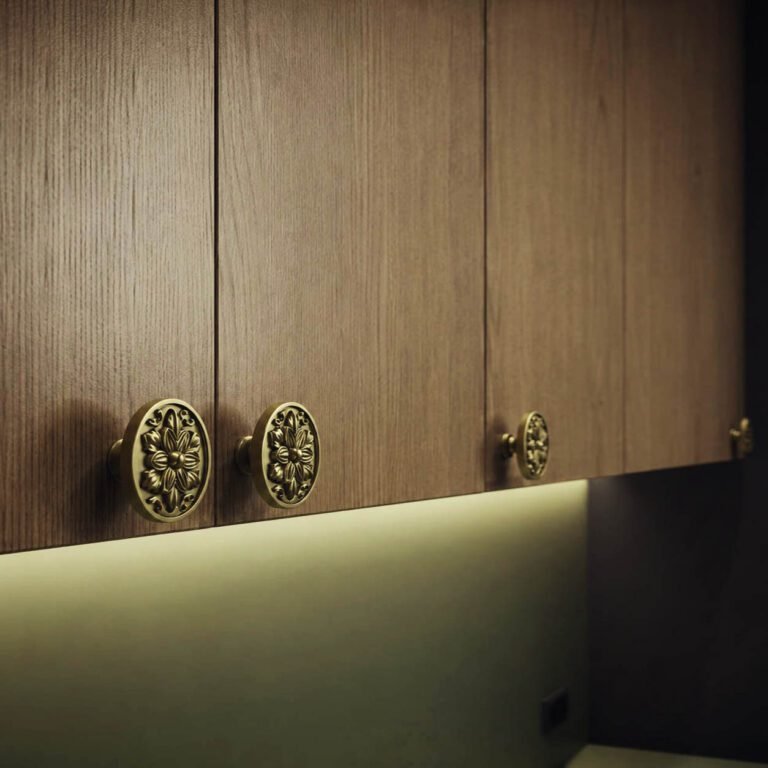
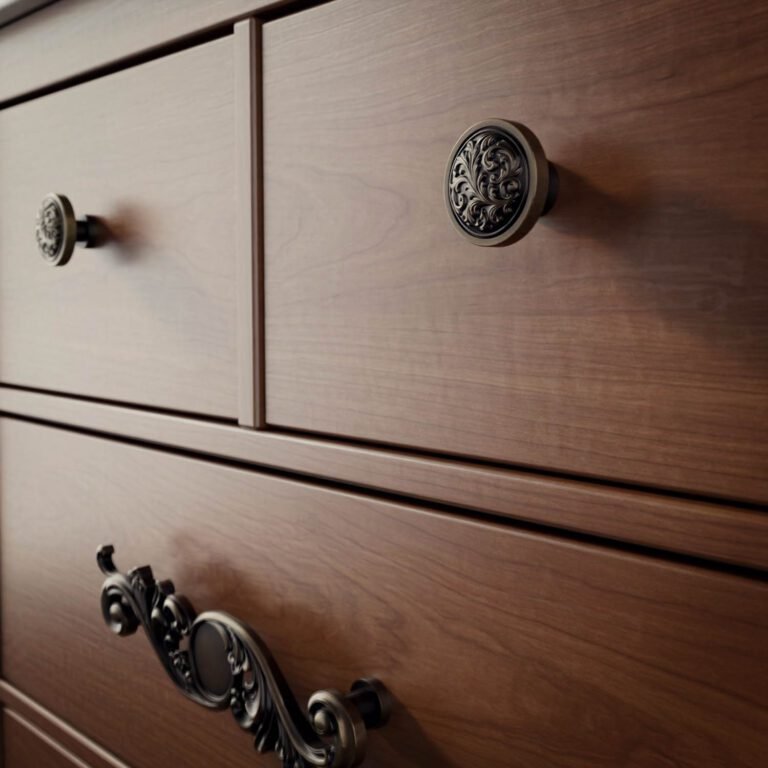
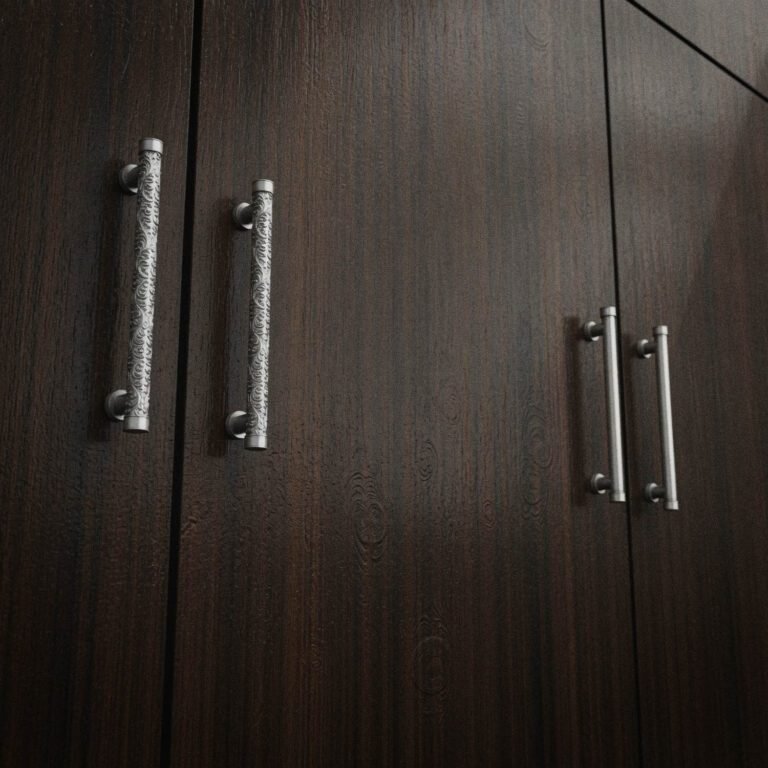
On the left, the Antique in a bathroom, dark and patinated. On the right, the Satin in a kitchen, crisp and bright. Two pieces, two goals: on one, you protect the character it’s gained; on the other, you maintain the shine.
What works on old brass hardware can damage yours
Much of the advice circulating for brass is aimed at old plumbing or locksmith fittings, made of raw, unworked brass, which really can be stripped and repolished without much consequence. Our handles are cast and hand patinated in our Paris atelier, with a finish already set and worked into the surface. Applying white vinegar, lemon juice, baking soda paste or metal polish cream risks attacking that finish unevenly, especially in the carved reliefs where the product tends to build up more than elsewhere. Steel wool and scouring pads are off limits for the same reason: they scratch a surface that then has no way of regaining its original look.
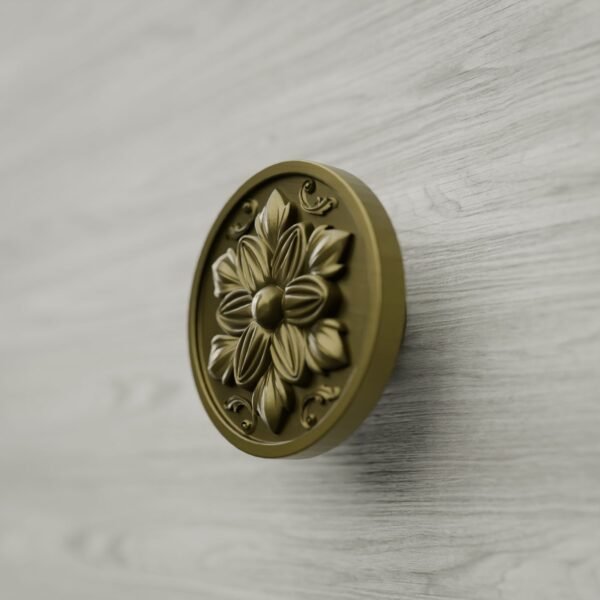
The habit that actually works is simpler than you’d think: regular dusting with a dry microfiber cloth, and every so often a little warm soapy water (a mild soap, free of ammonia or strong degreasers), applied with a soft cloth and wiped off right away. No soaking, no standing water: the goal is to clean the surface, not to saturate it. On a sculpted pattern like the Scrollwork, where dust naturally settles into the volutes, a soft brush or a soft-bristled toothbrush does the job gently, without ever forcing into the recesses.
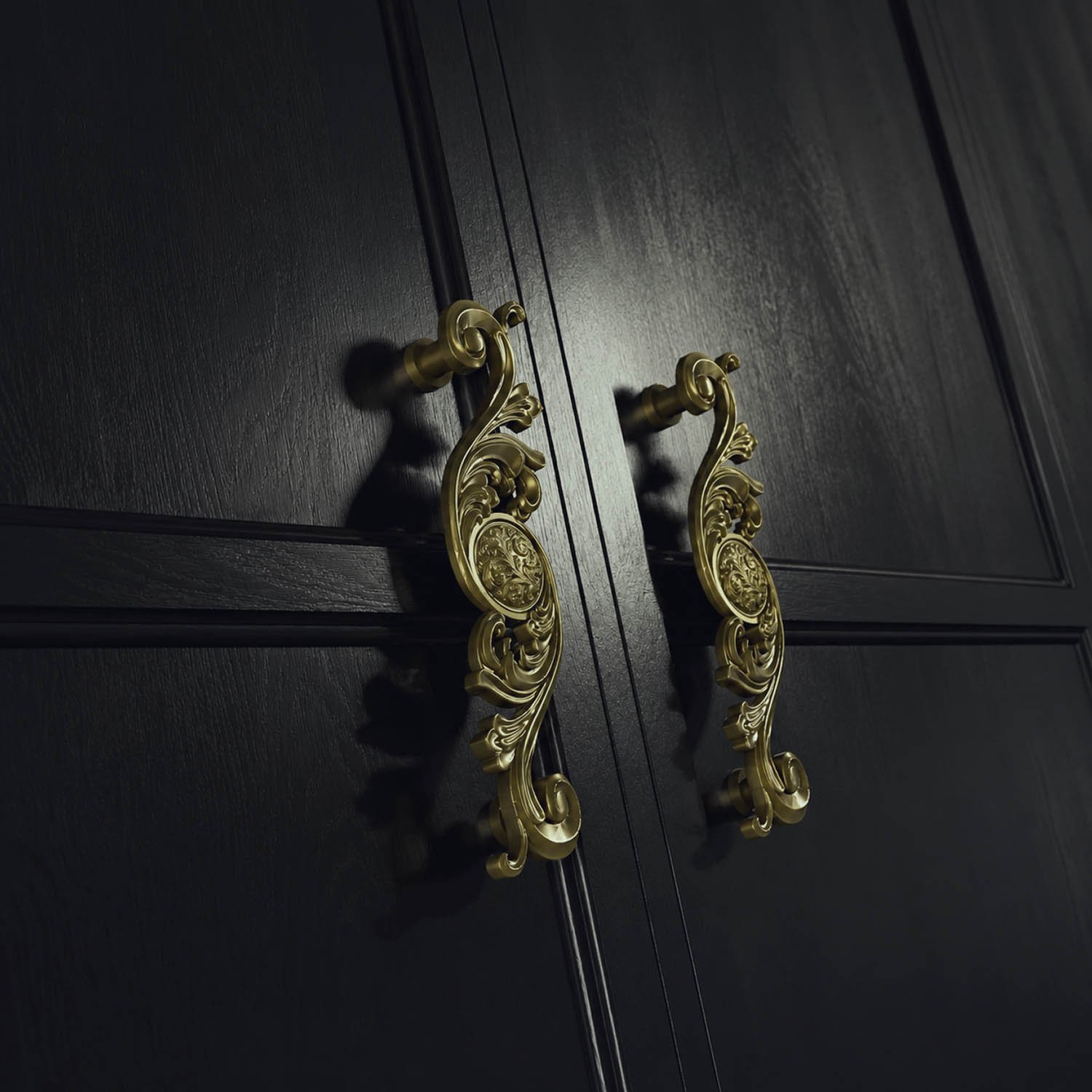
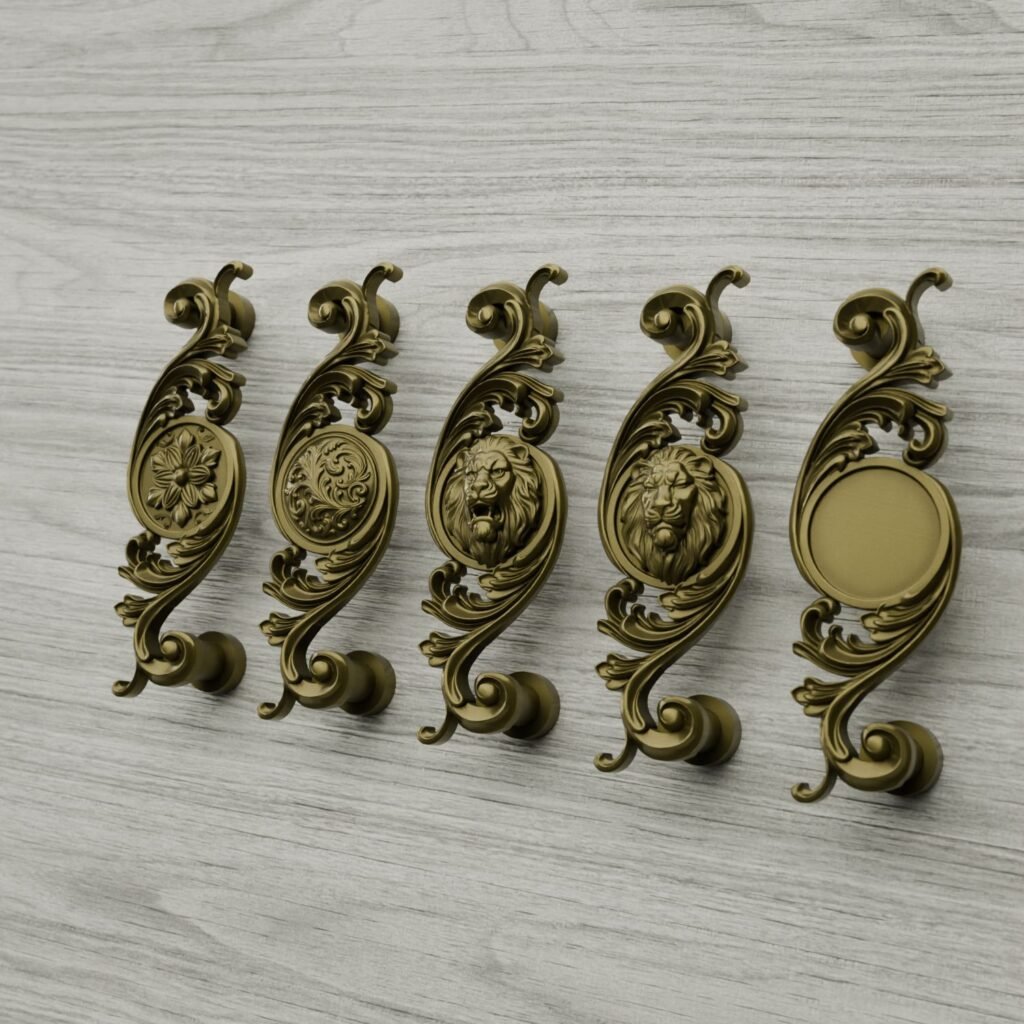
There’s actually something quite fitting about that caution: museum metalwork collections conservators never strip an old patina to make it shine. They dust it, protect it from standing moisture, and let it tell the time it has lived through. On a cabinet handle, the logic is the same, on an everyday scale.
The right habit, room by room
Brass handles heavy use well: solid resistance to impact, heat, and moisture, which makes it a smart choice in both kitchens and bathrooms. Two small adjustments are enough to adapt it to each room.
- In the kitchen, airborne grease settles faster than elsewhere: a quick wipe with a soapy cloth once a week is enough to keep it from building up in the relief.
- In the bathroom, residual moisture is what matters: wiping the handle down after a shower prevents limescale marks, especially in hard water areas.
- Outdoors, on the other hand, brass isn’t meant to stay exposed to the elements: constant outdoor exposure wears down the finish faster than indoors, whether patina or satin.
- Never in the dishwasher or soaked in water, even for a deep clean: the handle comes off, it’s cleaned in place.
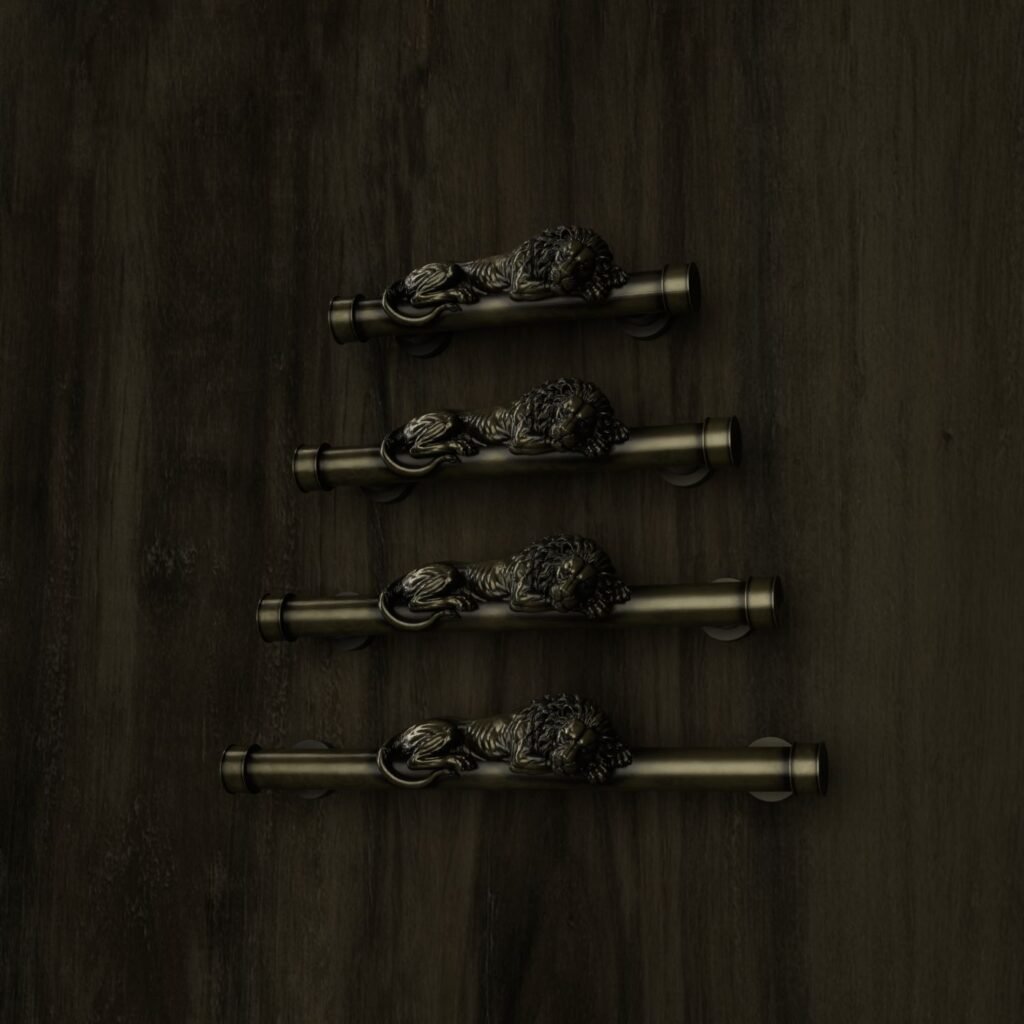

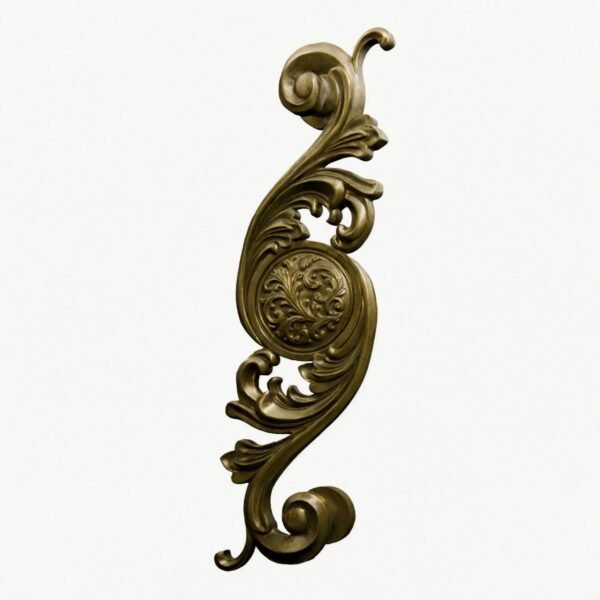
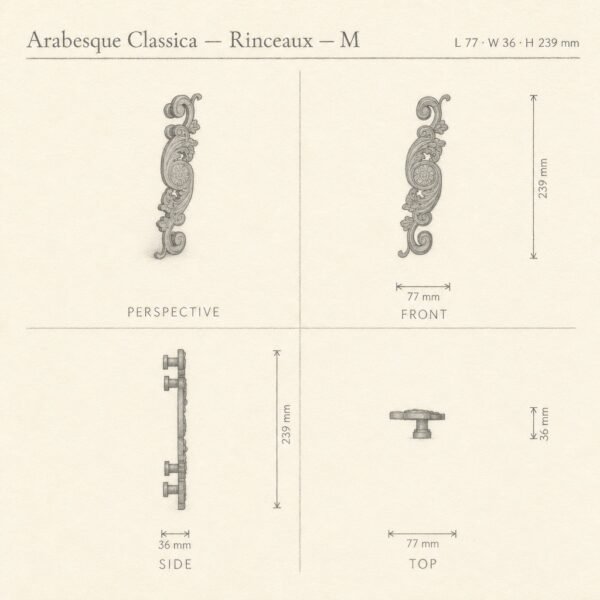
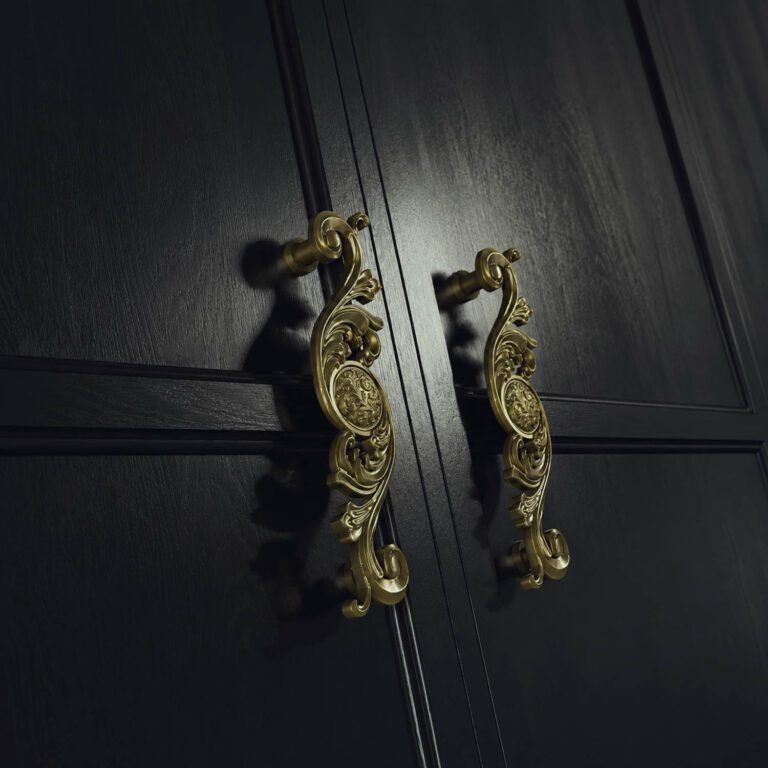
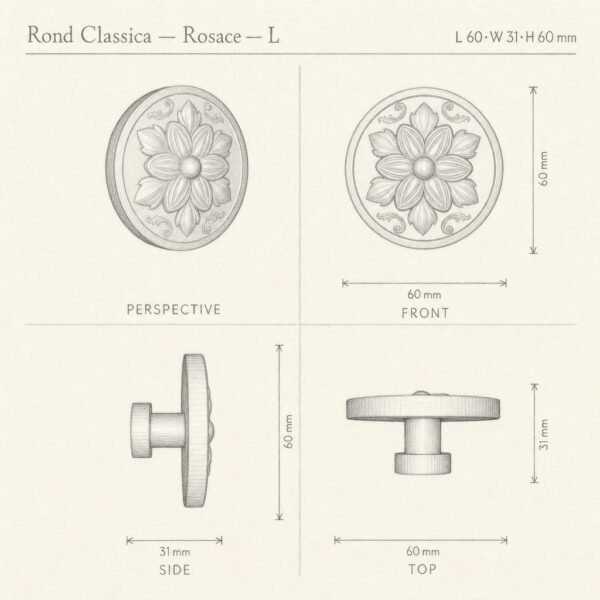
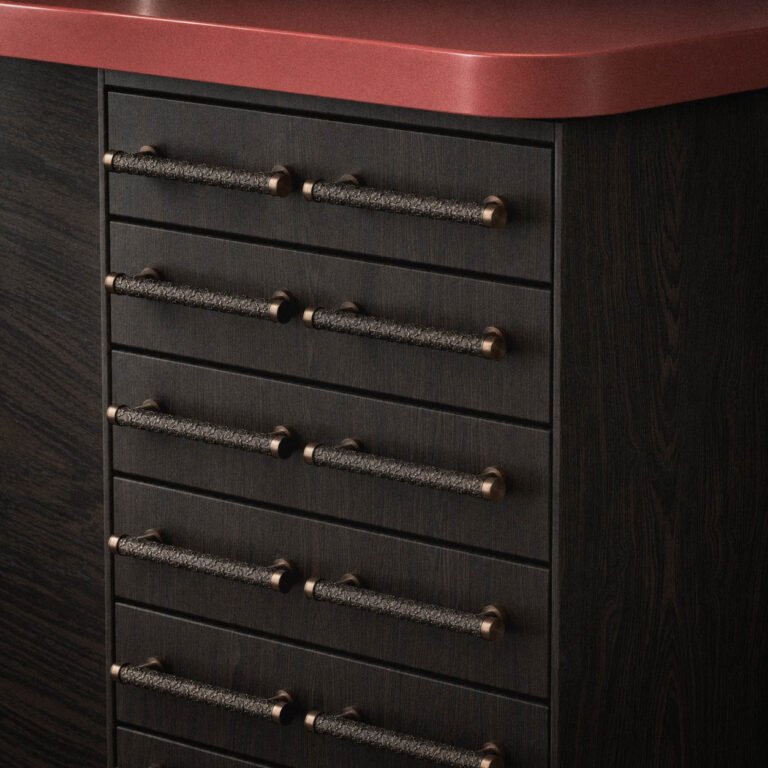
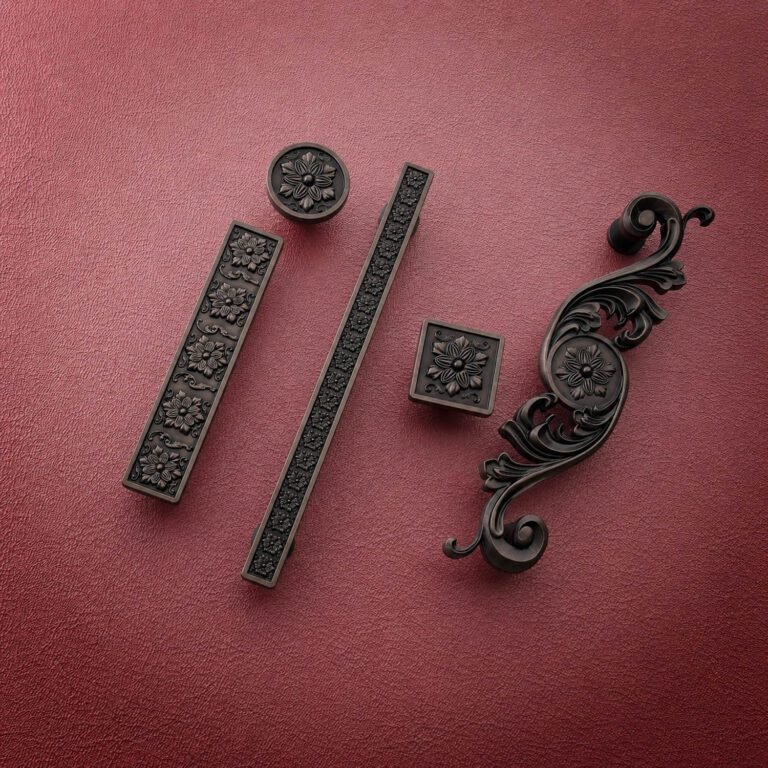
On a large pull like the Florentine Column, the surface to dust is wider but the gesture stays the same: a dry cloth daily, soapy water now and then. On an intricately worked cartouche like the Classica Arabesque, a more frequent, gentler pass works better, since the relief holds more dust than a plain silhouette.
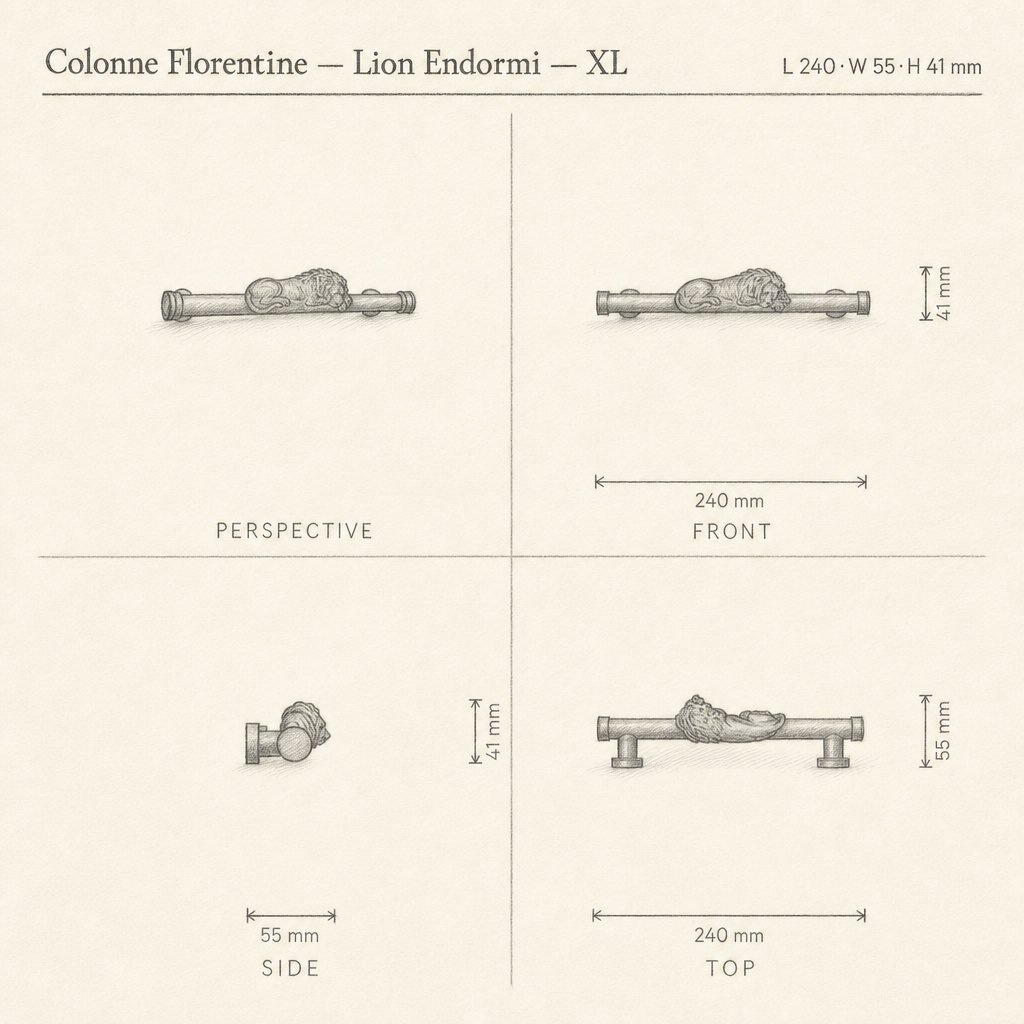

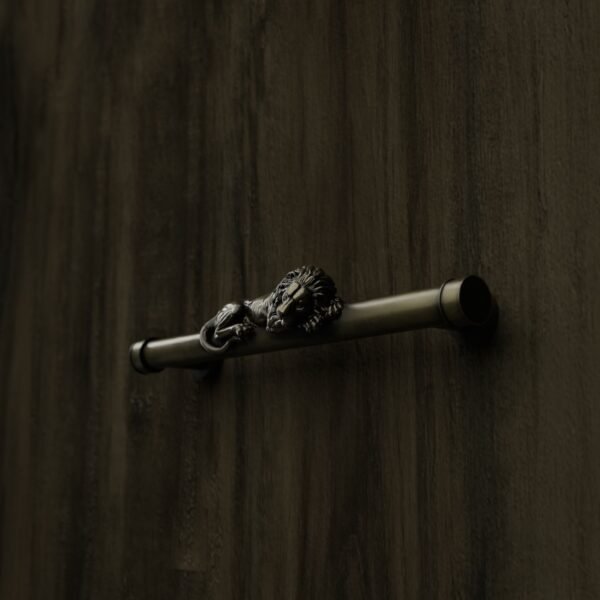
That’s also what’s at play in these atelier sketches: every relief, from the sleeping lion to the sculpted torso, is designed and hand-sanded before the patina. The same care deserves to go into upkeep, rather than into trying to make it “shine like new.”
At Holdon Paris, every brass handle is cast and hand-patinated in our Paris atelier, in Antique Brass as in Satin Brass, across all our brass silhouettes. Simple, regular upkeep is enough to keep them as they’re meant to be: lively for one, luminous for the other.
Frequently asked questions
Can you use white vinegar or lemon on a Holdon brass handle?
Better to avoid it: these acids are meant to strip old raw brass hardware and can attack a hand-patinated or hand-polished surface unevenly. Warm soapy water, applied and then wiped off, is enough in the vast majority of cases.
Does brass hold up to bathroom humidity?
Yes, brass is one of the materials we recommend for humid rooms. Just wipe the handle dry after use to prevent limescale marks, especially in hard water areas.
Will the Antique Brass patina fade over time?
It may change very slightly, that’s the nature of a living patina. Don’t try to “erase” it with an abrasive product: it’s what gives the finish its character.
What center-to-center spacing should I choose to replace an existing handle?
It’s measured between the centers of the two mounting points on the back of the old handle. Our center-to-center silhouettes are most often available in 96, 128, 160, and 192 mm.
How long does it take to receive brass handles?
Allow 5 to 10 business days for a standard order, made and patinated to order in our Paris atelier.
To explore further, the full range of brass handles and knobs can be browsed in the handle catalog filtered by brass, across all silhouettes and patterns.