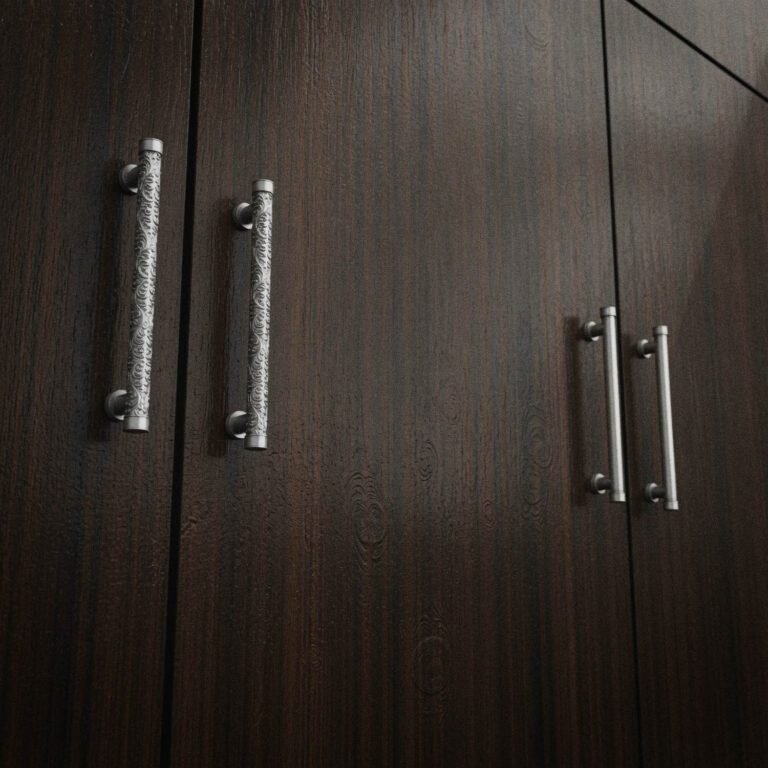
Renovating an Antique Piece Without Altering Its Character
A dresser found at a Sunday flea market, a buffet inherited from a grandmother, a family armoire that has survived three moves: these antique pieces already carry a history, a patina, a wood grain that no new furniture can imitate. Once the piece has been restored or simply cleaned, the temptation is to modernize it with a quick gesture: new handles, chrome or lacquered, to give it a fresh look. That’s often the mistake. A handle that’s too contemporary on a 19th century piece doesn’t make it younger, it contradicts it.
From Louis XVI dressers to the woodwork of grand residences, brass has always been the material of quality hardware: it’s what has dressed drawers, buffet doors, and display cabinets for centuries. Renovating an antique piece without altering its character starts with respecting that vocabulary, a material that ages well and a center-to-center measurement true to what the front has always known. Here’s how to make that choice without betraying the piece.
The risk of betraying an antique piece
An antique piece has a language: the curve of a drawer, the tone of wood patinated by time, often hardware that’s already ornate. Fitting a handle that’s too shiny or in a cold tone breaks that balance at a glance. Conversely, hardware that echoes those old codes (noble material, generous curve, patinated finish) extends the piece’s history instead of cutting it in two.
Two pitfalls come up often. The first is choosing a finish from the catalog without checking it against the existing wood: brass that’s too polished can clash with a dark patina, while aged brass blends in naturally. The second is mechanical: re-drilling an antique front to fit a new center-to-center measurement can damage the piece, sometimes irreversibly. Before any aesthetic choice, then, you need to measure what’s already there, a habit detailed in our handle installation guide.
Brass, the material that has always dressed antique furniture
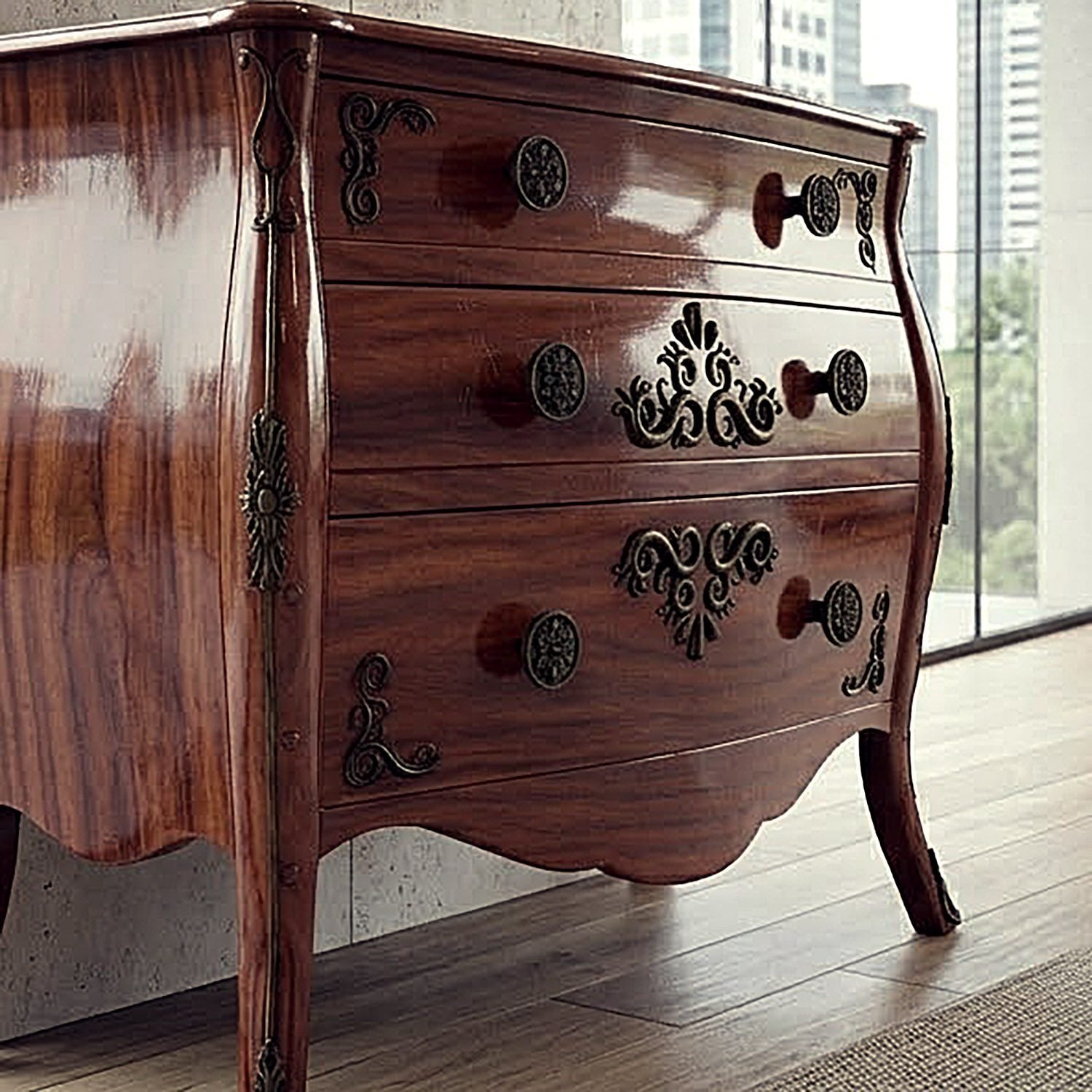
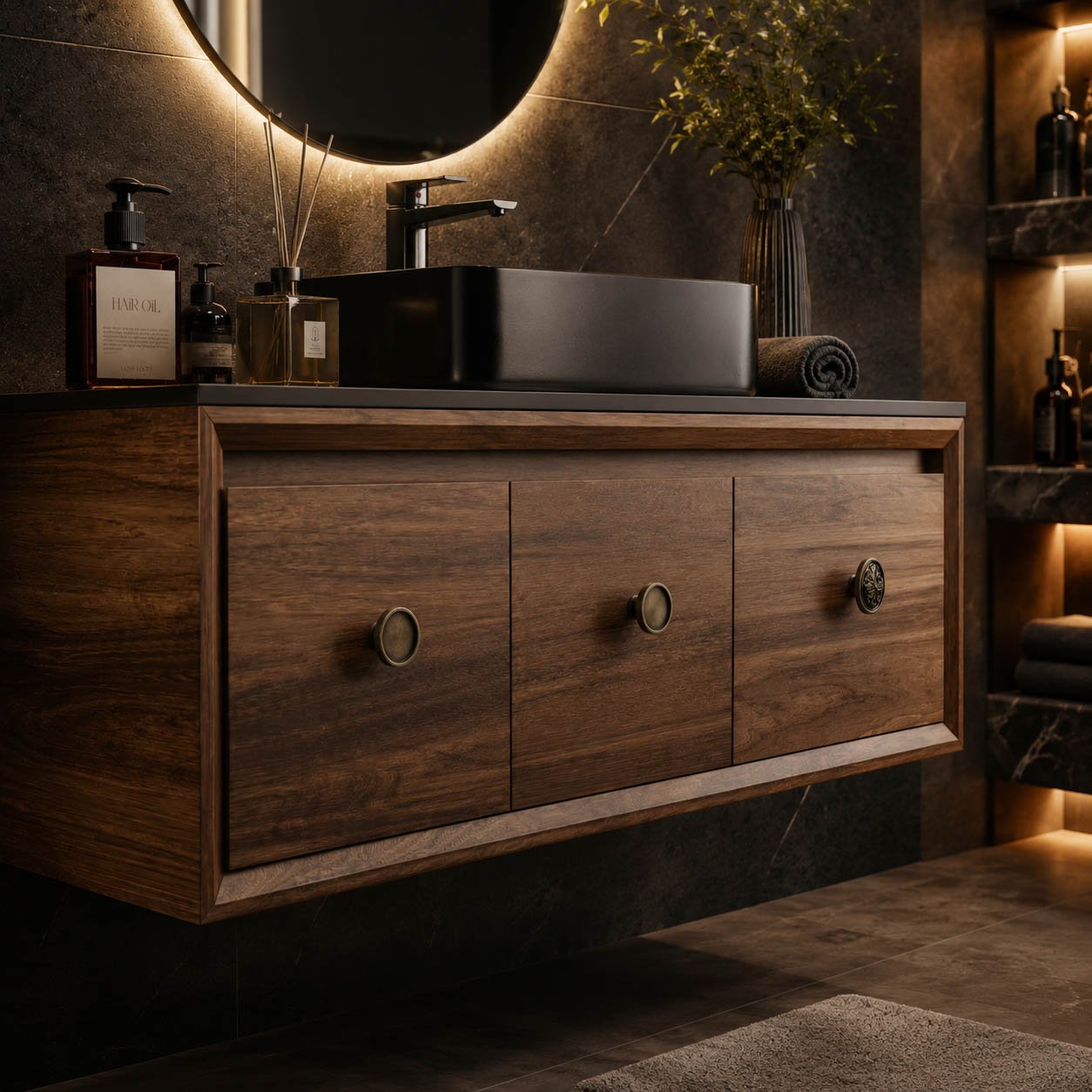
If a single material had to sum up the hardware of antique furniture, it would be brass. You find it on period chests of drawers, collector’s cabinets, the woodwork of grand apartments: its golden tone runs through styles without ever looking dated. It’s also a material that ages through patina rather than wear, a principle antique furniture already knows well.
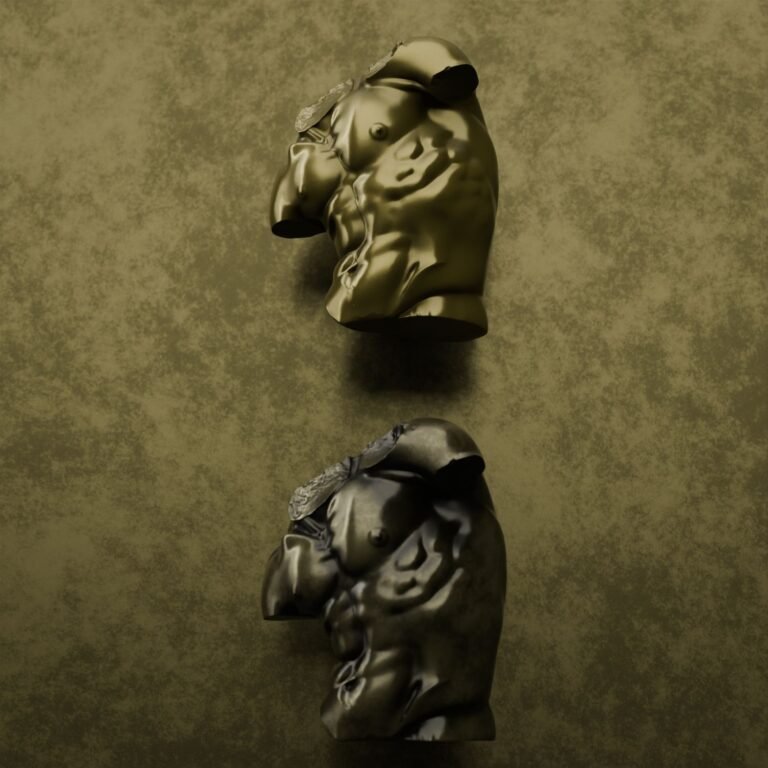
Several finishes let you match the choice to the character of the piece. Antique Brass carries aged golden tones with darker shadows in the recesses, as if the piece had always been there: it’s the most faithful option for furniture already marked by time. Satin Brass keeps the golden glow but in a more polished, more contemporary version: a fitting choice when the piece has been refreshed and you want a piece that contrasts slightly, without breaking the harmony.

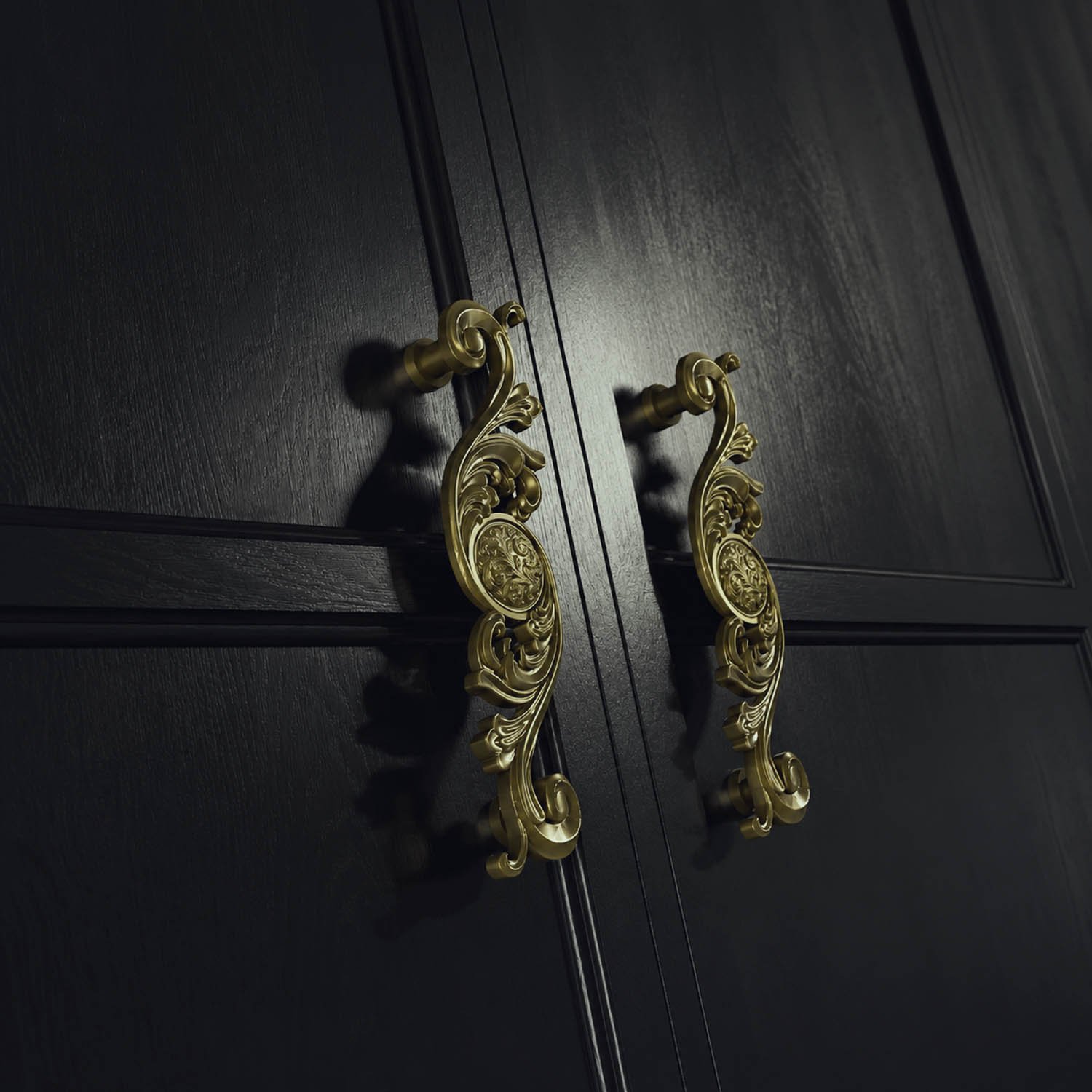
Brass isn’t just about appearance: it’s also a sturdy material that holds up well to heat and humidity, which makes it just as credible on a bedroom chest of drawers as on a kitchen buffet or an antique bathroom console, pieces where a bioresin finish would not be recommended.
Matching the center-to-center spacing to avoid redrilling an antique front
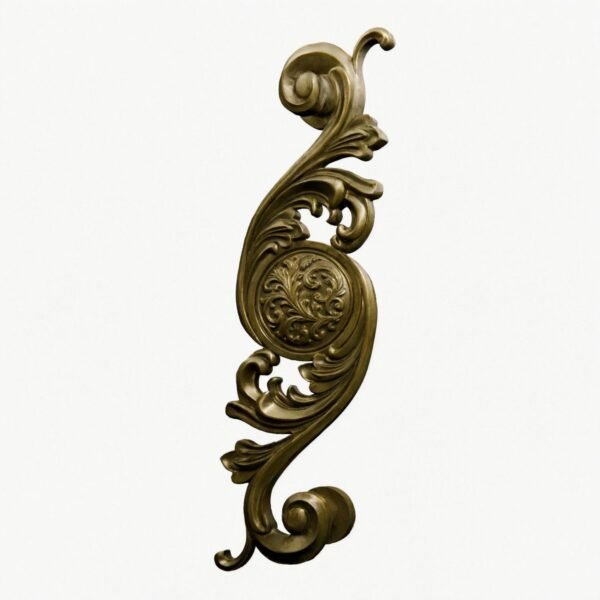
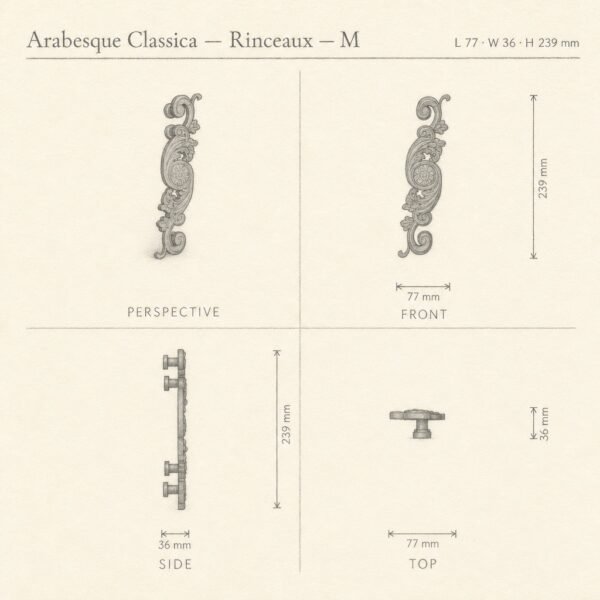
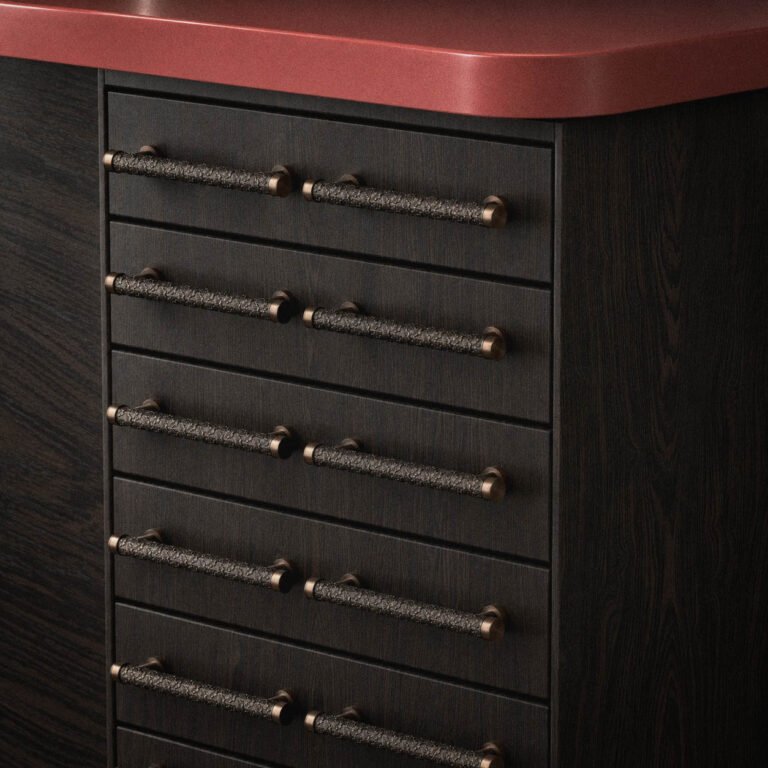
On an antique piece, the front already has its mounting holes. Identifying the existing center-to-center spacing (the distance between the two screw points of a pull) before ordering saves you from redrilling wood that can be a century old. Our pulls follow industry standards: the Palazzo Bar comes in 96, 128, 160, or 192 mm depending on size, the Classica Arabesque Scrollwork in 128, 160, or 192 mm. A knob, on the other hand, has only one mounting point: it’s the simplest solution when the front has just a single hole, as is the case with many drawers on antique chests.
Subtle or ornamental pattern: matching the gesture to the character of the piece
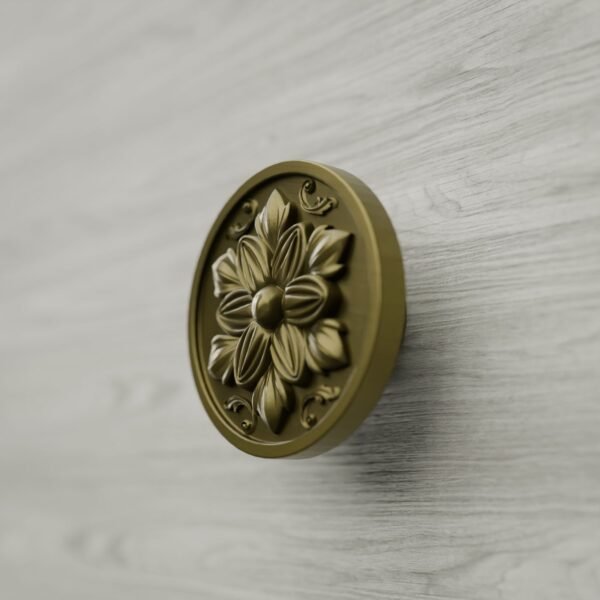
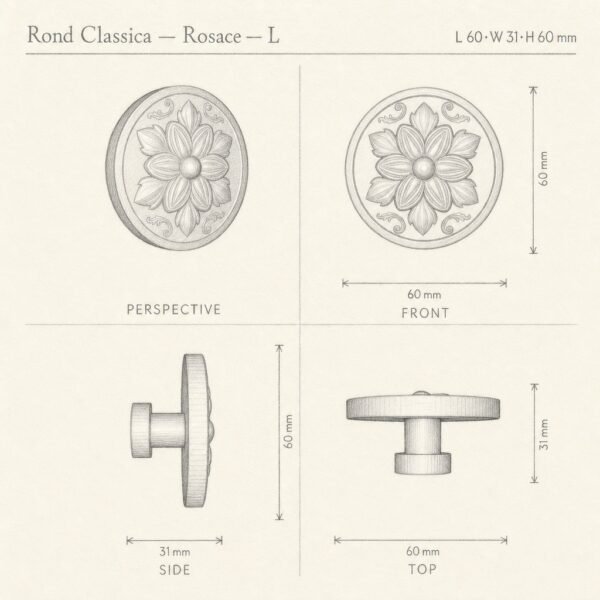
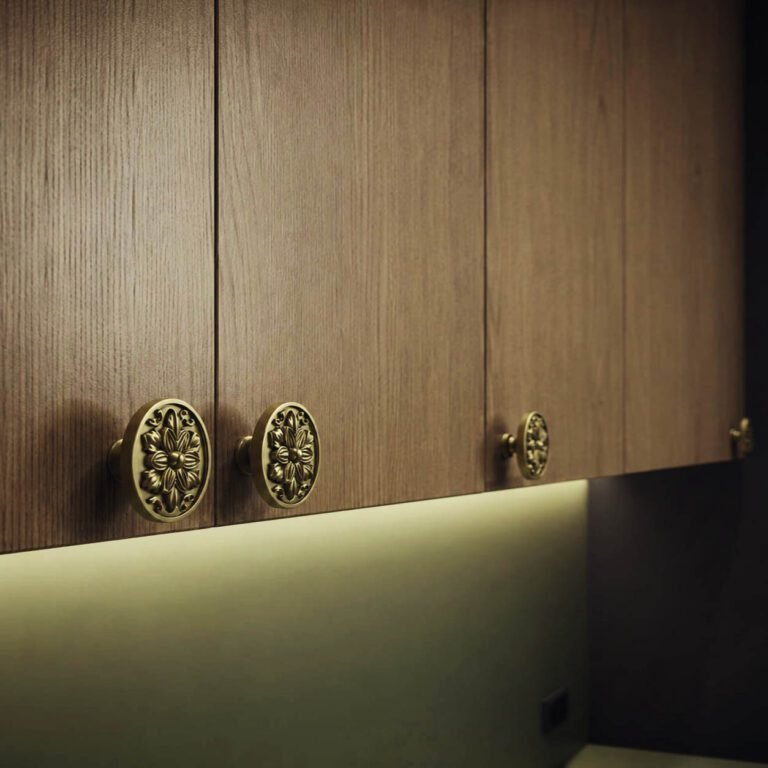
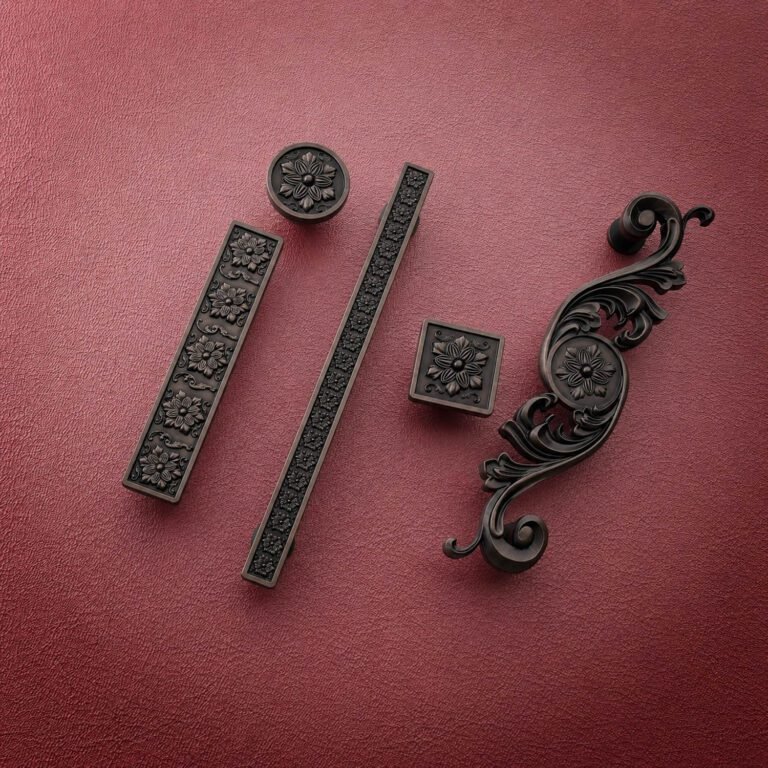
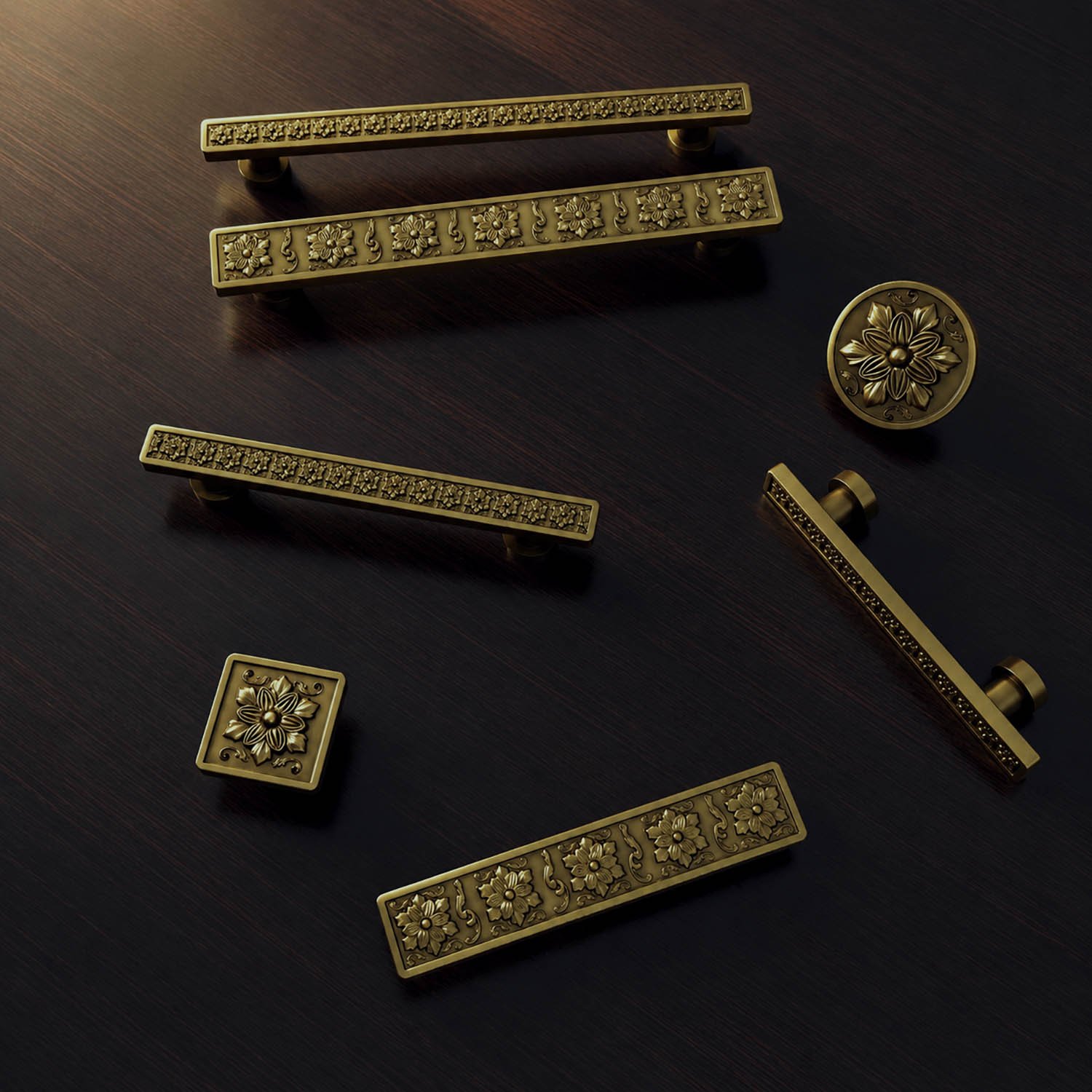
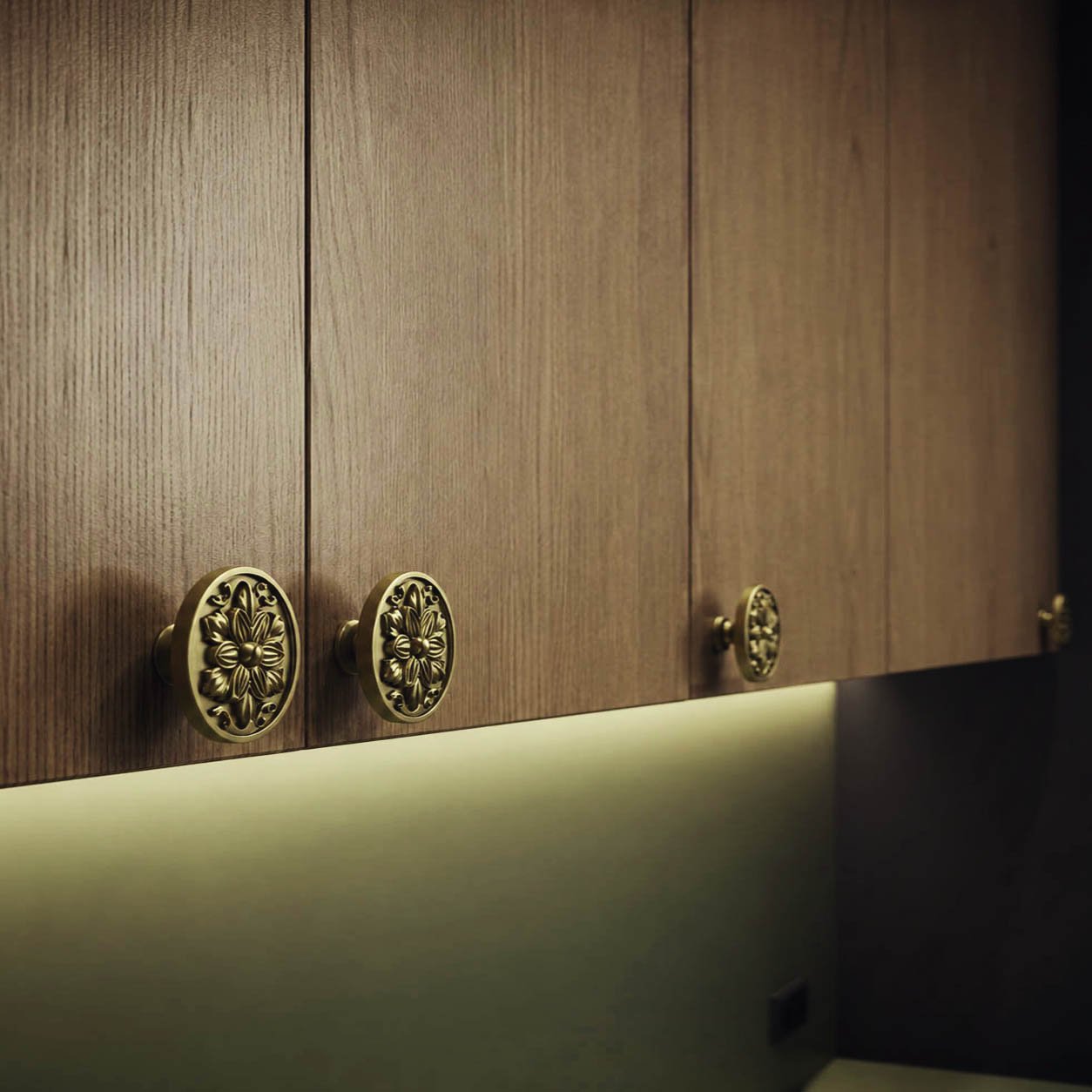
Not every antique piece calls for the same gesture. A dresser already rich with moldings often needs nothing more than a simple round knob, one that doesn’t compete with the woodwork. A plainer front, on the other hand, or a piece you want to showcase, can carry a bolder pattern: the Rosette, radiating from its center, or Scrollwork, whose acanthus curls run from Roman friezes to the paneling of Versailles. The principle stays the same as the one that has always governed antique hardware: the pattern highlights the piece, it doesn’t compete with it.
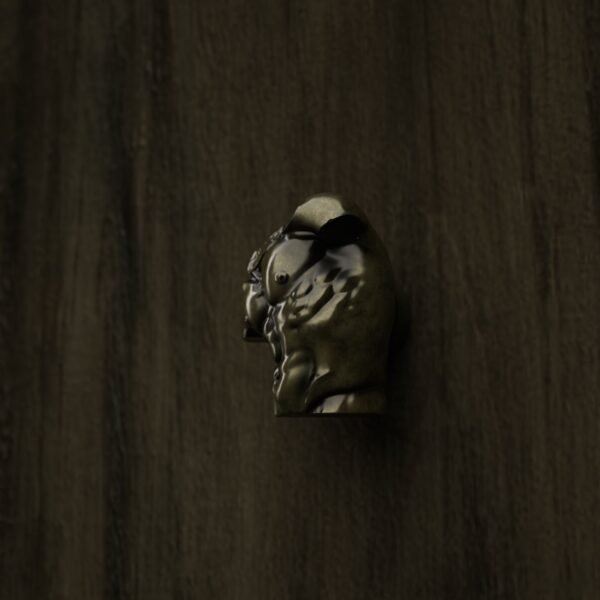
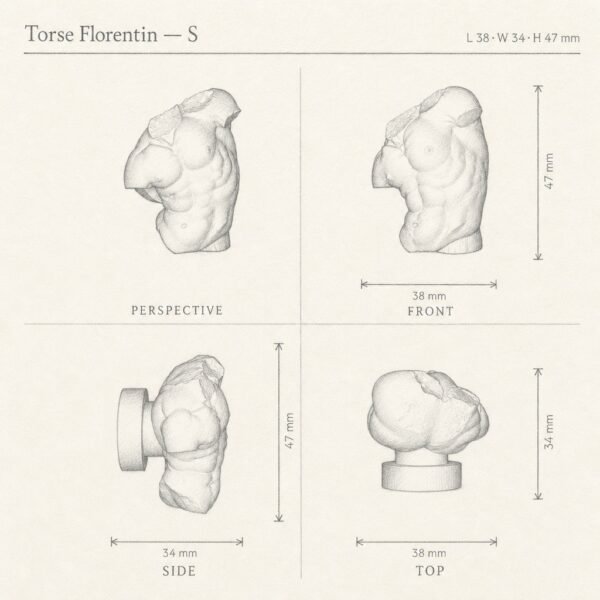
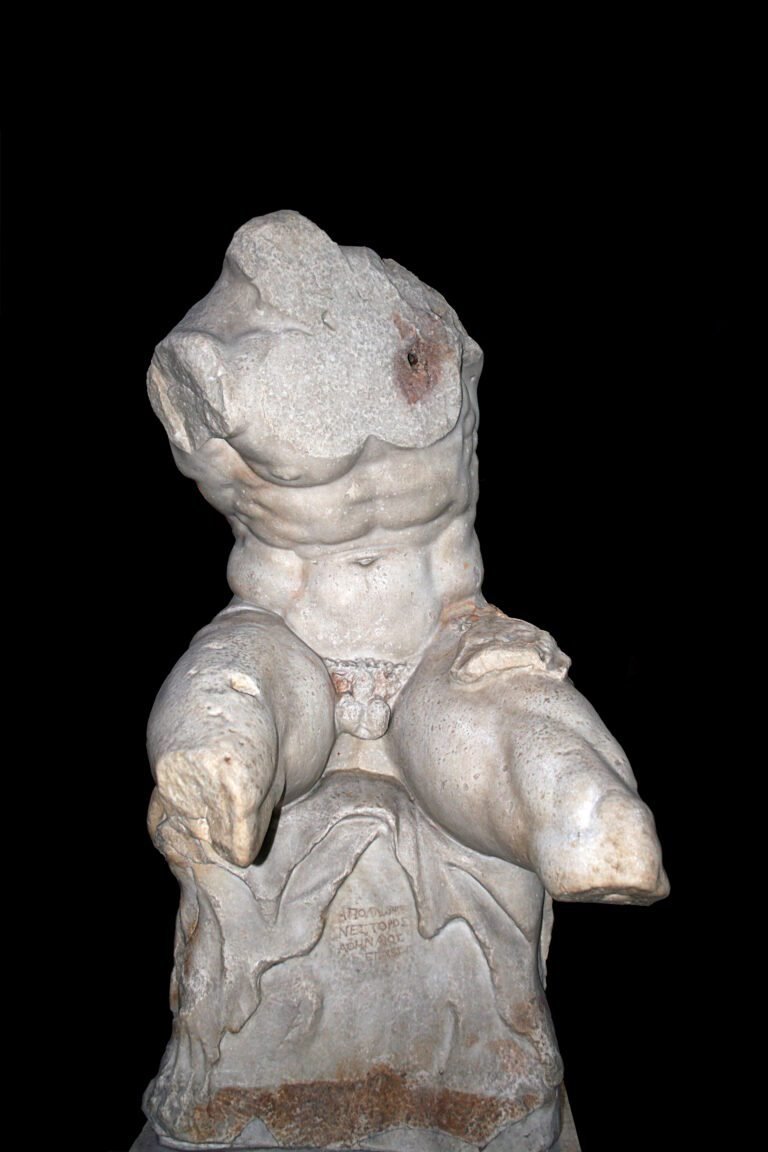
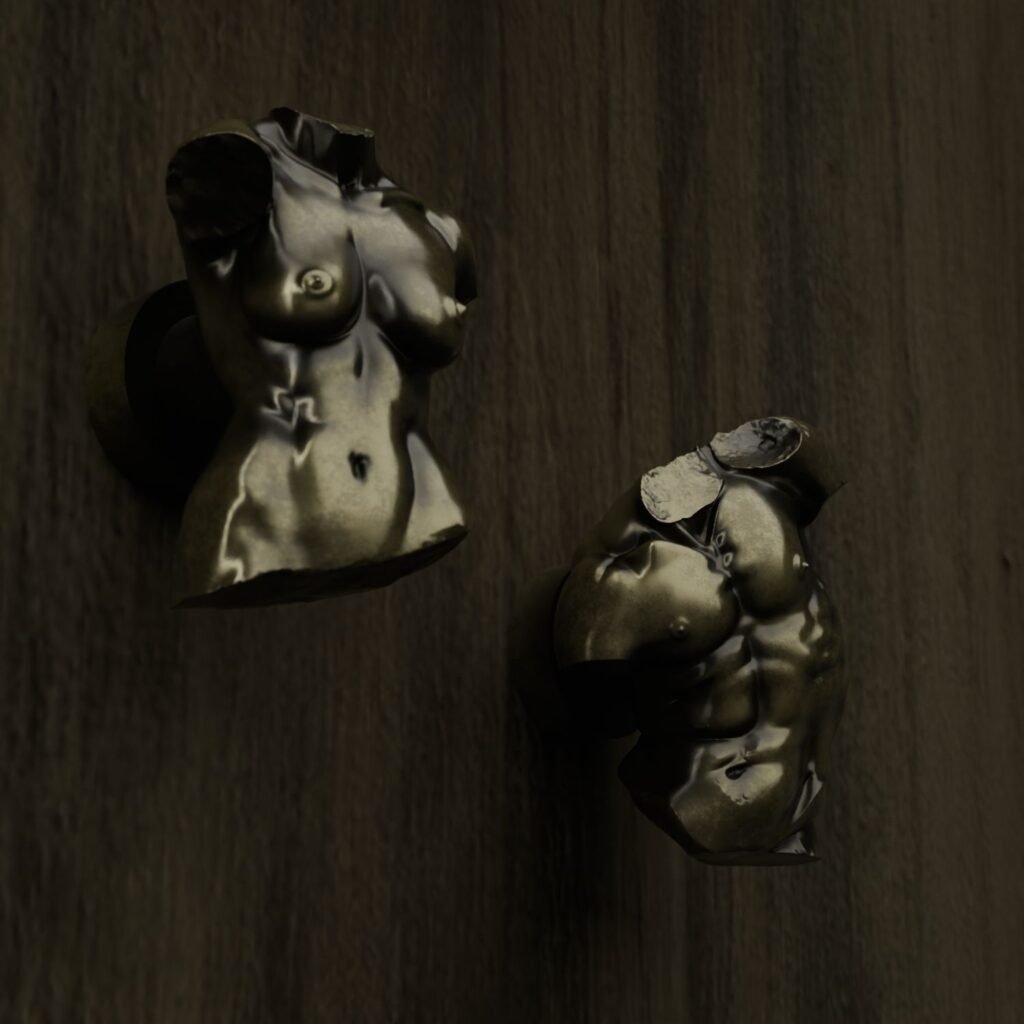
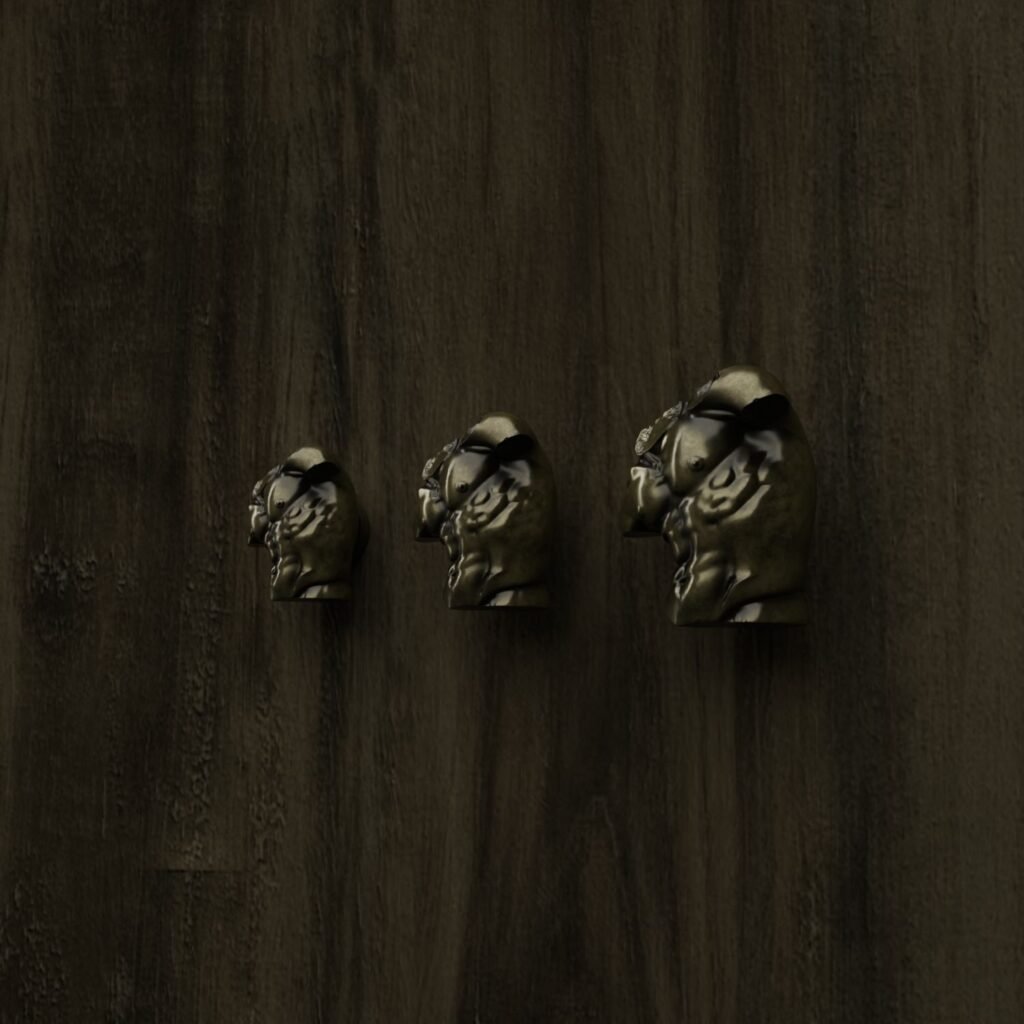
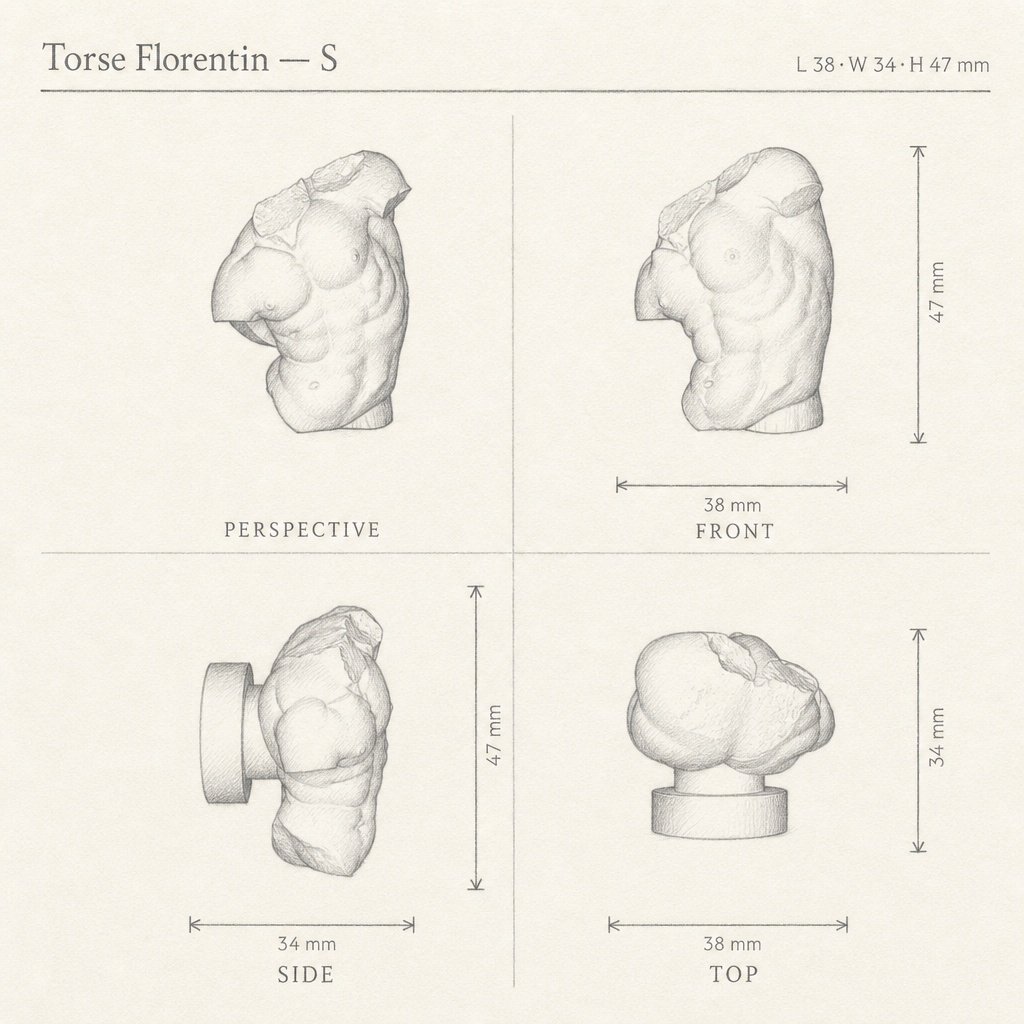
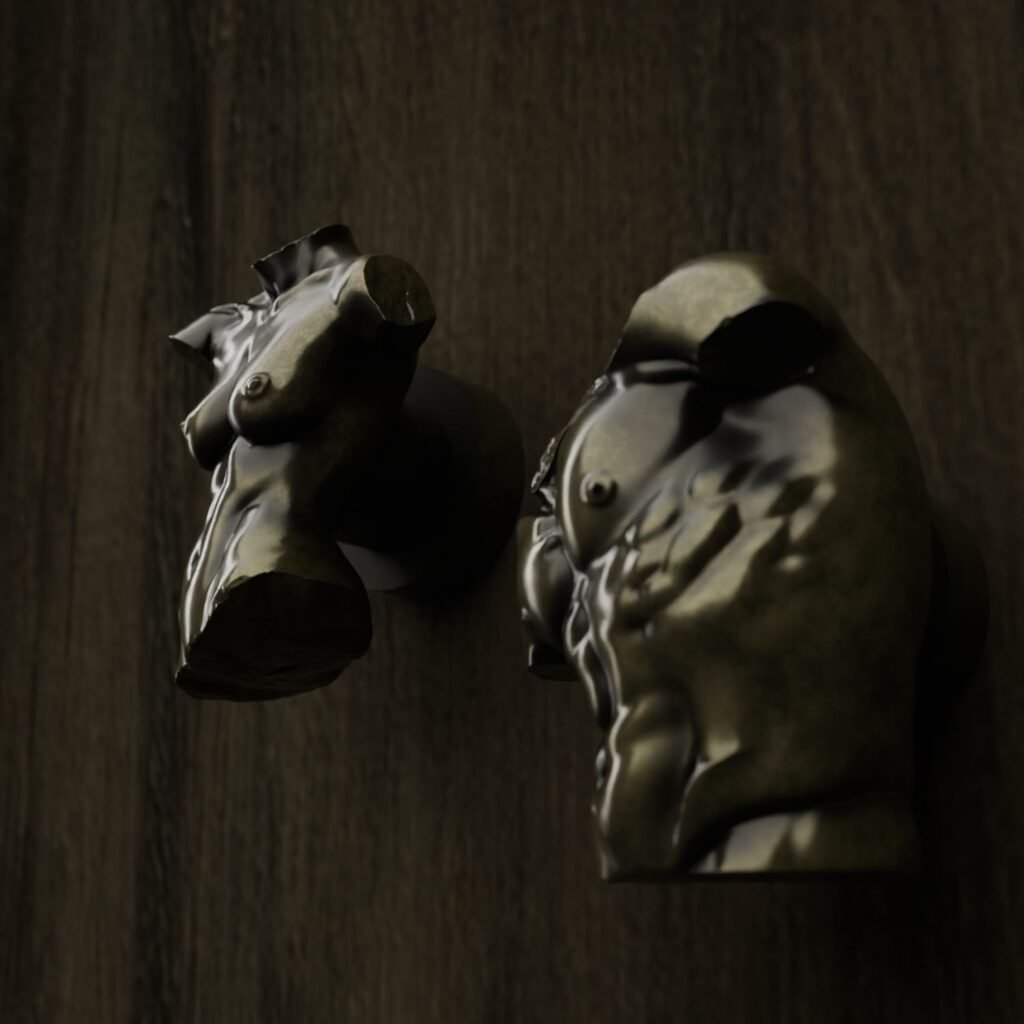
For a piece that calls for an even more sculptural gesture, like an entryway sideboard or a display cabinet door, an entire figurative pattern can become the handle itself: the Florentine Torso, inspired by the antique torsos the Renaissance revered, is the finest example of it. A choice best reserved for a single front, not repeated across an entire piece of furniture.
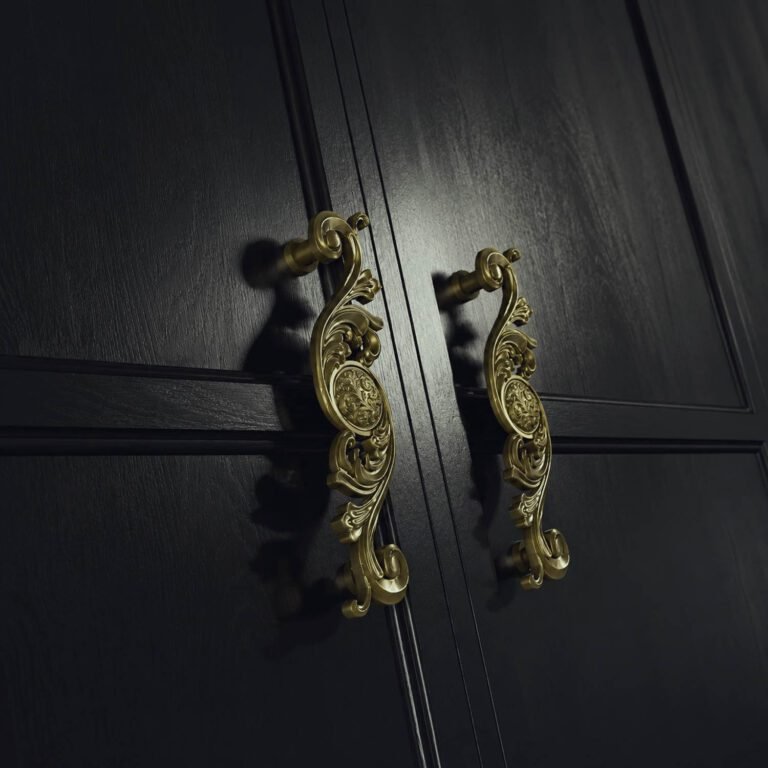
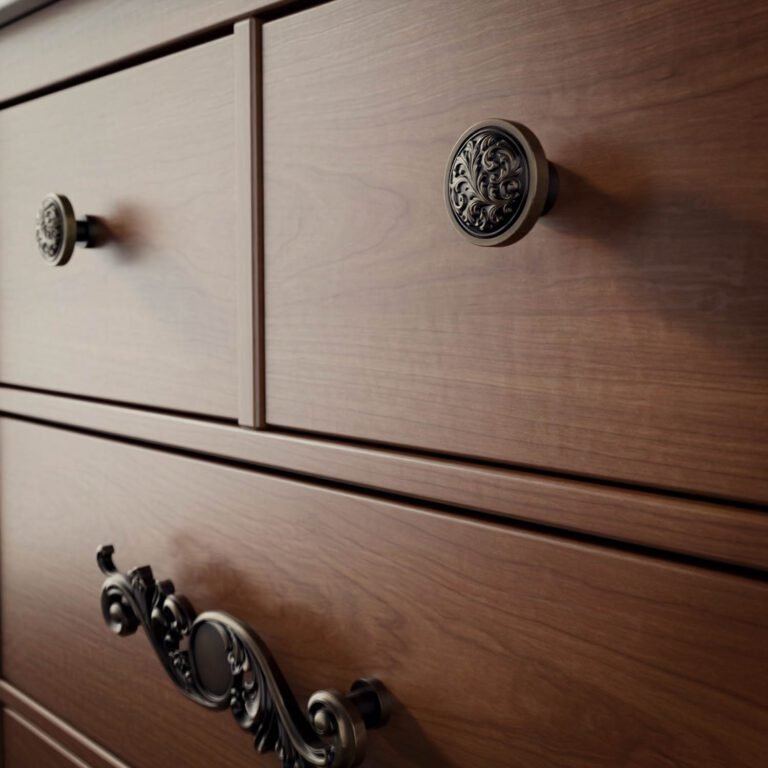
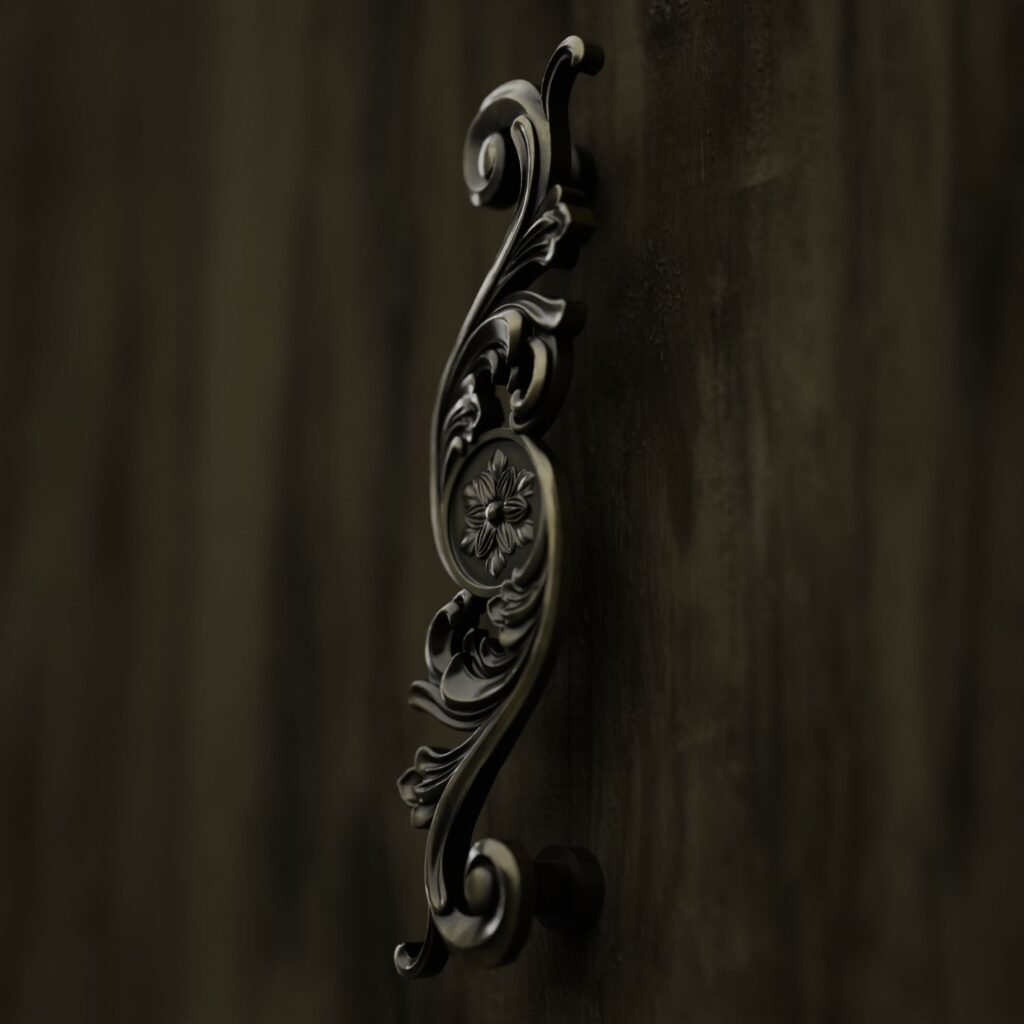
For a buffet or a display cabinet where you want a more classic ornamental pattern, the Scrollwork offers the same principle in a more botanical register: a dense design, meant to be looked at up close, that works equally well on a knob or a pull.
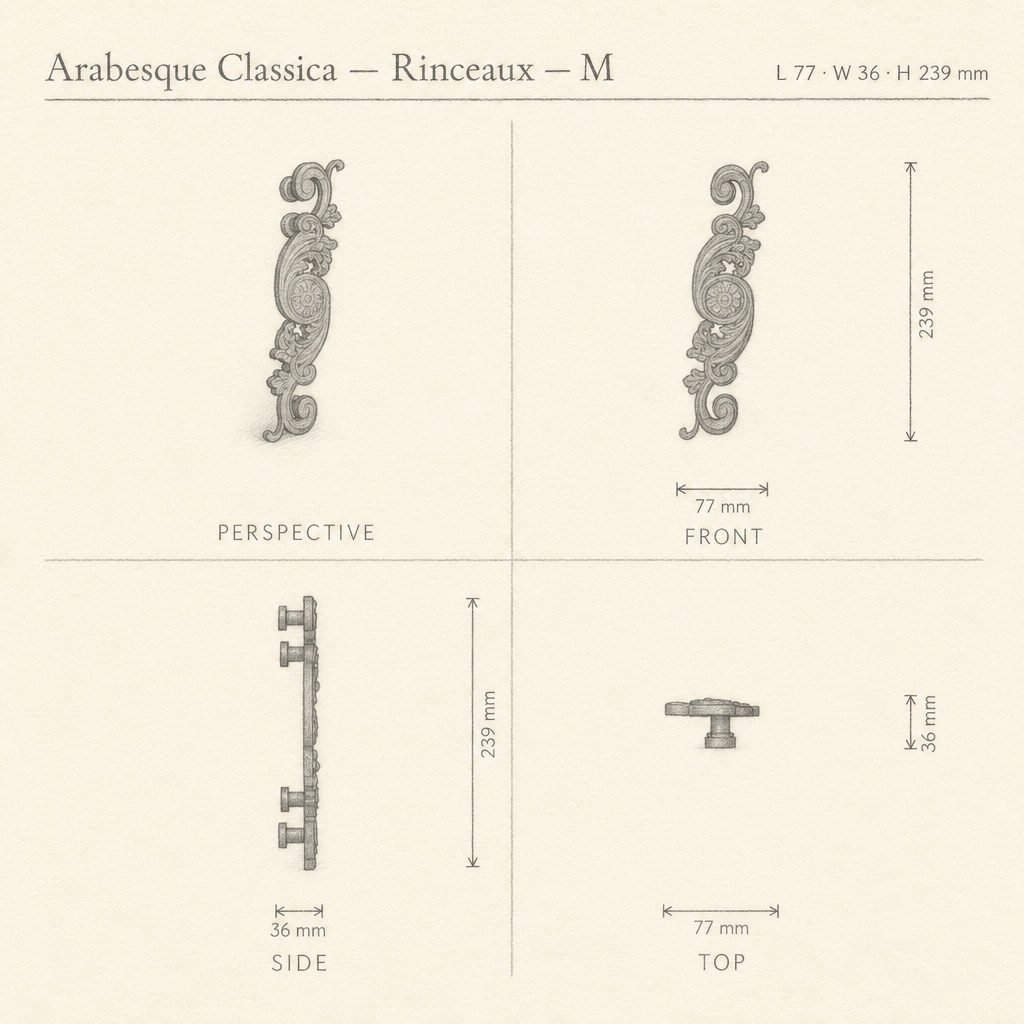
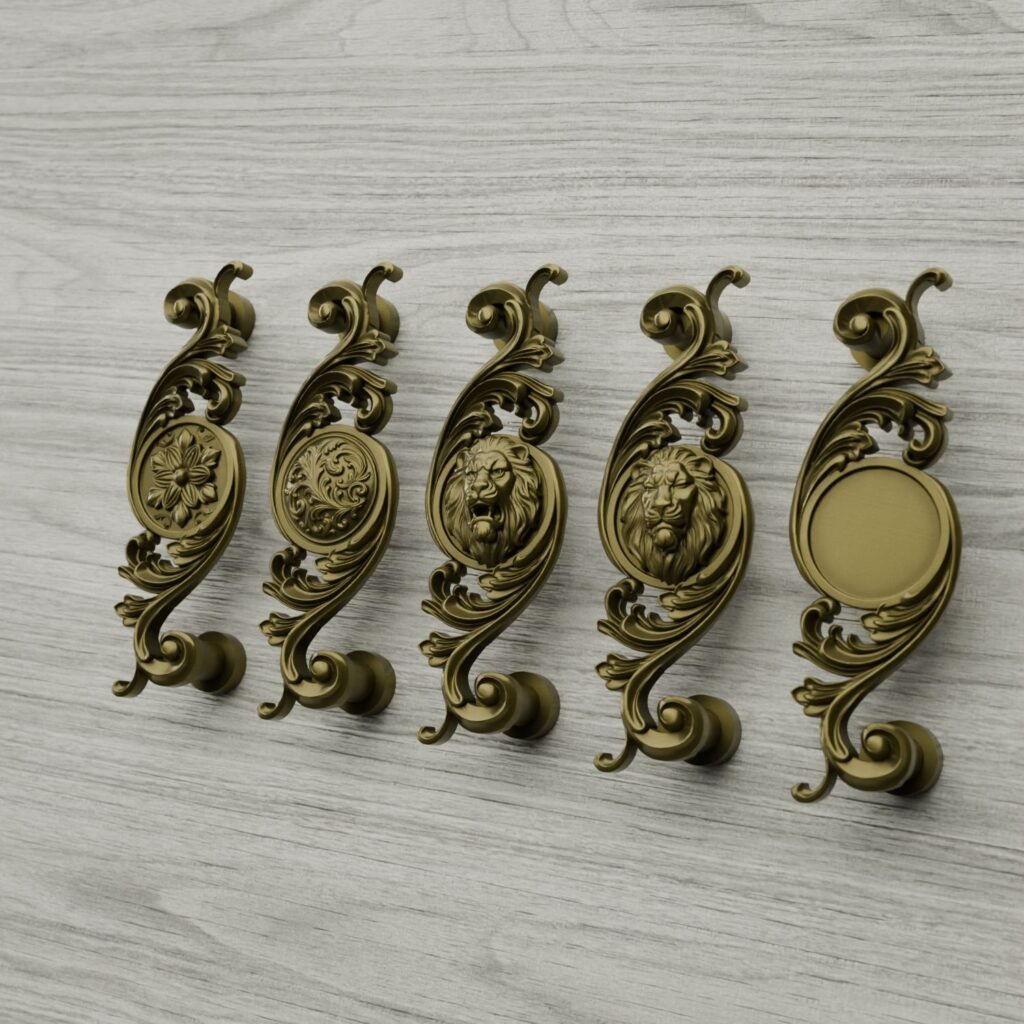
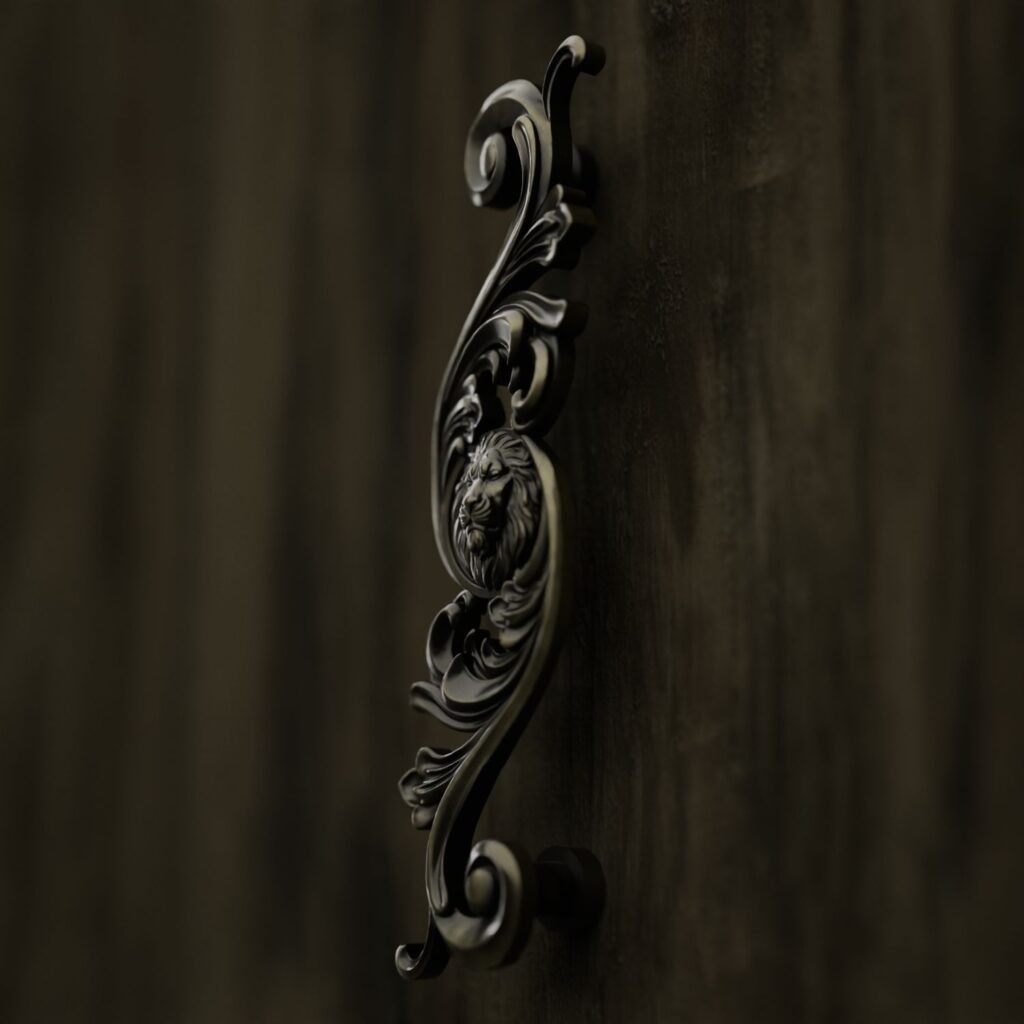
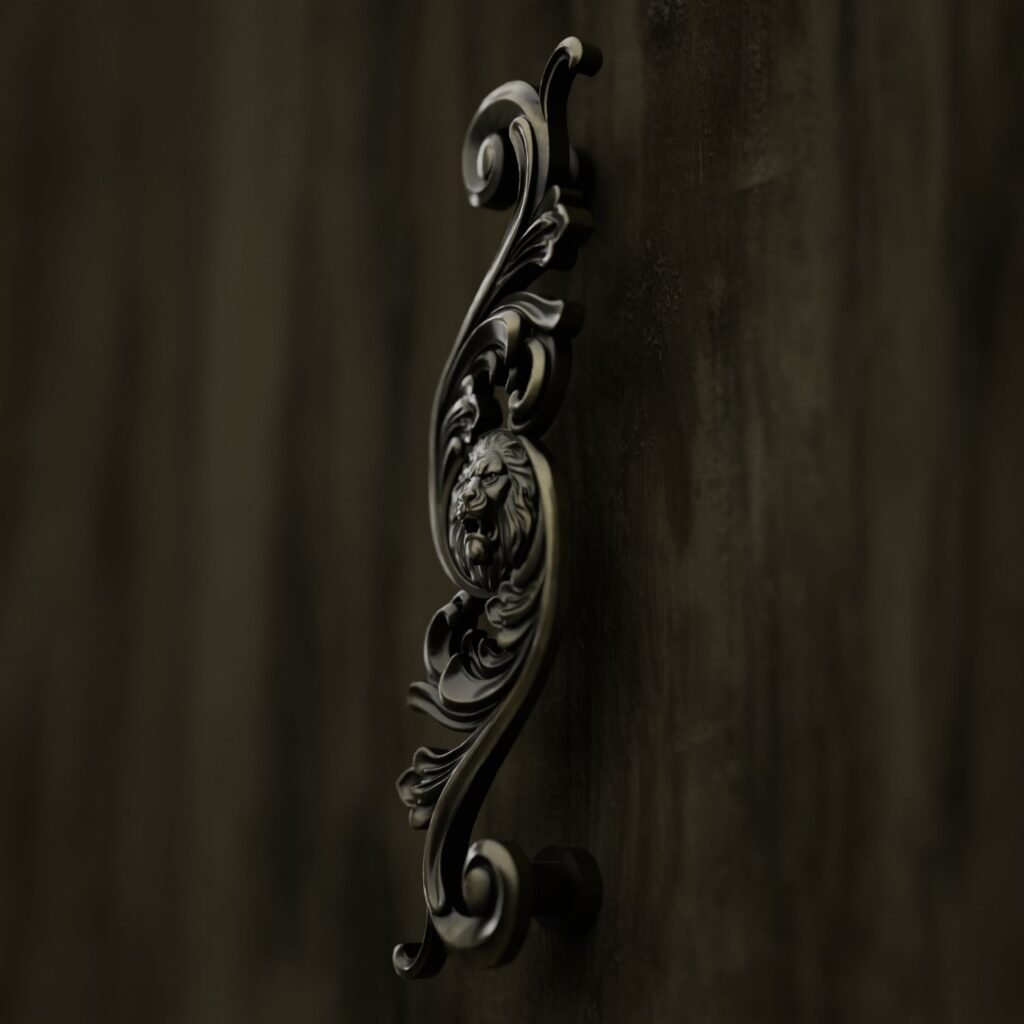
And for the front that truly deserves a strong gesture, the Classica Arabesque silhouette also features two heraldic figures, best reserved for a single standout piece rather than repeated throughout.
What to keep in mind before ordering
- Measure the existing center-to-center (distance between the two screws) before choosing a pull; if there is no match, a single-point knob avoids any extra drilling.
- On already dark or patinated wood, antique brass is the better choice; on a refreshed or light piece of furniture, satin brass keeps more shine.
- Brass holds up well to humidity and heat: an antique brass handle belongs equally in the bedroom, kitchen, or bathroom.
- Keep a single pattern per piece of furniture (Rosette, Scrollwork, or a figurative pattern reserved for one front) rather than mixing several ornamental languages.
- Allow 5 to 10 business days to receive catalog handles, a timeline that fits easily into a furniture restoration schedule.
Frequently asked questions
How do I know if my current handles have a standard center-to-center?
Simply measure the distance between the centers of the two mounting screws on a pull. The most common center-to-center measurements are 96, 128, 160, and 192 mm: our pulls, like the Palazzo Bar or the Classica Arabesque, follow these standards. A knob has only one mounting point, so there is no center-to-center to match.
Does brass hold up to the humidity of an older bathroom?
Yes. Brass is recommended for the kitchen, the bathroom, living spaces, and heavy-use doors or drawers, thanks to good resistance to heat and humidity. That’s an advantage on an antique piece in a water-prone room, whereas a bioresin finish would remain better suited to dry rooms.
Should the finish stay the same across the whole piece?
That’s the safest choice to keep the piece from looking fragmented: a single brass finish (antique or satin) across all the drawers and doors keeps a consistent look. Reserving a more sculptural pattern, like a Florentine Torso, for a single front strengthens the effect rather than diluting it.
How long does it take to receive new handles for a renovation?
Catalog handles are made to order in our Paris atelier and shipped within 5 to 10 business days, a timeline that fits easily into a furniture restoration schedule.
At Holdon Paris, every brass handle is cast and hand-patinated in our Paris atelier. Restoring an antique piece of furniture is often more about precision than boldness: the right material, the right measurement, the right amount of ornament. For more restoration ideas in the same spirit, our chronicles on cabinet handles for an Art Deco interior and on renovating a repainted kitchen explore other ways to match new hardware to an existing piece.