IKEA Kitchen: How to Choose Design Handles to Transform It
There’s a question almost nobody asks when planning a kitchen. You choose the cabinet fronts, the countertops, the backsplash, the lighting. You spend hours comparing shades of gray. And then the handles? You take whatever’s there, whatever comes standard, whatever costs nothing extra. The result: a kitchen you dreamed up as personal that ends up looking like a thousand others.
And yet there’s one simple, quick, reversible move, no renovation required, that changes everything. Change the handles.
IKEA: The Perfect Cabinet Awaits Its Jewelry
IKEA achieved something remarkable: designing modular cabinets with a technical quality that’s hard to match at this price. The Metod range is sturdy, well thought out, and adapts to any configuration. Millions of kitchens around the world rest on these structures, and rightly so.
But there’s a flip side. This standardization, which is its economic strength, is also its aesthetic limit. The handles IKEA supplies or offers are often functional, sometimes pretty, rarely memorable. They don’t tell a story. They have no character.
That’s precisely the void designer cabinet handles come to fill. The cabinet remains, sturdy and practical. It’s the handle that does the talking.
The good news is that IKEA’s center-to-center spacing is standard. 64 mm, 96 mm, 128 mm: these measurements are universal across quality hardware. Swapping out your IKEA handles requires no extra drilling, no modification to the fronts, no craftsman. One screw, one screwdriver, twenty minutes.
Which Metal for Which Kitchen?
If you’ve decided to take the leap, the real question comes next: which material to choose? Bronze, brass, copper, these three noble metals share a warmth that stainless steel or aluminum can rarely match. But they’re not interchangeable, and each tells a different story.
Bronze: Depth and Timeless Patina
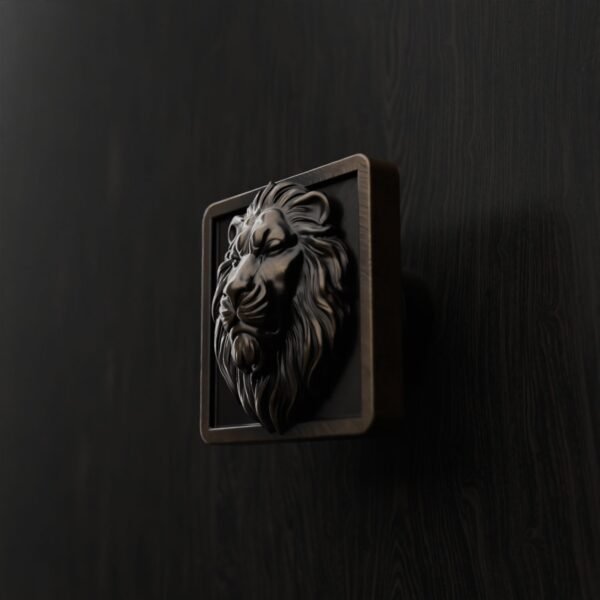
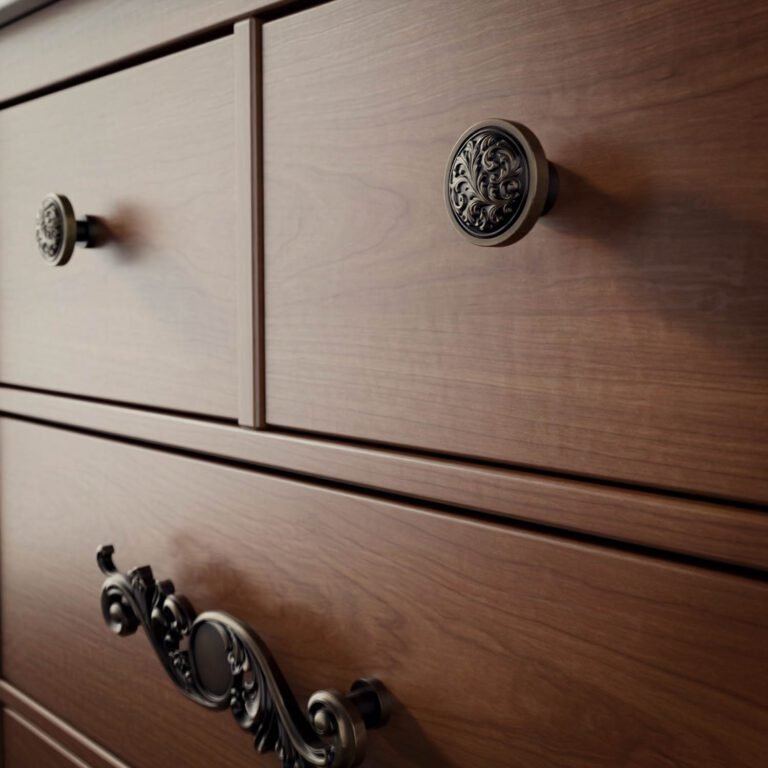
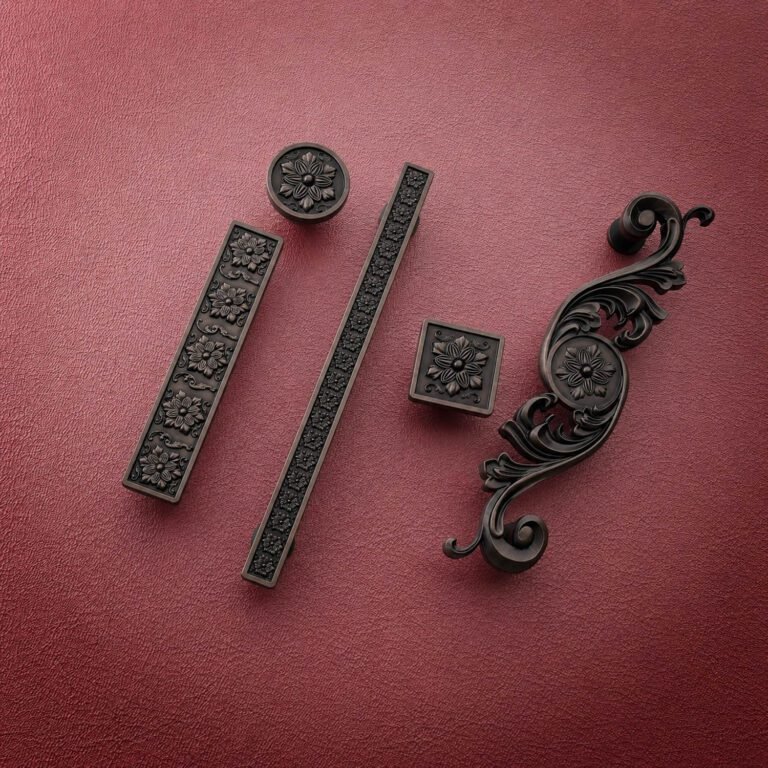
Bronze is the metal of memory. Dark, dense, rich in nuance, it evokes old libraries, Haussmann era ironwork, objects that endure through time. On a kitchen, a bronze handle creates a striking contrast against light fronts, white, cream, pearl gray, and immediately builds visual tension, that unexpected element that gives an interior character.
What makes bronze especially interesting is the way it ages. A natural patina develops over the months, shaped by the warmth of the hand, the air of the kitchen. Two handles of the same model will never carry quite the same tone after a few years. That’s not a flaw: it’s a signature.
Brass: Discreet Elegance Making a Comeback
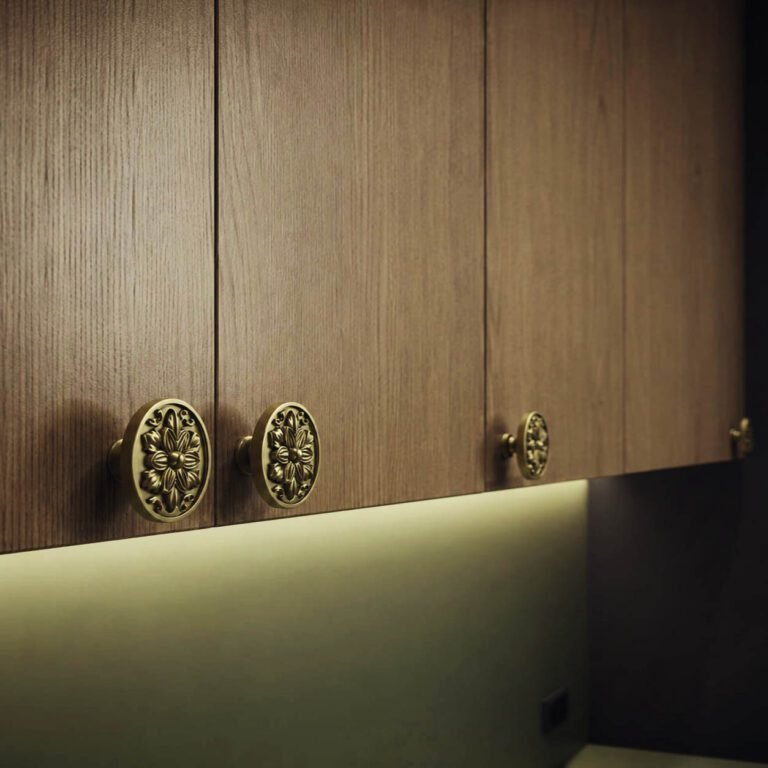
Brushed brass is, without question, the finish of the season. After years of polished stainless steel dominance, kitchens are warming back up. Brass, golden without being showy, warm without being loud, answers that longing. It pairs beautifully with natural wood, marble, waxed concrete, and linen or velvet fronts.
Unlike bronze, brass can be polished to preserve its original shine, or left as is to develop a soft oxidation that gives it a wabi-sabi look, very much in demand in 2026. This duality makes it a particularly versatile choice.
Copper: the color that tames a space
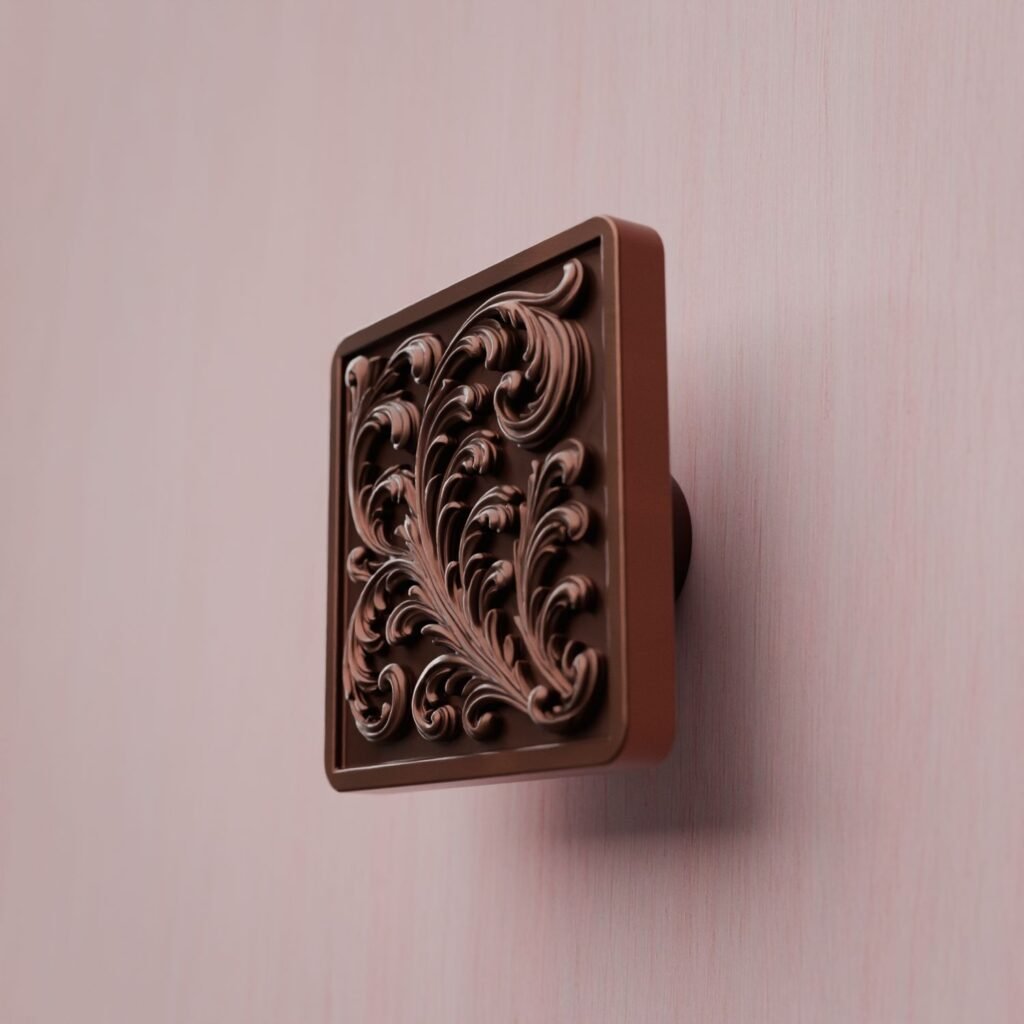
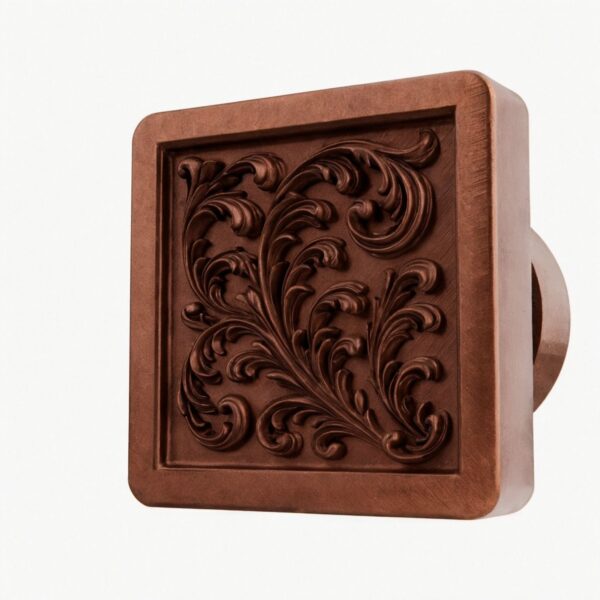
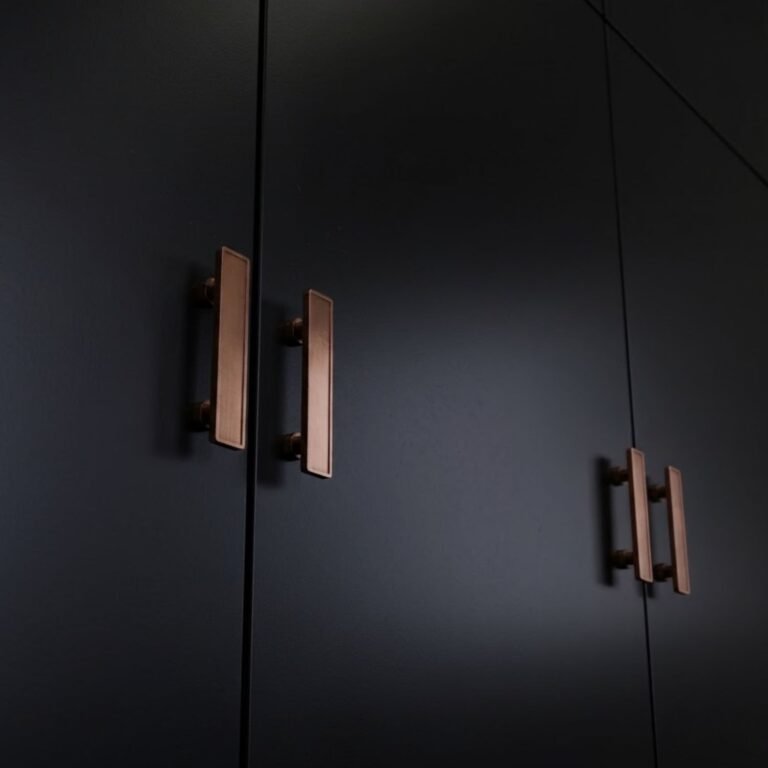
Copper is the boldest of the three. Its rosy, faintly orange hue is instantly recognizable. It doesn’t go unnoticed. That’s both its appeal and its constraint: a kitchen dressed in copper handles makes a deliberate choice, a decorative statement.
Against dark fronts, forest green, midnight blue, anthracite, copper creates a striking contrast. Against wood fronts, it converses with the warm tones of oak or walnut. It ages too, taking on a patina that shifts toward reddish browns, and can be hand patinated for even more pronounced effects.
Shape and center-to-center: the two essential parameters
Once the material is chosen, two technical elements come into play: shape and center-to-center.
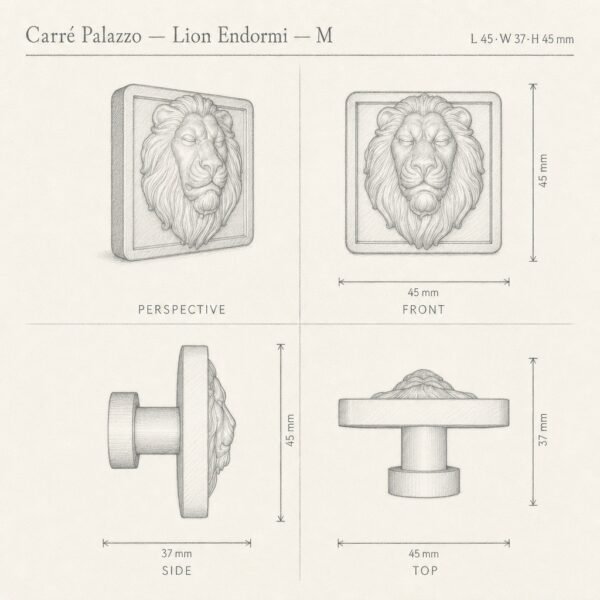
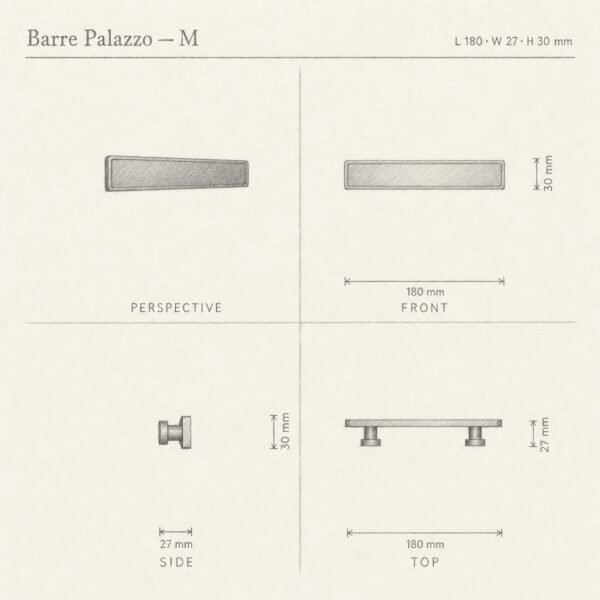
Center-to-center (c/c) is the distance between the two mounting screws. For a pull, measure precisely the gap between the existing holes on your fronts. IKEA’s standard measurements are 64 mm, 96 mm, 128 mm and 160 mm depending on the model. This is the one check you can’t skip before ordering. For a single point knob, the question doesn’t arise: one hole, centered.
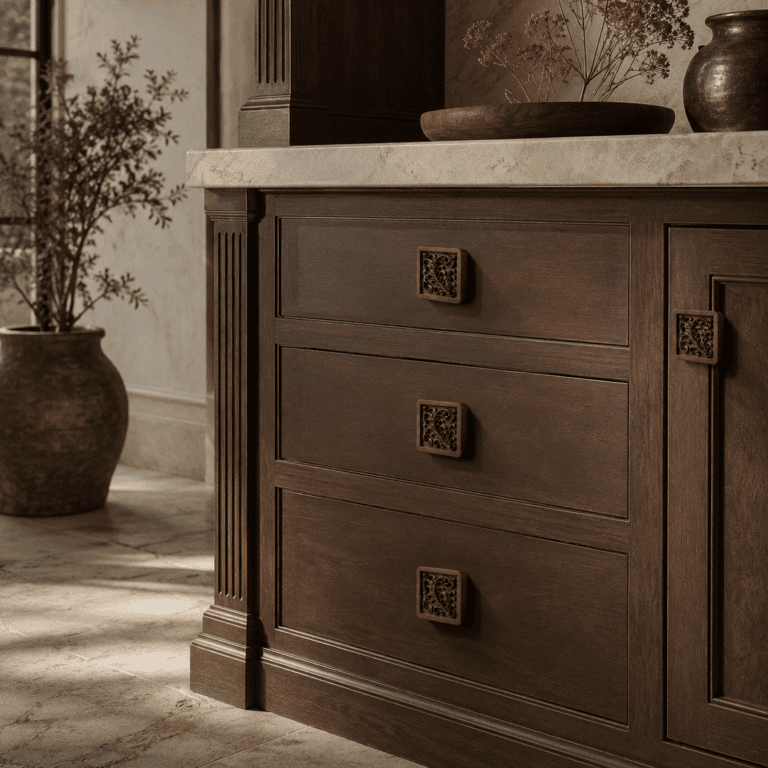
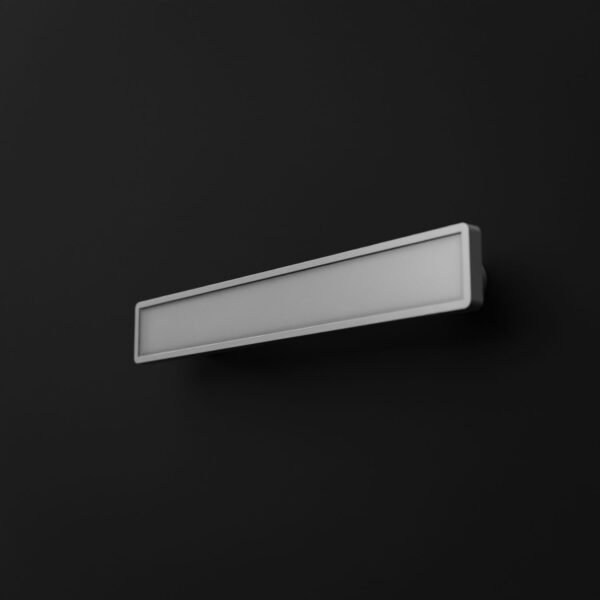
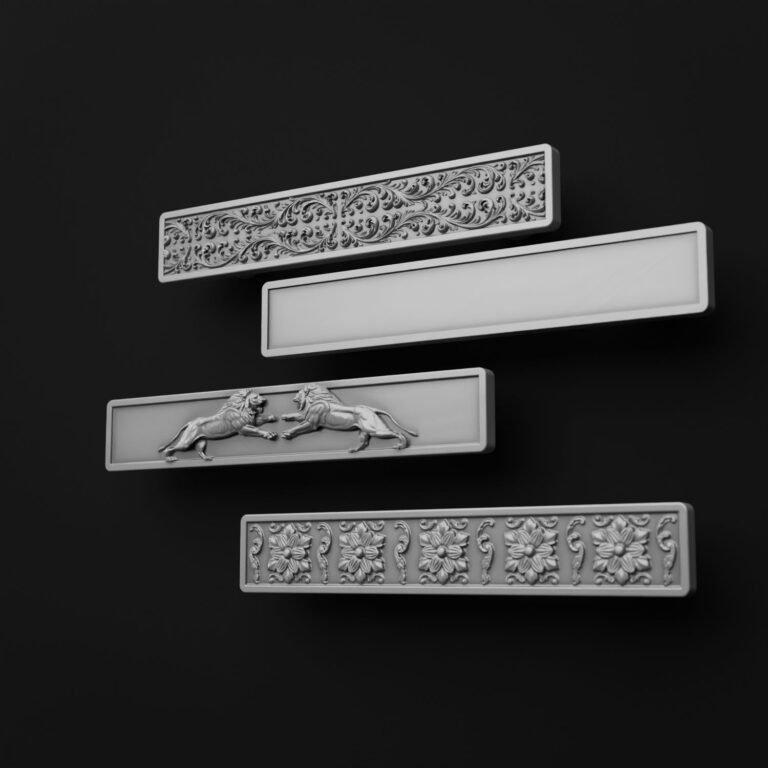
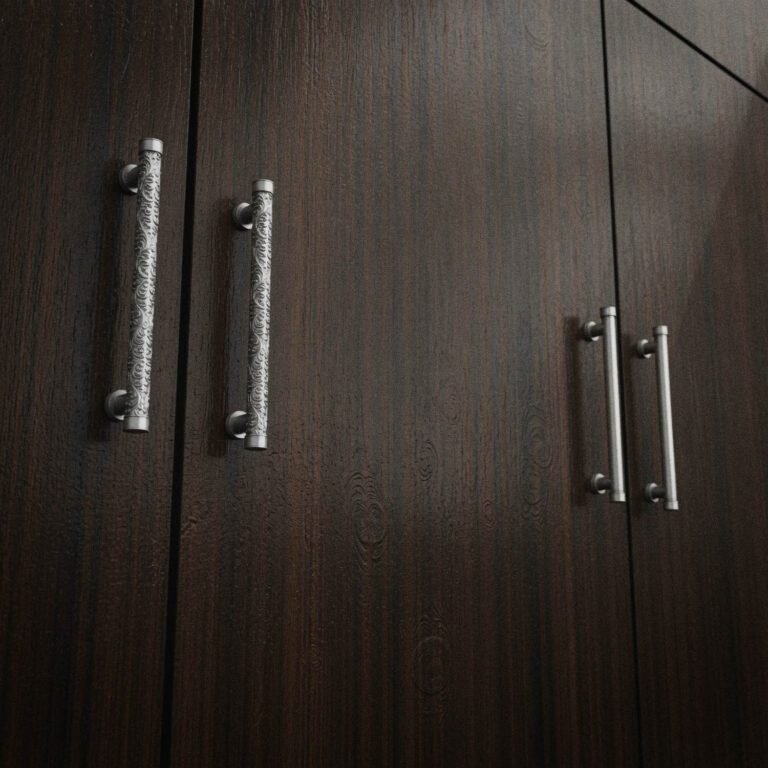
Shape is a matter of coherence with the room as a whole. A clean, contemporary kitchen calls for geometric lines, understated bars, crisp cylinders. A kitchen with more classic elements, solid wood, a stone countertop, can carry more sculptural, more worked forms. What matters most: the handle should be in dialogue with what surrounds it, not in competition.
A useful rule: a strong handle in a simple interior works better than an unremarkable handle in a busy one. The handle needs a reason to exist.
The impact of a handle: far more than a detail
We say it often, because we believe it deeply: the handle is not a detail. It’s a point of contact. The first gesture you make walking into a kitchen, the texture you feel ten times a day without noticing, the object that gives, or fails to give, a piece of furniture its character.
Swapping IKEA handles for pieces in bronze, brass, or copper is an investment of a hundred euros or so for a transformation worth ten times that in visual impact. It’s one of the rare interior design moves that offers such a ratio of effect to effort.
And it’s reversible. If your space evolves, your handles can evolve with it. Without breaking a single tile.
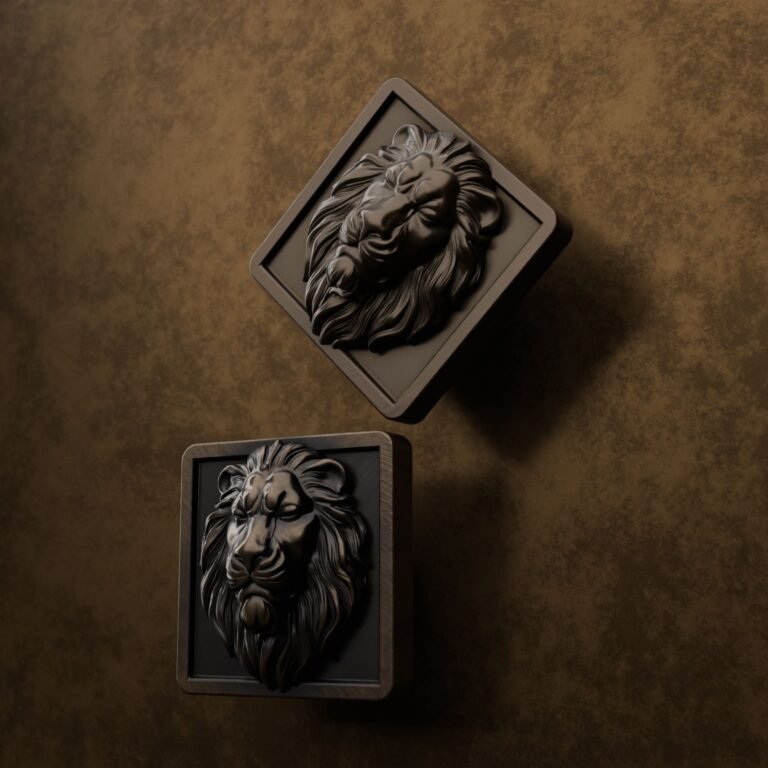
At Holdon Paris, we design cabinet handles in bronze, copper, and brass, handmade in our Paris atelier. Each piece is designed to fit IKEA fronts, including Metod, Kallarp, and Voxtorp, as well as Plum and Superfront furniture, and standard cabinetry. Our first collections are coming soon. If our approach speaks to you, sign up for our newsletter to discover our pieces in preview.