Cabinet Handles for the Bathroom: the Design Detail That Changes Everything in a Wet Room
There’s one room we decorate almost to the last detail. We choose the tile with care, the faucets down to the millimeter, the mirror the way we’d choose a frame. And then the vanity arrives, with its original handles, the ones we never really chose and that say nothing.
In just a few years, the bathroom has become one of the most lived-in rooms in the home. It’s where we look for the calm of morning, low light, a form of care. Yet the detail we forget most often is the vanity handle. That’s a shame, since it’s one of the first things the hand meets each day, often still damp, straight out of the shower. A point of contact, not an accessory.
In a wet room, metal isn’t optional
Before shape and before color comes a simple constraint: the material has to hold up against moisture. That’s the rule that rules out half the hesitation from the start. Our metals, aluminum, bronze, copper, and brass, are all rated for this use. They take on ambient humidity, knocks, and heat without flinching, and their care sheet lists the bathroom right alongside the kitchen.
It’s also the one place in the catalog where our most accessible material steps aside. Bioresin, perfect and budget-friendly on a decorative piece kept dry, has no place in a wet room, since its surface doesn’t take well to prolonged moisture. For a bathroom, we stay with metal from start to finish, and the entry point is no longer bioresin but satin aluminum.
Bronze, copper, aluminum: every metal has its own mood
Once that rule is set, choosing becomes a pleasure again, because all that’s left to decide is the mood.
Satin aluminum is the most understated and affordable of our metals. Completely unaffected by moisture, its surface gives off a soft gray light, neither mirror-bright nor fully matte. It’s the contemporary default, equally at home in a minimalist bathroom or a room that’s already richly dressed.
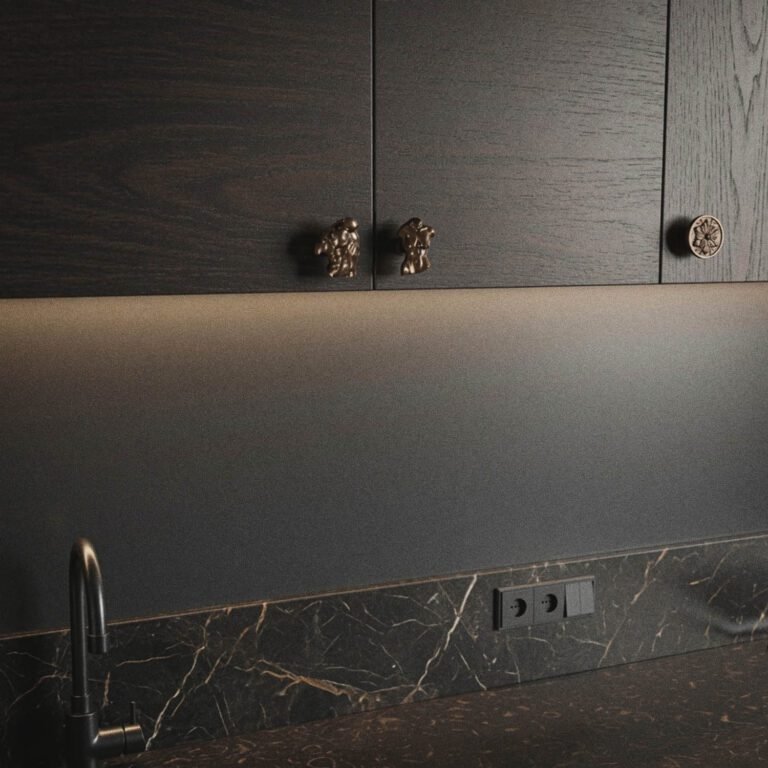
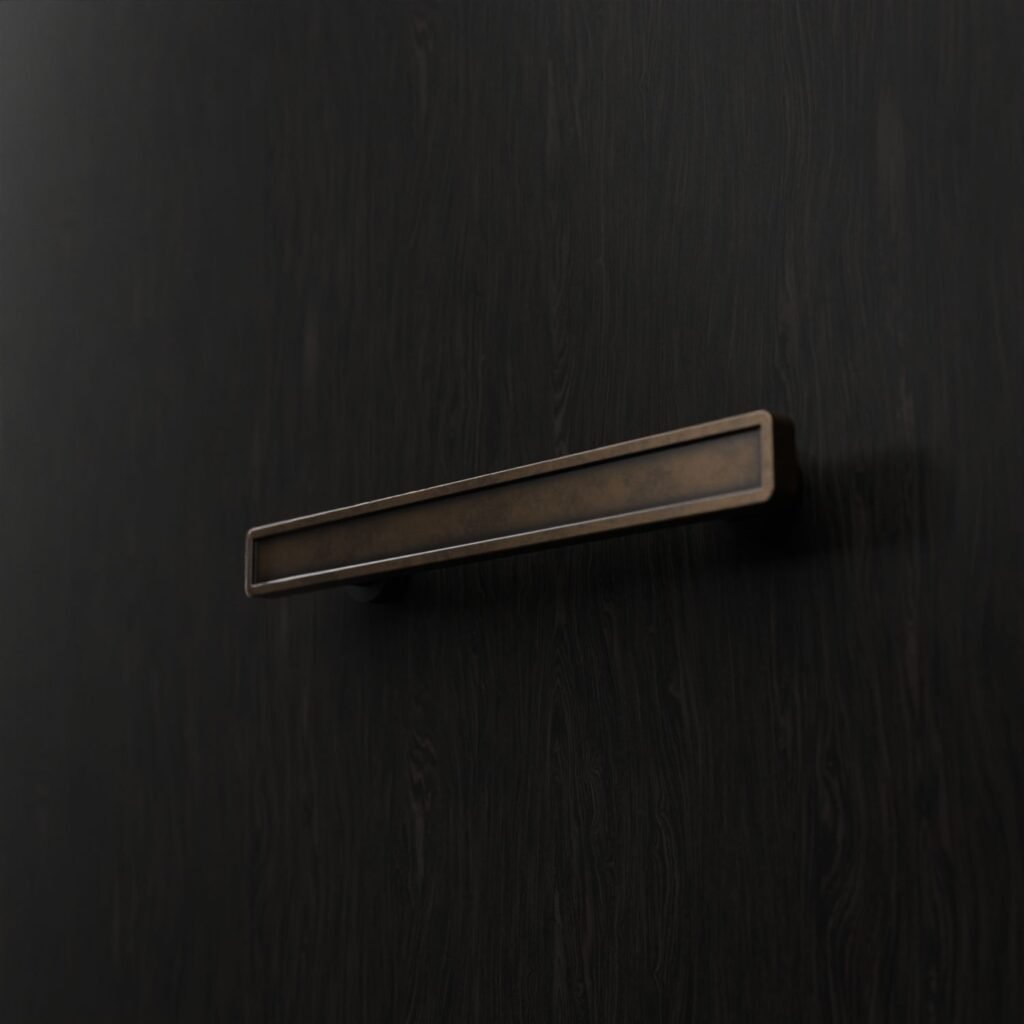
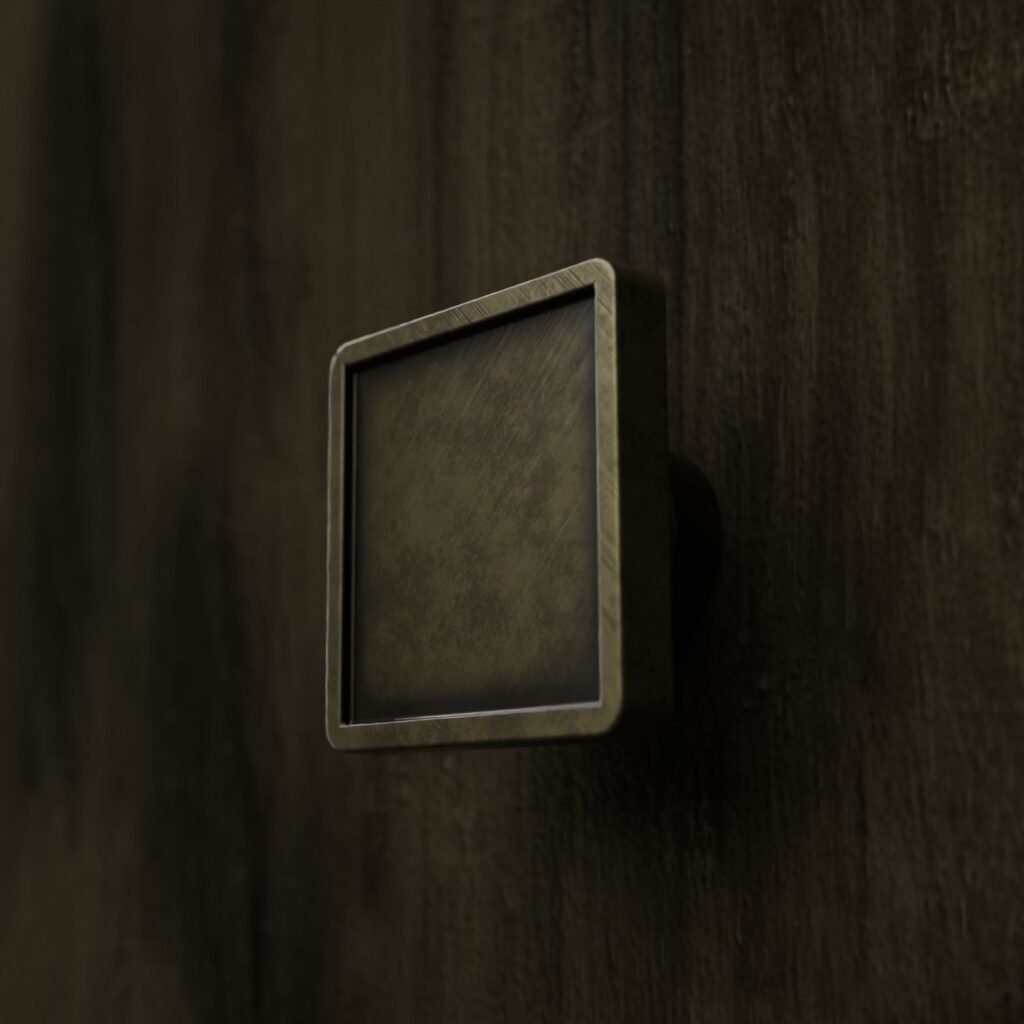
The bronze plays a different tune. It’s an alloy naturally resistant to corrosion, and in a ventilated room, the slightly humid air gently speeds up its patina. The handle often looks even more beautiful here than anywhere else in the house: the ocher and brown tones deepen, each piece evolving at its own pace. With wood, stone, and linen, the match is immediate.
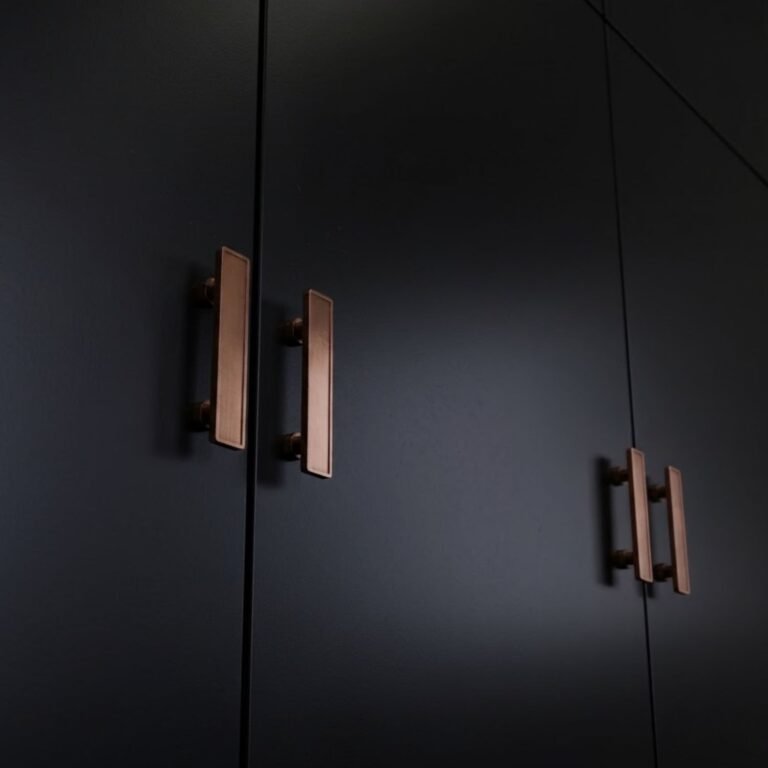
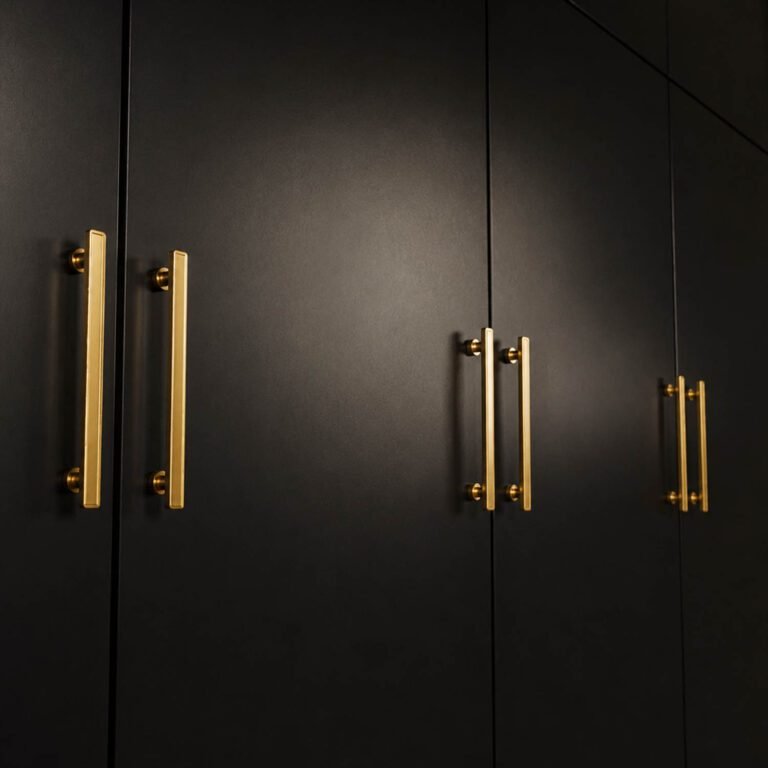
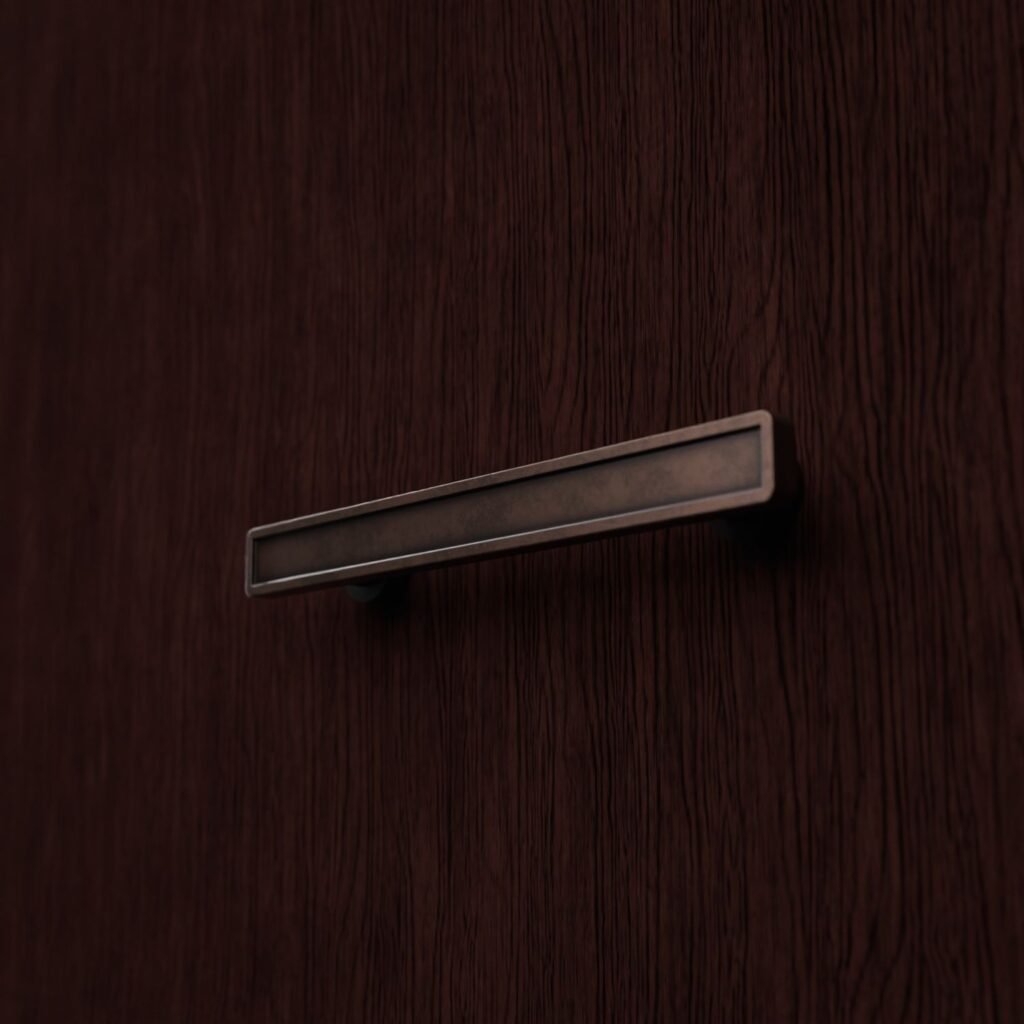
The copper pushes the warmth even further. Its rosy hue warms a white or light gray front, and it has well-known antimicrobial properties, a discreet but welcome detail in a bathroom. Brass, in between, adds a more golden glint, almost sunlit.
On the scale of our catalog, aluminum remains the most accessible metal. Copper, bronze, and brass step it up a notch, on the side of patinas hand-applied in our atelier. The choice then comes down to two questions: the mood you’re after, cool and crisp or warm and alive, and what you feel like putting into it.
A firm grip, even with wet hands
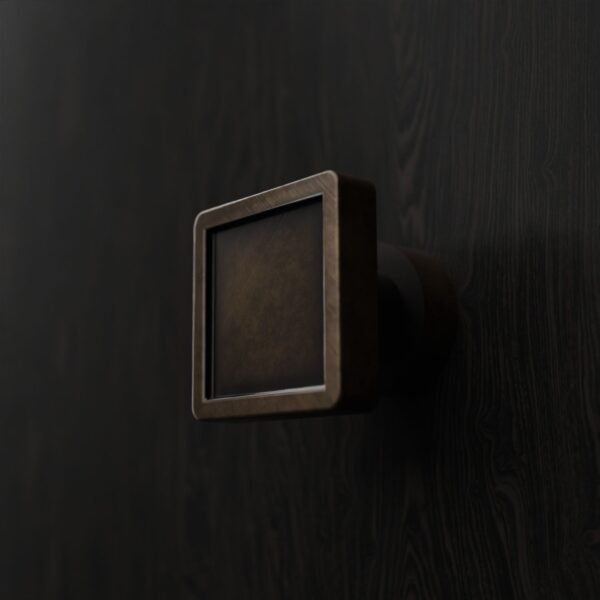
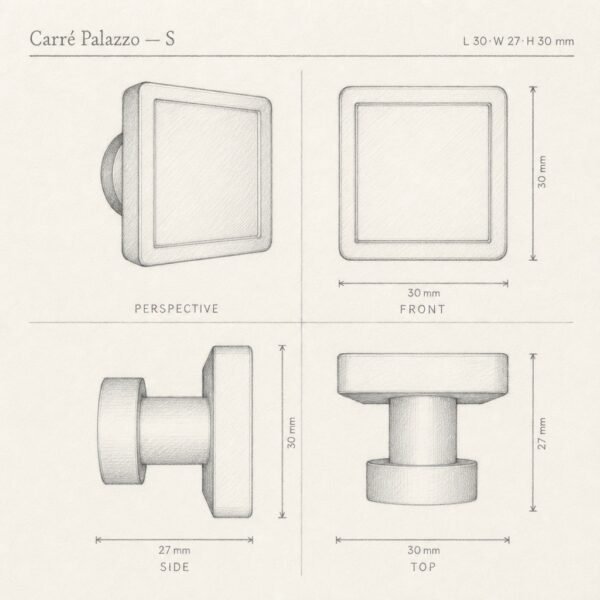
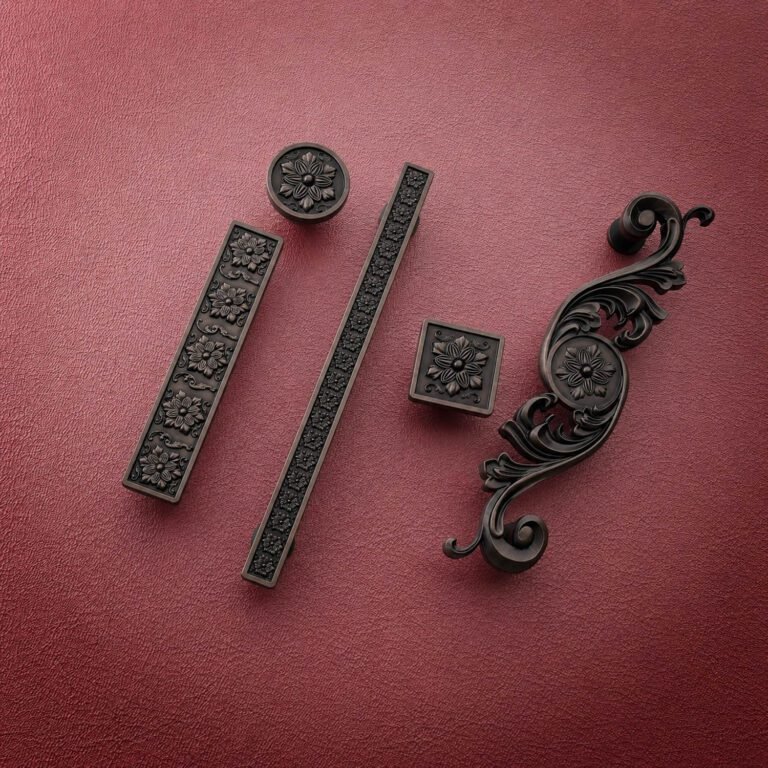
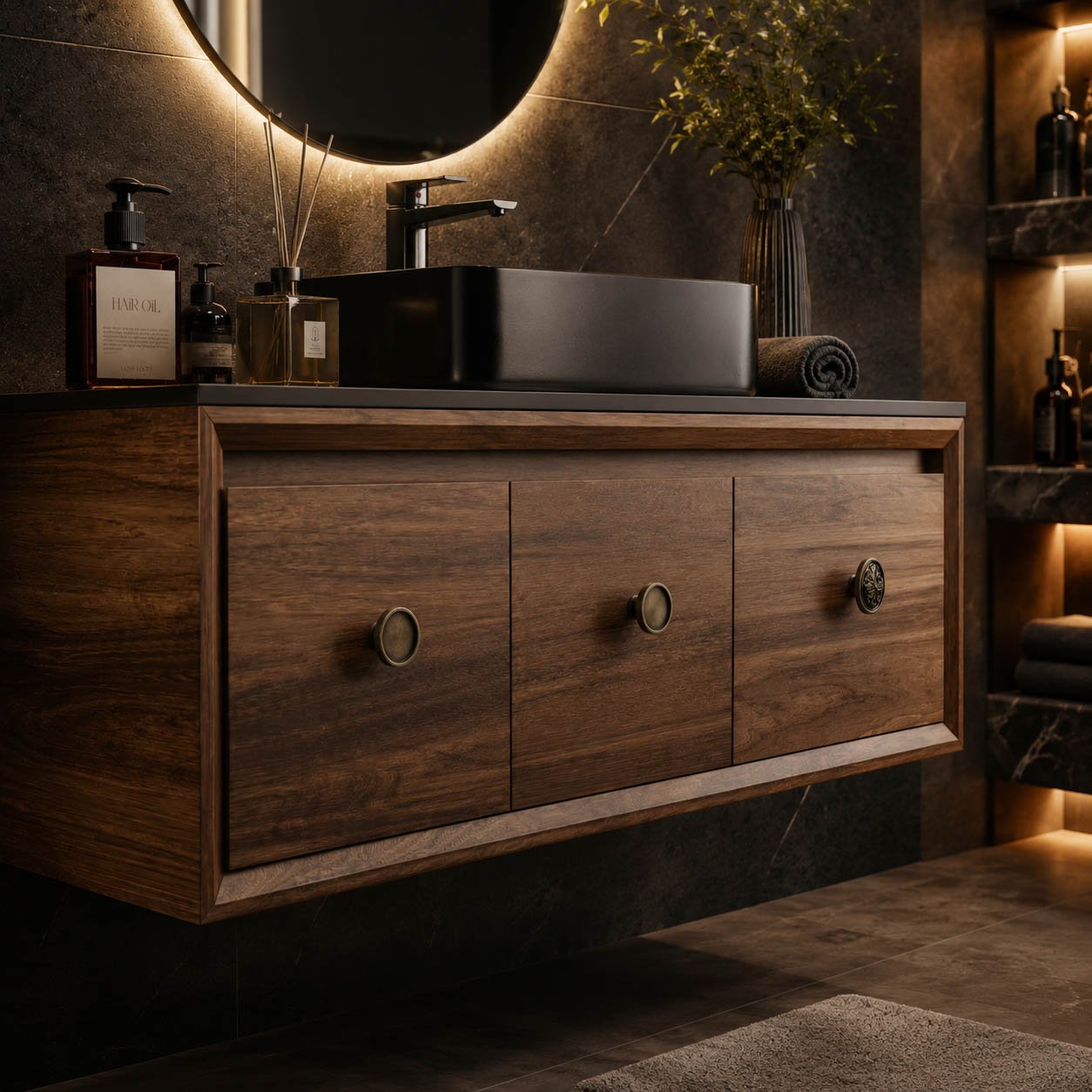
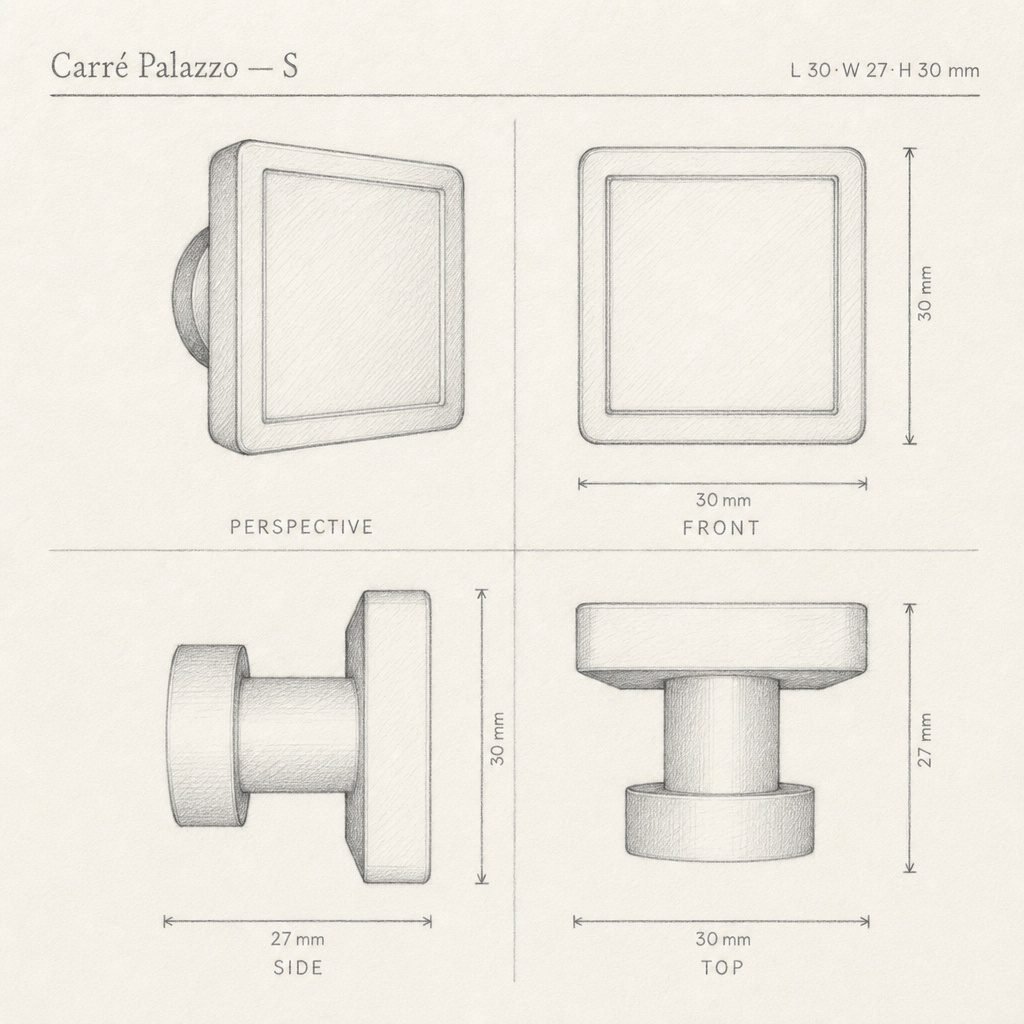
In a bathroom, ergonomics is not a luxury. You open a drawer with wet fingers, you reach for a handle stepping out of the shower, and the motion needs to stay sure. This is where a knob with crisp relief has the advantage. The Palazzo Square, with its slightly raised frame, offers a firm grip even when your hand slips. Its square geometry holds the line of a wall-hung vanity as well as a storage column, and never looks out of place.
Center-to-center, the only measurement you need to take
Just as with the kitchen or the dresser, the only technical step comes down to one measurement. Measure the distance between the two existing holes, from center to center: that’s the center-to-center. In bathroom furniture, you’ll most often find 96 and 128 millimeters.
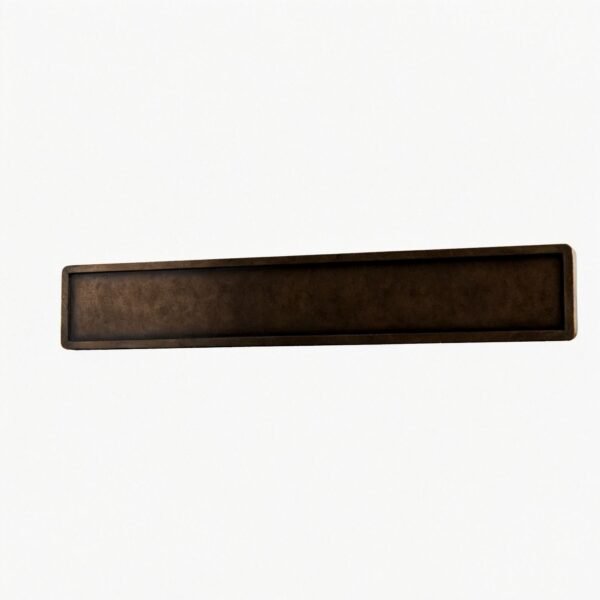
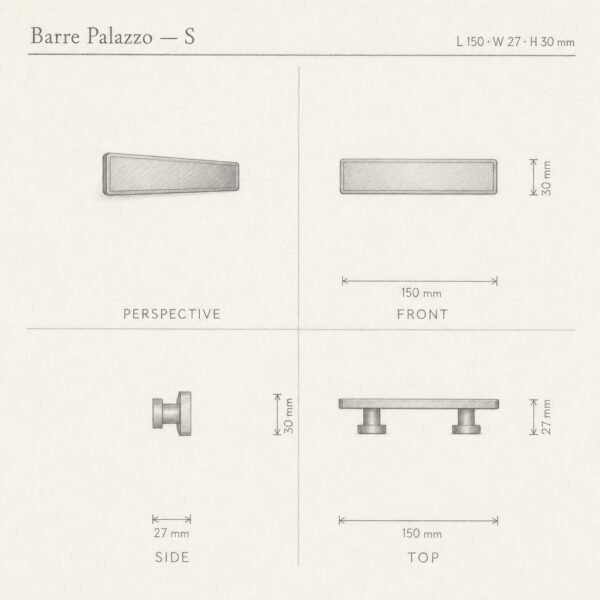
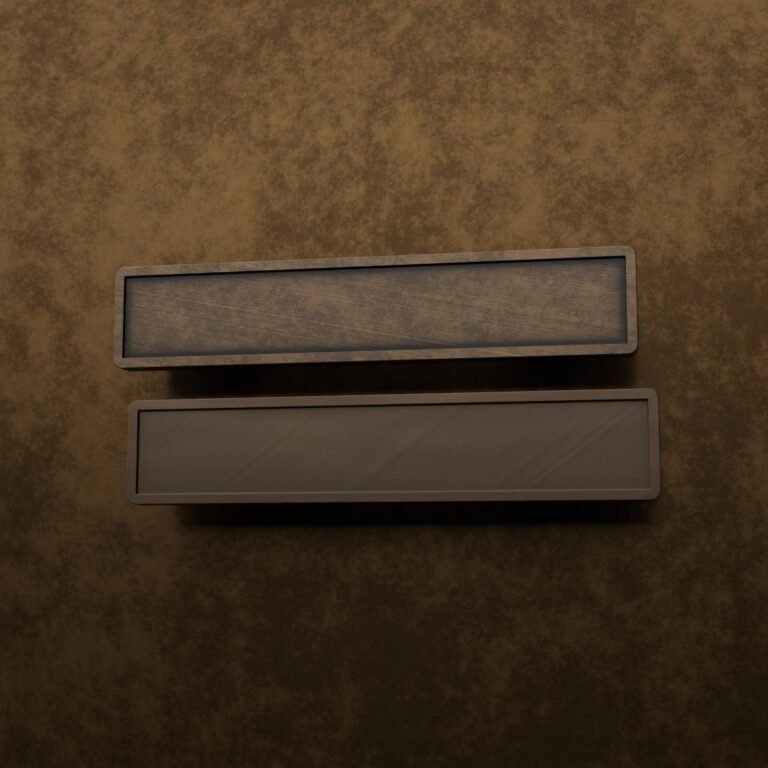
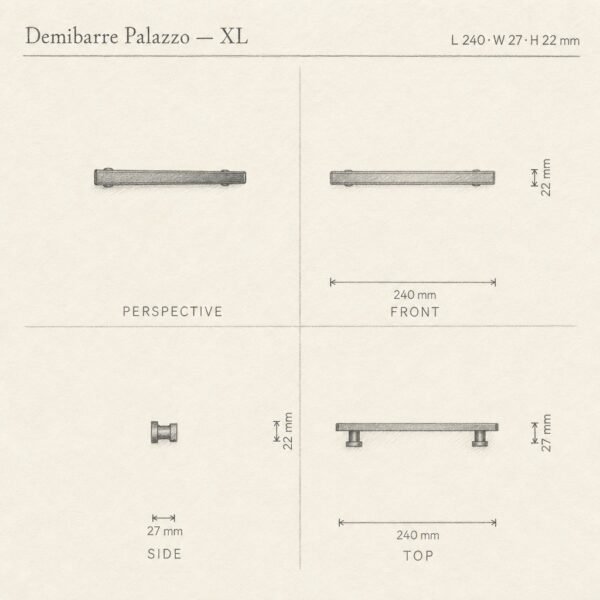
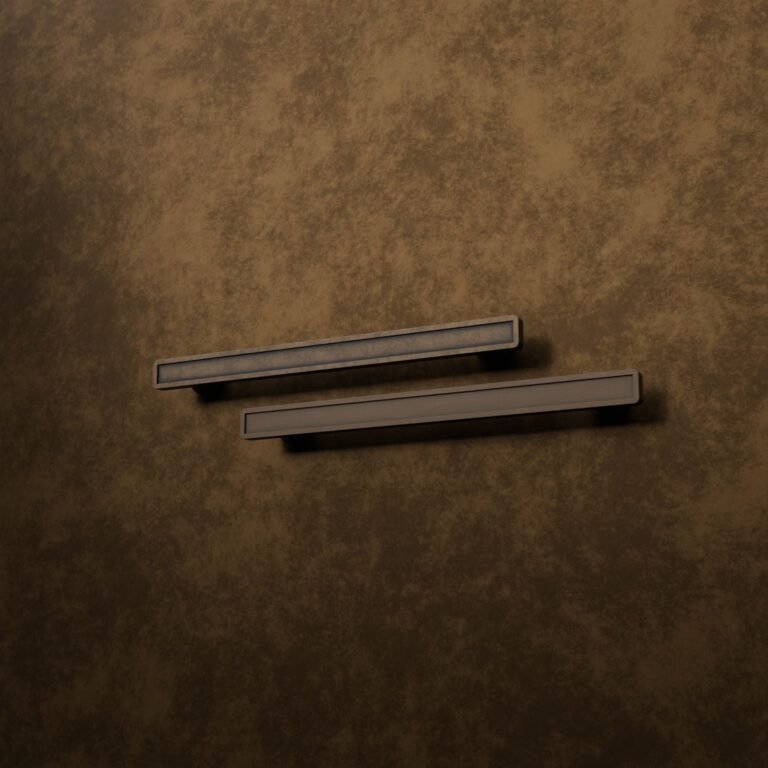
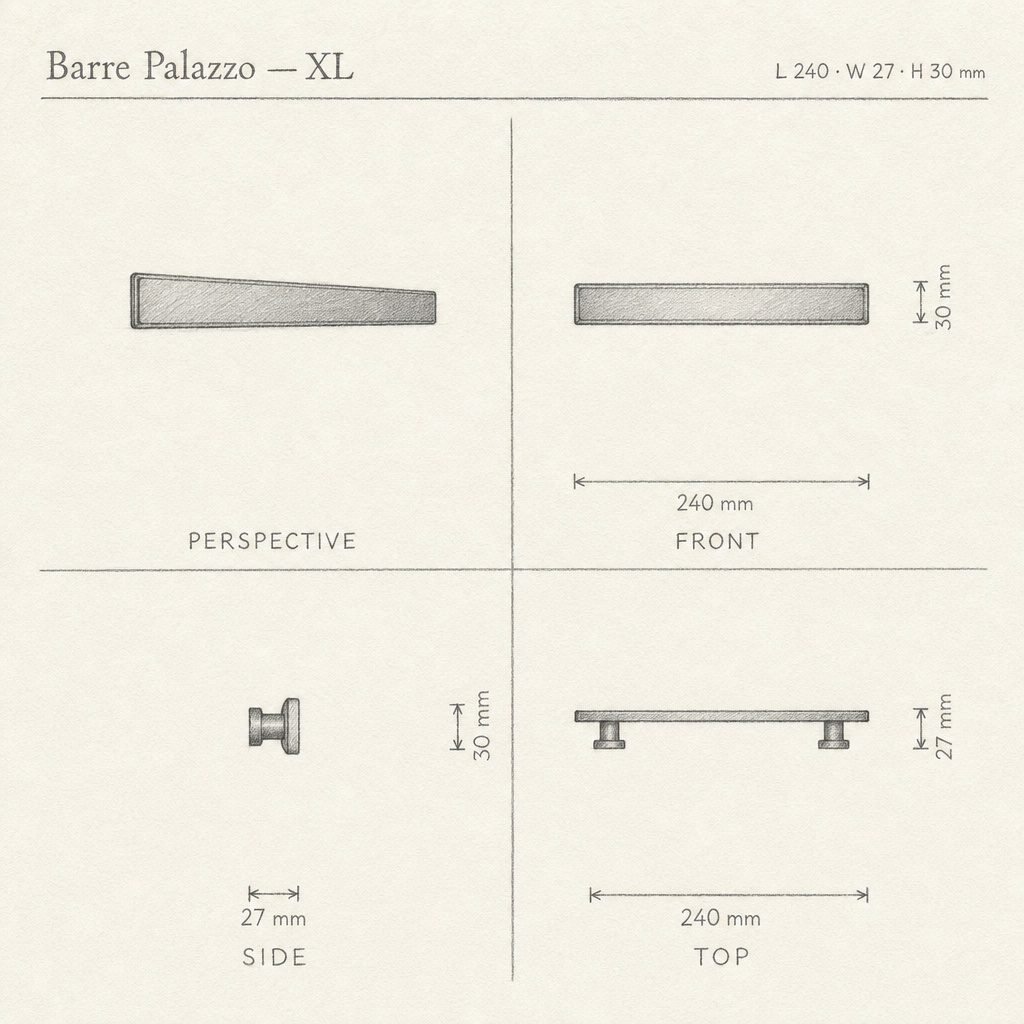
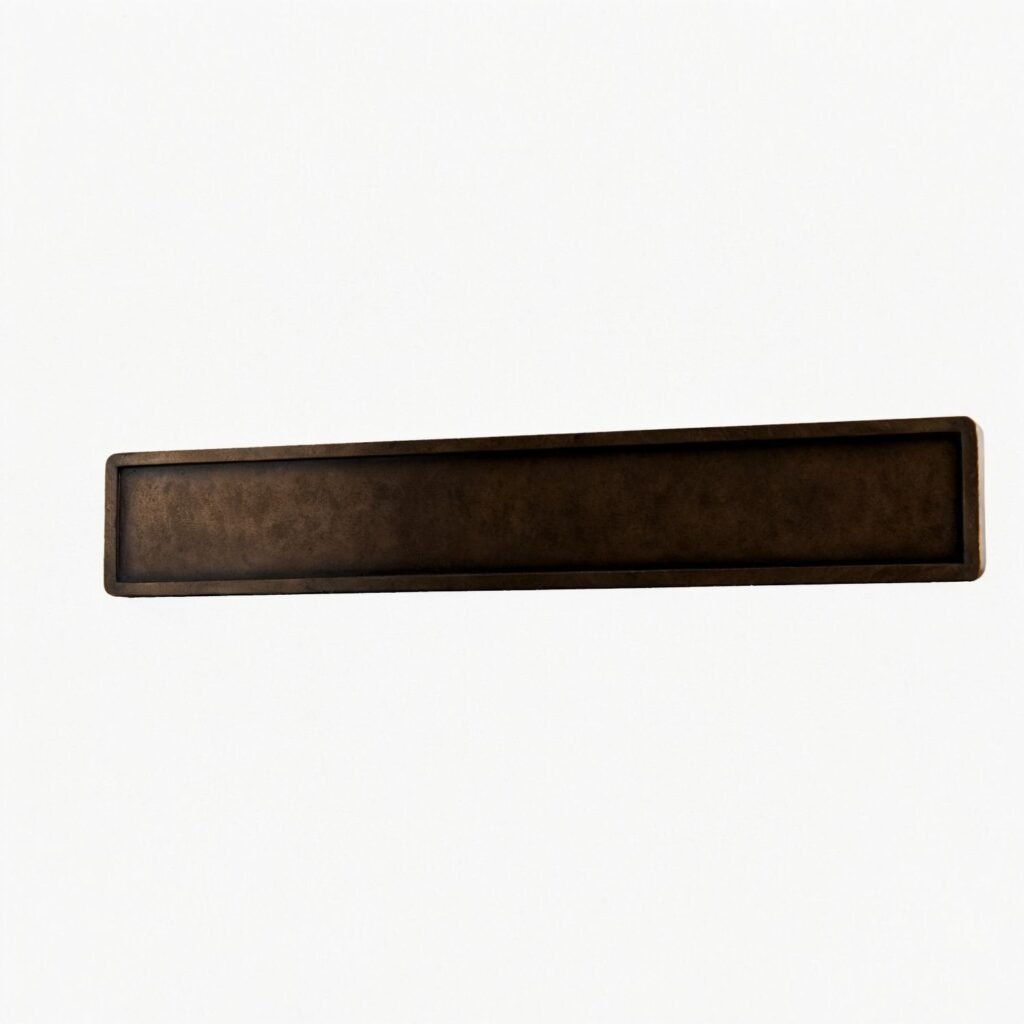
For a double vanity or a slightly wide low cabinet, a pull sets a horizontal line that structures the front and opens with one hand. The Palazzo Bar covers the usual spans, from 96 to 192 millimeters, in several lengths. And if your cabinet is drilled for a bar but you’d rather have a knob, one hole is all you need: the other closes with a discreet cover cap.
A few frequently asked questions
What material should you choose for a bathroom handle?
A metal. Aluminum, bronze, copper, and brass hold up easily against the humidity of a ventilated bathroom. Bioresin, on the other hand, is reserved for decorative furniture kept dry: it’s not made for a bathroom.
Are bronze and copper affected by humidity?
No. These are alloys that are naturally resistant to corrosion. In a properly ventilated bathroom, ambient humidity even gently enriches their patina instead of damaging it.
What center-to-center spacing works for a vanity cabinet?
The most common are 96 and 128 millimeters. The only measurement you need is the distance between the two existing holes, from center to center. For a single-point knob, one hole is enough.
Does a brass handle work well in a bathroom?
Yes. Brass is a sturdy metal that holds up beautifully in a wet room, with a golden glow that warms the space and pairs just as well with light wood as with neutral tones.
The handle, signature of a fully realized bathroom
A truly finished bathroom is recognized by its details, not the size of the shower. The vanity handle is one of those small decisions that, taken together, separate a room that’s simply furnished from one that’s truly composed.
At Holdon Paris, we make handles and knobs in aluminum, bronze, copper, and brass, right here in Paris, hand finished and ready to ship in 5 to 10 days. Just the detail your wet room was missing.