Submerged Bronze, Azurite Copper, Verdigris Bronze: What Autumn Adds to the Holdon Collection
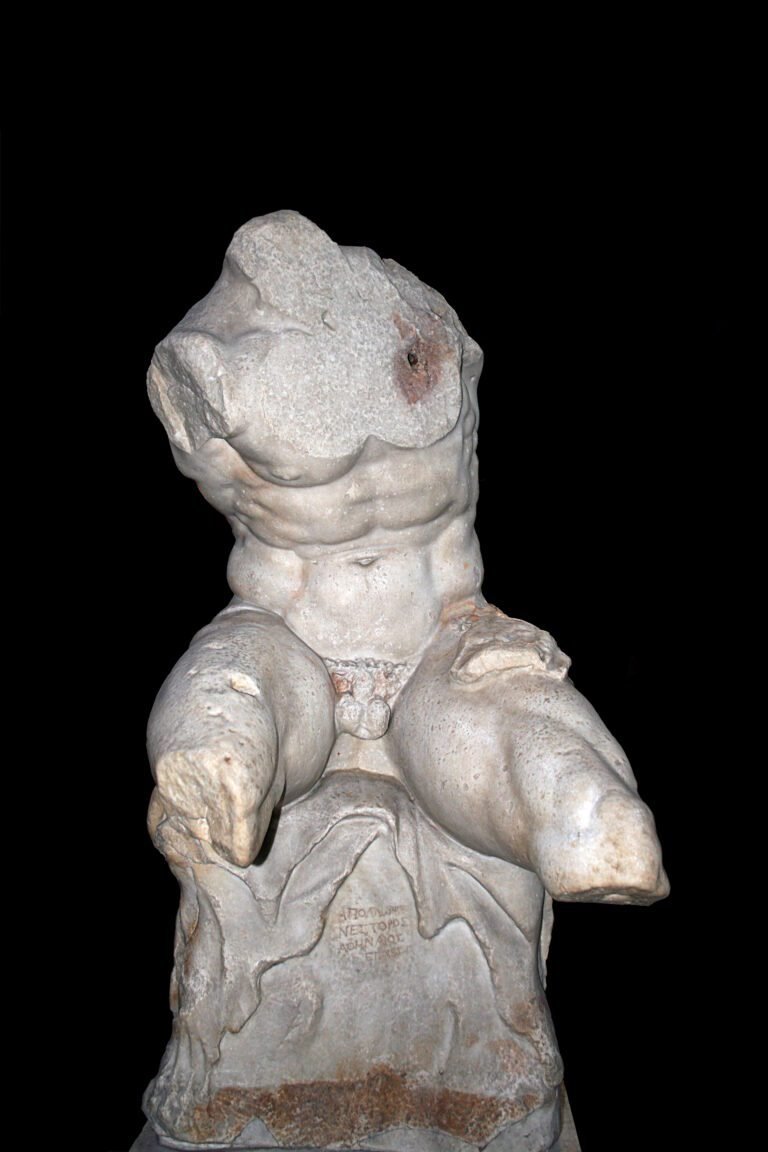
Metal has never needed to be new to be beautiful. The Greek bronzes raised from the Aegean Sea are proof of that: the salt stripped and lightened them, covering them in a mineral veil, and it is these pieces, worn by two thousand years underwater, that fascinate museums today. Painters ground azurite into pigment long before they knew ultramarine. And in gardens, verdigris has always settled on bronze statues without anyone thinking to remove it: it was part of the work. Patina has never been an accident to correct. It is the moment when a metal begins to tell the story of time passing.
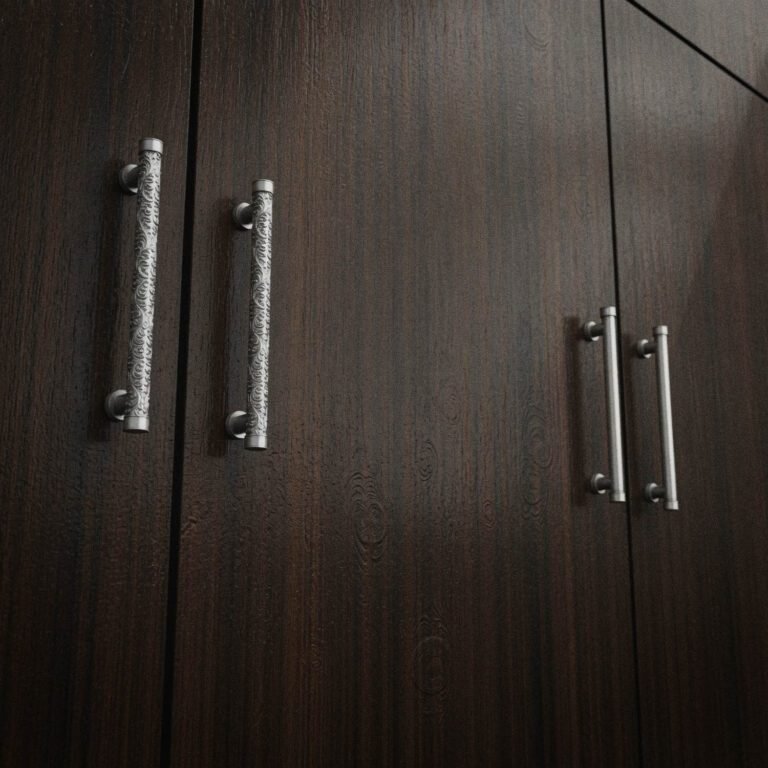
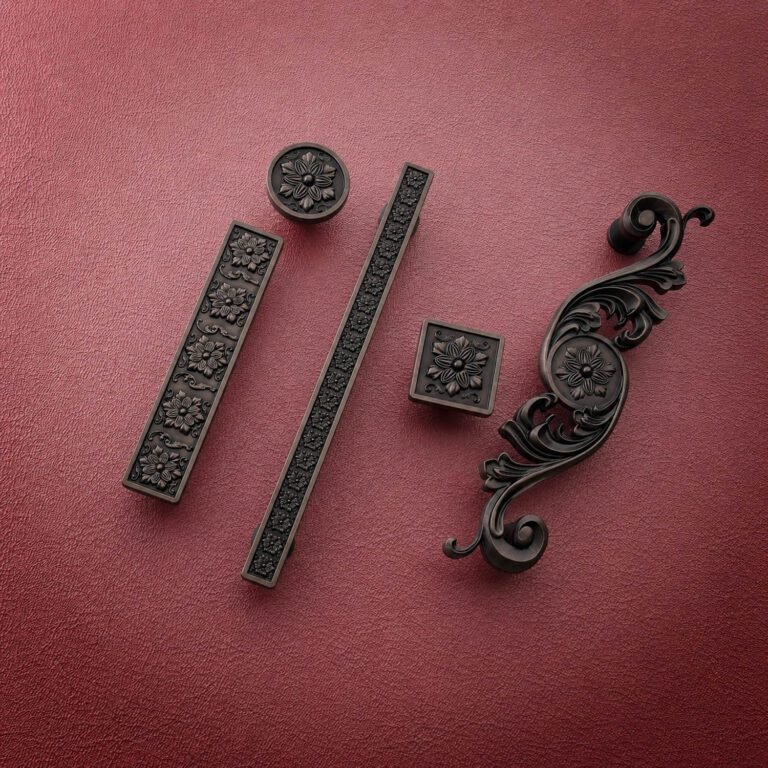
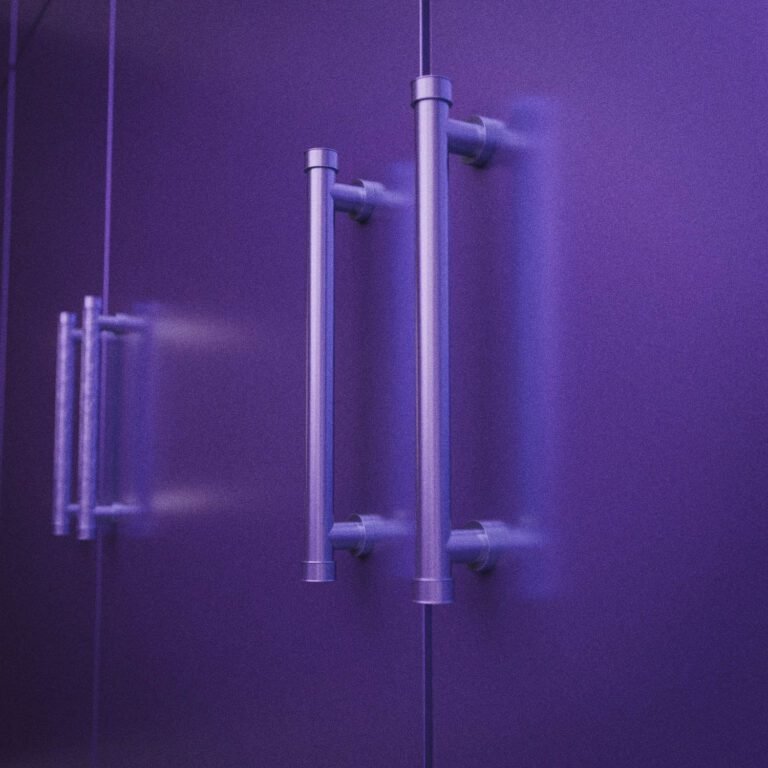
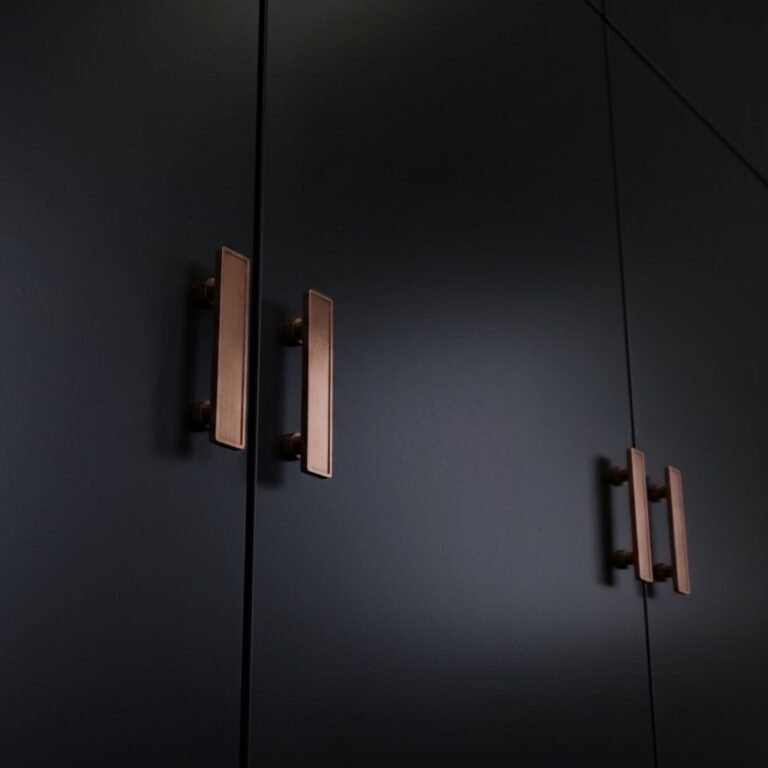
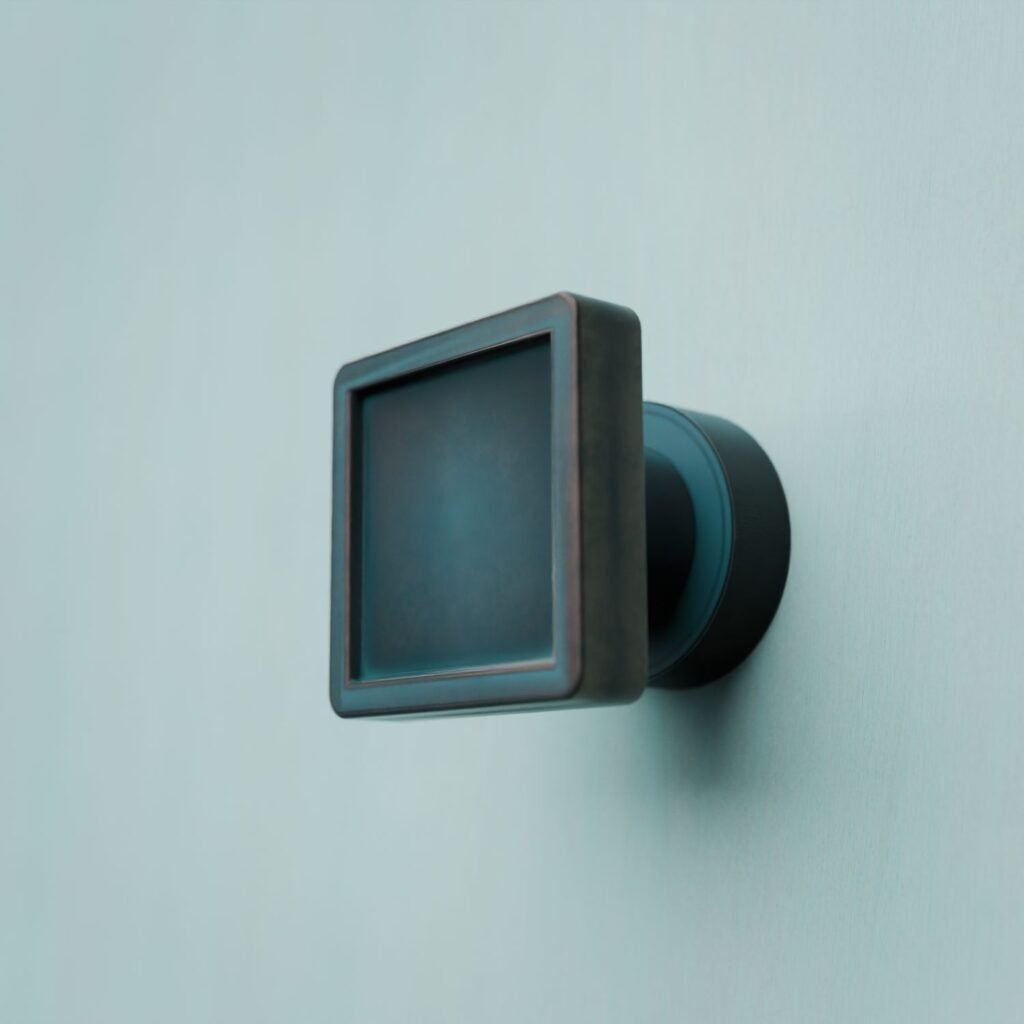
This season, three new patinas join the Holdon Paris collection: Submerged Bronze, Azurite Copper, and Verdigris Bronze. Each one retells a different story, that of the sea, that of pigment, that of the garden, and is applied by hand to bronze or copper cold cast in the Paris atelier. They create no new silhouette: they offer a new reading of the metal on the shapes already present in the Classica Europa collection.


Submerged Bronze, the patina raised from the sea
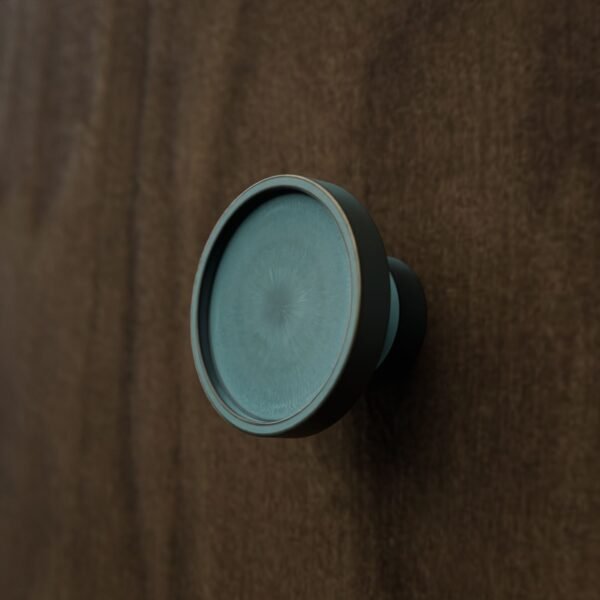
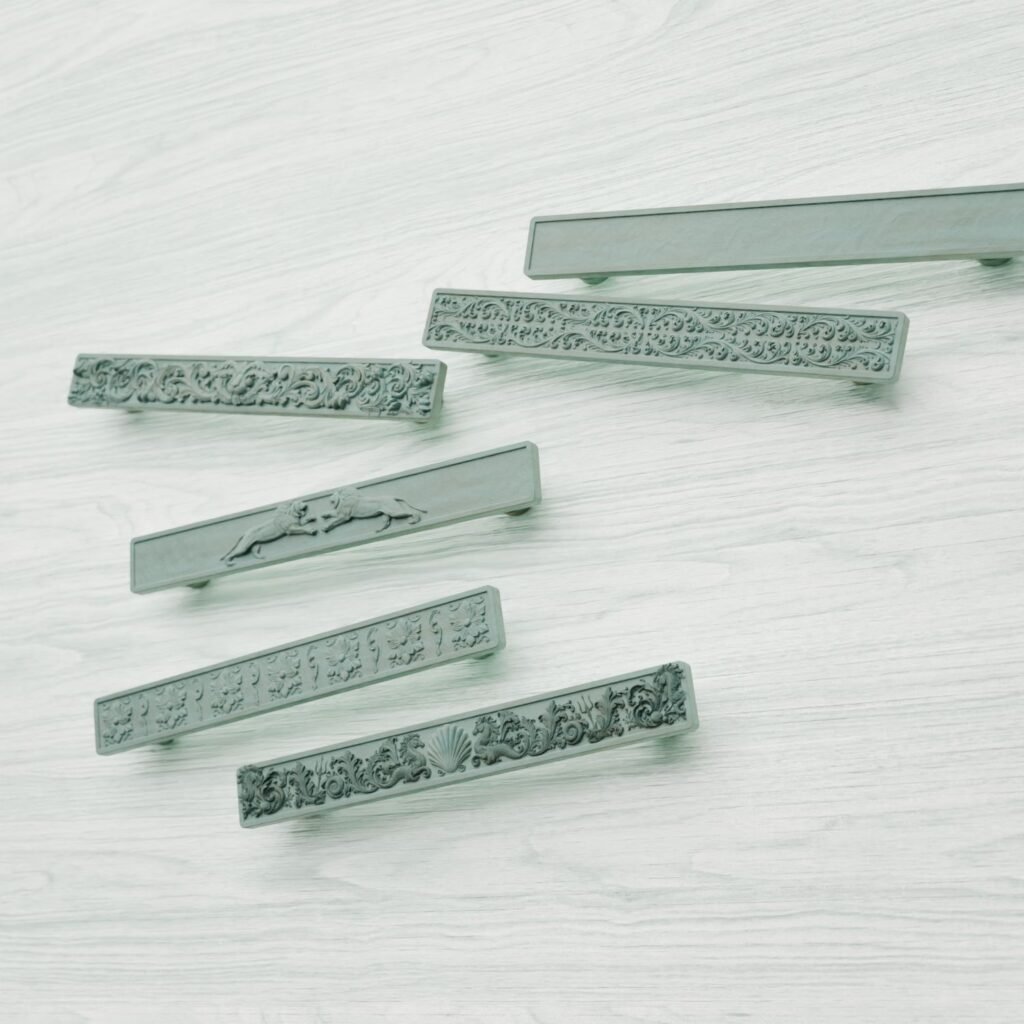
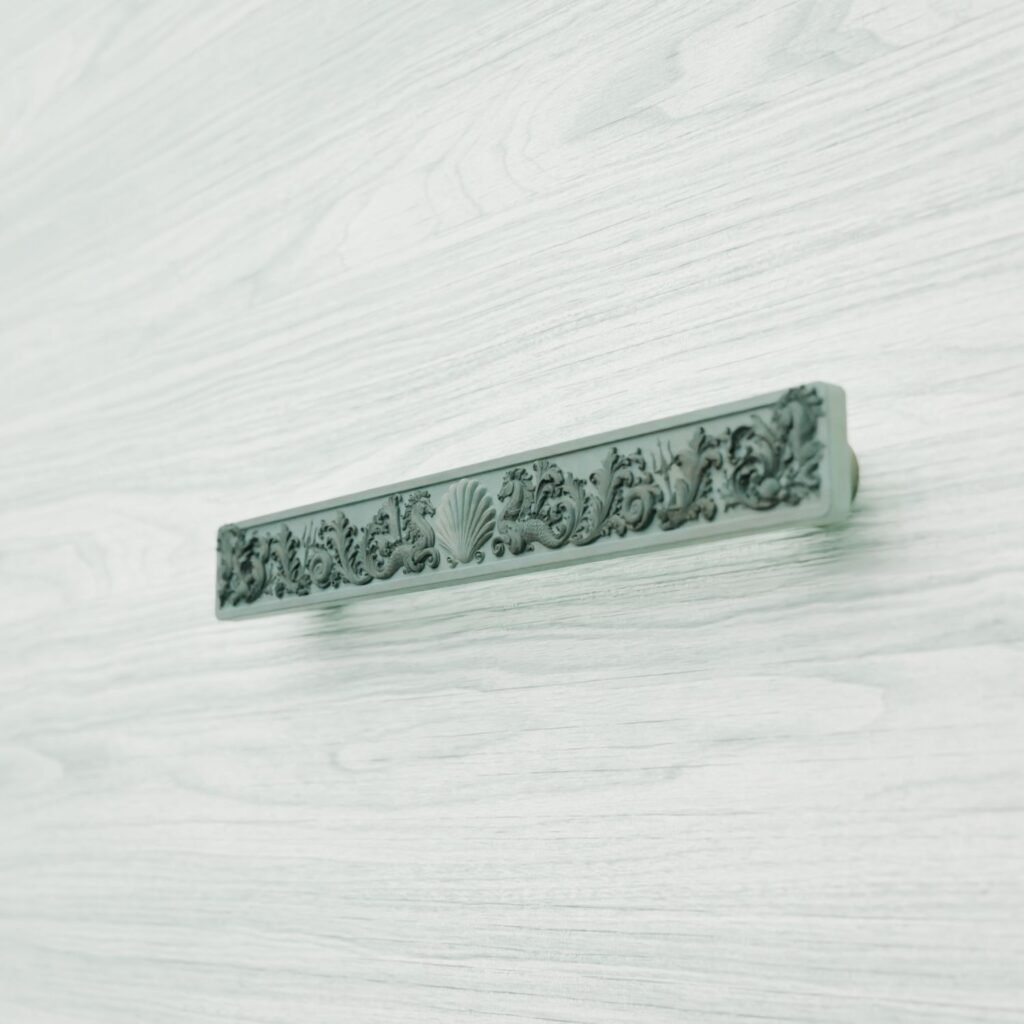
The Riace bronzes, like those of Antikythera, no longer have the dark color usually associated with the metal: their long stay underwater has lightened them, tinted them blue, and covered them in a chalky veil. Submerged Bronze captures that exact state. A powdery blue settles into the depths of the relief, a pale sea green covers the midtones, and along the edges a white veil catches the light like the chalk of a marine concretion. The bronze can only be guessed at through the color, in transparency: it is the lightest of the Holdon patinas, and the quietest, a piece that seems to have been found rather than made.
It finds its place on light, matte fronts: lime, sand, linen, blond or whitewashed wood, where it blends in like a pebble in the light. On a sage green, eucalyptus, or gray blue, the tonal harmony stays botanical and calm. It holds up surprisingly well against a matte black or a deep blue, where its paleness becomes precious. It fades, however, against red woods and saturated warm tones, terracotta or mahogany, which turn it gray.

Azurite Copper, the blue that copper wears
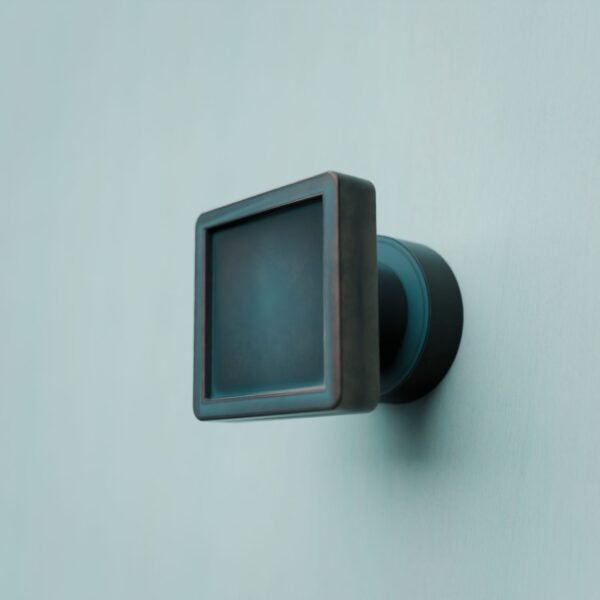
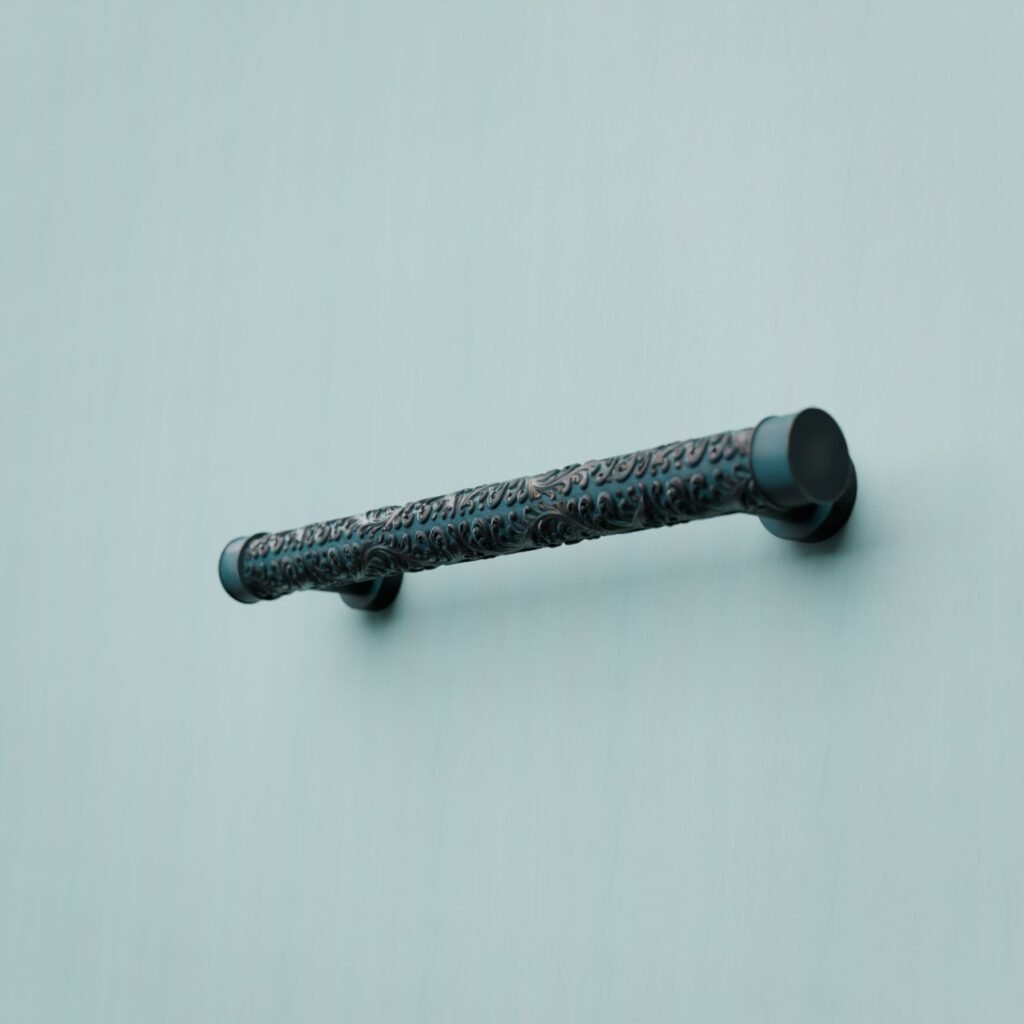
Azurite is the blue mineral of copper, a companion to malachite in the same veins, and one of the first blues that painters ever ground, long before ultramarine. Azurite Copper takes up the idea: a deep blue patina, matte and velvety, applied by hand to every piece. In the hollows, the blue deepens to ink; on the edges and the raised details of the pattern, the copper shows through and warms the whole with a glowing thread. Nothing flat, nothing painted: a color that seems to come from the metal itself and catches the light like a polished stone.
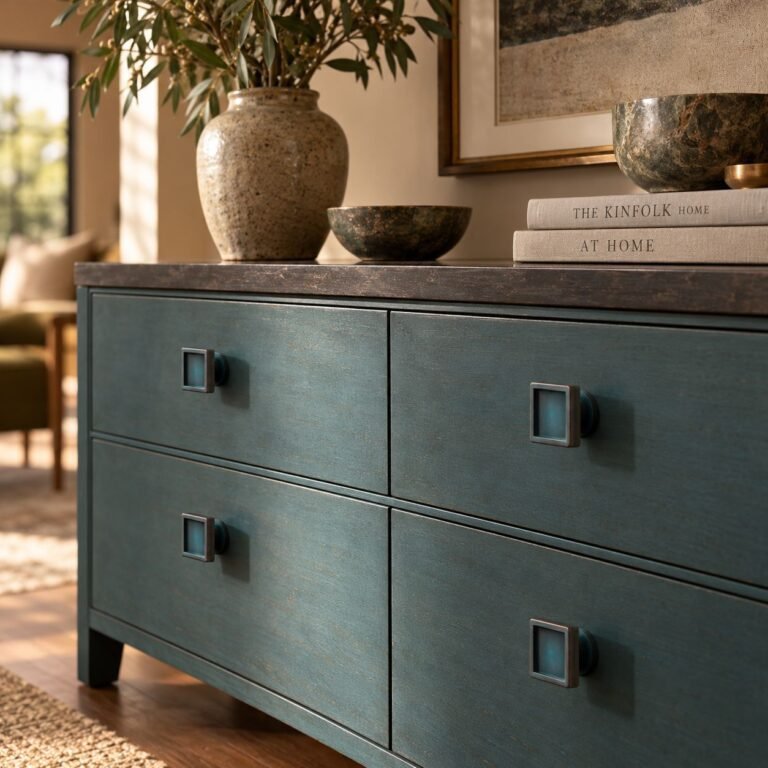
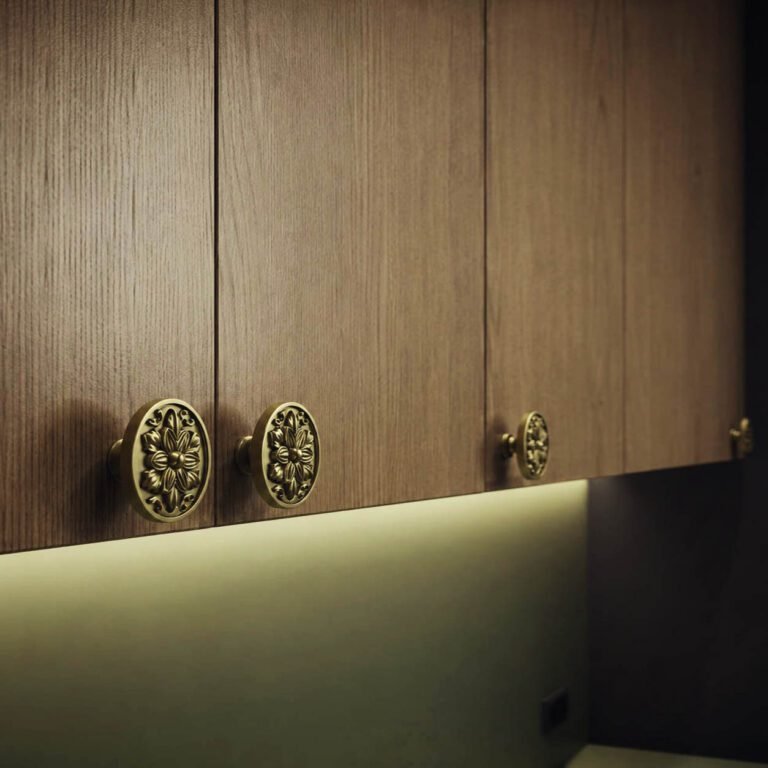
It gives its best on light, matte fronts: off white, linen, natural oak, or blond wood, where the blue becomes the only event on the front. On a midnight blue or teal kitchen, tone on tone, it brings a depth that solid lacquers don’t have, and the thread of copper ties it to a wood or warm stone countertop. Against terracotta, brick, or walnut, the contrast turns bold, almost complementary: best suited to interiors that embrace color with confidence. It grows more discreet against cool grays and blues too close to its own, which mute it rather than make it come alive.
Verdigris Bronze, the garden patina pushed toward blue
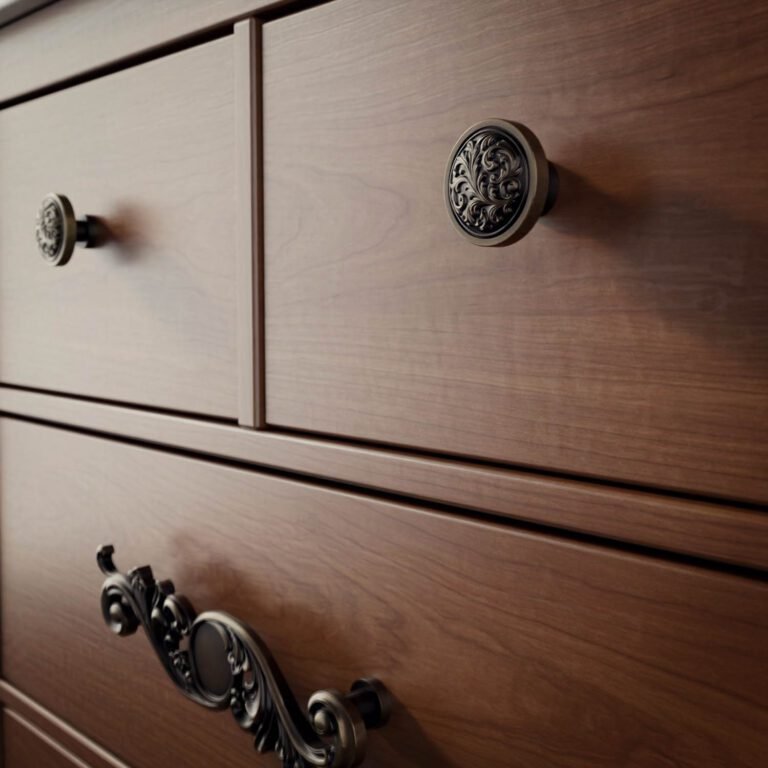
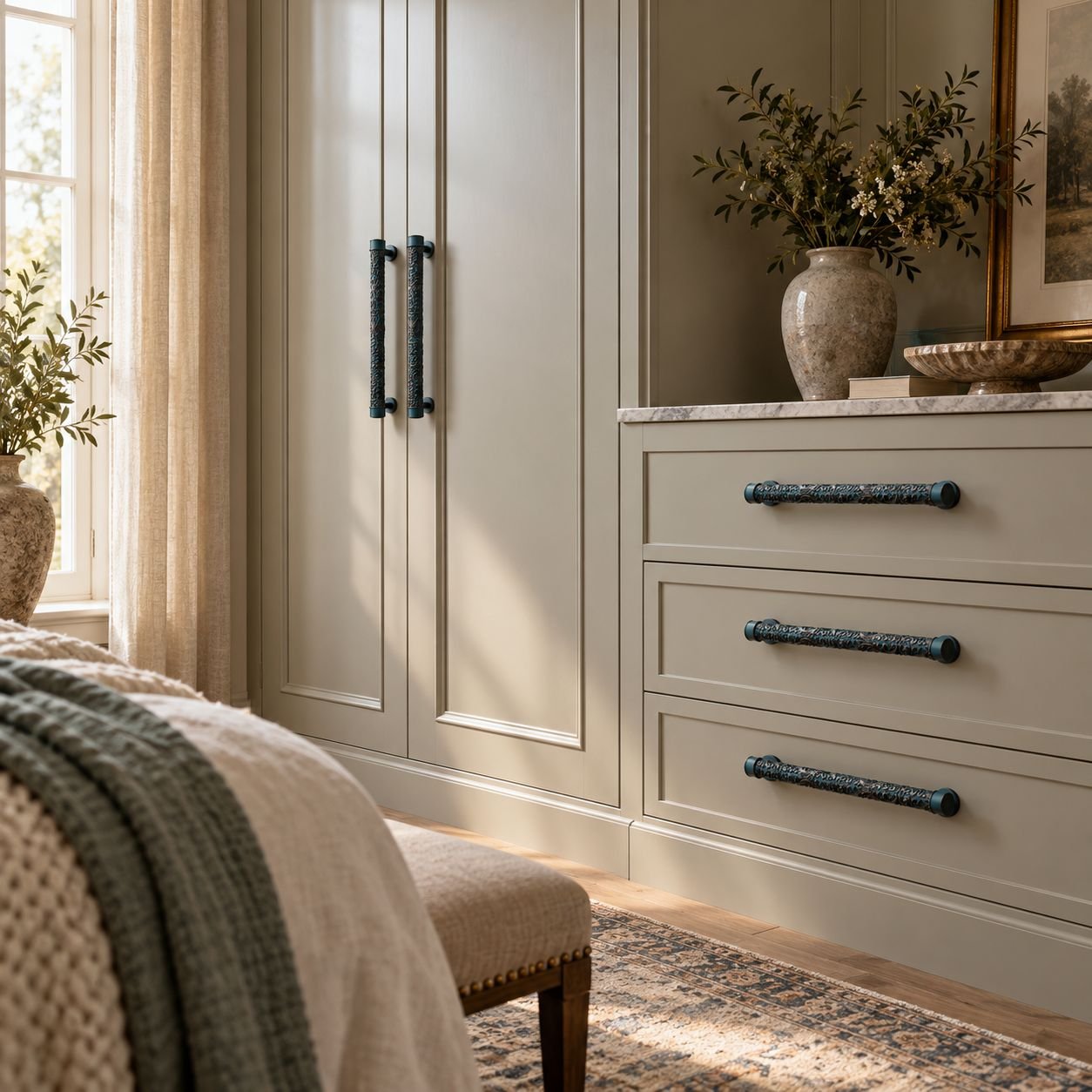
The verdigris is the oldest of all patinas, the one time itself leaves on outdoor bronzes, in squares and gardens. Verdigris Bronze applies it by hand, in successive layers, and pushes it well beyond the pale tone most people know: a saturated blue-green across the midtones, a sulfur black deep in the recesses, and on every edge, bronze sanded back to bare metal, catching the light and tracing the pattern. The piece reads in several layers of depth, like an object pulled from a cabinet of curiosities, and no handle is ever exactly the twin of another.
It shows to best advantage on dark, matte fronts: black, forest green, midnight blue, where it reads as a set stone rather than an added color. On light oak, raw wood, or linen, it brings back the spirit of the garden and park benches, patina included. Tone on tone against a sage or celadon front, the pairing works as long as the front stays noticeably lighter than it is, otherwise the two cancel each other out. Brightly colored glossy lacquers, on the other hand, rob it of its depth.

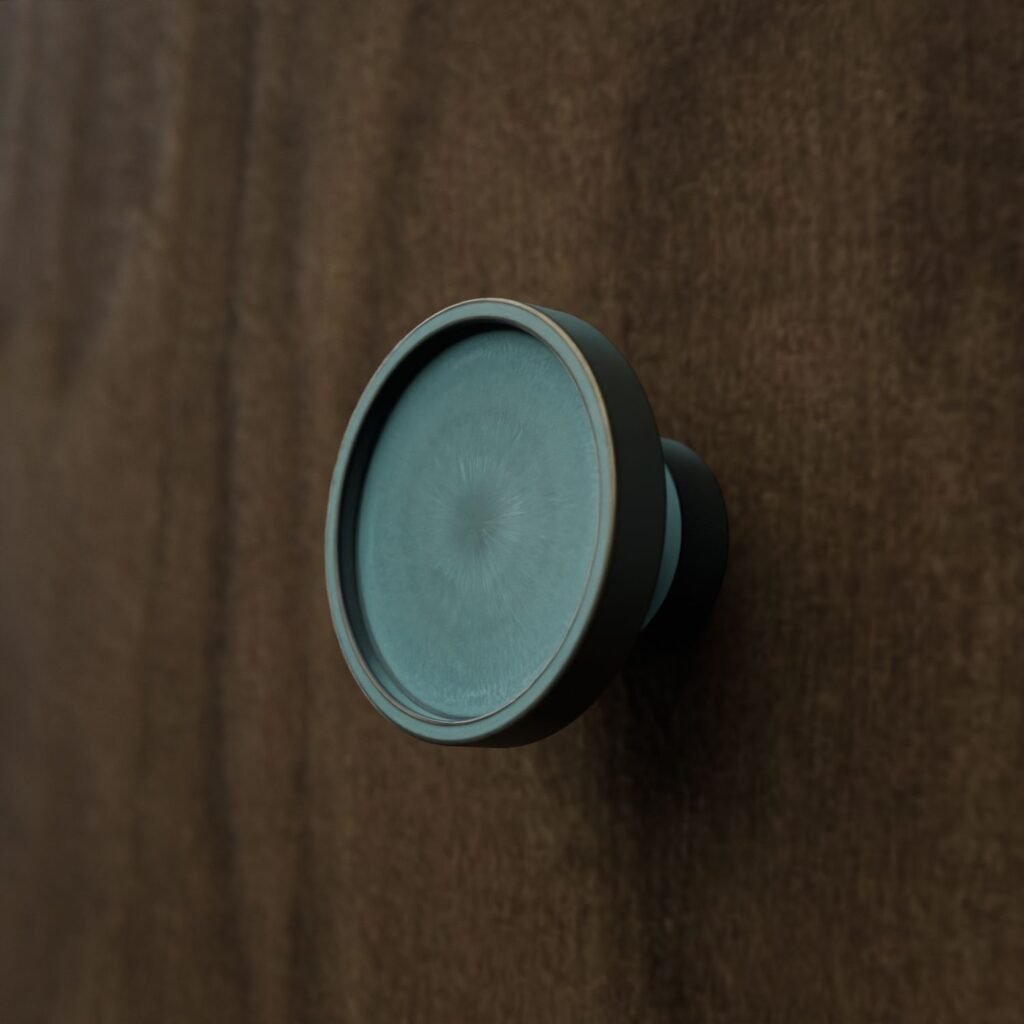
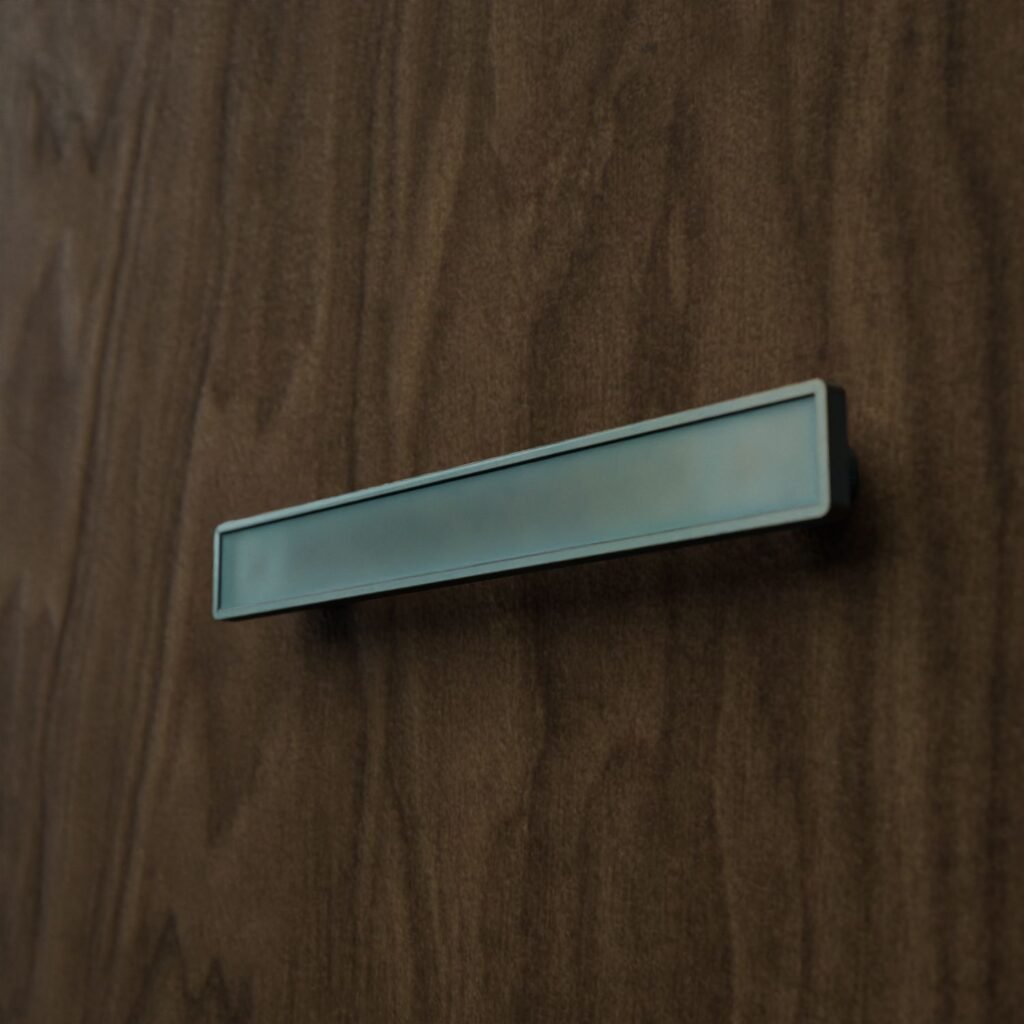
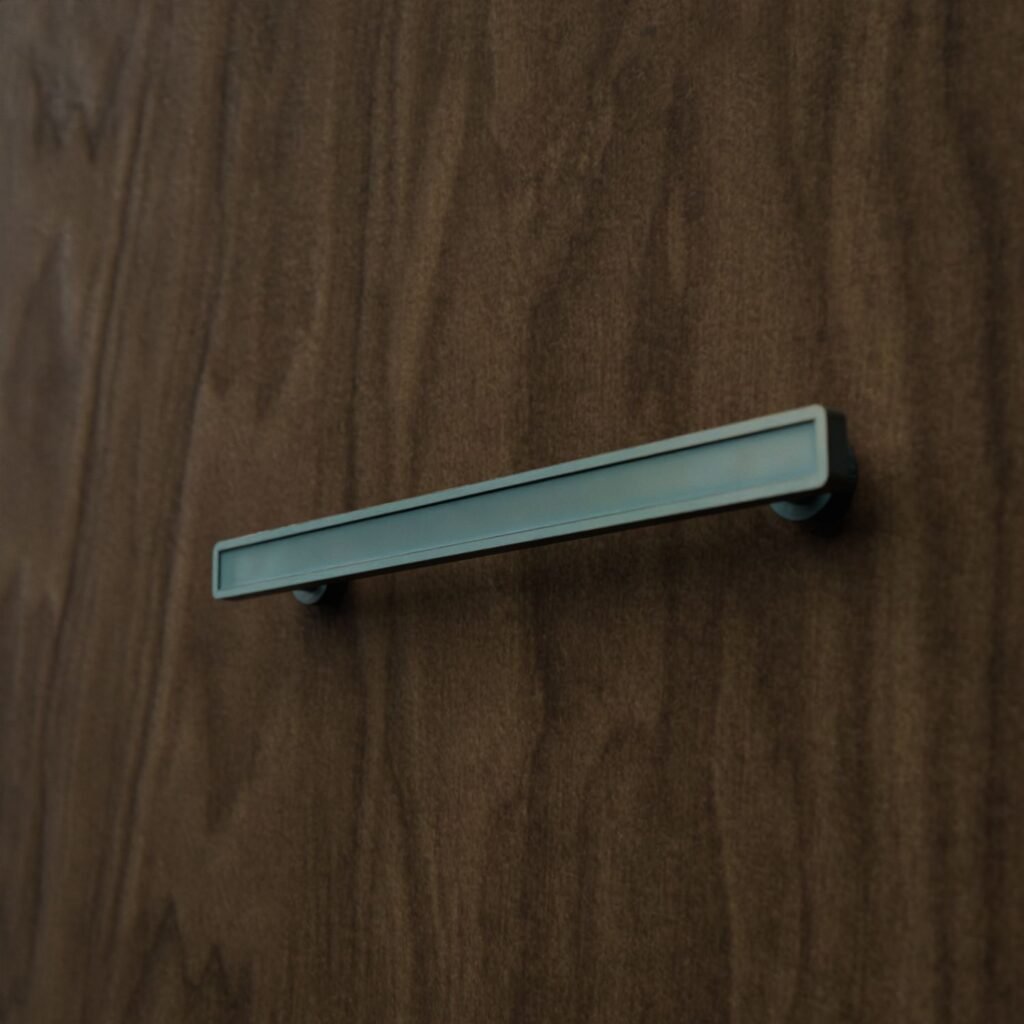
The same atelier gesture, three patinas
Bronze and copper work just as well in a kitchen or bathroom as in a living room: these are metals recommended even in rooms exposed to water, and advised against only outdoors, exposed to the elements, where their evolution would escape any control. Nothing like the restrictions of bioresins, then. These new patinas join the silhouettes already present in the Classica Europa collection, from the knob to the pull, and ship with the same lead times as the rest of the standard catalog. You can also pair two different patterns on the same patina for a single piece of furniture: Scrollwork and the Scrollwork pattern pair naturally, for instance, with Essential, for a front that plays on nuance rather than contrast.
For those already looking at brown handles, Antique Bronze and Antique Copper remain the warmest references in the range: Submerged Bronze, Azurite Copper and Verdigris Bronze are their most mineral version, the one that leans toward blue and green rather than brown.
At Holdon Paris, each patina is hand-applied on a piece cold-cast in the Parisian atelier: none of the three is strictly identical to its neighbor on the display, and that is precisely what we ask of them. To discover them across every silhouette in the collection, head to the Classica Europa catalog, or each patina’s page: Submerged Bronze, Azurite Copper, Verdigris Bronze.
Frequently asked questions
Do Submerged Bronze, Azurite Copper and Verdigris Bronze hold up to bathroom humidity or kitchen heat?
Yes. Bronze and copper are both recommended even in living spaces, the kitchen and the bathroom. The only reservation concerns the outdoors exposed to the elements, where the patina’s durability over time cannot be guaranteed.
Which silhouettes are these new patinas available on?
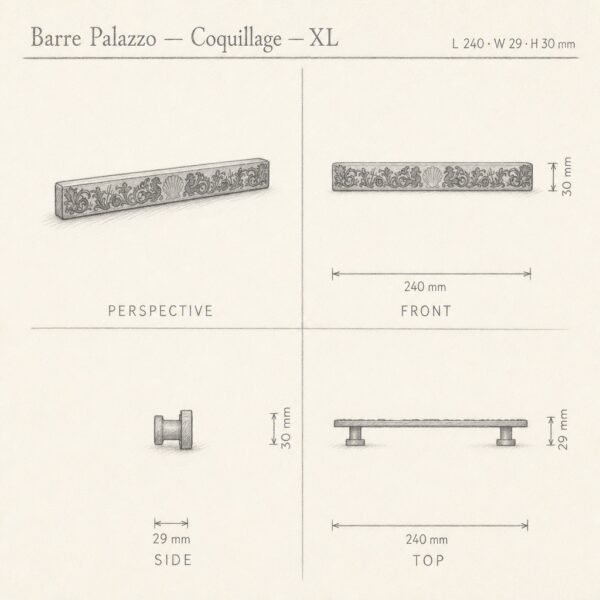
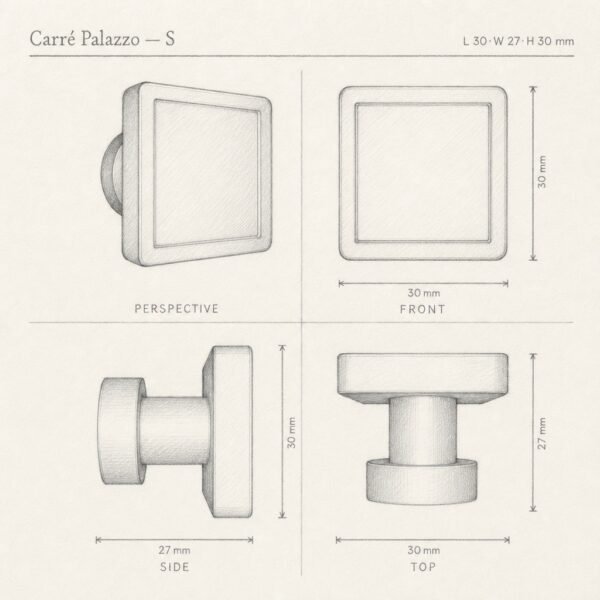
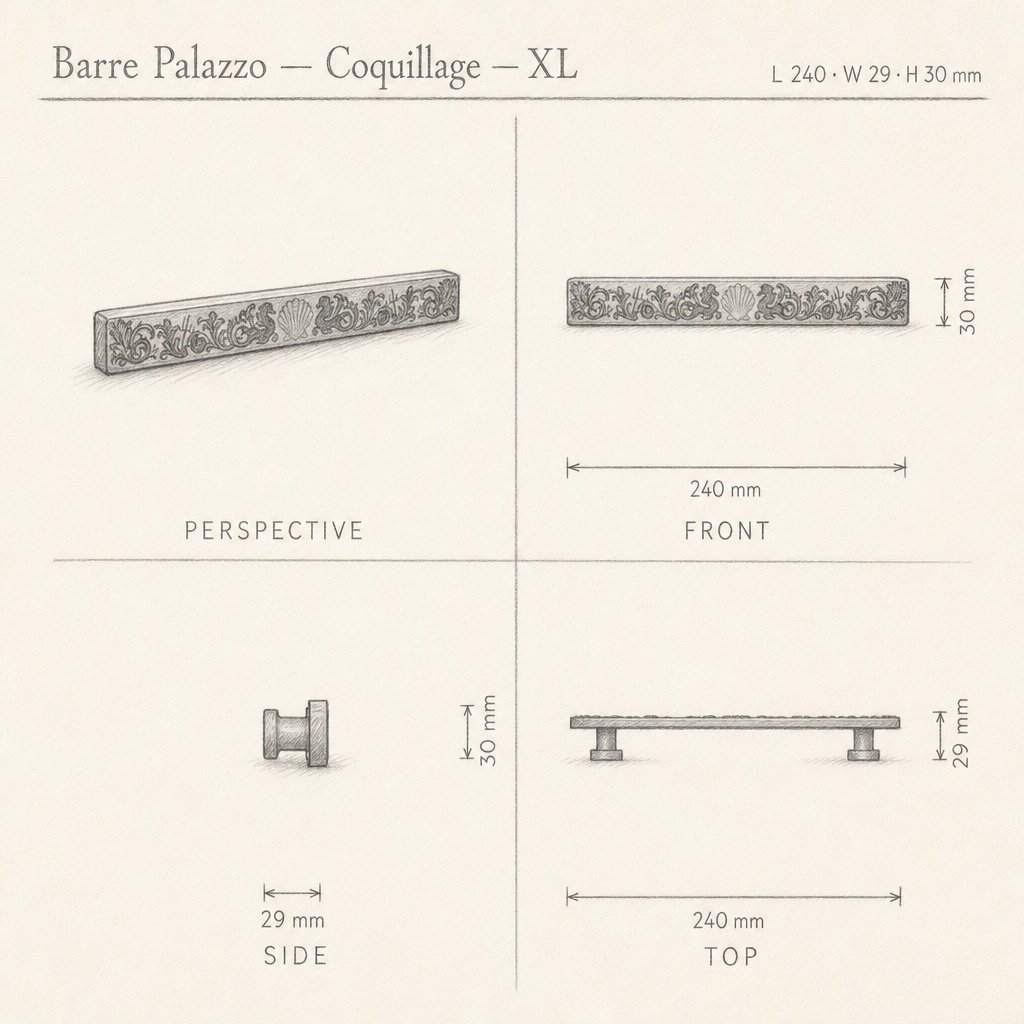
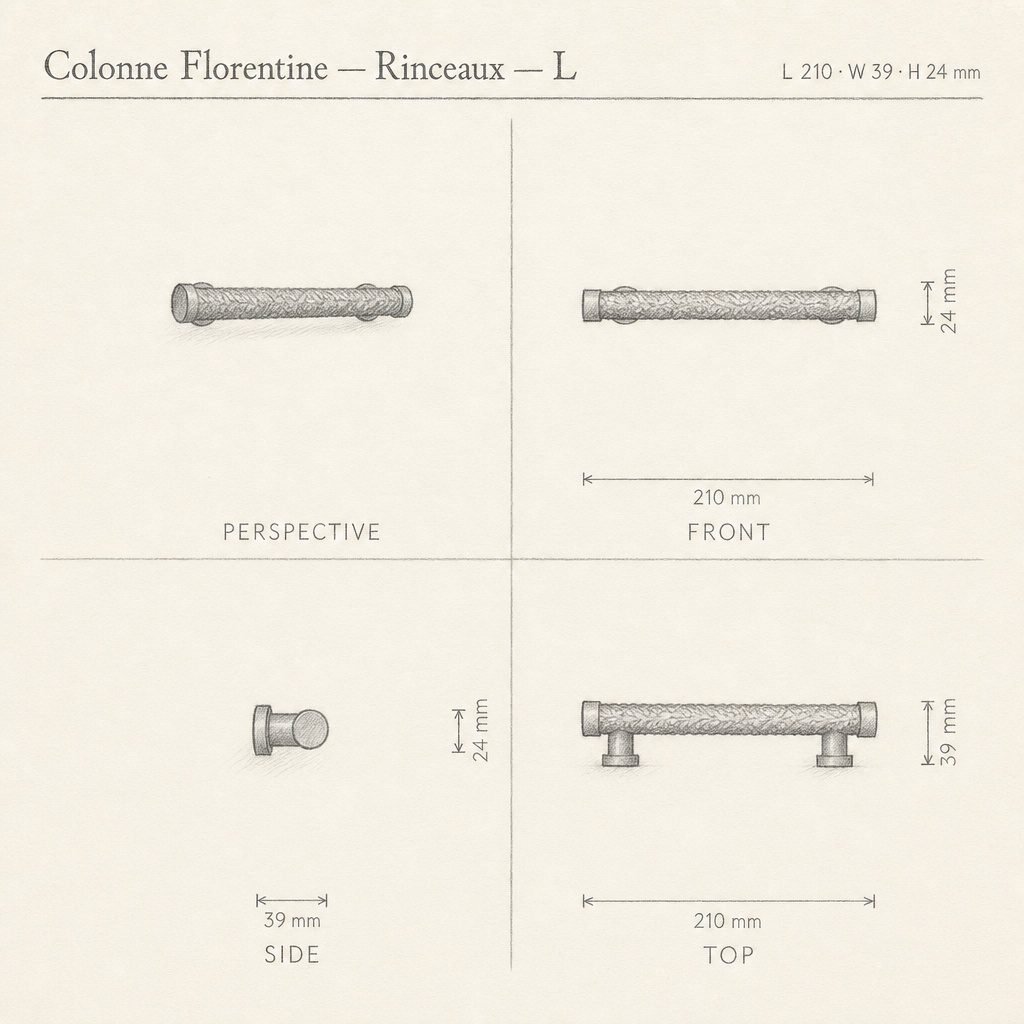
They apply to the silhouettes already present in the Classica Europa collection, in knob as well as pull: Palazzo Bar, Palazzo Square, Classica Round, Florentine Column, Palazzo Slim Bar, Classica Arabesque, depending on the patterns already available on each.
How long does it take to receive a handle in one of these finishes?
The standard catalog lead time applies: between 5 and 10 business days, each piece hand-finished in the Paris atelier upon receipt of the order.
What sets a patinated finish apart from a raw or satin metal?
A patina is a hand-applied oxidation or coloring that plays on the hollows and raised details to create the look of lived-in metal, as opposed to satin or matte finishes, whose surface stays uniform.