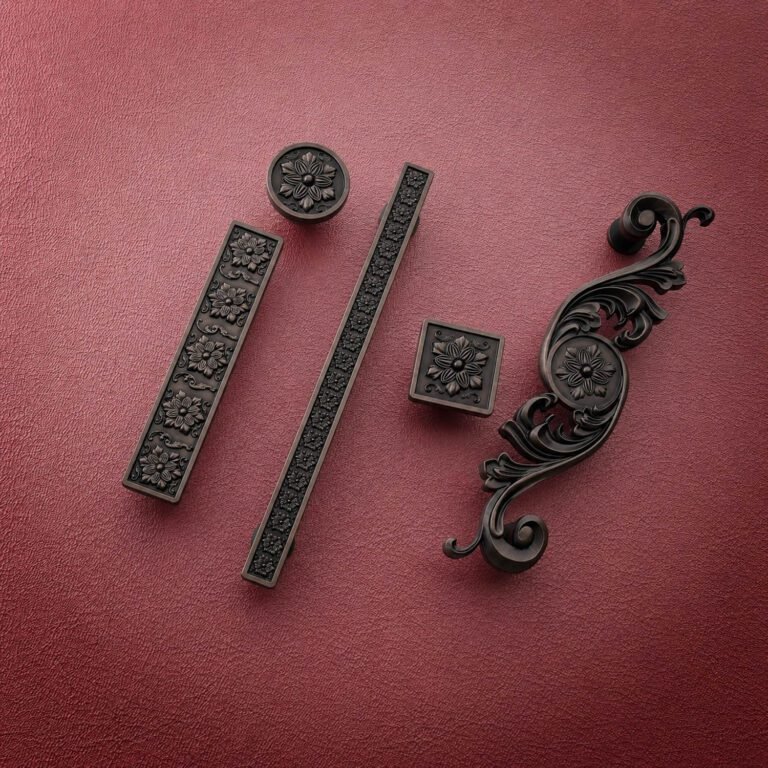
Why We Make Handles
An overlooked market, immense creative freedom, maximum decorative impact. Discover why Holdon Paris chose to reinvent the cabinet handle.
A Dormant Market Just Waiting to Happen
There are objects we touch every day without ever really looking at them. The cabinet handle is one of them. We grab it, pull it, open it, close it. Ten times, twenty times a day. And yet, when did you last choose one with intention?
The decorative handle market is strange territory. On one side, industrial supply: thousands of anonymous references, mass produced identically, sold in bulk at home improvement stores. On the other, heritage luxury: master bronze artisans, historic foundries, magnificent pieces that remain out of reach, reserved for exceptional projects and the budgets that come with them.
Between the two, almost nothing.
It was precisely this gap that caught our attention. An object that’s omnipresent, functional, intimate, we touch it, we grasp it, we come into physical contact with it, and yet it’s left to indifference or reserved for an elite few. There was something absurd about that. And so, an opportunity.
Because the handle isn’t a detail. It’s a point of contact. The first gesture you make entering a kitchen, opening a sideboard, reaching for your things. It says something about the space it inhabits. It can be neutral, functional, forgettable. Or it can assert a personality, extend a decorative intention, surprise.
We chose surprise.
Freedom Within Constraint
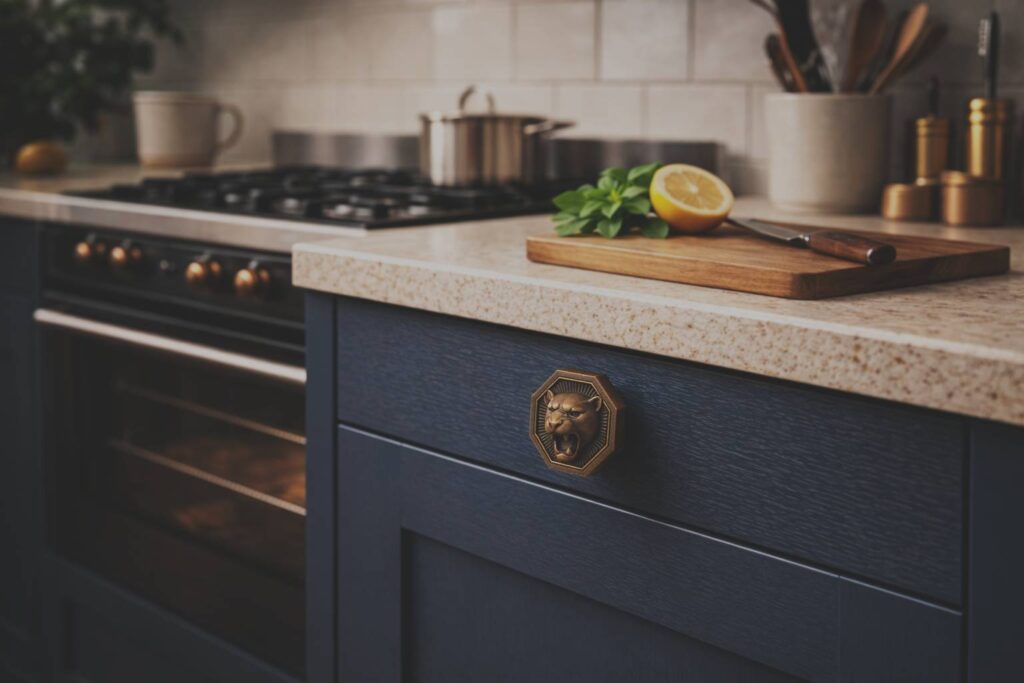
You might think designing a handle is a limited exercise. A few centimeters, a simple function, obvious constraints of use. It’s exactly the opposite.
The handle is a space for creation of rare freedom, precisely because its constraints are so clear. It must sit well in the hand. It must withstand thousands of uses. It must mount securely. These requirements don’t limit creativity, they give it shape.
It’s the paradox of constraint: when the frame is defined, imagination is freed within it. Jewelers know this. So do watchmakers. Working at a small scale, with precise technical requirements, demands a rigor that pushes toward the essential. Every curve matters. Every proportion shows. There’s no room for approximation.
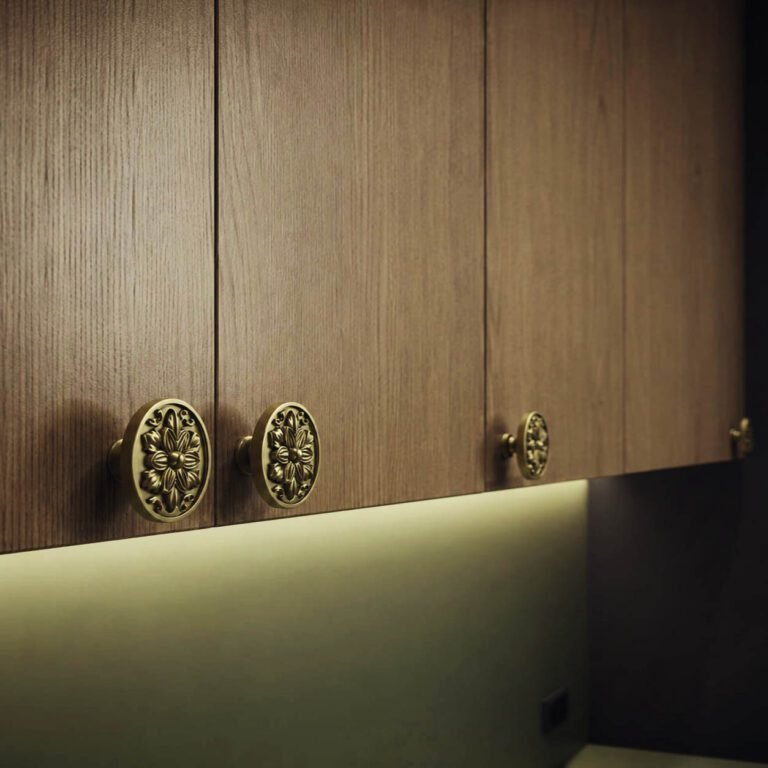
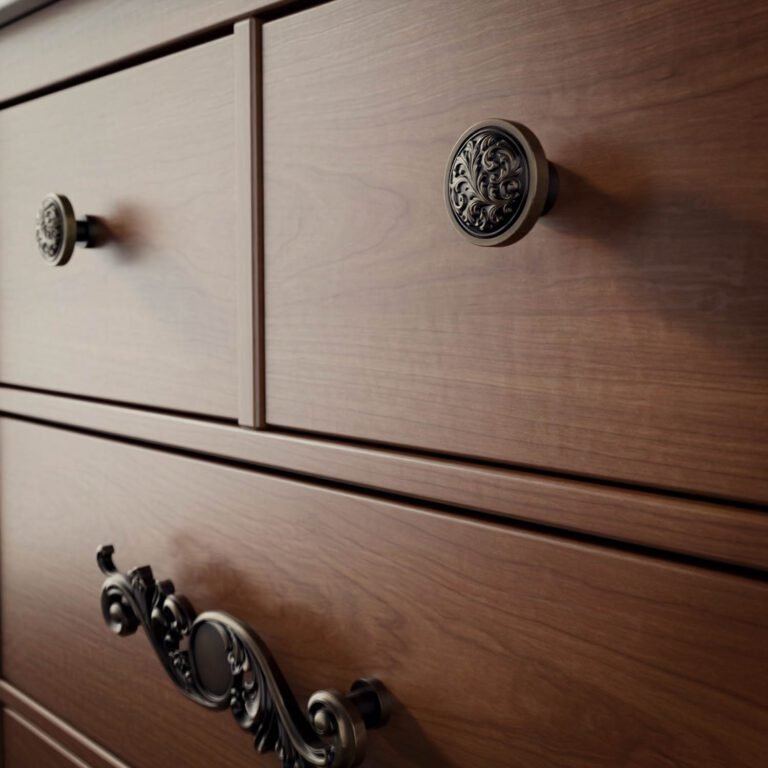
This scale also allows a boldness we wouldn’t permit ourselves on larger objects. A handle can be baroque without overwhelming a room. It can be provocative without dominating. It can quote Art Deco, borrow from neoclassicism, flirt with the organic or the brutalist, all while remaining an accent, a punctuation mark within an interior.
It’s an ideal playground for anyone who loves design but refuses five-figure signature furniture. A space where you can express a strong vision without imposing a complete decorative overhaul.
Adapting to What Already Exists
There’s an approach to design that inspires us in particular: one that starts from what already exists rather than a blank page.
Superfront and Plum demonstrated this brilliantly with cabinet fronts. Their insight: millions of people own IKEA cabinet frames. These structures are solid, modular, affordable. What they often lack is personality. Rather than convincing people to throw everything out and buy designer furniture, why not offer them a way to transform what they already have?
This philosophy speaks to us deeply. It’s economically smart, ecologically sensible, and creatively stimulating. It recognizes a reality: most interiors aren’t blank pages. They’re made of accumulations, inheritances, compromises, pieces of furniture kept because they still work.
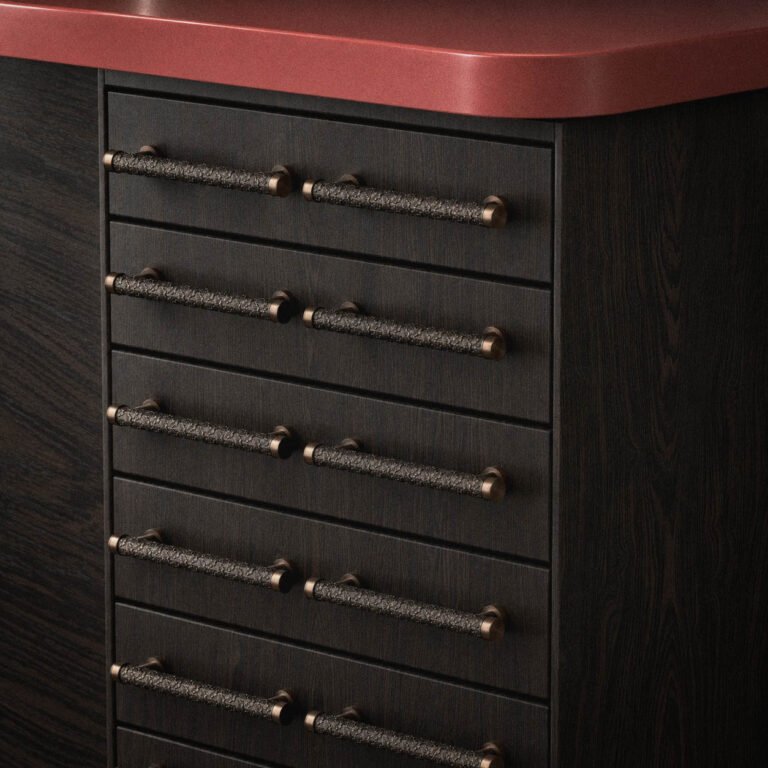
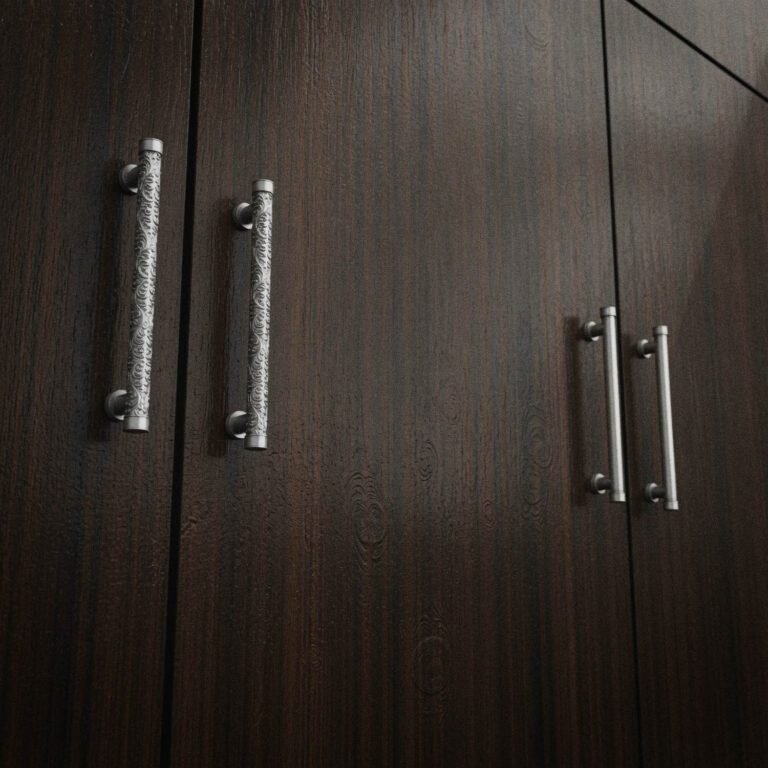
The handle is the perfect lever for this approach. Changing the handles on an IKEA kitchen, a secondhand dresser, or a family piece you can’t bring yourself to throw away is a simple, reversible, affordable gesture. And yet the visual impact can be radical.
We design our pieces with this compatibility in mind. Standard center-to-center spacing, common drilling diameters, typical front thicknesses: we work with these constraints, not against them. The goal is for our handles to install on as many existing pieces of furniture as possible, with no modification, no complicated workarounds.
Transform rather than replace. Personalize rather than standardize. Offer character without requiring a full rethink.
It’s our way of democratizing design: not by lowering prices to the point of creative poverty, but by offering strong pieces that fit into life as it actually is.