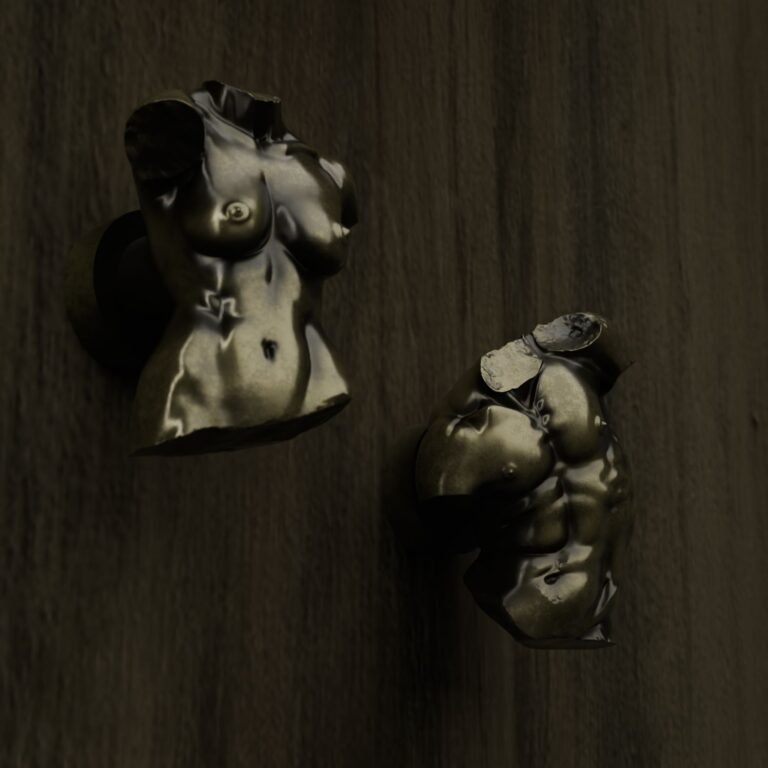
Long Cabinet Handle: The Solution When the Center-to-center Is Too Wide
Some furniture still carries, clearly visible on its fronts, the traces of hardware long gone. Two round holes, sometimes three, spaced about eight inches apart or more: the signature of an old handle, removed one day for a reason now forgotten, that no piece sold today comes close to matching exactly. This kind of spacing turns up often when hunting for a trade cabinet, a 1950s dining buffet, or a reclaimed workshop piece: furniture made at a time when ironwork was custom made, with no standard to respect.
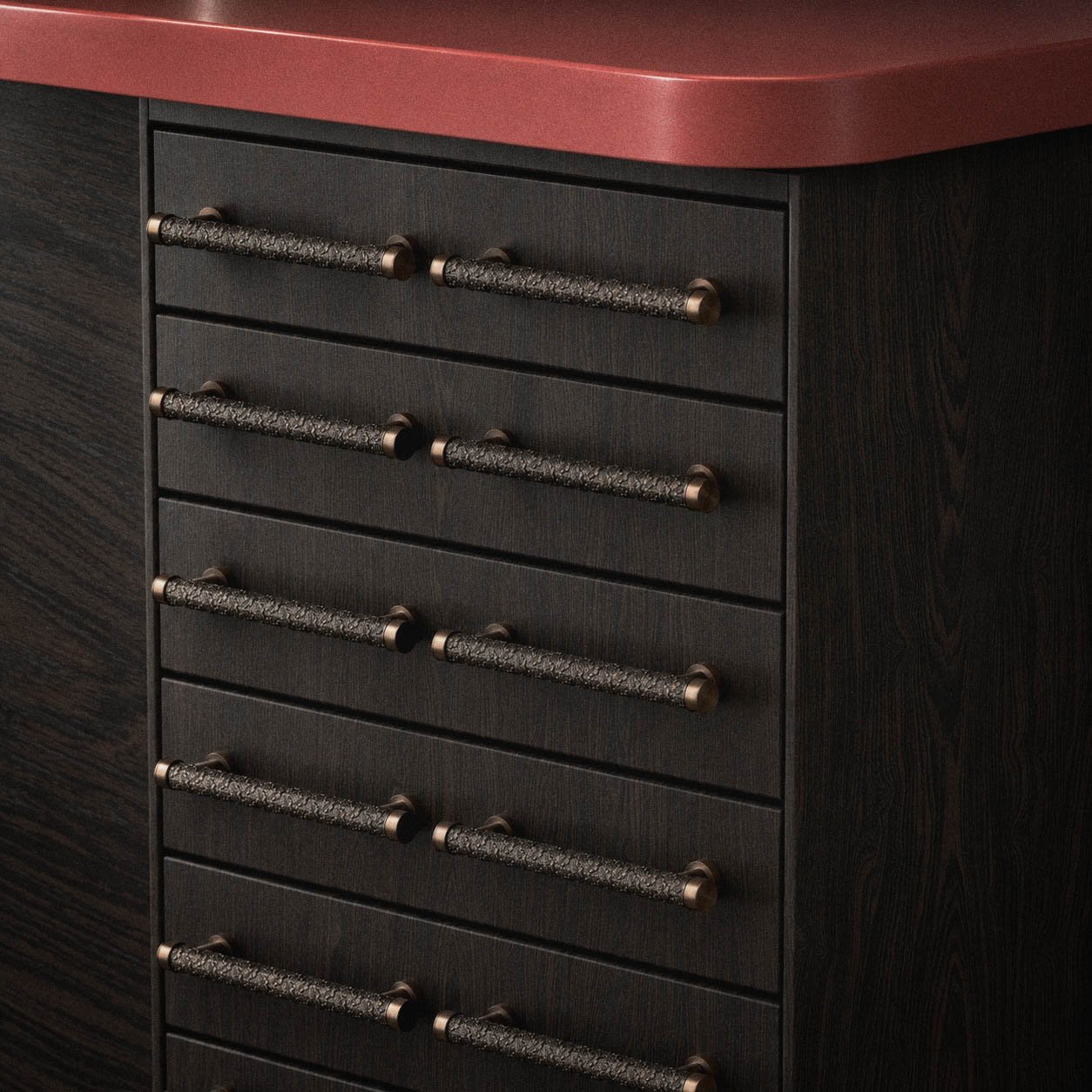
Faced with a center-to-center of 250 mm or more, the temptation is to fill in the front for a clean, neutral surface, or to search in vain for an oversized handle that doesn’t exist in any catalog. There’s a third way, simpler and more elegant: instead of trying to bridge the gap with a single piece, compose a duo of two handles. At Holdon Paris, the Florentine Column and Palazzo Bar silhouettes lend themselves particularly well to this.
A center-to-center the standard catalog doesn’t cover
A pull (the kind that mounts at two points, as opposed to a knob) comes in a handful of standard measurements: 96, 128, 160, and 192 mm, depending on the size chosen. These are the spacings found on the vast majority of contemporary fronts, from IKEA to custom cabinetry. Beyond that, on an antique piece or a flea market find, you’re outside the standard, and no handle on the market, however long, is designed to span such a gap in a single piece.
That’s where the instinct to patch and fill often takes over by default, erasing the problem rather than solving it. But filling in an antique front also erases part of its history, and the visual result rarely matches the quality of an original finish. Another option exists, one that turns the constraint into a design choice.
The handle duo, a habit being rediscovered
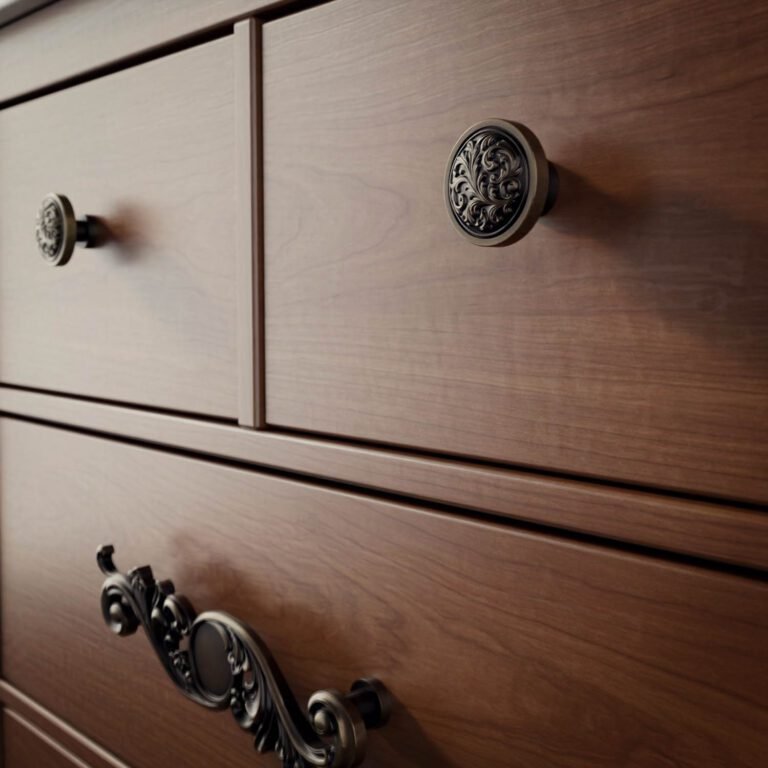
Mounting two handles on a single front is nothing new or eccentric. On large chests of drawers and 19th century apothecary cabinets, wide, heavy drawers frequently took two pulls instead of one: the grip was firmer, the weight better distributed, and the front read with more rhythm. The practice faded with the standardization of furniture, but it’s making a quiet comeback today, embraced by interiors that favor a touch of bold detail.
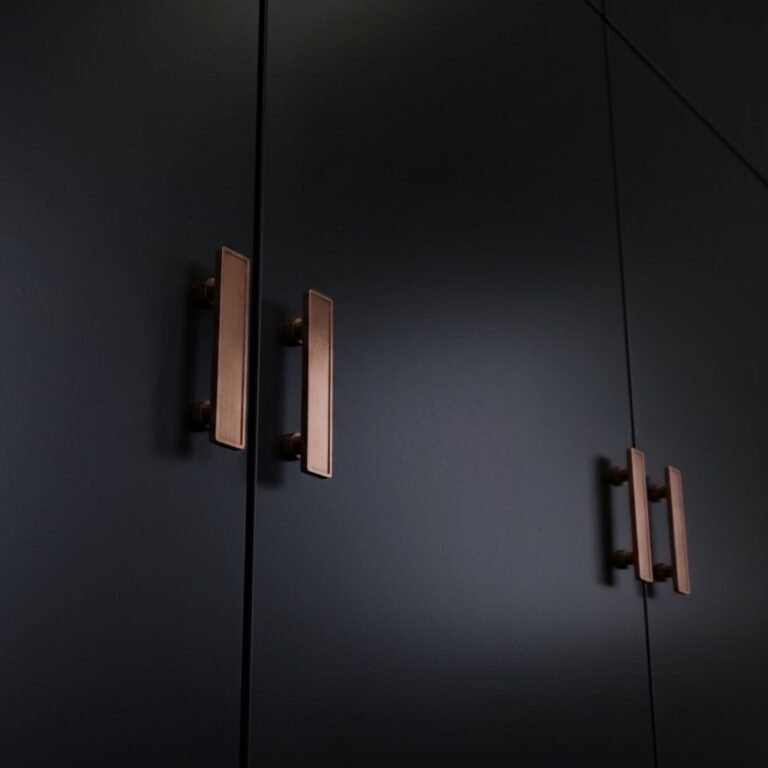
On a piece with a wide center-to-center, this principle becomes a concrete solution. Rather than searching for a single handle matched exactly to the old holes, you drill two extra mounting points near the existing ones and install two handles, identical or slightly different. The result doesn’t try to hide the old spacing: it works with it, in a confident symmetry.

Florentine Column and Palazzo Bar: two lines made to be doubled
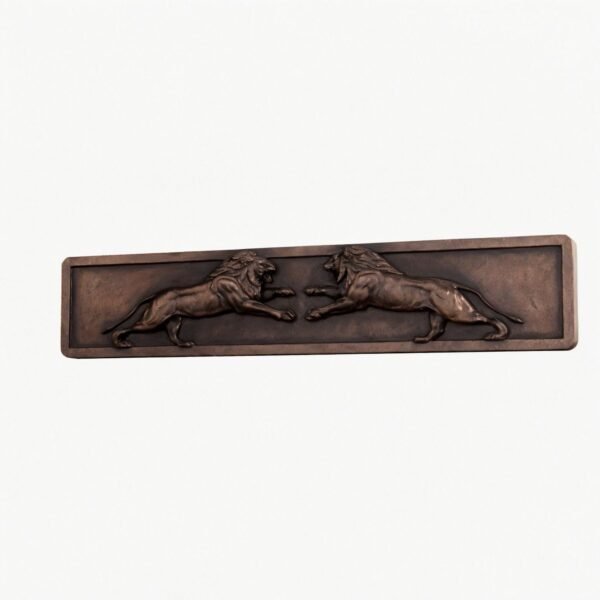
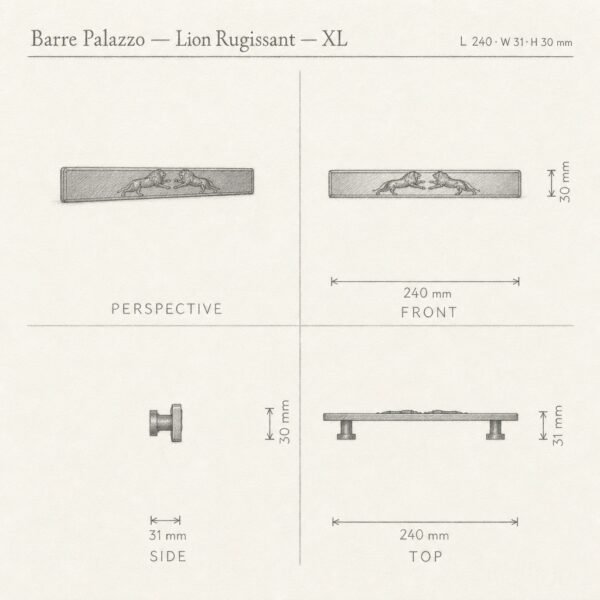
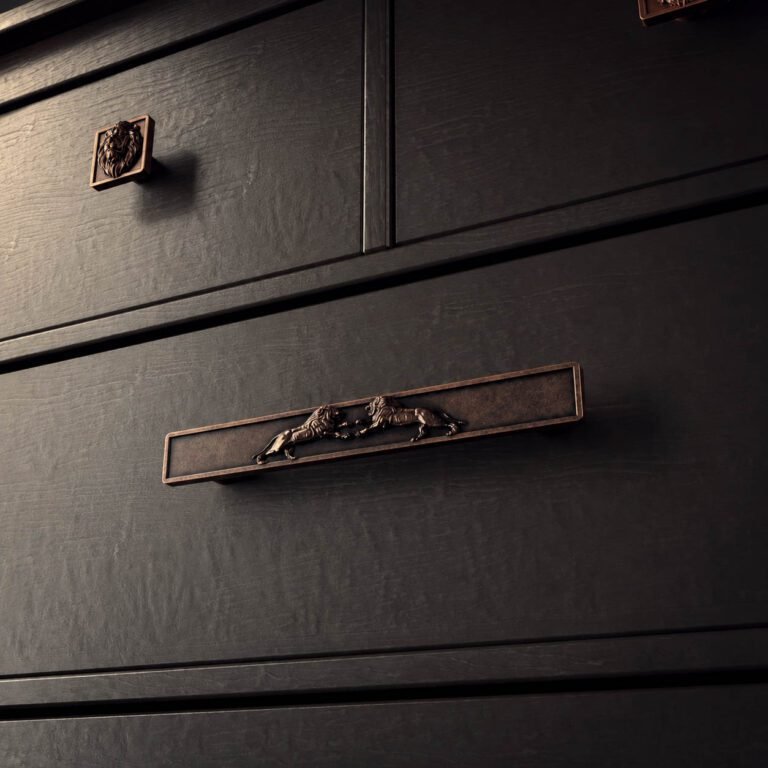
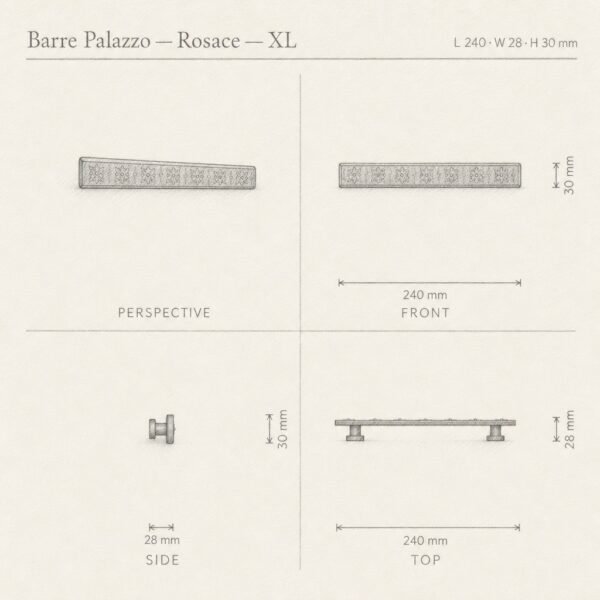
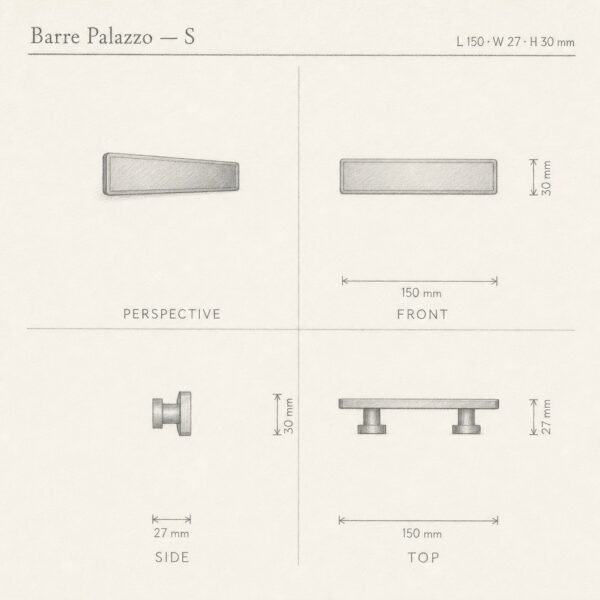
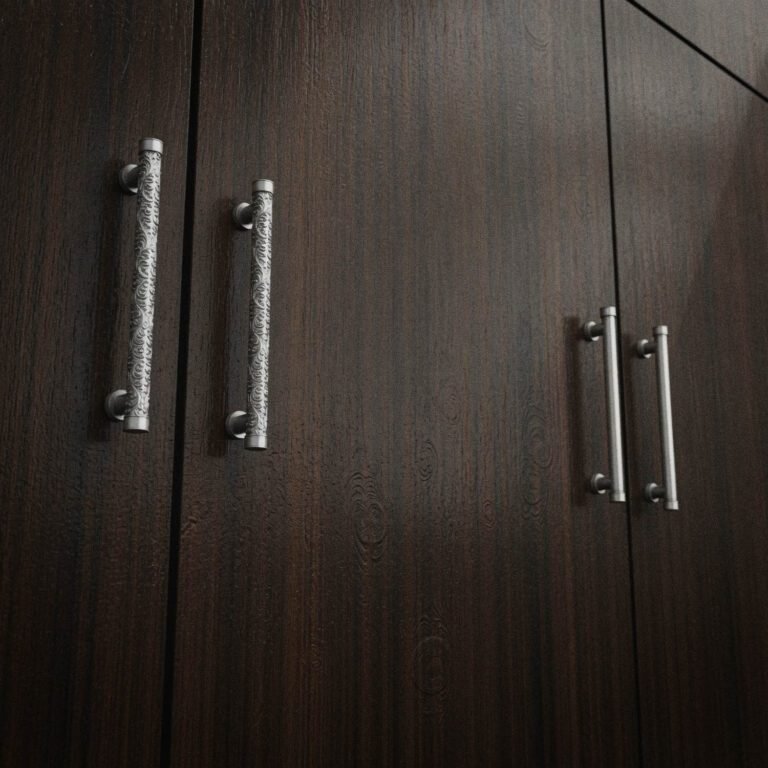
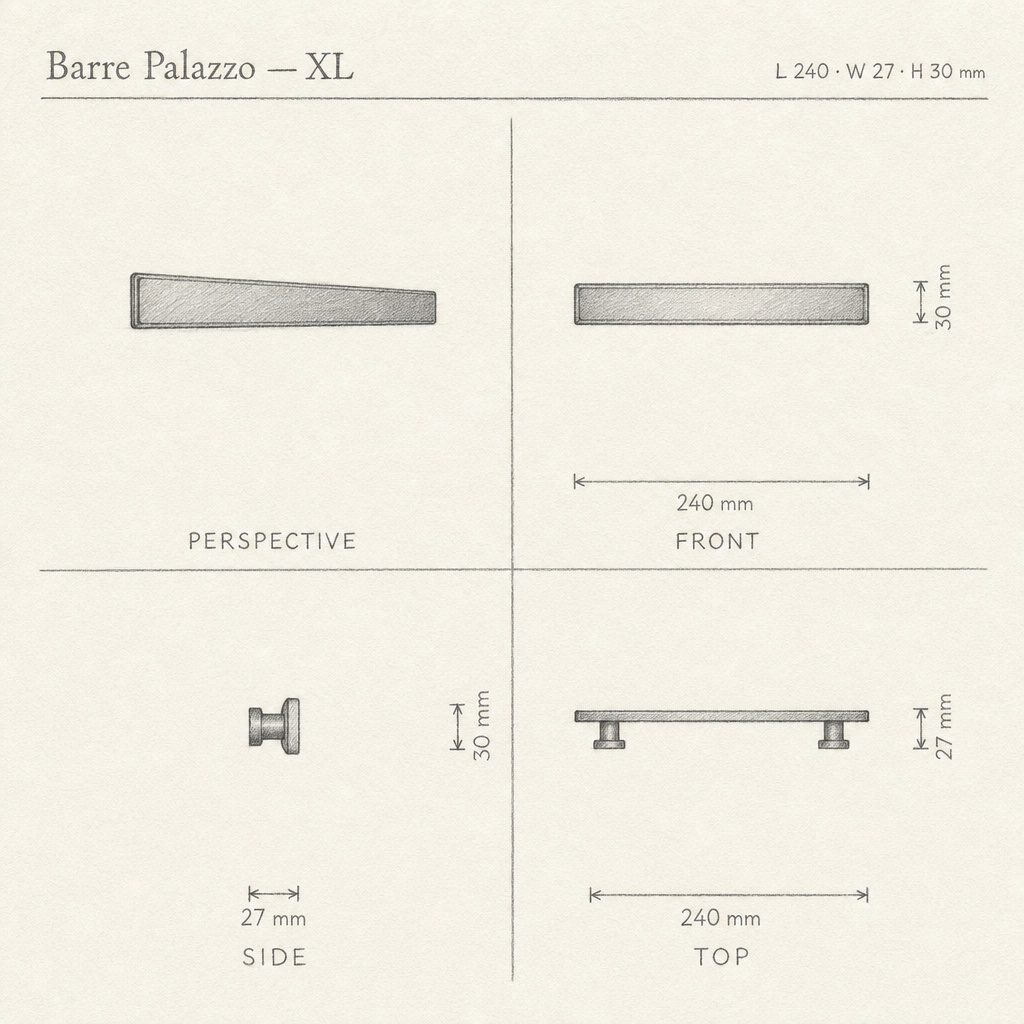
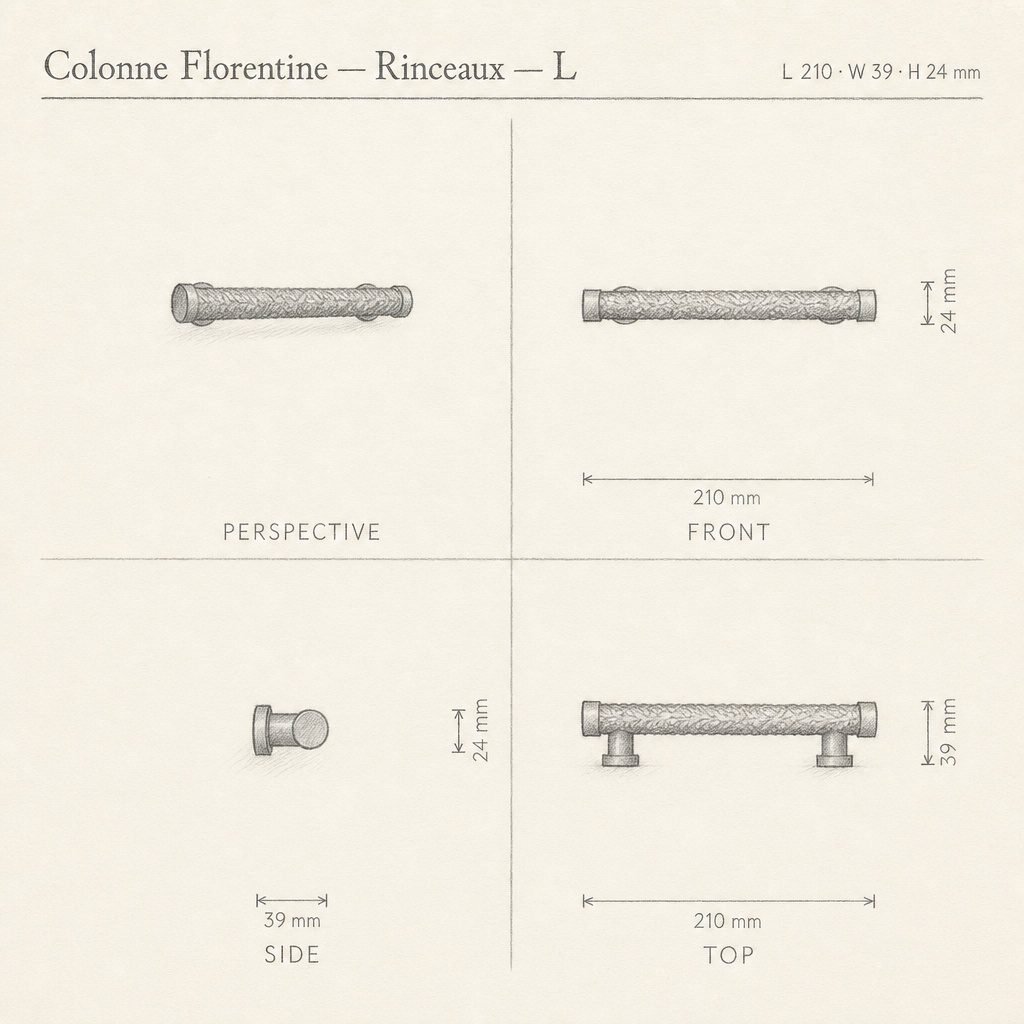
Not every silhouette lends itself as well to this exercise. It takes a line sober and repeatable enough that two pieces, placed side by side, read as a composition rather than a mistake in placement. The Florentine Column borrows architecture’s oldest element, the column: a cylindrical shaft stretched between two round plates, standing out from the front as a volume rather than a simple drawing laid on top of it. The Palazzo Bar follows the same logic, flattened: a straight line, inspired by the façades of Italian palazzos, with a raised frame that casts a crisp line of shadow.
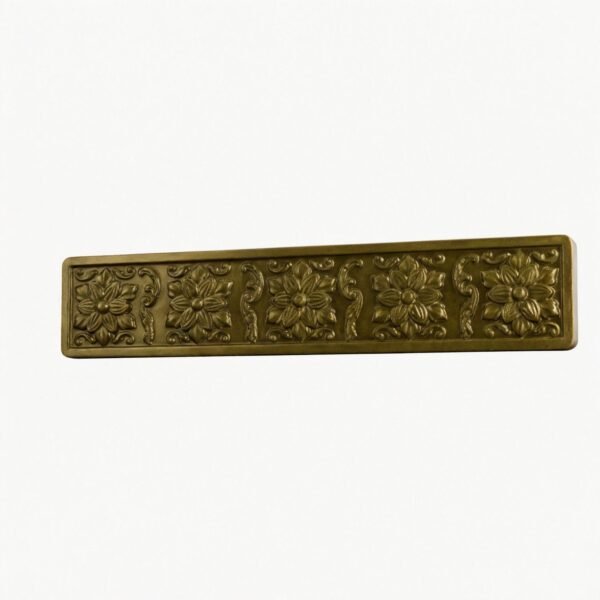
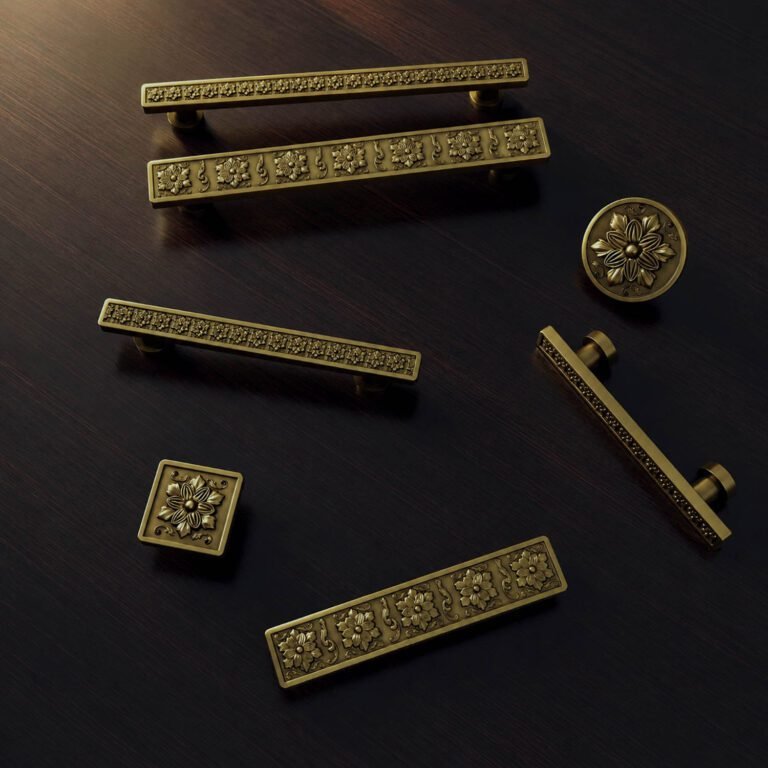
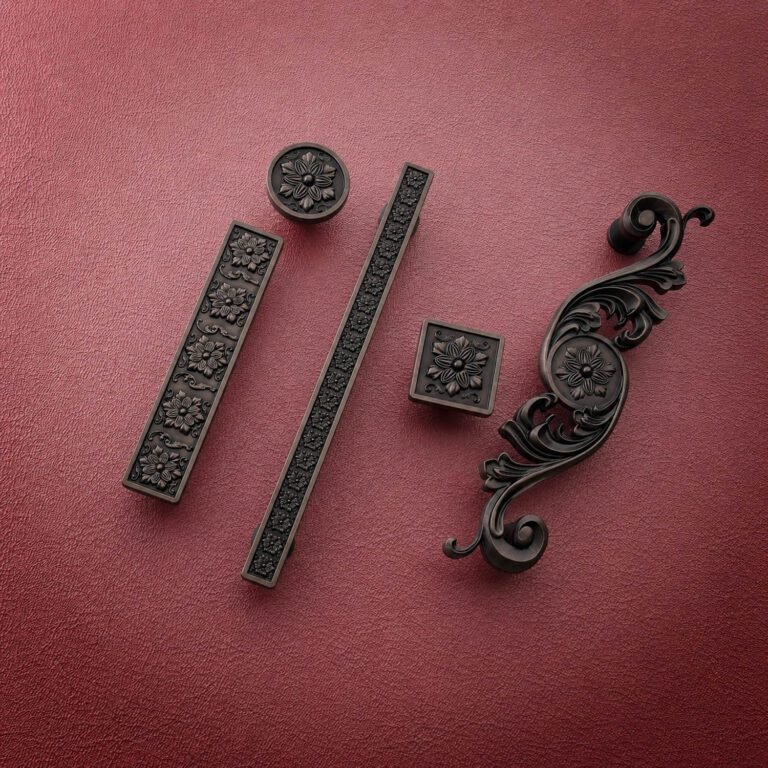
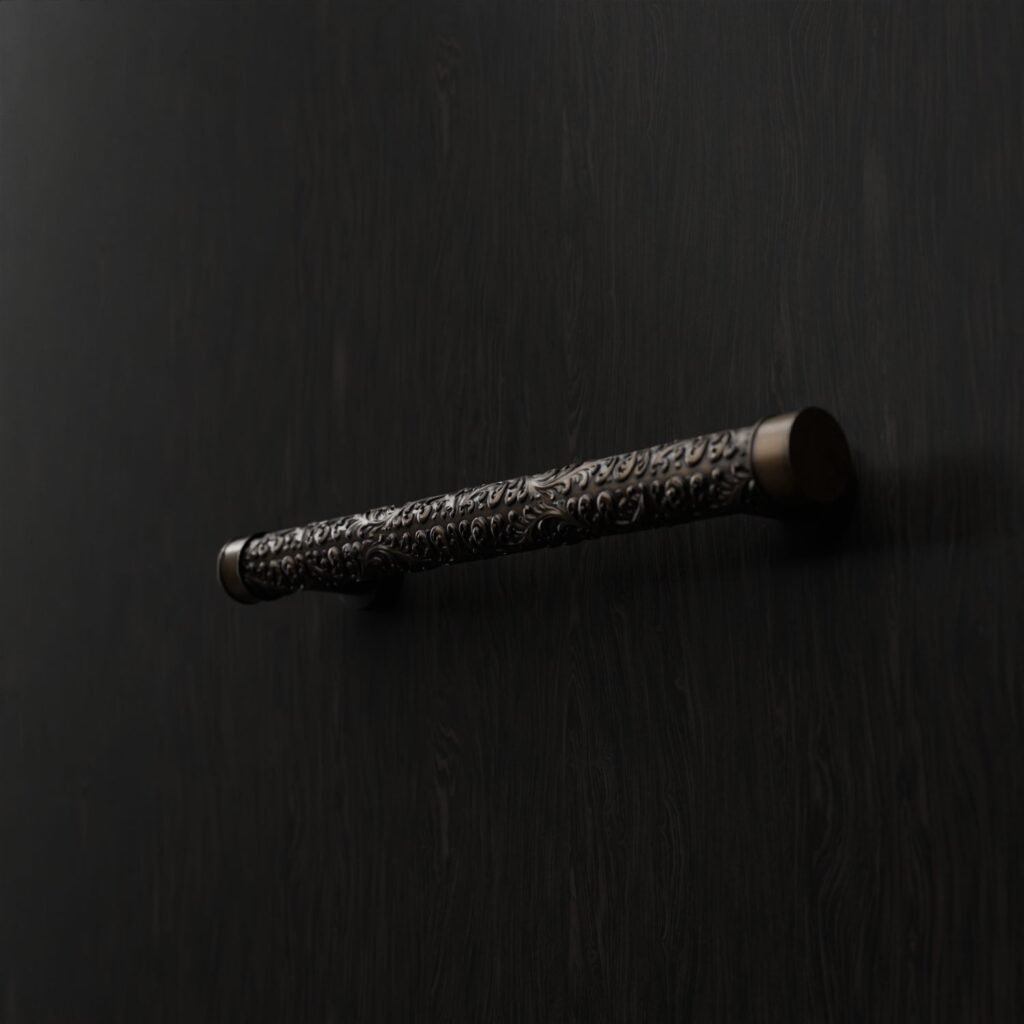
Both share one decisive point in common for this project: they already rest on two fixing points, and their design stays identical from end to end. Doubled, they don’t contradict each other, they answer each other. In their Essential version, the shaft or bar stays bare and it’s the material that sculpts the light. Dressed in a pattern like Scrollwork or Rosette, they offer the ornament a continuous field, inherited from a vocabulary the Florentine Renaissance already applied to columns and pilasters.


Pairing the duo without patching the front
In practice, the old holes don’t disappear: they become a reference point. You choose a standard center-to-center, most often 96 mm, the most compact in the catalog, for each handle in the duo, and position the two pieces symmetrically around the center of the front, even if the original fixings end up hidden under one of the plates or just beside it. The eye registers the overall composition, not the detail of the initial drilling.
Better to position both handles unglued and check before drilling: tracing paper or a simple cardboard template is enough to verify alignment and spacing before you engage the drill bit. For the full detail on drilling and fastening, our Holdon handle installation guide covers the process, whatever the thickness of your front.
What material for furniture that’s already lived a little
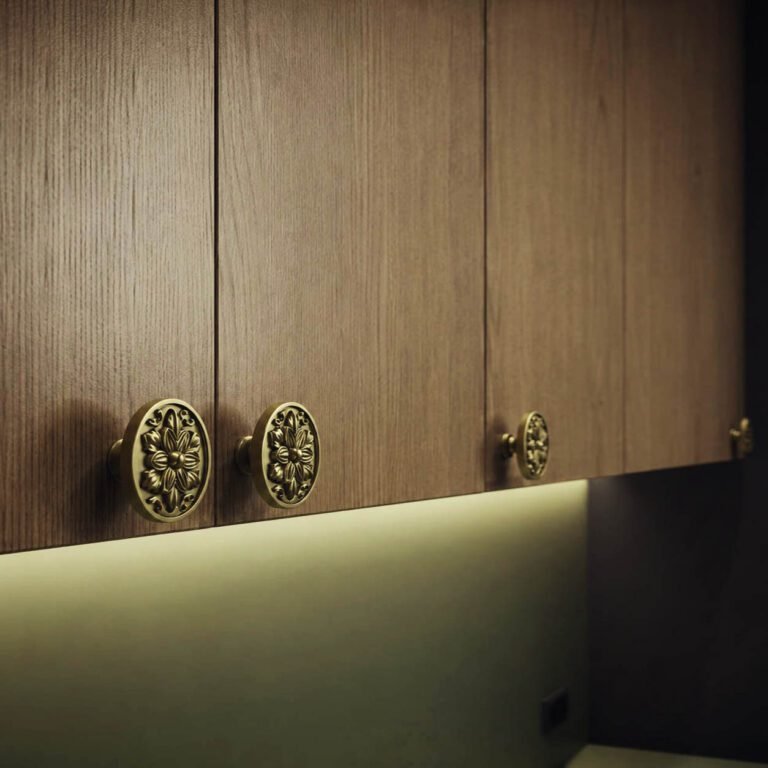
A piece of furniture that already carries the marks of time rarely calls for a finish that looks too new. The Antique Bronze, Antique Copper, and Antique Brass patinas were designed for this: a chemical patina applied by hand, which settles into the relief and lets the raw metal show through in places, like a piece that had traveled through the decades alongside the furniture itself. Copper and brass hold up just as well in a kitchen or bathroom as in a living room, which leaves the door open if the renovated piece changes use along the way.
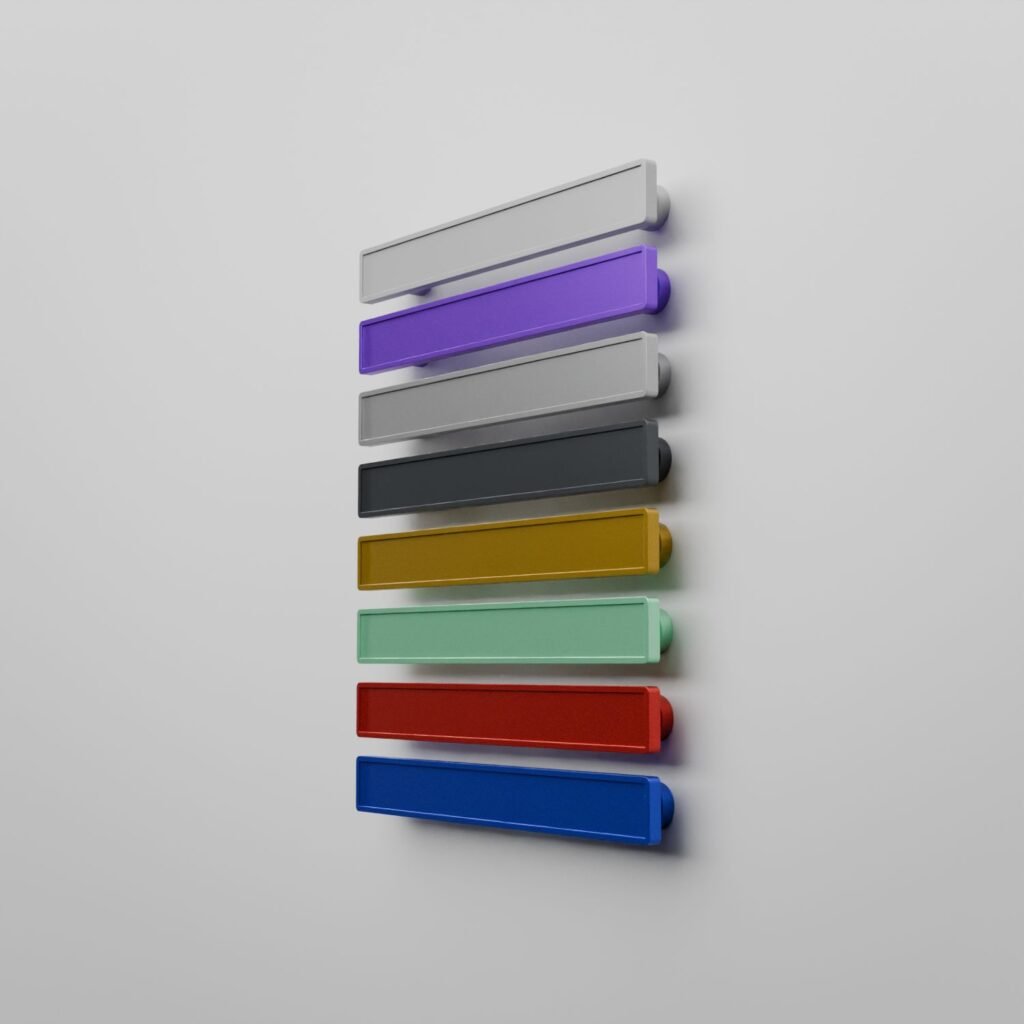
For a dresser or a closet, a more accessible option exists in bioresin, in a palette of bolder shades, from Electric Blue to Dark Lilac: a lighter material, reserved for dry rooms and decorative uses, to be avoided for a kitchen or bathroom. A way to compose a duo in keeping with the furniture’s spirit, or on the contrary to bring in a touch of color that contrasts with its great age.
Frequently asked questions
What is the maximum center-to-center distance available at Holdon Paris for a bar handle?
Our pull handles, Florentine Column and Palazzo Bar, go up to 192 mm in size XL, with steps at 96, 128, and 160 mm depending on the size chosen.
My cabinet has a center-to-center of 250 mm or more, what should I choose?
No single handle covers that kind of gap. The solution is to mount two handles as a duo, drilling two additional mounting points near the existing holes, rather than searching for an oversized piece or filling in the front.
Do you need to fill the old handle holes?
Not necessarily. By working them into the duo’s composition, or hiding them beneath one of the backplates, you avoid a patch that’s always visible once the front is repainted or varnished.
Which finishes work best on an antique cabinet?
The Antique Bronze, Antique Copper, and Antique Brass patinas, designed to evoke metal that has already lived a little, pair naturally with a piece that carries its own history.
How long does it take to receive Holdon Paris handles?
Between 5 and 10 business days for catalog pieces, duos included since the two handles are ordered separately.
At Holdon Paris, we often prefer to work with a cabinet’s constraints rather than erase them. A center-to-center that’s too wide isn’t a flaw to quietly fix, it’s the opportunity for a duo of handles, clean and deliberate. The choice is yours: the silhouette, the pattern, and the material that best carry on the story of the piece.
To learn more, also read our article on the Scrollwork pattern and our tour of the Classica Europa collection.