Restyling an Old Wood Buffet: The Handle That Changes Everything
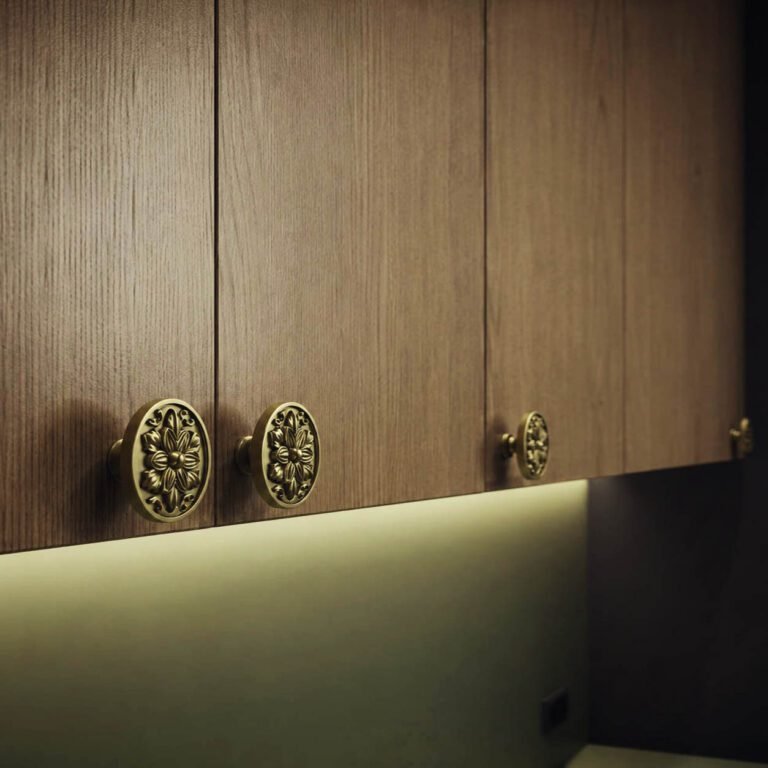
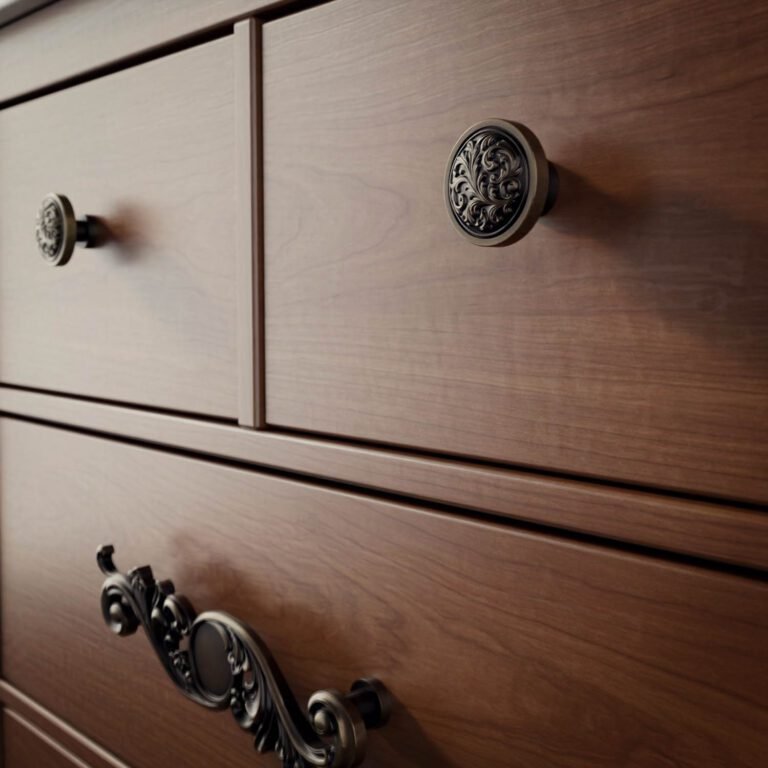
An antique buffet weathers the decades better than most furniture. It comes from an inheritance, a flea market, or an estate sale, and it almost always has solid wood under a tired finish. Repainting the whole front is a weekend project, swapping out the knobs is a one hour job, and it’s often the knob that transforms the piece the most. The round knob, in fact, is one of the oldest shapes in decorative furniture: you find it on Louis XVI chests, on Art Deco buffets from the 1920s, and just as naturally on a contemporary Scandinavian kitchen. Its longevity is no accident: the rounded shape fits the hand and plays with light, whatever patina you give it.
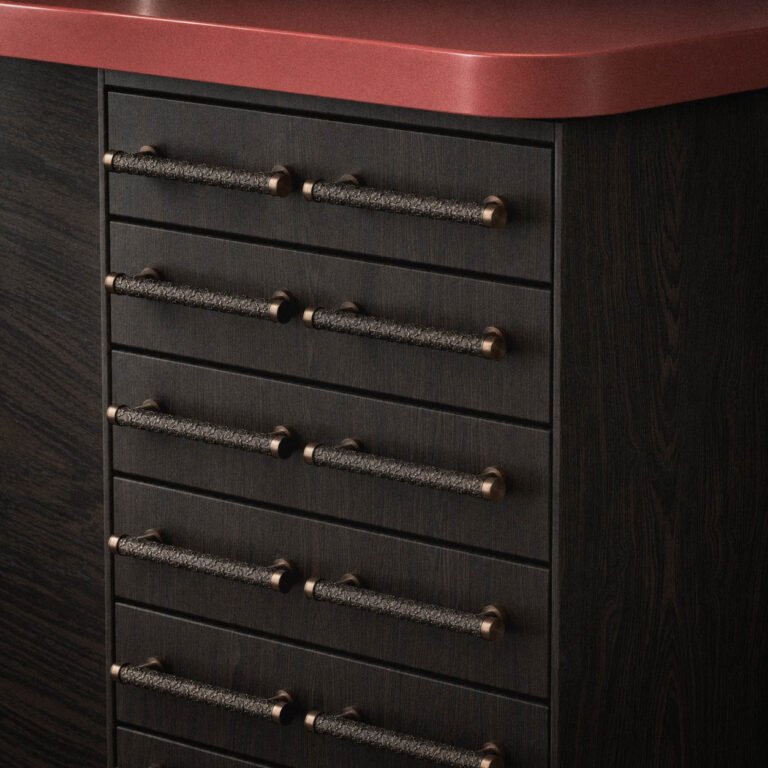
On a buffet, this detail repeats several times, on every drawer, on every door, which makes it the spot on the piece you look at most often without thinking about it. That’s exactly why it carries so much weight: replacing the knobs across the whole front changes the visual rhythm of the piece, well before any question of paint.

The knob, the detail that comes back the most
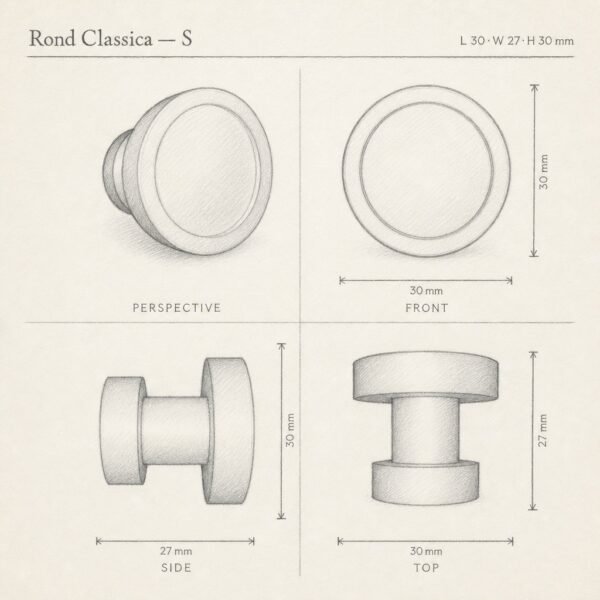
A sofa or a pendant light, you only see once. The knobs on a buffet, by contrast, come in a handful (no pun intended): three, four, sometimes more, spread across the whole front. That’s what makes the move so visually effective. The Classica Round picks up this foundational geometry with a curve that’s neither too flat nor too prominent, calibrated to let any patina applied to it shine, from the most understated metal to the most narrative finish.
Round or square: two languages for an antique buffet
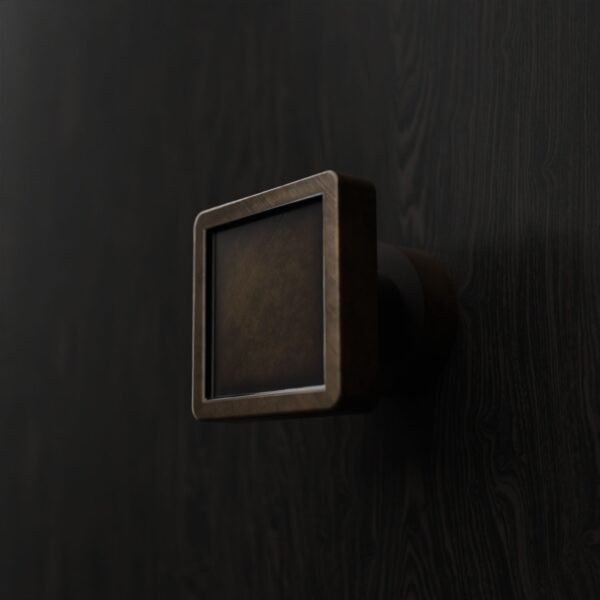
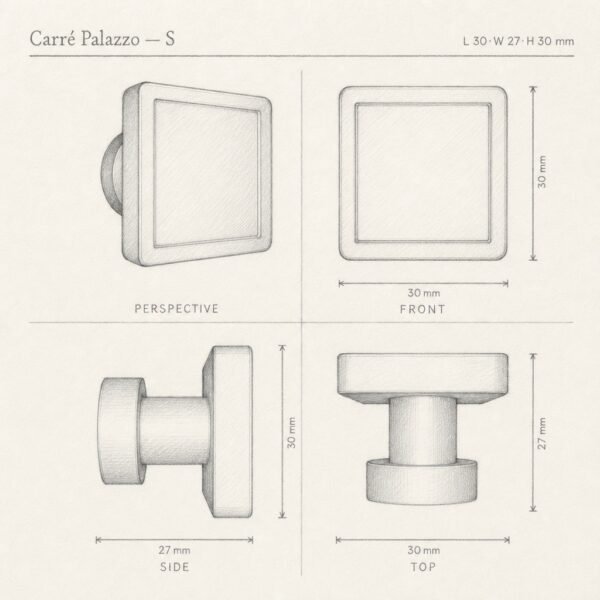
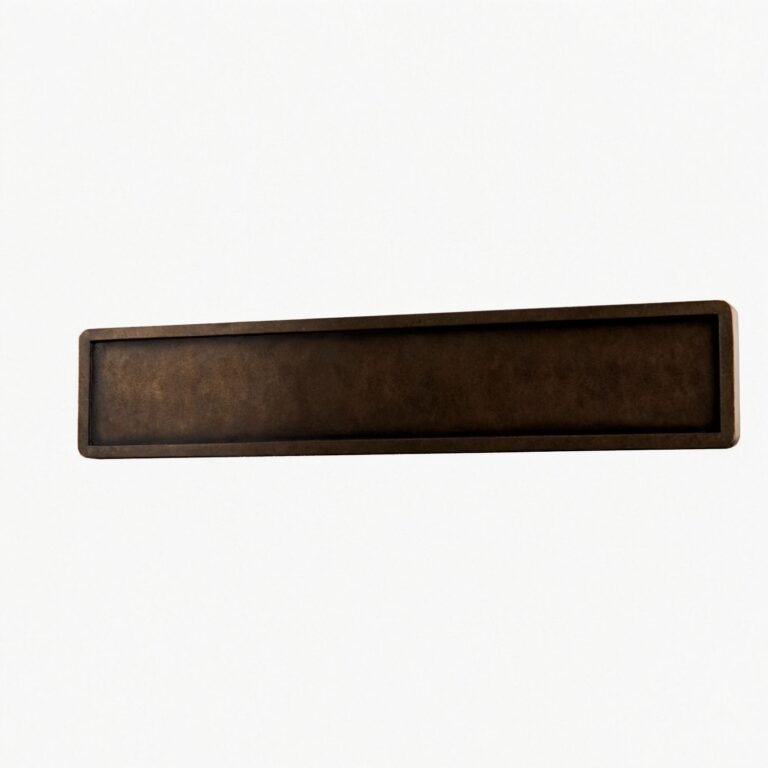
The choice of silhouette already says something about the result you’re after. The Classica Round keeps a soft, traditional profile, the one you’d expect on an inherited buffet that doesn’t need to reinvent itself. The Palazzo Square borrows its geometry from Italian palace facades: a recessed frame that draws a more architectural play of shadows, for a buffet you want to read as a structured piece rather than a family heirloom. Both exist within the same family of bronze patinas, which lets you shift register without changing palette.
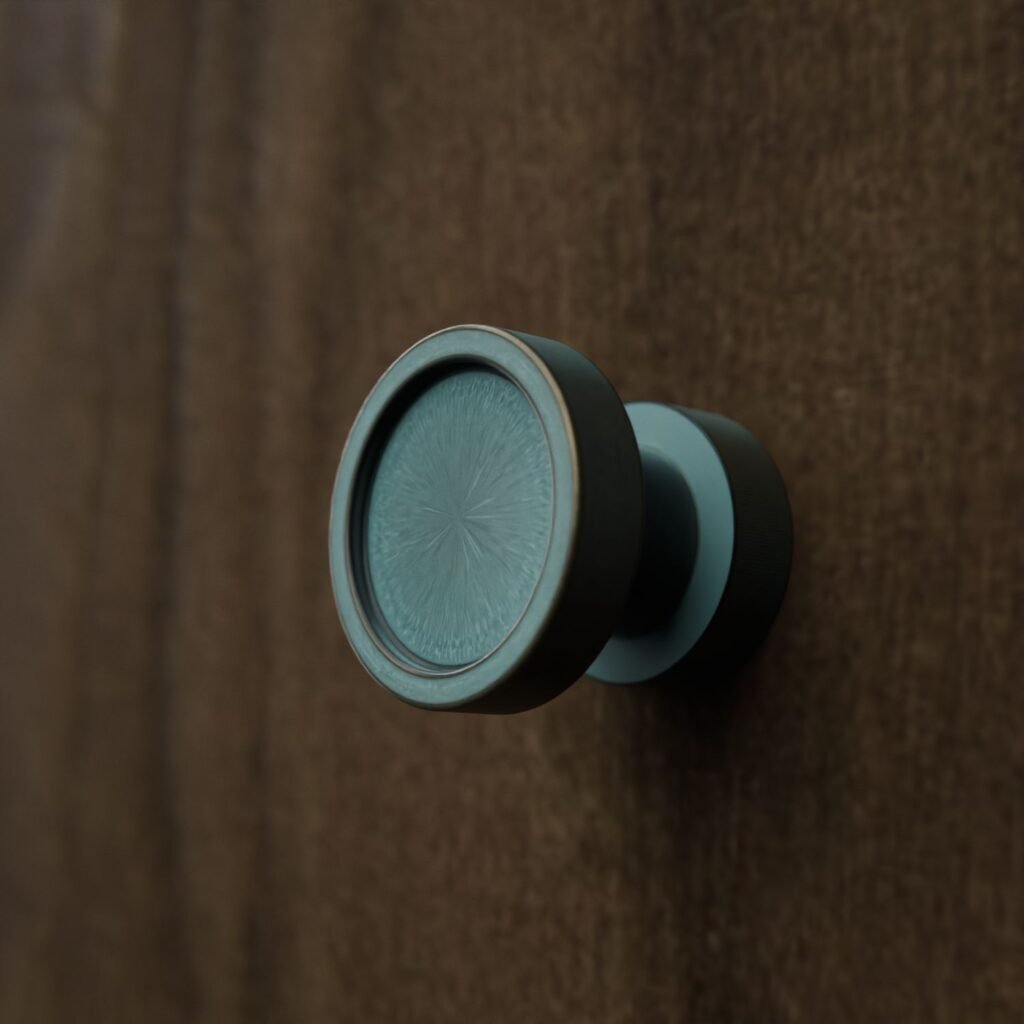
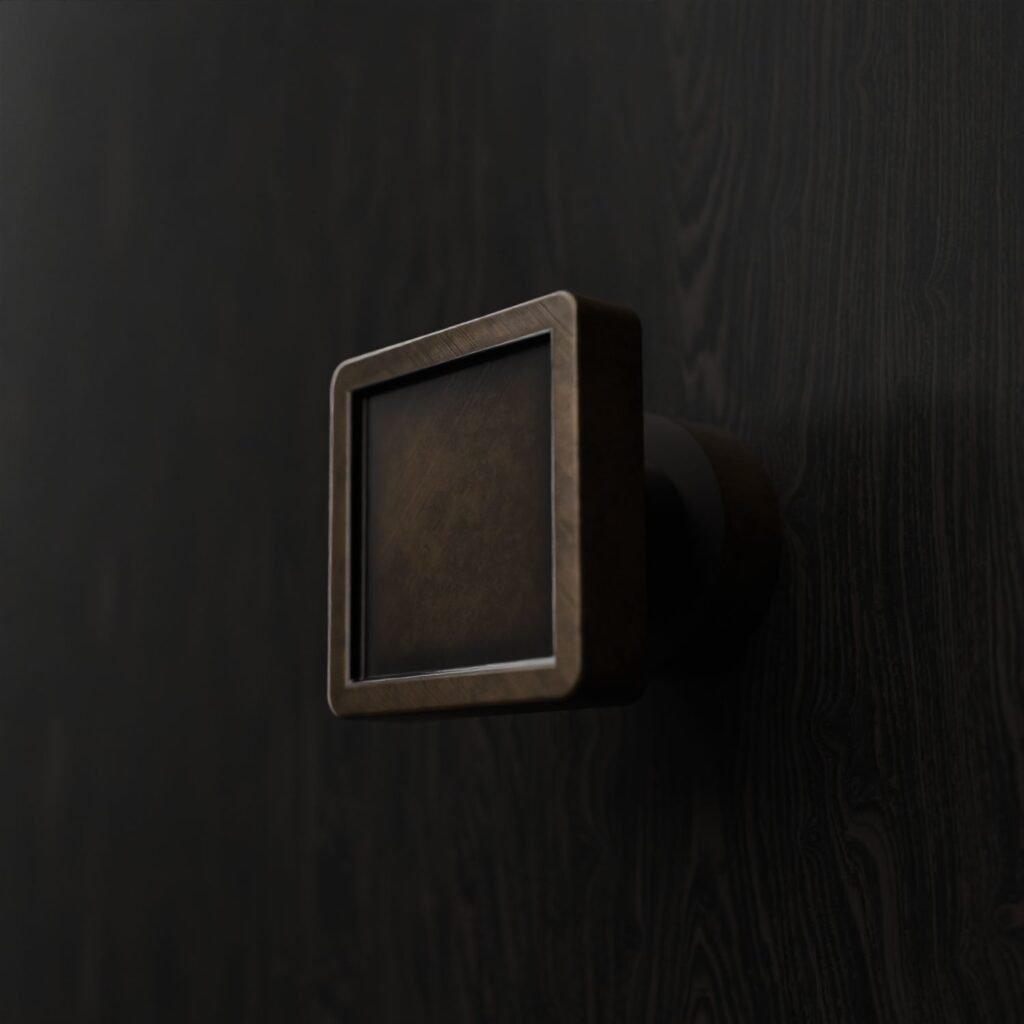
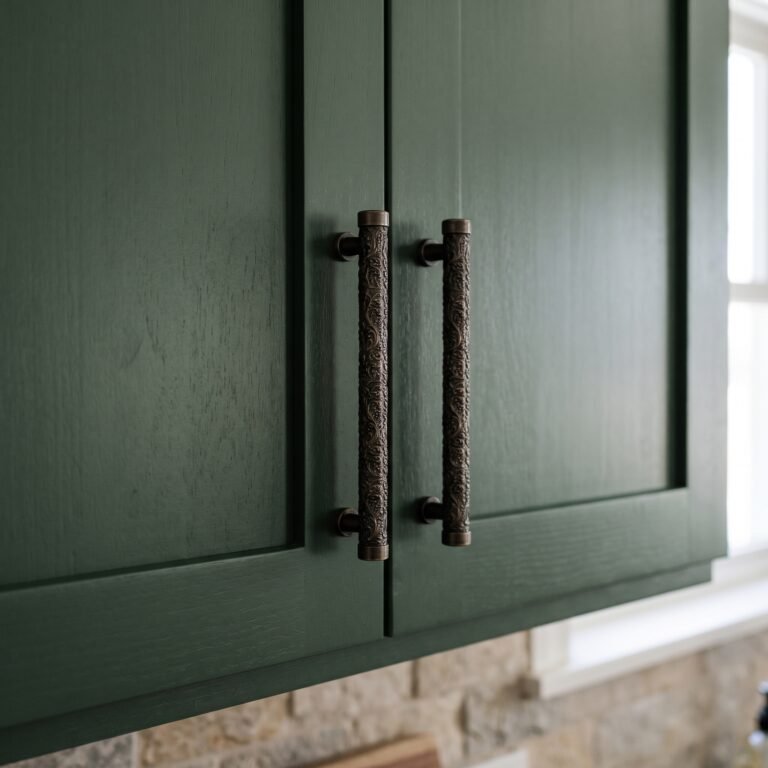
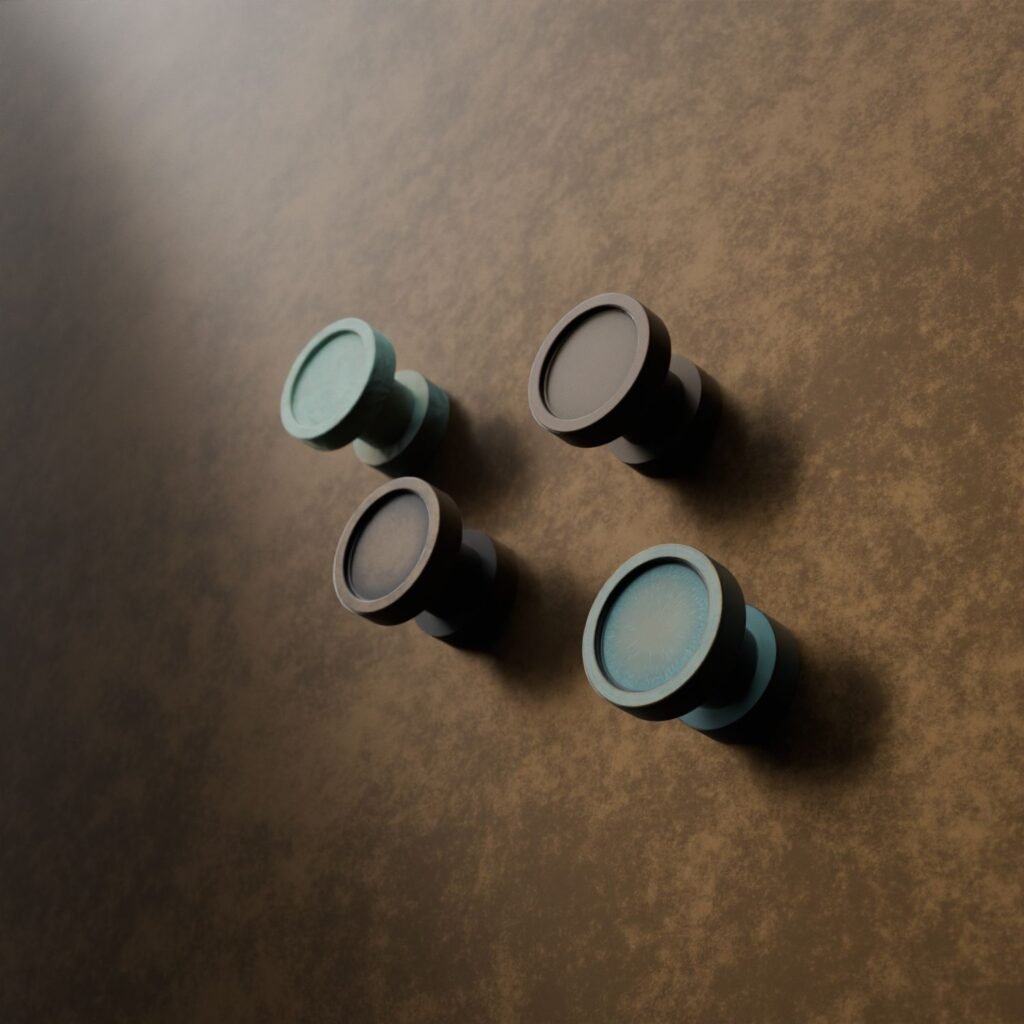
Patina, in fact, isn’t a simple color choice. Verdigris Bronze pushes the tone toward a deep blue-green, with edges sanded bright that catch the light, a little like the garden bronzes you come across in parks. Antique Bronze stays warmer, more golden-brown, and feels particularly at home on walnut or smoked oak. On an already dark sideboard, the first creates contrast; on warm wood, the second blends in with sophistication.
Getting the dimensions right
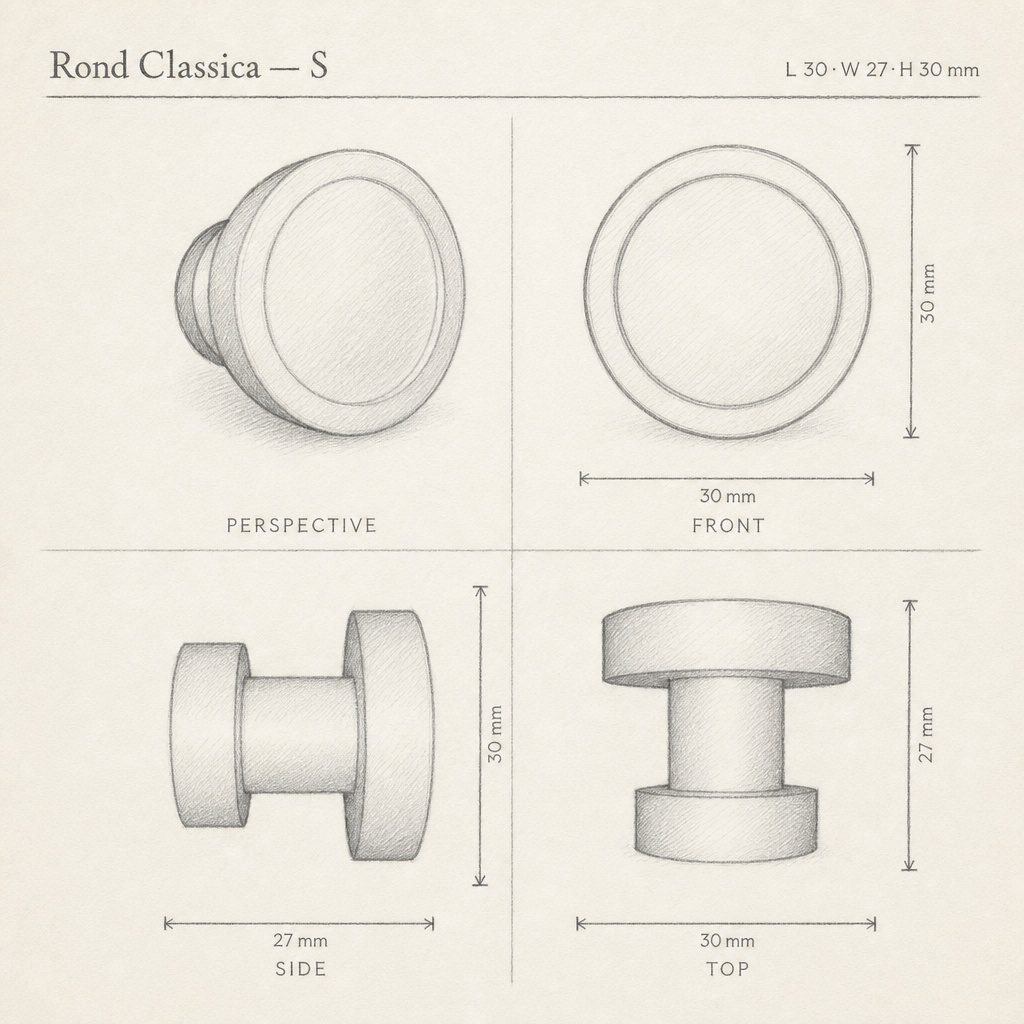
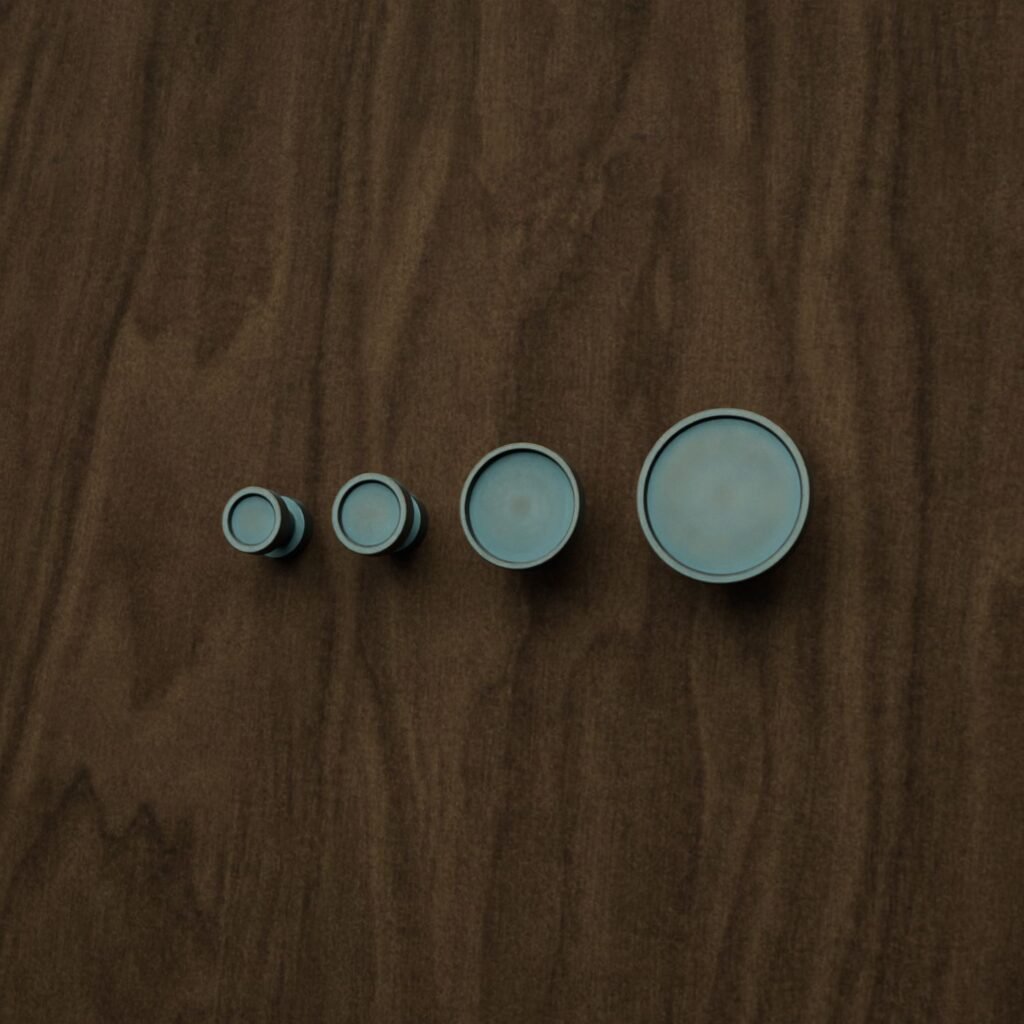
Classica Round and Palazzo Square both belong to the knob family: a single fixing point, compared to two for a classic pull. That’s a real advantage on an antique sideboard, the existing drilling often matches the diameter of a new knob, with no carpentry work needed. Size, meanwhile, comes down to the eye as much as the ruler: a discreet format for a small cutlery drawer, a bolder format for a large storage door, with sizes in between for everything that falls in the middle.
Patinating bronze without a second thought
An antique sideboard gets used, opened and closed every day, and the hardware has to keep up. Bronze holds up well to this kind of use: good resistance to knocks, to heat, and to the ambient humidity of a living room, with upkeep that comes down to a dry cloth, no abrasive products. The patina is never perfectly uniform from one knob to the next, and that’s intentional: each piece reads as a hand-worked object rather than an industrial series, and the catalog offers several bronze patinas to fine-tune the tone you’re after, from the lightest to the darkest.
A few things to know before you start
- Single-point knobs often go into the existing hole, with no new drilling needed if the diameter matches.
- A discreet size for a narrow drawer, a bolder size for a large door: size is chosen front by front.
- Round and Square come in the same family of bronze patinas: you can switch silhouettes without switching palette.
- Simple care with a dry cloth, no abrasive products, preserves the patina over time.
Changing the knobs on an antique buffet is a way to keep what’s solid about the wood while refreshing what catches the eye first. At Holdon Paris, every bronze patina is designed as a lasting detail rather than a passing trend, in keeping with what we discussed about the collection’s most recent bronze and copper patinas. The same simple care applies to the other metals in the catalog, as we detailed for brass. Find the full range of patinas on the page dedicated to bronze.