
Pattern · Holdon Paris
Shell
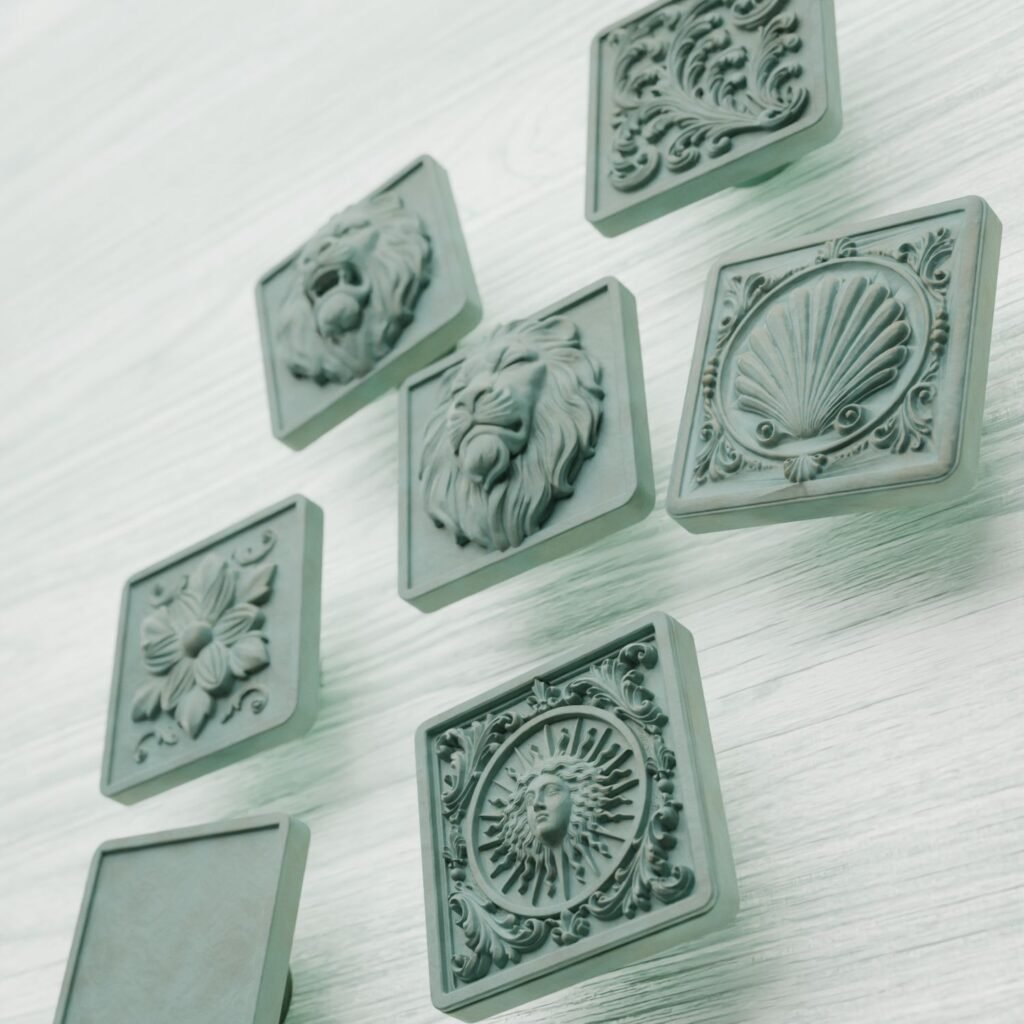
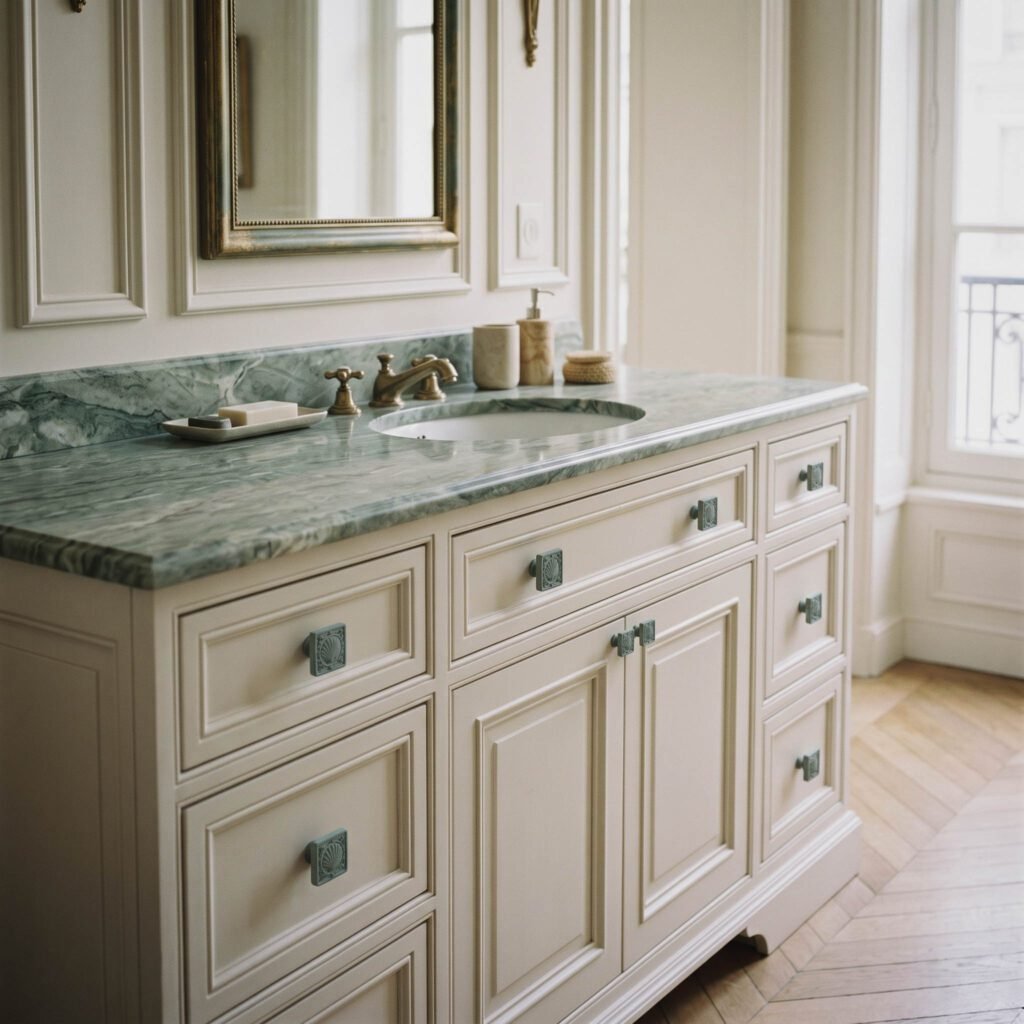
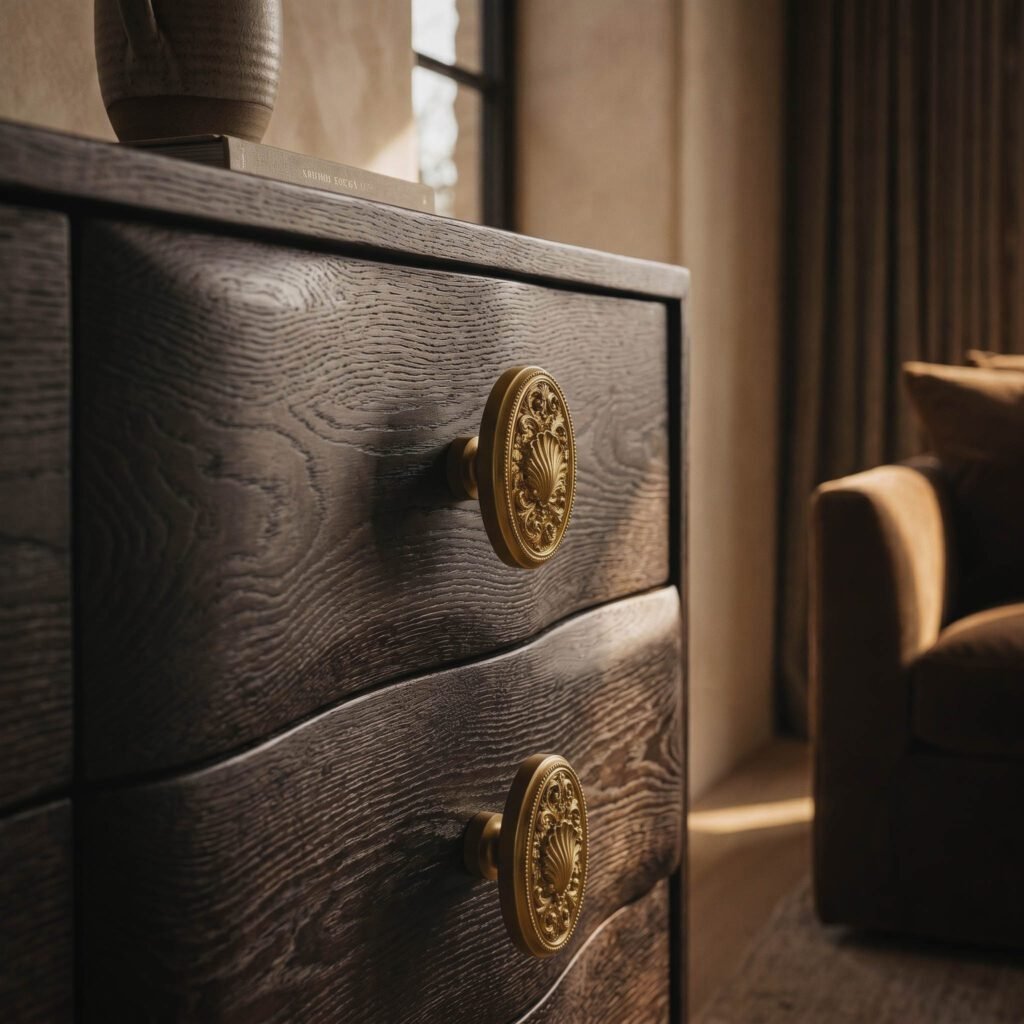
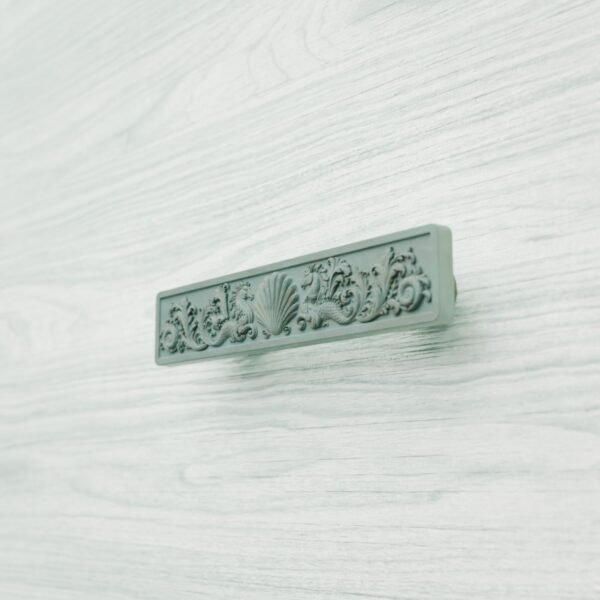
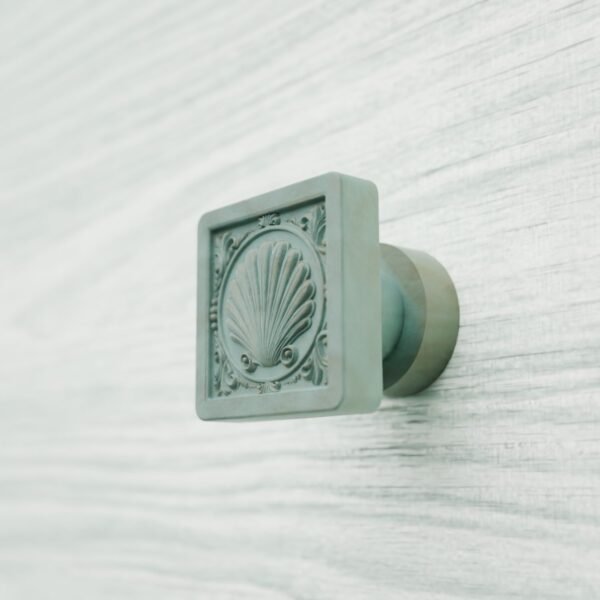
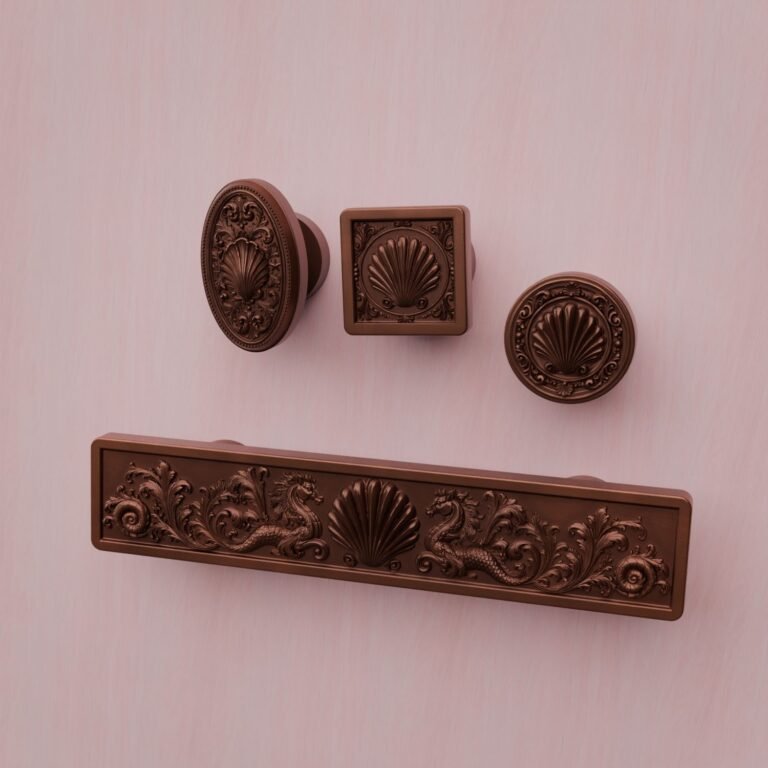
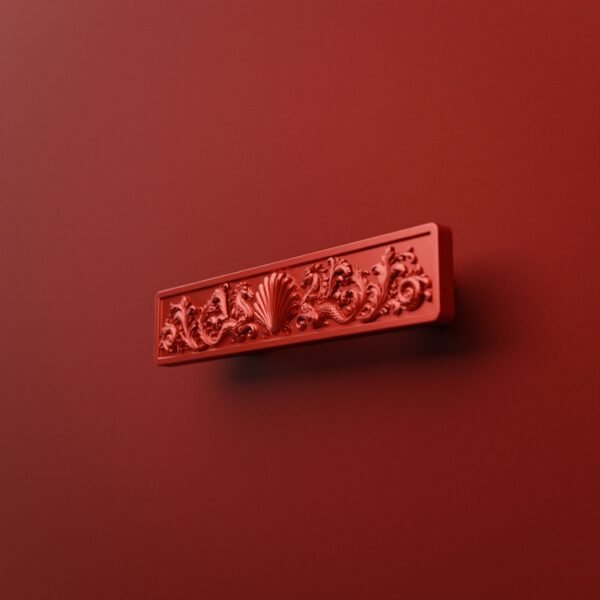
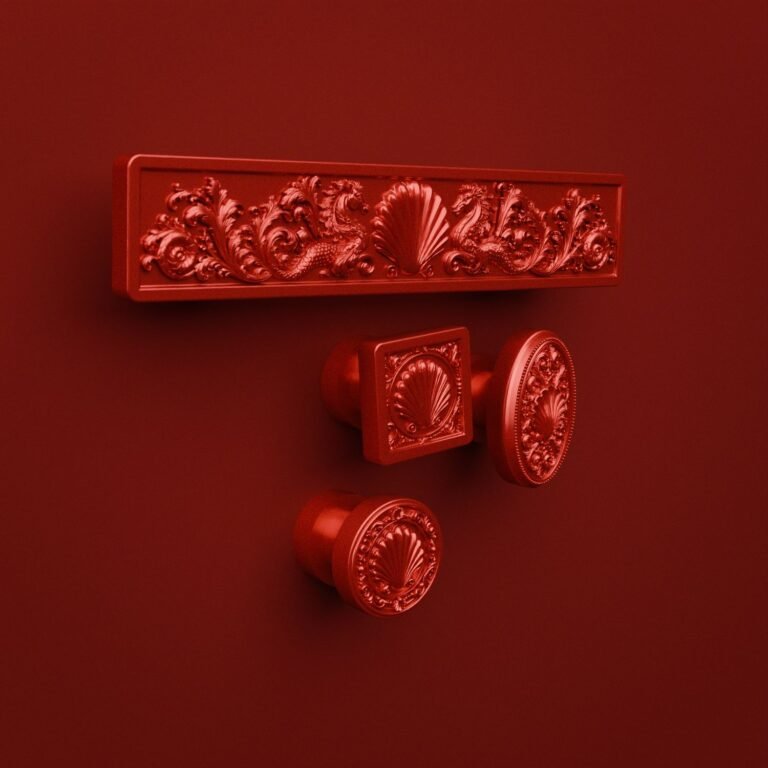
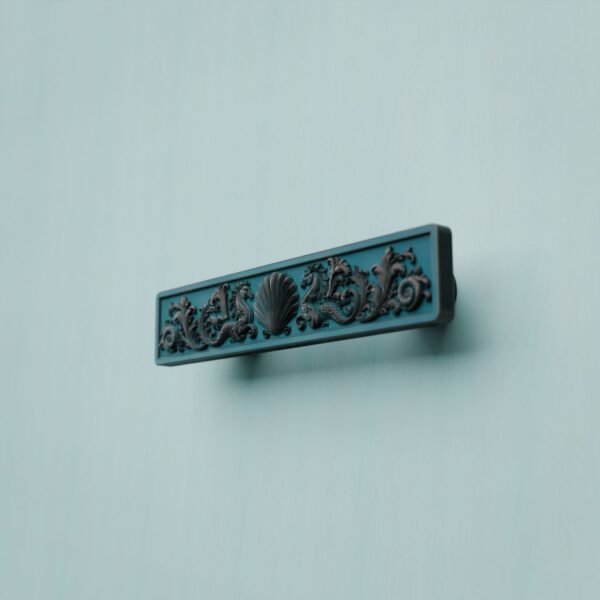
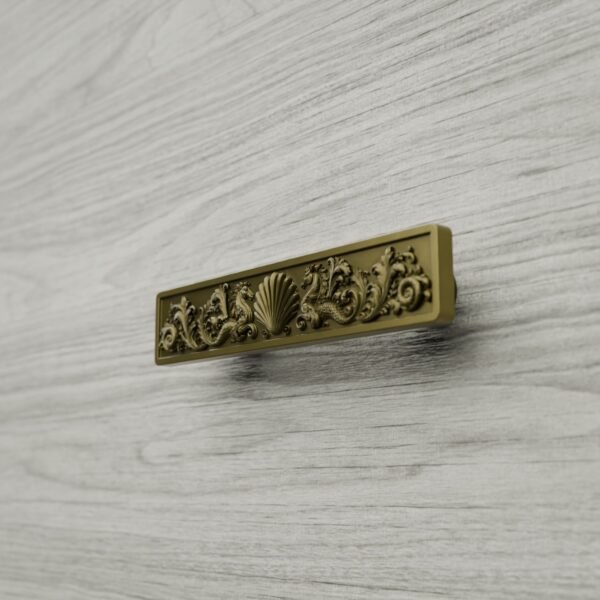
A scallop shell opened like a fan: deep ribs radiating from the hinge, resting on two scrolls. The seashell runs through the entire history of ornament, the pilgrim’s emblem on the road to Compostela, the crown of Renaissance niches, the seed of eighteenth-century rocaille. A crisp relief that reads at first glance and catches the light across the whole front.
The character

The ornament the sea already drew
The only motif in the repertoire that nature delivered finished.
The scallop shell entered ornament before the ornamentalists did: a fan of radiating ribs, a hinge, a perfect symmetry, it was all already there. Pilgrims of the Camino de Santiago wore it as an emblem. The Renaissance crowned its niches with it, and Botticelli used it to bring forth Venus. The eighteenth century made it the matrix of the rocaille, lending its name to an entire style, the rococo. From chair backs to commode aprons, it has never left furniture.
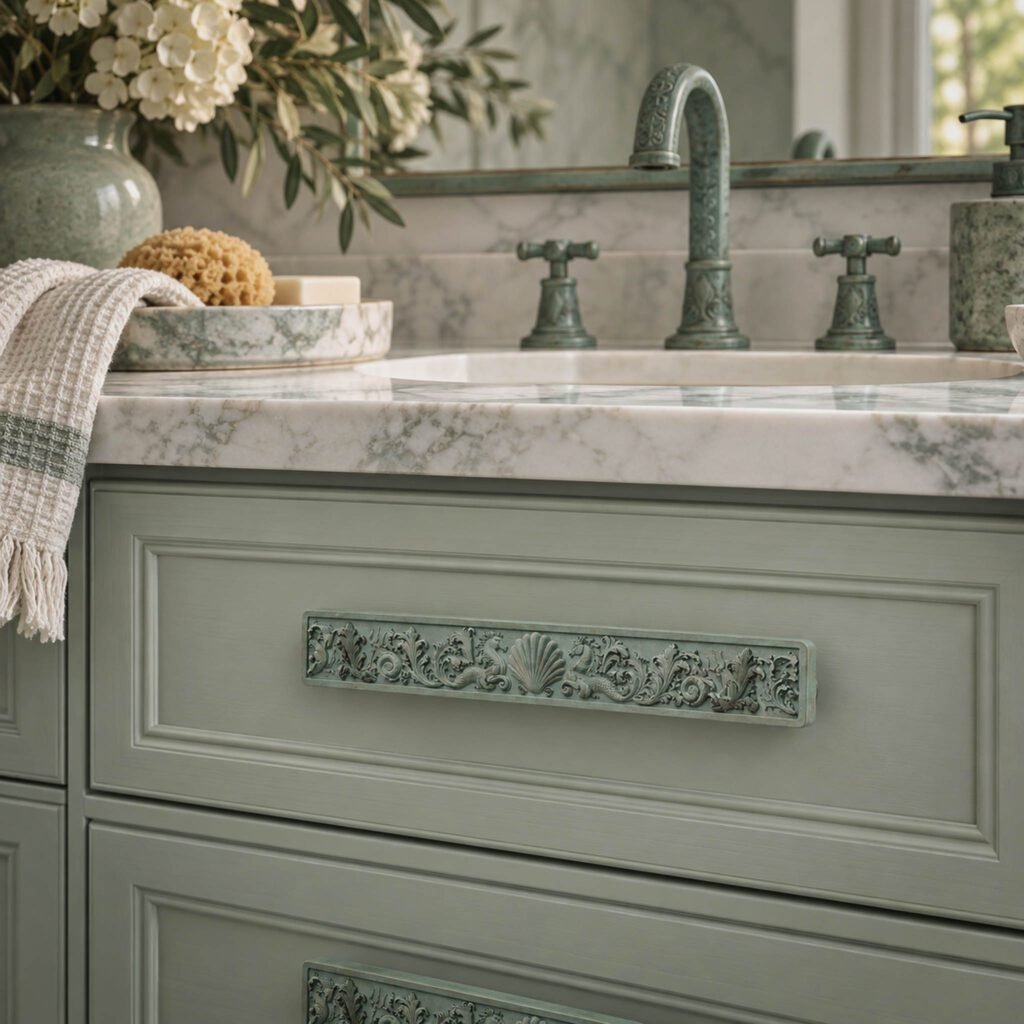
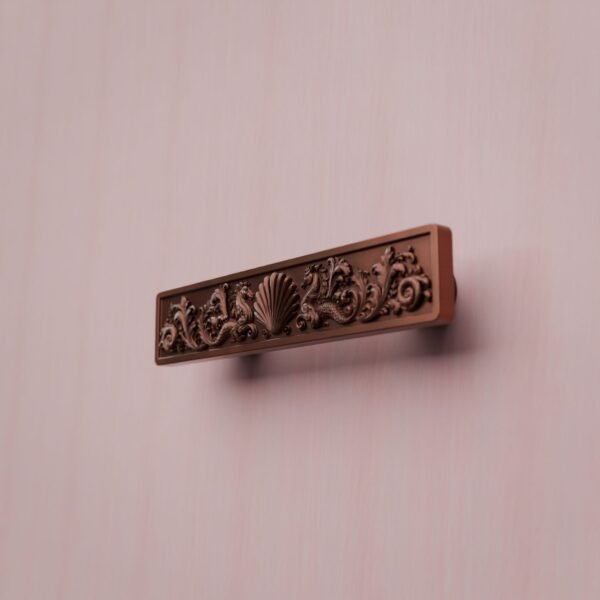
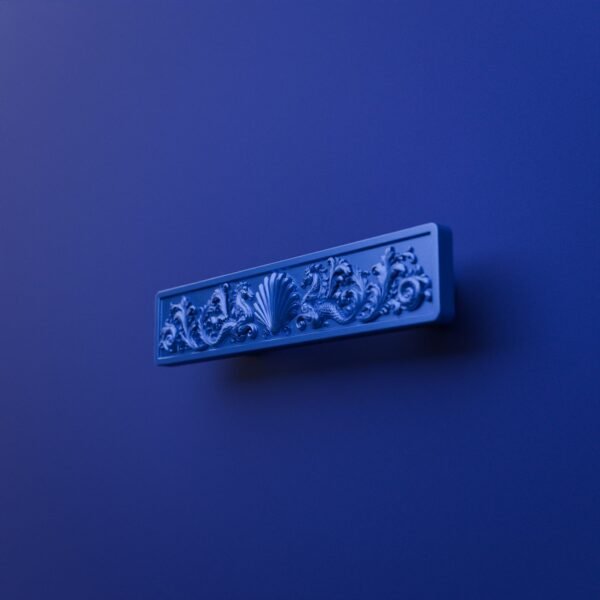
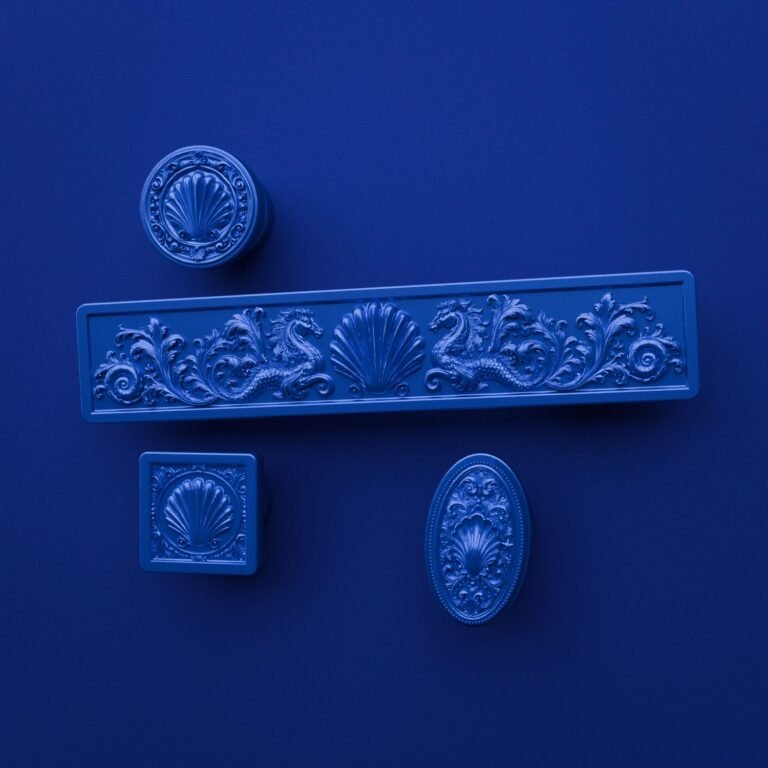
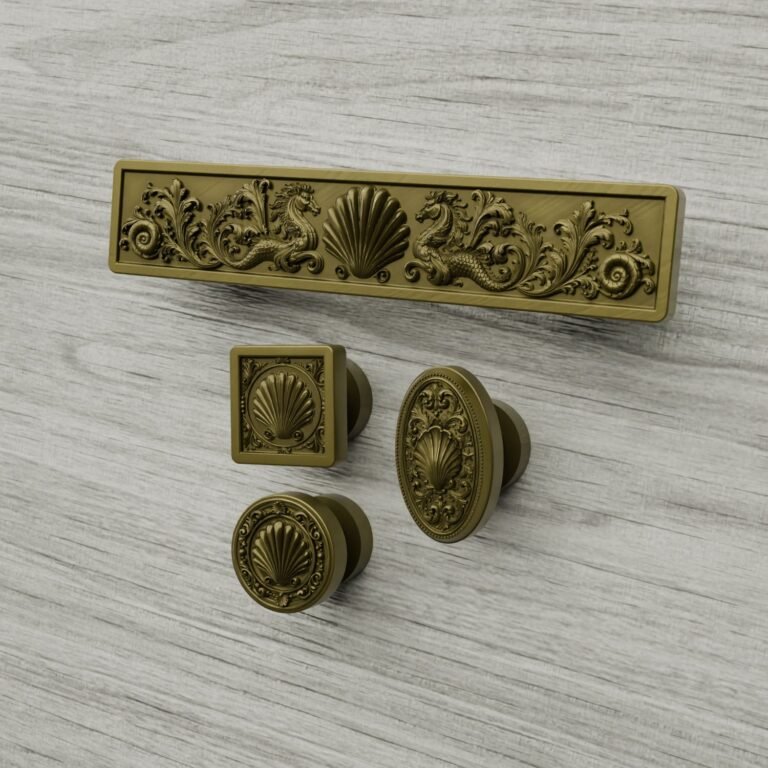
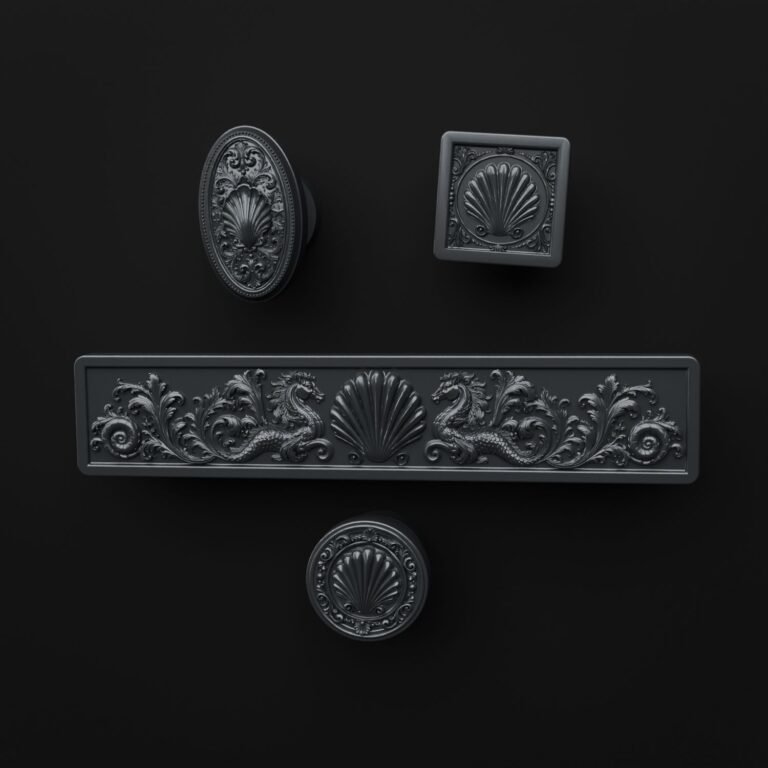
On a handle, the shell works like an architectural ornament. The hinge anchors the composition, the ribs fan outward, and their deep hollows carry the light from one edge of the front to the other. Larger formats let the motif surround itself with its own world: scrollwork of sea foam, seahorses, starfish. As ordered as a rosette, yet alive like something from the sea: a motif that brings a story to a front without ever overwhelming it.
Inspiration
A few Holdon handles in pictures
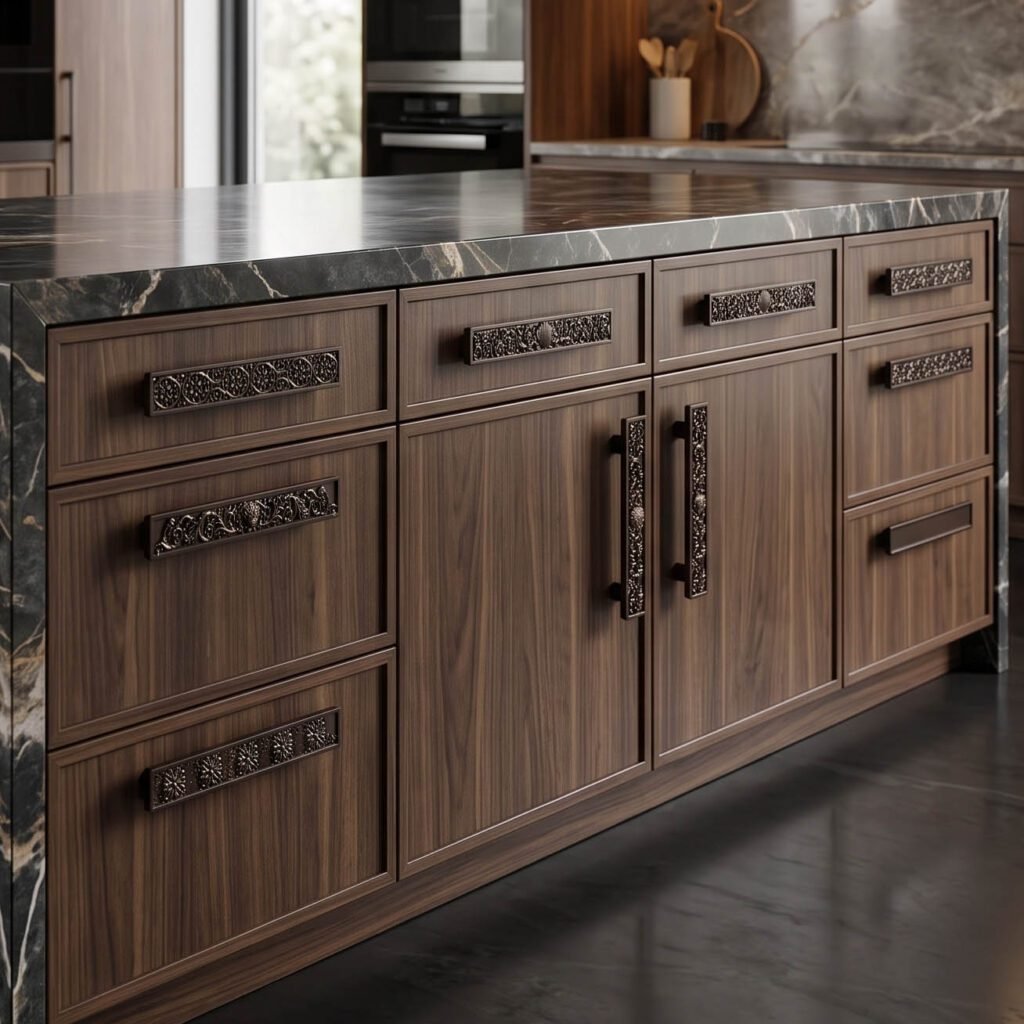

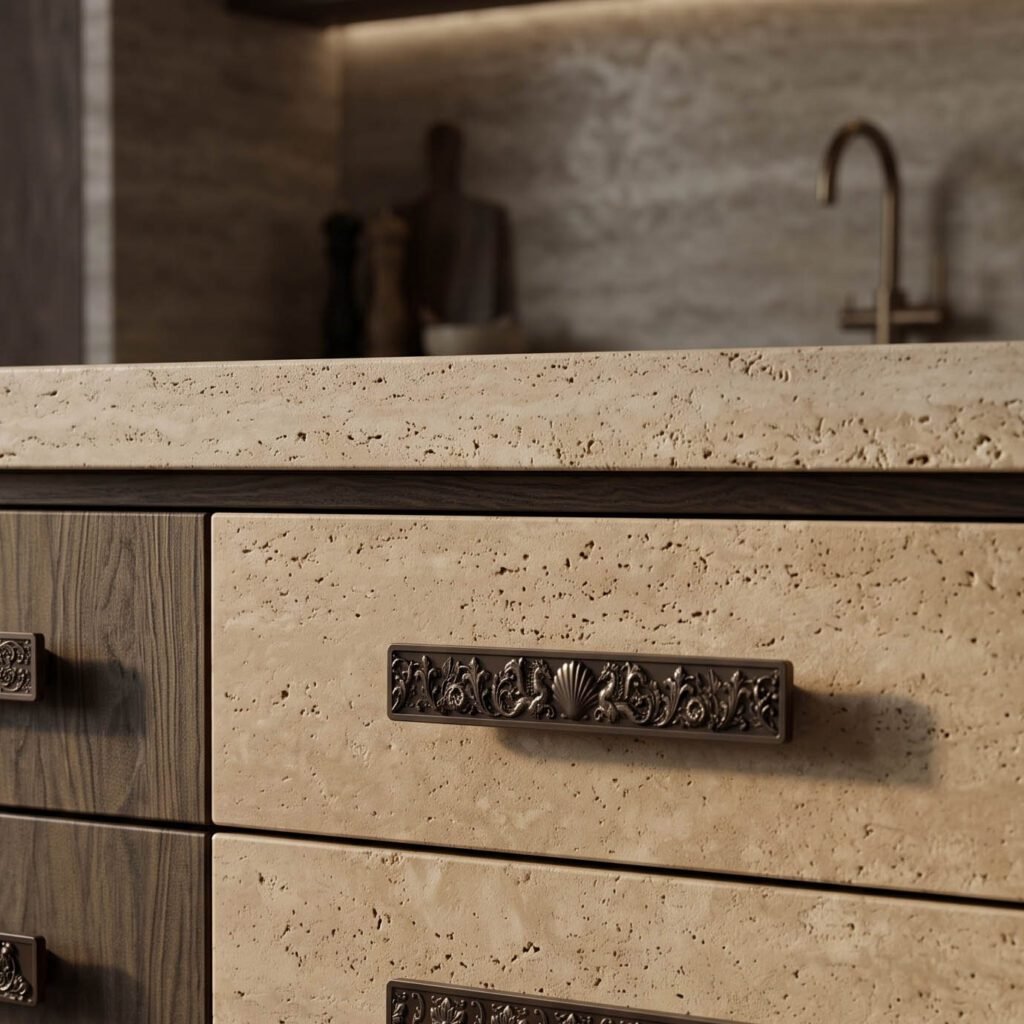
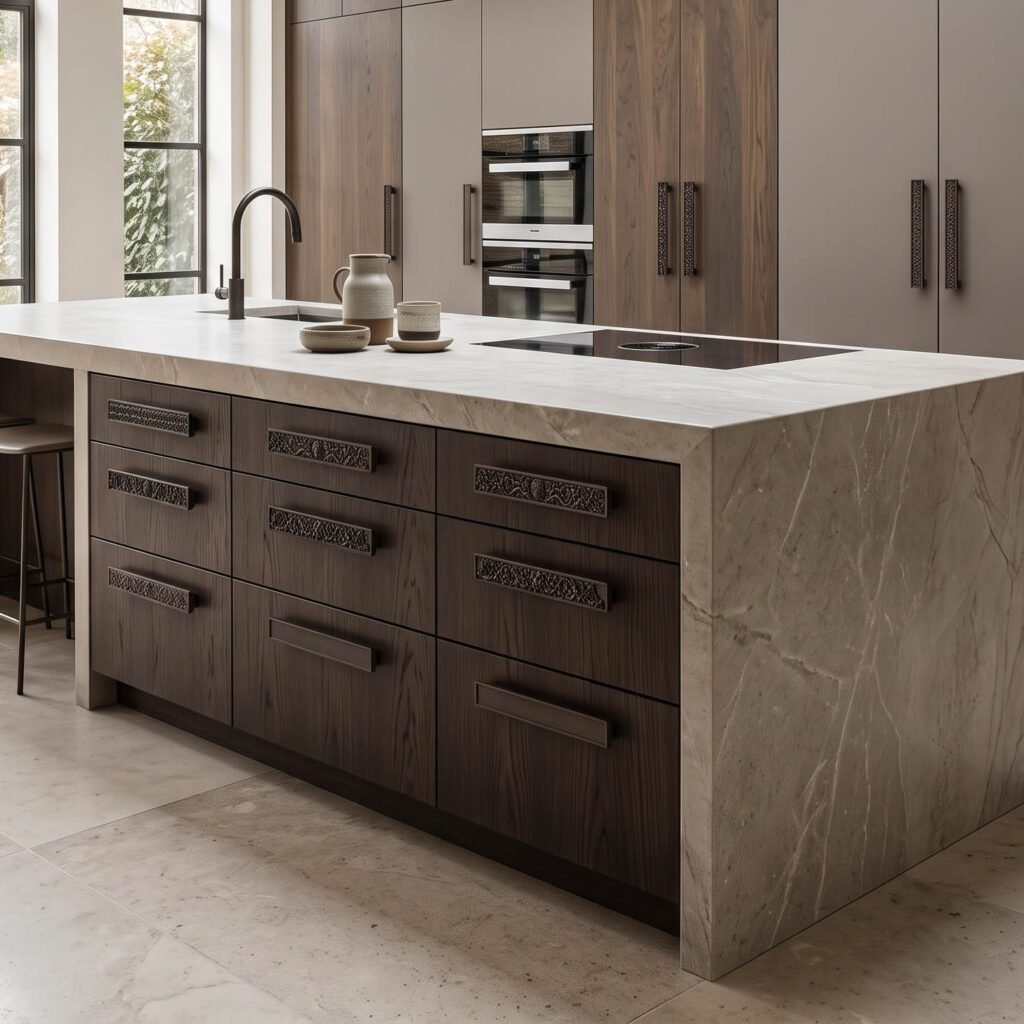
Filter the possibilities
The handles patterned Shell
Each variant pairs this pattern with a finish, a silhouette, and a size. Click to order directly.

$89.95

$78.95




$61.95


$61.95


$33.95

$22$18.70-15% until October 31

$22$18.70-15% until October 31
$33.95$28.86-15% until October 31



$78.95


$50.95
$61.95


$50.95

$33.95


Refining the handles of the Shell pattern
By rate
Dimensions
Size
Center-to-center
Exact dimensions
Height (cm)
Width (cm)
Depth (cm)
Appearance
Colors
Material
Finishes
Type & Shape
Cabinet handle types
Sense of installation
Shape
Specific shape
Silhouette
Style
Collection
Pattern
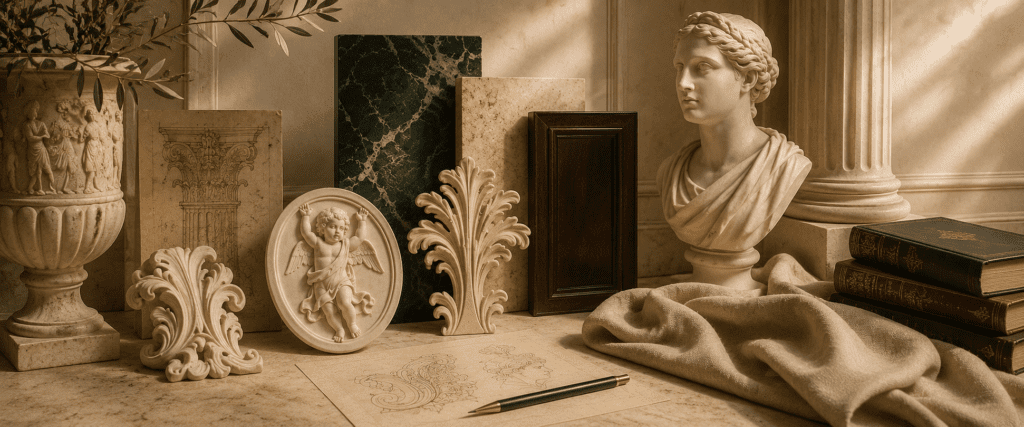
The Cahiers d’Holdon, for further reading
The Shell, Memory of the Wave: Archaeology of a Pattern

Choose the finish
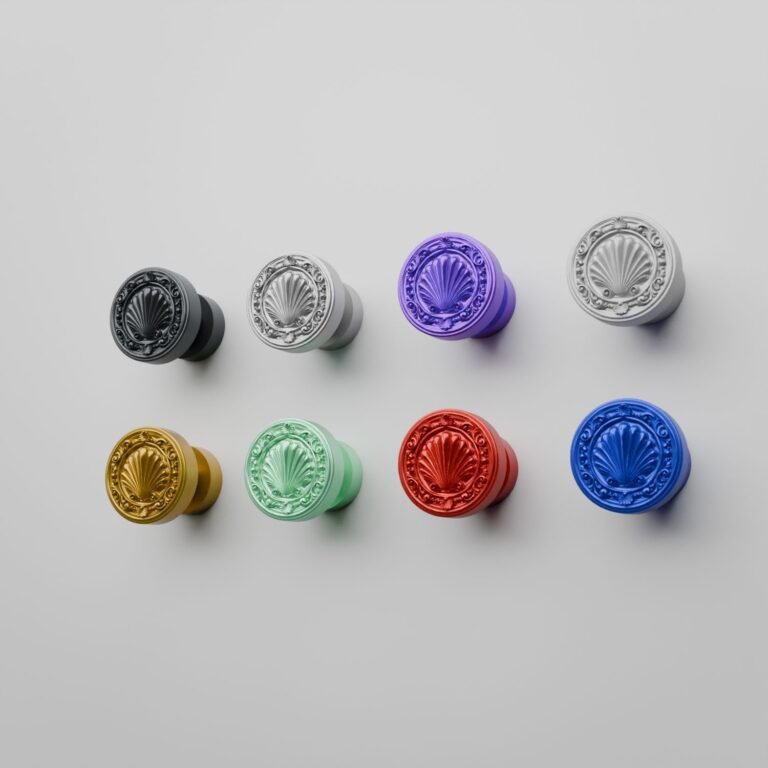
The finishes available for the Shell
The finish determines the material, patina, and look of your handle. The collection’s default is highlighted, and every other finish is compatible with this pattern.
See finishes available
See finishes available

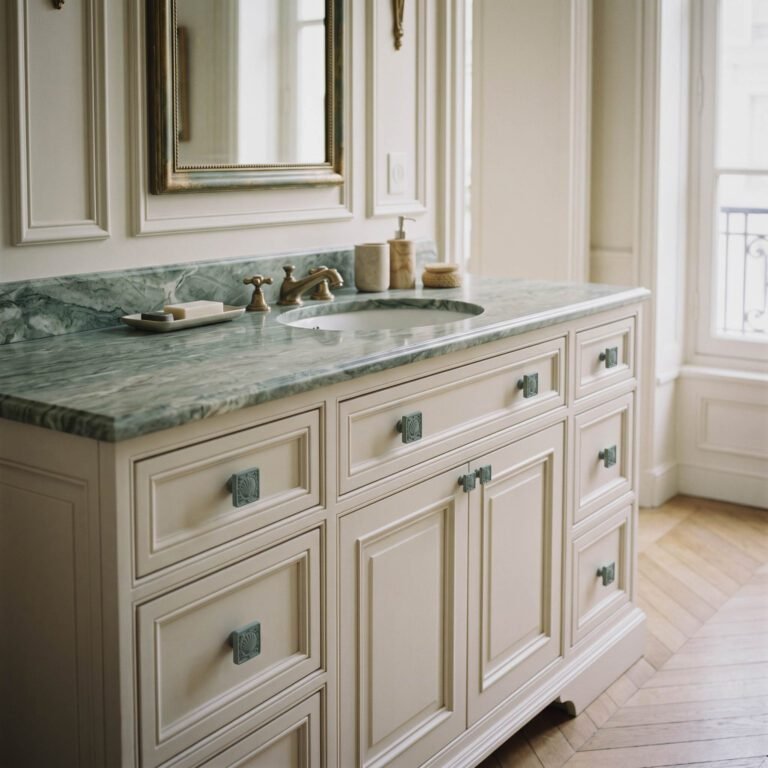
A very light bronze, as if raised from two thousand years in the Mediterranean: powdered blue settled in the hollows, sea green on the raised details, edges veiled in white. The patina of shipwrecks, tamed.

A warm, golden brown patina, with softly oxidized areas and others subtly polished. A finish that feels authentic and timeless.
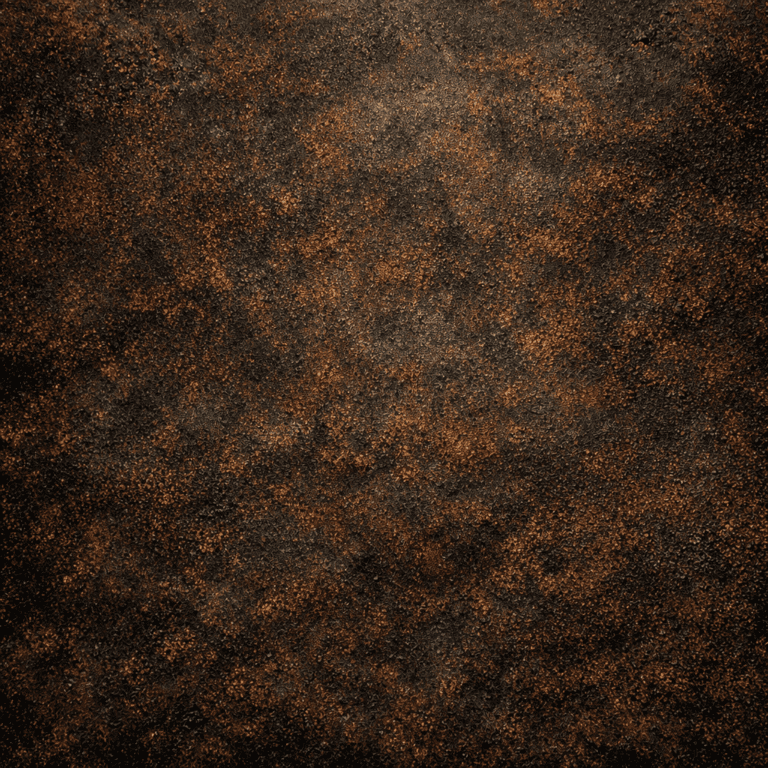
A patina in deep, warm brown-orange tones: living, lightly oxidized texture. Warmth and authenticity.
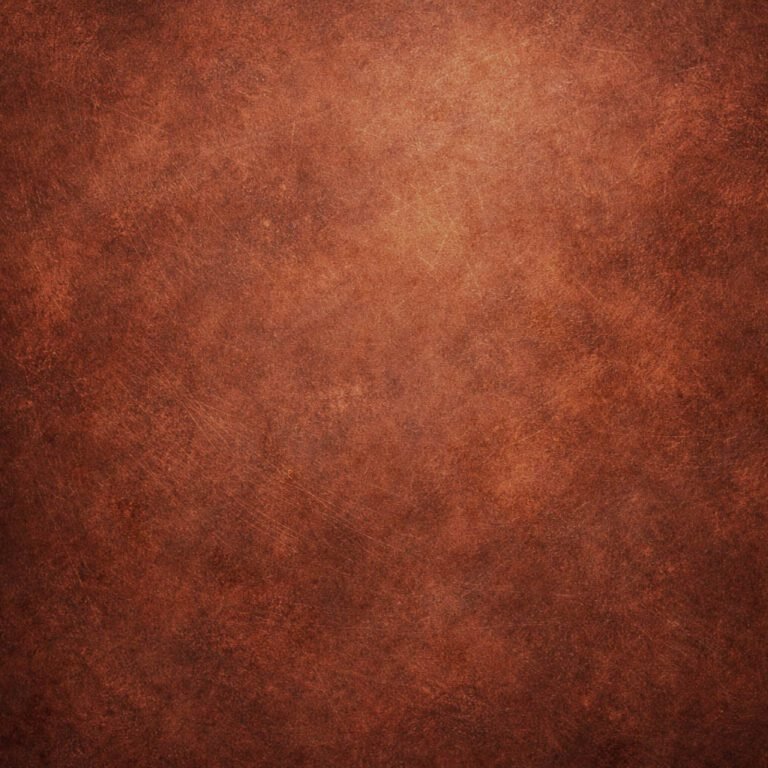
A polished copper with luminous orange highlights, soft and silky to the touch.
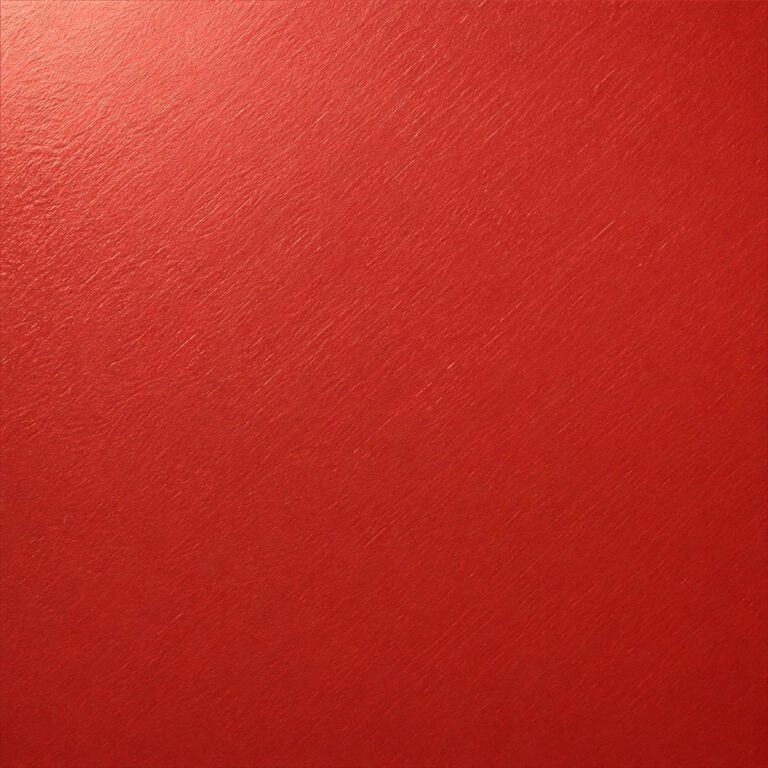
A deep, luminous red between lacquer and pearled metal. A signature look, boldly claimed.
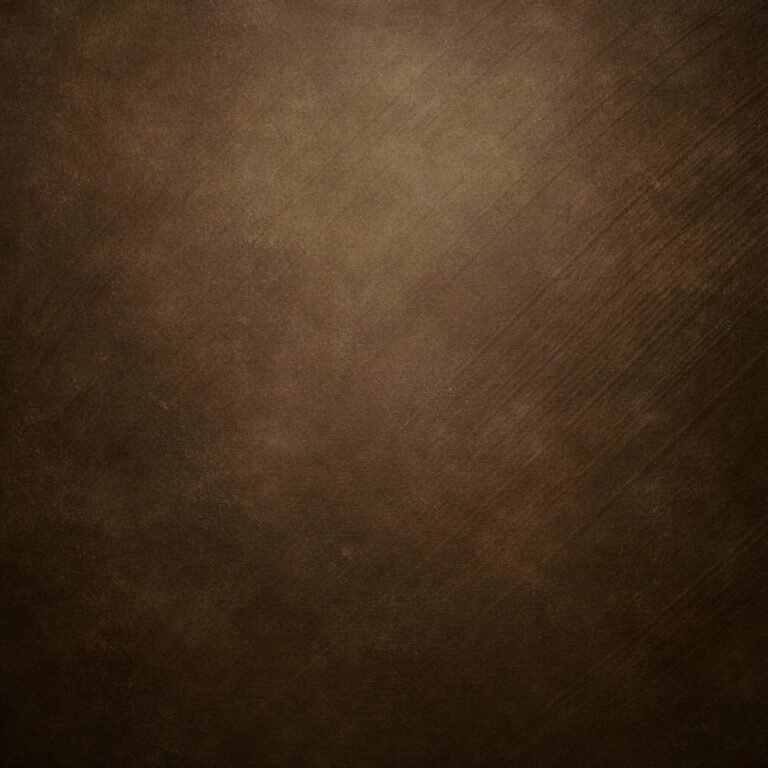
A plain, contemporary bronze, with no excess shine and no period patina. Warm, understated, premium.
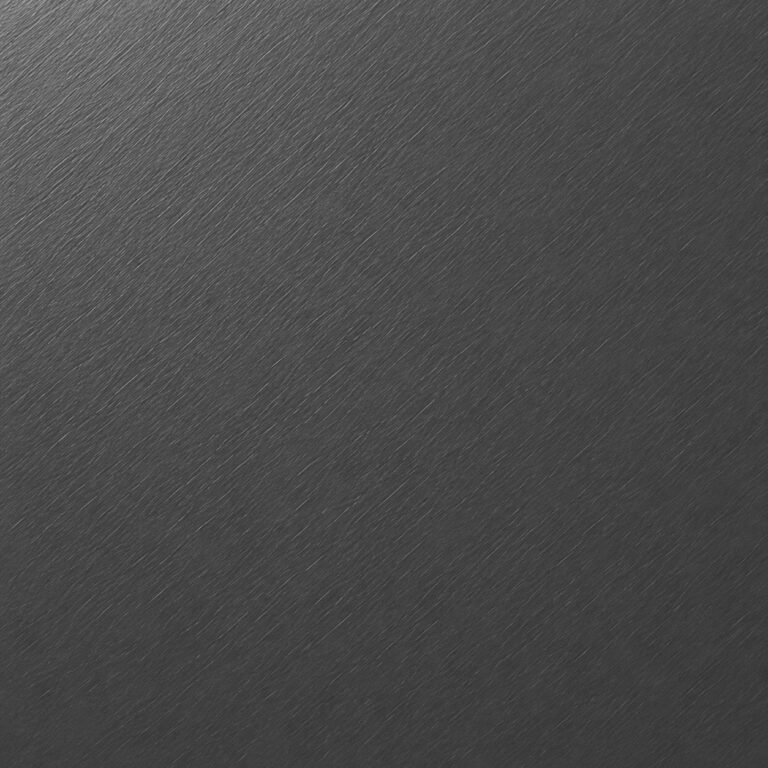
A steel gray with metallic reflections, calm and architectural. Understated modernity, quiet luxury.
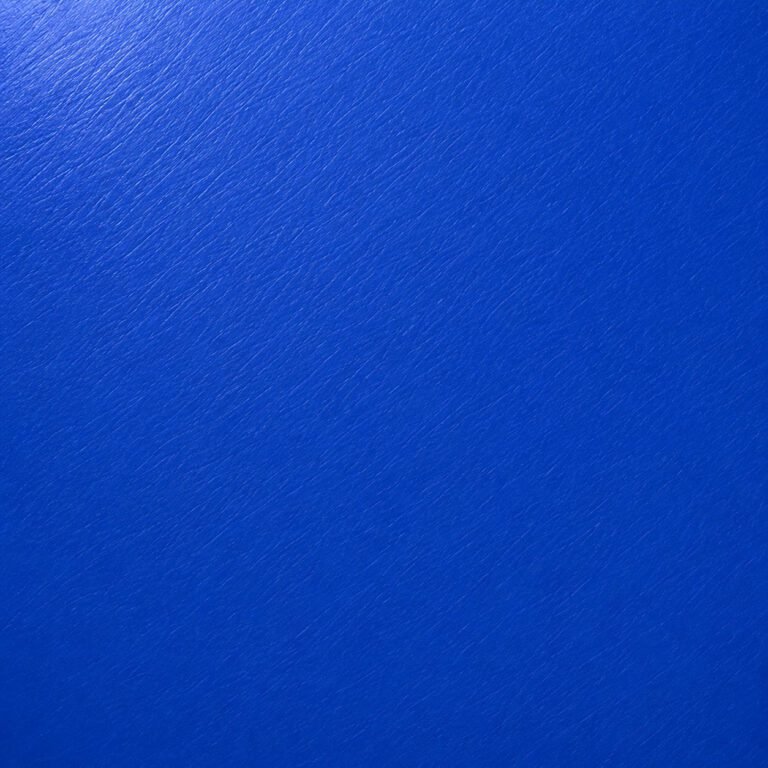
A vibrant, intense blue: a striking focal point for those who love bold interiors.

A warm, sunlit gold, at once precious in its shine and full of contemporary decorative energy.

A bright gray with subtle mineral undertones, precise, refined, almost airy.

A pure, sculptural white with a pearlescent shift depending on the angle. Absolute clarity and elegance.

A silvery metal with soft, contemporary reflections. Understated, luminous, timeless.
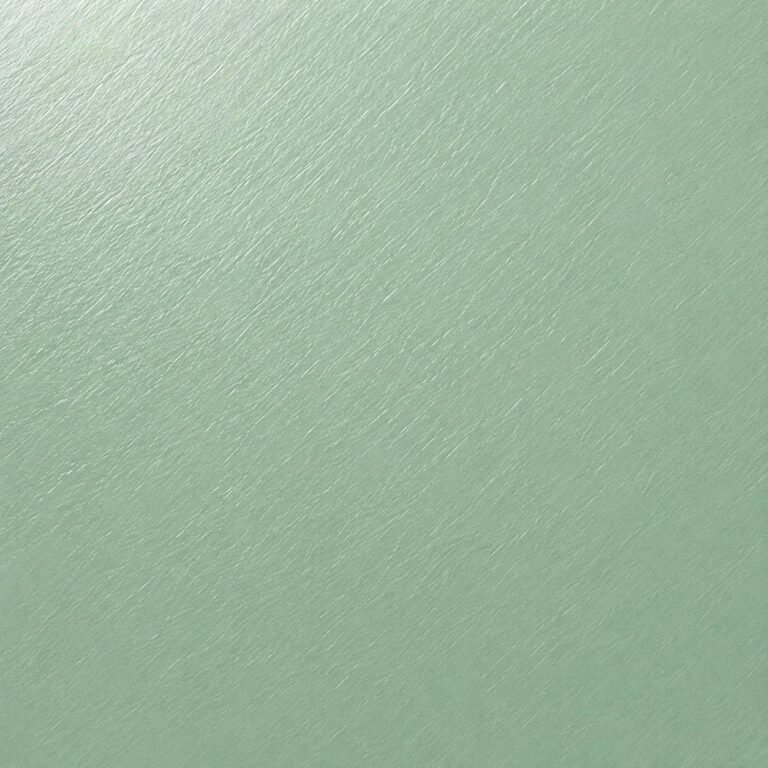
A deep, luminous green, somewhere between precious emerald and lush contemporary greenery: bold presence, unexpected freshness.

A warm, aged brass with a soft golden patina, showing lightly oxidized areas that reveal the depth of the metal beneath. Warmth and timeless nobility.

A silky, contemporary polished brass with warm golden highlights. Brass shine in its purest form.

A deep lilac shimmering with a pearlescent sheen, poised between floral softness and unabashed sophistication.
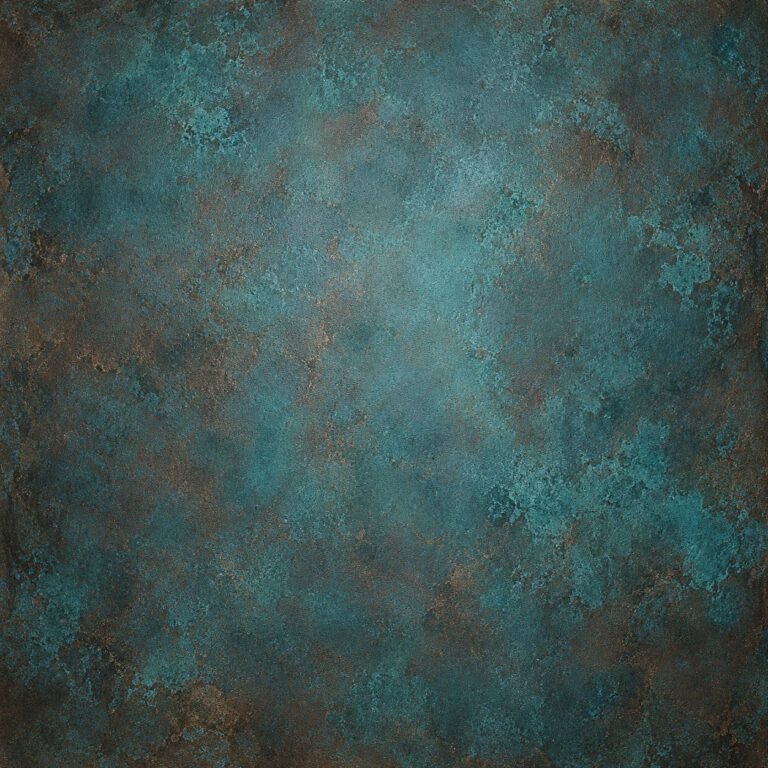
A deep blue patina applied by hand on copper, matte and mineral, that lets the glowing metal show through on the reliefs. The blue that copper carries within itself.
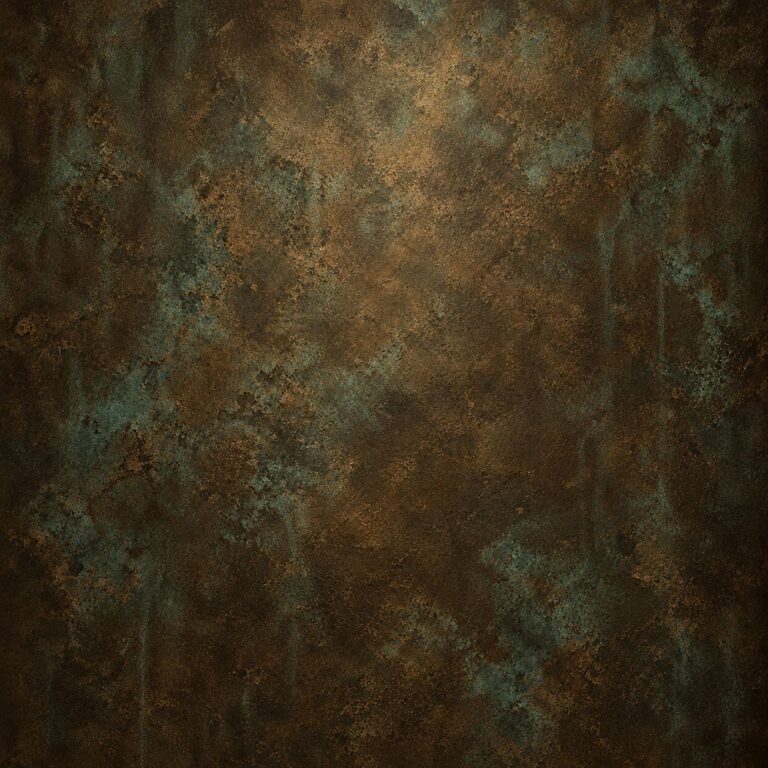
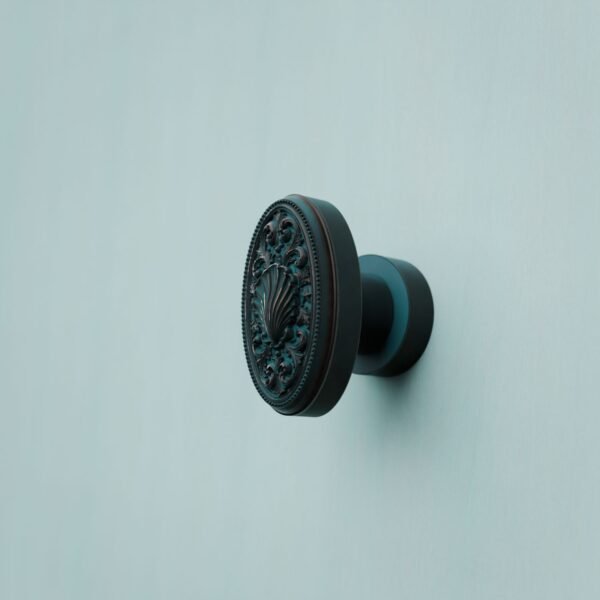
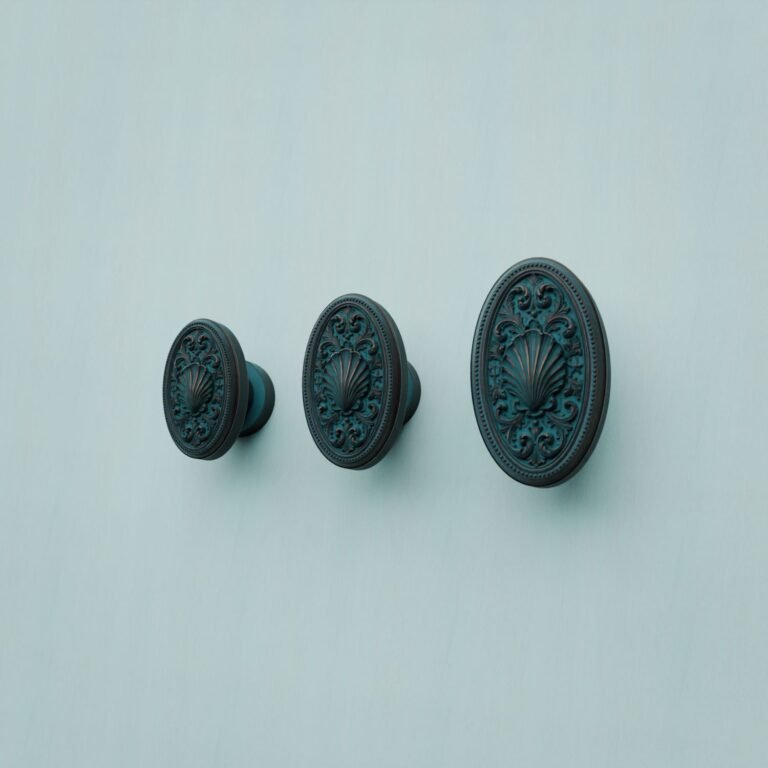
A verdigris pushed to blue, a dark ground settled in the hollows of the relief, and bronze sanded back to raw brightness on the edges. The patina of outdoor bronzes, in denser form.
The atelier · Holdon Paris
How is our catalog built?
At Holdon, every handle is designed as a piece of jewelry for furniture, born in our Paris atelier from a dialogue between three voices.
The material
The shape
A true shape, chosen the way one chooses a goldsmith’s line, taking form in a precise silhouette.
Choose your silhouette
Compatible silhouettes
The pattern defines the character; the silhouette determines its geometry. Here are the silhouettes that host this pattern in the current catalog.
See the compatible silhouettes
See the compatible silhouettes
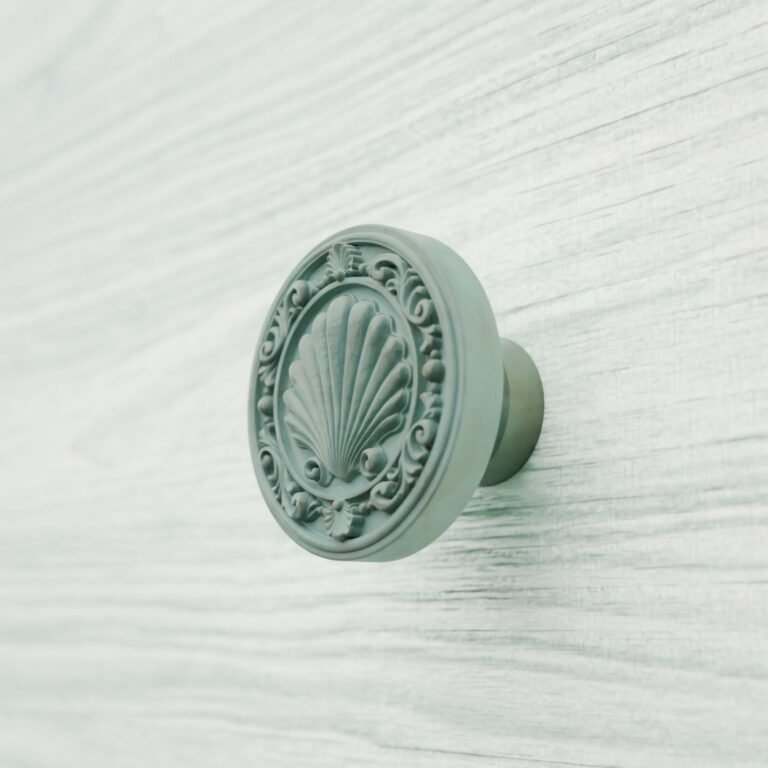
A round classic silhouette with generous curves and a soft profile that welcomes the hand, a shape that crosses styles without ever aging. The most timeless version of the cabinet knob.
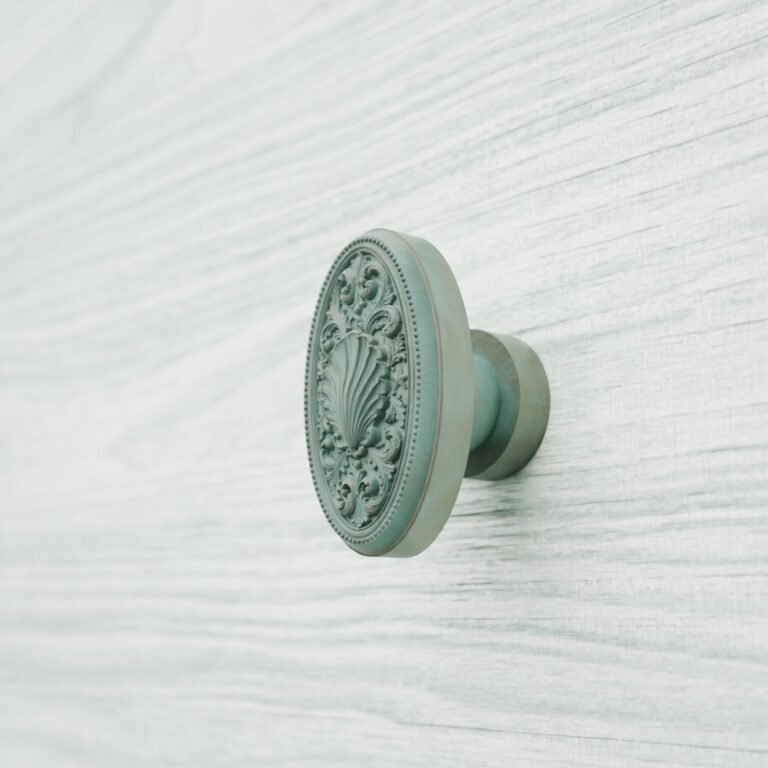
An oval knob with the profile of a cameo: a domed field, a fine border that frames it, a curve that calls the hand. The Florentine Medallion descends from the Renaissance tondo and the medallions of paneled rooms: the noble shape of the emblem, brought down to furniture scale. Left bare, the material composes alone; ornamented, it becomes the exact setting of its pattern.
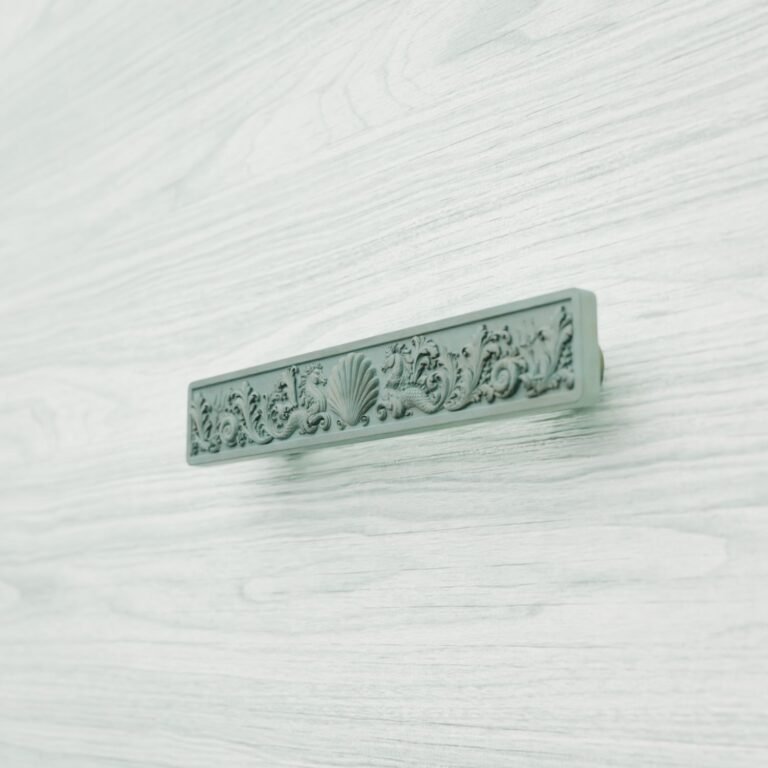
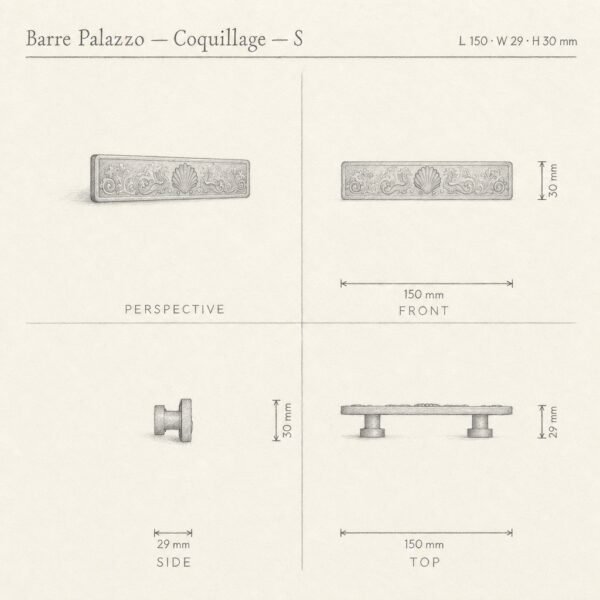
The Palazzo Square stretches out. Same crisp lines, same softened angles, now in a bar pull format, on two mounting points. A horizontal presence, clean and confident, equally at home on a large kitchen front or a low cabinet. The Palazzo design, simply drawn out to match doors that ask for more.
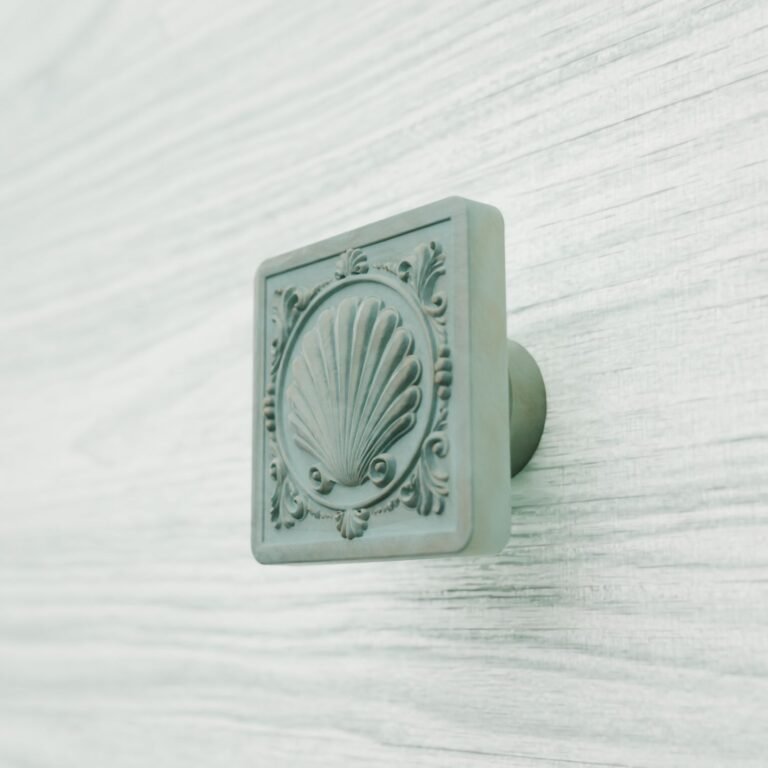
A square silhouette with precise architecture: softened corners, a stepped frame that plays with shadow, a slightly recessed front face that adds depth without overloading the form. The Palazzo Square’s geometry works as well on a contemporary kitchen as on an antique dresser, and adapts to standard fronts without losing its character. A sober, premium detail that evokes an Italian palazzo, minus the budget that comes with one.
Continue exploring
Beyond this pattern
The Classica Europa collection
All the patterns and finishes in this collection share a common vocabulary, same spirit, same decorative register.
Discover the collection →All the patterns
From the most understated to the most ornate. Each pattern has its own register, choose the one that speaks to your interior.
See all the patterns →All the finishes
Bronze, copper, brass, lacquer, resin, each finish gives your handle its material, its color, its patina.
See all the finishes →Chronicles and essays
Our articles on Shell

A collection of ornament is never truly finished. This is how the great European houses built their decorative repertoire over the centuries: in small…
Frequently asked questions
Your questions about the pattern Shell
Find your handles
Understanding the pattern
What is a pattern on a Holdon handle?
The pattern is the ornament or carving applied to the handle’s front face, without changing its geometry. The same knob, the same bar, can take on different patterns: Essential (nothing, just the silhouette), Scrollwork (acanthus scrollwork in bas relief), Roaring Lion or Sleeping Lion (figures in high relief). The pattern thus transforms the handle’s look while keeping the same base shape. It’s the ornament that gives the piece its character.
Motif, silhouette, and shape
What difference between a pattern, a silhouette, and a shape?
The shape is the broad category: square, round, rectangle, cylinder. The silhouette is a precise variation within a shape, like the Palazzo Square or the Classica Round, with its own proportions and character. The pattern, in turn, sits over the silhouette: it’s the ornament or sculpting that makes each handle different, without touching the geometry. The same pattern can dress several silhouettes this way, each keeping its own underlying line.
Choosing your pattern
How to choose a handle pattern for your furniture?
The pattern is chosen based on how much presence you want the front to have. An Essential fades into the background and lets the silhouette speak, an ornamental pattern like Scrollwork adds a quiet detail, a sculptural figure like a lion becomes a true focal point. Look at the piece and its setting: on an already busy ensemble, a calm pattern holds its own, on a understated piece, the pattern can carry more relief. There’s no wrong choice, only the intensity you’re after.
Composing multiple patterns
How to Combine Multiple Patterns on the Same Piece of Furniture
Alternating is ideal. An Essential on the everyday drawers, a sculptural pattern on the center door, Scrollwork on the entryway dresser: each piece then tells its own story. On a single silhouette, the same knob repeated a dozen times would quickly feel monotonous; varying the patterns lets the whole ensemble breathe. Keep one common thread, the material and finish, so the front stays coherent despite the variety of ornament.
Motif and silhouette compatible
Does a pattern go on every silhouette?
Not always. Some ornamental and sculptural patterns need enough front surface to register visually: a Roaring Lion on the smallest size of the slimmest silhouette ends up illegible. Subtler patterns, on the other hand, adapt to nearly every silhouette and size. Each pattern's and silhouette's page shows the combinations that are actually available.
Delivery, Customs, Payment, and Support
How Long Will It Take to Receive My Handles?
Each handle is made to order in our Paris atelier. Allow an average of 5 to 10 business days for production, plus the carrier's delivery time, which varies by address. You'll receive an email with the tracking number as soon as the shipping label is issued, generally between the 5th and 10th business day after your order.
Are Your Payment Methods Secure? What Payment Options Do You Offer?
We accept all major credit cards (Visa, Mastercard, American Express) via Stripe, as well as PayPal. Transactions run through these two international references in online payment: Holdon Paris never sees and never stores your card number, all sensitive data is transmitted encrypted to the platform. The site runs entirely on HTTPS. For large professional orders, bank transfer with a deposit is possible (see architects and professionals).
Can I Return My Order if I Don't Like It?
Yes. French law gives you 14 days from receipt to exercise your right of withdrawal, with no need to justify it. The handles must be returned in their original condition, uninstalled, and return shipping is at your expense unless the error is ours: the refund is issued within 14 days of receipt at our workshop. To start a return, write to us via contact Holdon Paris: we'll send you the address and the process. Custom and personalized pieces are not eligible for the right of withdrawal, since they are made specifically for you.
A patterned handle: Shell for your furniture
Made in Paris, to order. Ships in 5 to 10 days.